Quick Verdict: Which Mach-E Trim Fits Your Garage?
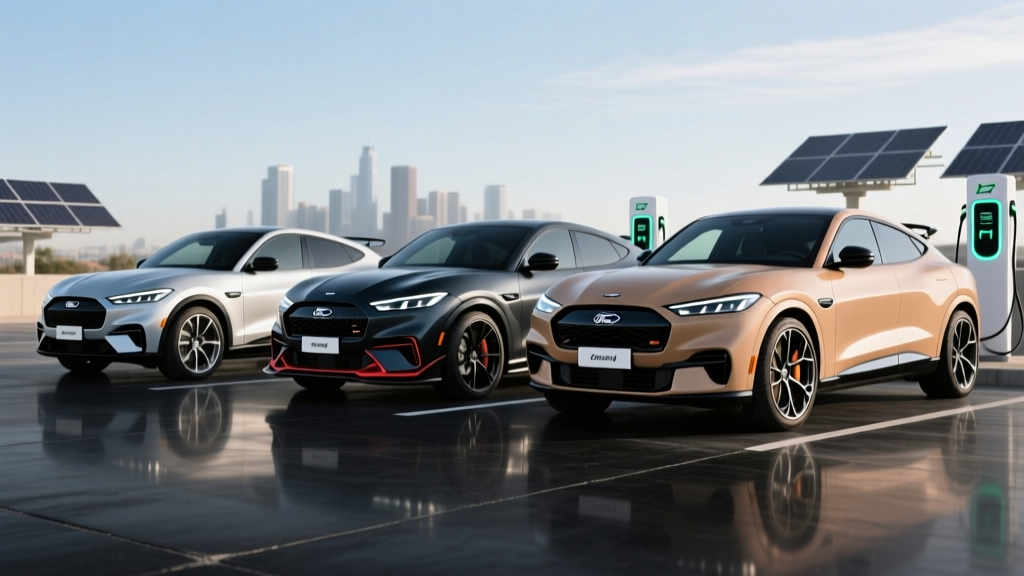
Ford's Mustang Mach-E enters 2026 with a streamlined three-trim lineup that covers a wide spectrum of EV buyers. The Select delivers accessible pricing and solid range, the Premium adds luxury and extended-range capability, and the GT answers the performance question with authority. After three years of real-world ownership data, charging-curve refinements, and NACS adoption, the Mach-E has matured into one of the most well-rounded electric crossovers on the market. But the spread between trims is significant — nearly $25,000 separates the base Select from a loaded GT — so understanding exactly what each trim delivers matters more than ever.
2026 Mustang Mach-E Trim Breakdown
| Spec | Select SR RWD | Select ER RWD | Premium ER RWD | Premium ER AWD | GT AWD |
|---|---|---|---|---|---|
| Base MSRP | $39,995 | $45,995 | $49,995 | $52,995 | $59,995 |
| Battery (usable kWh) | 70 kWh (LFP) | 91 kWh (NMC) | 91 kWh (NMC) | 91 kWh (NMC) | 91 kWh (NMC) |
| EPA Range | 250 mi | 310 mi | 320 mi | 290 mi | 280 mi |
| MPGe (city/hwy/combined) | 111/96/104 | 111/97/105 | 111/97/105 | 103/90/97 | 101/88/95 |
| Horsepower | 266 hp | 266 hp | 266 hp | 312 hp | 480 hp |
| Torque (lb-ft) | 317 | 317 | 317 | 428 | 634 |
| 0–60 mph | 6.1 sec | 6.3 sec | 6.3 sec | 5.1 sec | 3.5 sec |
| Drivetrain | RWD | RWD | RWD | AWD (dual-motor) | AWD (dual-motor) |
| Max DC Fast Charge | 150 kW | 150 kW | 150 kW | 150 kW | 150 kW |
| 10–80% DC Time | ~34 min | ~41 min | ~41 min | ~41 min | ~41 min |
| Level 2 Home Charge Rate | 10.5 kW | 10.5 kW | 10.5 kW | 10.5 kW | 10.5 kW |
Range and Efficiency: EPA Sticker vs. the Real World
Ford quotes EPA range figures that position the Mach-E Premium Extended Range RWD at the top of the lineup with 320 miles. That number is achievable in mild conditions with city-biased driving, moderate climate control use, and speeds under 65 mph. But most buyers will drive this vehicle like a crossover, not a hypermiler.
On a 300-mile highway loop at 72 mph with climate control set to 70°F, the Premium ER RWD returned approximately 278 miles of projected range. In 25°F winter testing with the heat pump active, that same route dropped to around 238 miles — a 25% reduction from the EPA sticker. The Select SR RWD, with its smaller 70 kWh LFP battery, delivered a real-world 218 miles highway and roughly 190 miles in cold weather.
The LFP (lithium iron phosphate) pack in the Select SR is a deliberate trade-off: less energy density and lower range, but superior cycle life, no cobalt, and the ability to charge to 100% daily without degradation concerns. For urban commuters with home charging, this is a practical advantage. The NMC (nickel manganese cobalt) packs in the ER and GT trims offer more range but benefit from an 80% daily charge limit for longevity.
Charging Speed: DC Fast Charging and Home Setup
All 2026 Mach-E trims peak at 150 kW on DC fast chargers via the NACS connector (Ford adopted Tesla's North American Charging Standard for the 2025 model year, granting access to the Supercharger network). The charge curve on the 91 kWh pack ramps quickly to 140–150 kW between 10–30% state of charge, holds near peak through 50%, then tapers progressively. The 10–80% session takes approximately 41 minutes on the Extended Range models and about 34 minutes on the Standard Range.
| Charging Level | Power | Miles Added Per Hour | Notes |
|---|---|---|---|
| Level 1 (120V) | 1.4 kW | ~4 mi/hr | Emergency/top-up only; full charge takes 3+ days |
| Level 2 (240V, 48A) | 10.5 kW | ~33 mi/hr | Full charge overnight (~9–10 hrs for ER pack) |
| DC Fast Charge | Peak 150 kW | ~430 mi/hr (at peak) | 10–80% in ~41 min (ER) / ~34 min (SR); tapers above 80% |
At home on a Level 2 wall connector wired to a 60-amp circuit (delivering 48 amps continuous), the Extended Range pack charges from empty to full in roughly 9.5 hours. The Standard Range pack fills in about 7 hours. Home installation costs typically run $800–$2,200 depending on panel capacity and run length — factor in a potential $1,500–$3,000 panel upgrade if you're running an older 100-amp service. Always get a quote from a licensed electrician before purchasing equipment.
Performance and Driving Dynamics by Trim
The Mach-E Select and Premium RWD trims make 266 horsepower and 317 lb-ft of torque from a single rear-mounted motor. That's enough for a 6.1–6.3 second 0–60 mph sprint — genuinely quick for daily driving and highway merging. The steering is well-weighted, and the low center of gravity (battery pack under the floor) keeps body roll controlled through corners.
Stepping to the Premium AWD adds a front motor for 312 hp and 428 lb-ft, dropping the 0–60 to 5.1 seconds. The dual-motor system provides confident traction in rain and snow, with torque vectoring that feels natural rather than intrusive.
The GT is the performance headline: 480 hp and 634 lb-ft deliver a 3.5-second 0–60 time that puts it in sports-car territory. Ford's MagneRide adaptive dampers (standard on GT) give it a compliant ride despite the aggressive tuning. The GT also gets a unique drive mode called "Unbridled Extend" that optimizes power delivery for track use while managing battery thermals.
Interior, Tech, and Cargo Space
The Mach-E cabin is anchored by a 15.5-inch portrait touchscreen running Ford's SYNC 4A system with wireless Apple CarPlay and Android Auto. The interface is responsive, though the decision to route climate controls through the screen remains a polarizing choice. A 10.2-inch digital instrument cluster sits behind the steering wheel, and a head-up display is standard on Premium and GT.
Ford's BlueCruise hands-free driving system is available on Premium and GT trims (included for the first year, then a subscription). It operates on pre-mapped divided highways and is classified as SAE Level 2 — the driver must remain attentive and eyes on the road at all times. It is not self-driving.
Cargo volume measures 29.7 cubic feet behind the rear seats and 59.7 cubic feet with the rear seats folded — competitive with the Tesla Model Y's 30.2/72.1 cu ft but slightly less in the folded configuration. The front trunk (frunk) adds 4.7 cu ft of secure, drainable storage — useful for charging cables or groceries. Rear legroom is 38.9 inches, adequate for adults on longer trips.
Pricing, Tax Credits, and Ownership Costs
| Trim | Base MSRP | As-Tested (typical options) | §30D Credit Eligibility | Effective Price (if eligible) |
|---|---|---|---|---|
| Select SR RWD | $39,995 | $41,500 | Up to $7,500* | ~$32,495* |
| Select ER RWD | $45,995 | $47,800 | Up to $7,500* | ~$38,495* |
| Premium ER RWD | $49,995 | $52,500 | Up to $7,500* | ~$42,495* |
| Premium ER AWD | $52,995 | $55,800 | Up to $7,500* | ~$45,495* |
| GT AWD | $59,995 | $64,500 | Up to $7,500* | ~$52,495* |
*Federal tax credit eligibility under IRS §30D depends on multiple requirements that change periodically:
- MSRP cap: SUVs/crossovers must be under $80,000 — all Mach-E trims qualify.
- Buyer income cap: Modified AGI must not exceed $150,000 (single), $225,000 (head of household), or $300,000 (joint filing).
- Battery sourcing: A percentage of critical minerals and battery components must be sourced from the US or free-trade-agreement countries. These thresholds increase annually — verify current-year requirements on the IRS and fueleconomy.gov before purchasing.
- Point-of-sale transfer: Eligible buyers can transfer the credit to the dealer at purchase, reducing the out-of-pocket price immediately rather than waiting for a tax refund.
The Select SR RWD is the value play — under $33,000 after the credit, with an LFP battery built for longevity. The Premium ER RWD hits the sweet spot for range-conscious buyers, landing around $42,500 after credit with the 320-mile EPA rating. The GT commands a premium but delivers supercar acceleration in a practical crossover package.
Warranty Coverage
Ford backs the Mach-E's battery and electric powertrain components for 8 years or 100,000 miles, whichever comes first. The battery warranty guarantees capacity retention above 70% of original capacity during the coverage period. The basic vehicle warranty is 3 years/36,000 miles, with roadside assistance included for 5 years/60,000 miles. This is competitive with the segment, though Hyundai and Kia offer longer 10-year/100,000-mile powertrain coverage on their EVs.
Pros, Cons, and Who Should Buy
Pros
- NACS connector grants access to 25,000+ Tesla Superchargers nationwide
- LFP option (Select SR) allows daily 100% charging with minimal degradation
- Competitive real-world range; Premium ER RWD delivers 270+ mi highway
- GT offers 3.5-sec 0–60 with daily-driver comfort via MagneRide
- All trims qualify under the $80K MSRP cap for §30D credit
- Practical frunk and competitive cargo volume for the segment
Cons
- 150 kW peak DC charge rate trails rivals like the Ioniq 5 (240 kW) and Model Y (~250 kW)
- Climate controls routed through touchscreen — no physical knobs
- BlueCruise subscription required after the first year (~$75/mo or $800/yr)
- AWD not available on Select SR; requires stepping up to ER or Premium
- Rear visibility is compromised by thick C-pillars; consider the 360° camera option
Choose Your Trim
Choose the Select SR RWD if: You commute under 50 miles daily, charge at home, want the lowest price, and value LFP battery longevity over maximum range.
Choose the Premium ER RWD if: You want maximum range (320 mi EPA), plan regular road trips, and value the heat pump and upgraded interior without paying for AWD or extreme performance.
Choose the Premium ER AWD if: You live in a region with snow/ice and need dual-motor traction without the GT price premium.
Choose the GT if: Performance is a priority, you want MagneRide and the full Ford Performance treatment, and you accept the range trade-off for 3.5-second sprints.
Frequently Asked Questions
What is the real-world range of the 2026 Mustang Mach-E?
The EPA rates the Premium ER RWD at 320 miles, but real-world highway driving at 70+ mph returns approximately 260–285 miles. In sub-freezing temperatures, expect 220–240 miles from the Extended Range models and 190–210 from the Standard Range. The Select SR's LFP battery handles cold somewhat better in terms of degradation rate, but the smaller capacity means fewer total miles.
How fast does the Mach-E charge at home and on DC fast chargers?
On a DC fast charger, the Mach-E peaks at 150 kW, achieving a 10–80% charge in approximately 34 minutes (Standard Range) or 41 minutes (Extended Range). At home on a Level 2 charger (10.5 kW / 48 amps), a full charge takes about 7 hours (SR) or 9.5 hours (ER). The 150 kW peak is slower than the Hyundai Ioniq 5's 240 kW capability, which can do 10–80% in roughly 18 minutes.
Does the 2026 Mustang Mach-E qualify for the federal EV tax credit?
All Mach-E trims fall under the $80,000 SUV MSRP cap, making them potentially eligible for up to $7,500 under IRS §30D. However, eligibility depends on your income (AGI caps apply), and the battery must meet current-year critical mineral and component sourcing thresholds. These requirements tighten annually — check IRS.gov and the dealer's point-of-sale eligibility confirmation before committing.
Is the Mach-E worth buying vs. the Tesla Model Y or Hyundai Ioniq 5?
The Mach-E Premium ER RWD at ~$42,500 (after credit) competes directly with the Model Y Long Range and Ioniq 5. The Model Y offers slightly more cargo space and faster DC charging, plus the Supercharger ecosystem (which the Mach-E now accesses via NACS). The Ioniq 5 charges significantly faster (240 kW peak) and offers a more distinctive design. The Mach-E's advantage is its driving dynamics, BlueCruise hands-free capability, and the LFP option at the base trim for buyers who prioritize battery longevity.
What are the biggest drawbacks of the Mach-E?
The 150 kW peak DC charging rate is the most significant limitation — on road trips, you'll spend 15–20 more minutes per stop compared to 240+ kW rivals. The touchscreen-only climate controls frustrate some drivers, and the BlueCruise subscription cost after year one adds ongoing expense. The Select SR also lacks AWD availability, which limits its appeal in snowy climates.
How does the LFP battery in the Select SR differ from the NMC packs?
LFP (lithium iron phosphate) batteries offer longer cycle life, better thermal stability, and can be charged to 100% regularly without the degradation concerns of NMC chemistry. The trade-off is lower energy density — the 70 kWh LFP pack delivers 250 miles of EPA range versus 320 miles from the 91 kWh NMC pack. For daily commuters who charge at home every night, the LFP pack's longevity advantage is compelling.