The Bottom Line on the 2026 Mustang EV
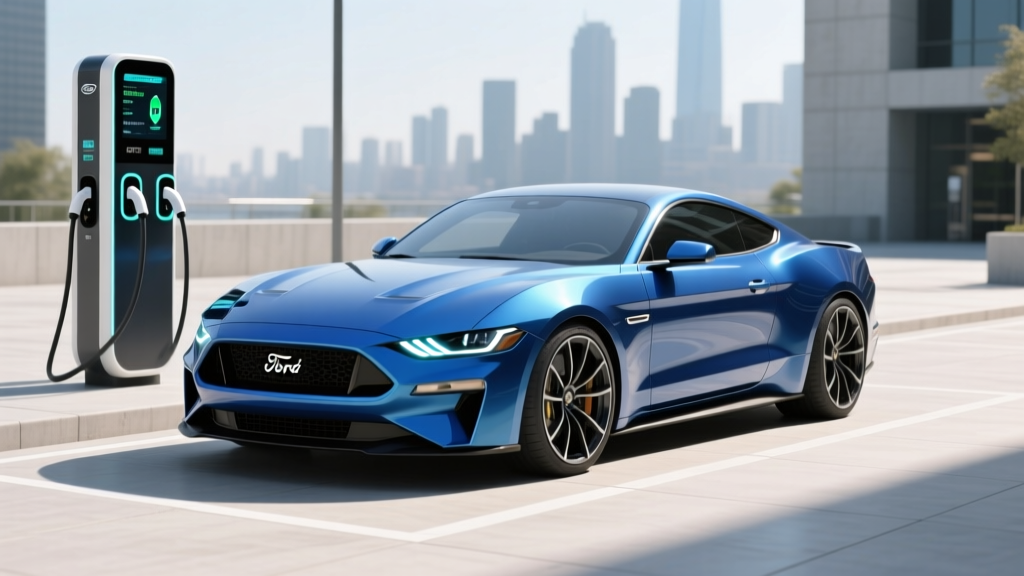
The 2026 Ford Mustang EV is an announced, next-generation electric coupe expected to ride on Ford's new flexible EV platform (TE1), replacing the discontinued Mustang Mach-E nameplate and finally wearing the Mustang badge on a dedicated electric sports coupe. Based on Ford's preliminary disclosures and platform targets, expect a starting MSRP near $50,000–$55,000, an EPA-estimated range of 280–350 miles depending on battery pack, and DC fast charging peaking around 180–250 kW. As of early 2026, Ford has not released final specs, trims, or an on-sale date — all figures below are estimates based on Ford's announced platform capabilities, supplier data, and competitive positioning against the Tesla Model 3 Performance and Dodge Charger Daytona EV. Treat every number as preliminary until Ford publishes official specifications.
What We Know About the 2026 Mustang EV Platform
Ford confirmed in late 2024 that its next wave of mid-size EVs would ride on a new TE1 platform — a dedicated, rear-wheel-drive-biased architecture using large cylindrical battery cells (similar in form factor to Tesla's 4680 cells) rather than the pouch cells in the outgoing Mach-E. This platform underpins the 2026 Mustang EV coupe as well as an upcoming electric Explorer for global markets.
The TE1 architecture is designed for:
- Battery chemistry: Likely NMC (nickel manganese cobalt) for higher energy density in a performance coupe application, though Ford has not confirmed LFP availability for a base trim.
- Battery capacity: Estimated 75–100 kWh usable, depending on standard-range and extended-range pack options.
- Drive layouts: RWD standard, AWD available on GT or performance trims.
- Voltage system: 400V architecture (not 800V), based on supplier disclosures — meaning peak charge rates will trail Hyundai/Kia's E-GMP vehicles but should remain competitive with Tesla.
The shift to cylindrical cells signals Ford's push to reduce per-kWh battery costs while improving thermal management — critical for a coupe marketed on performance and sustained highway driving.
Estimated Range, Efficiency & Real-World Expectations
Until the EPA certifies final numbers, here's what the platform targets and competitive benchmarks suggest:
| Spec | Estimated / Target | Notes |
|---|---|---|
| EPA Range (Standard Range RWD) | ~280–300 mi | Smaller pack, lower MSRP entry point |
| EPA Range (Extended Range RWD) | ~330–350 mi | Larger pack, highway cruiser |
| EPA Range (GT AWD) | ~260–290 mi | Performance tuning trades range for power |
| Battery Capacity (usable) | ~75–100 kWh | Two pack sizes expected |
| Efficiency | ~28–32 kWh/100 mi | Coupe aero + heavier battery vs sedan |
| 0–60 mph (GT AWD) | ~3.5–4.0 sec | Targeting Model 3 Performance territory |
| Horsepower (GT) | ~480–550 hp | Dual motor, performance tune |
Real-World Range Reality Check
EPA estimates assume mixed driving at moderate temperatures. In practice:
- Highway-only at 75 mph: Expect 15–20% less than EPA. A 330-mile EPA rating likely delivers 265–280 miles on a flat interstate run.
- Cold weather (below 30°F): Plan for 25–35% range loss without preconditioning, meaning that same 330-mile pack could net 215–250 miles in a Midwest winter.
- Mountain/terrain driving: Regenerative braking recovers some energy on descents, but sustained climbs will drain the pack faster than EPA predicts.
For buyers in northern climates or those who regularly drive 200+ miles one-way, the extended-range pack is strongly recommended.
Charging Speed & Infrastructure
Ford EVs now use the NACS (Tesla-style) charge port as standard, granting native access to the Tesla Supercharger network — the most reliable DC fast-charging network in the U.S. with over 25,000 stalls. This is a major advantage over CCS-equipped competitors that still rely on Electrify America or EVgo.
| Charging Level | Power | Estimated Speed | Use Case |
|---|---|---|---|
| Level 1 (120V household) | ~1.4 kW | ~3–4 mi/hr | Overnight trickle; emergency only |
| Level 2 (240V home) | ~11.5 kW (est.) | ~30–35 mi/hr | Daily home charging; full overnight refill |
| DC Fast Charge (peak) | ~180–250 kW | 10–80% in ~22–28 min (est.) | Road trips; ~150–180 mi added in 15 min |
Understanding kW vs kWh: kW (kilowatts) measures charging power — how fast energy flows into the battery. kWh (kilowatt-hours) measures battery capacity — how much energy the battery stores. A 250 kW charger doesn't deliver 250 kWh; it delivers energy at a rate of 250 kW that tapers as the battery fills.
The charge-curve reality: Peak kW ratings (e.g., "250 kW") apply only at low state-of-charge (roughly 10–30%) and optimal battery temperature. As the battery fills past 60–70%, charge speed drops significantly. A "10–80% in 25 minutes" claim is far more useful than a peak kW number — and even that assumes you've preconditioned the battery via the car's navigation-routed charging system.
How the 2026 Mustang EV Compares to the Gas Mustang & Rivals
The 2026 Mustang EV isn't just competing with other EVs — it's competing with the gas-powered Ford Mustang that loyalists have driven for 60 years. Here's how the ownership math and driving experience stack up:
| Factor | 2026 Mustang EV (Est.) | 2025 Mustang GT (Gas) | Tesla Model 3 Perf. |
|---|---|---|---|
| Base MSRP | ~$50,000–$55,000 | ~$44,000 | $54,990 |
| EPA Range / Tank | ~300–350 mi | ~340 mi (16 gal × 21 mpg) | 315 mi |
| 0–60 mph | ~3.5–4.0 sec (GT) | 4.1 sec (5.0L V8) | 2.9 sec |
| Fuel/Energy Cost per Mile | ~$0.04–$0.06 (home) | ~$0.14–$0.18 (gas) | ~$0.04–$0.06 (home) |
| Annual Maintenance | ~$300–$500 | ~$700–$1,000 | ~$300–$500 |
| Federal Tax Credit (§30D) | Up to $7,500 (if eligible) | $0 | Up to $7,500 (if eligible) |
| Drivetrain Sound | Synthetic / quiet | V8 rumble (real) | Quiet / synthetic |
Key takeaway: The gas Mustang GT is still cheaper to buy and offers an irreplaceable V8 experience. The EV version will cost more upfront but save $1,500–$2,500 per year in fuel and maintenance for a typical driver covering 12,000 miles. Over five years, those savings can offset $7,500–$12,500 of the price gap — before factoring in any tax credits.
Purchase Price, Tax Credits & 5-Year Cost Breakdown
The IRS §30D federal tax credit offers up to $7,500 for qualifying new EVs, but eligibility depends on:
- MSRP cap: Vans, SUVs, and pickup trucks: $80,000. Sedans and coupes: $55,000. If the Mustang EV is classified as a coupe, only trims below $55,000 will qualify.
- Buyer income cap: AGI must not exceed $150,000 (single), $225,000 (head of household), or $300,000 (joint).
- Battery sourcing: Increasing percentages of critical minerals and battery components must be sourced from the U.S. or free-trade-agreement countries. Ford's TE1 platform uses cylindrical cells — likely from a joint venture or CATL-licensed production — and sourcing details will determine credit eligibility per trim.
- Point-of-sale transfer: Eligible buyers can apply the credit as a down-payment reduction at the dealer rather than waiting for a tax refund.
Always confirm current-year eligibility on IRS.gov before purchasing — these rules have changed annually since 2023.
| Cost Category | Mustang EV (Est.) | Mustang GT (Gas) |
|---|---|---|
| Purchase Price (base) | $52,000 | $44,000 |
| Federal Tax Credit | –$7,500 (if eligible) | $0 |
| Effective Purchase Price | $44,500 | $44,000 |
| Fuel/Energy (5 yr, 60k mi) | $2,400 (home charging) | $9,000 (gas at $3.50/gal) |
| Maintenance (5 yr) | $2,000 | $4,500 |
| Insurance (5 yr avg.) | $10,500 | $8,500 |
| Total 5-Year Cost | ~$59,400 | ~$66,000 |
Insurance note: EVs typically cost 15–25% more to insure than comparable gas cars due to higher repair costs and battery replacement risk. Get quotes before buying — your mileage will vary significantly by state, age, and driving record.
Real-World Ownership: What First-Time EV Buyers Must Know
If you've never owned an EV, the 2026 Mustang EV will require adjustments to your routine. Here are the realities no marketing brochure will emphasize:
Home Charging Is Nearly Essential
Public charging works for road trips, but daily EV ownership lives or dies on home charging access. A Level 2 home charger (240V, ~40-amp circuit) adds roughly 30–35 miles of range per hour and can refill the Mustang EV overnight.
Level 2 installation costs:
- Charger hardware: $400–$700 (e.g., ChargePoint Home Flex, Emporia Vue)
- Electrician labor + permit: $800–$2,500 (varies by panel proximity and local code)
- Electrical panel upgrade (if needed): $1,500–$3,500 for a 200-amp service upgrade
- Total typical range: $1,200–$3,200 if your panel has capacity; up to $6,000+ if an upgrade is required
If you live in an apartment, condo, or street-parking situation without charging access, an EV — including the Mustang EV — will add friction to your life. Evaluate this honestly before purchasing.
Cold Climate? Plan for Range Loss
Lithium-ion batteries lose efficiency in cold weather, and cabin heating draws significant power. Buyers in Minnesota, Michigan, or New England should:
- Choose the extended-range pack for winter buffer
- Use preconditioning (scheduled departure heating while plugged in) to warm the battery and cabin before driving
- Expect 25–35% less range on sub-freeting days compared to the EPA sticker
Road Trips Require Planning (But Less Every Year)
With NACS access to the Supercharger network, Mustang EV owners will have the best public-charging experience available in the U.S. On a 500-mile trip, plan for one 25–30-minute stop to charge from 15% to 80%. The Tesla Supercharger network averages over 99% uptime, far ahead of third-party CCS networks.
Common Misconceptions Addressed
| Myth | Fact |
|---|---|
| "EV batteries need replacing every few years." | Modern EV batteries are warrantied for 8 years / 100,000 miles (minimum per federal mandate), and data shows most retain 85–90% capacity at 100k miles. Full replacement costs $12,000–$20,000 but is rarely needed within the first decade. |
| "The Mustang EV will be self-driving." | Ford's BlueCruise is a SAE Level 2 driver-assist system. It handles steering and speed on approved highways but requires the driver to remain attentive with eyes on the road. It is not autonomous driving. |
| "Charging takes too long for road trips." | A 10–80% DC fast charge in ~25 minutes aligns with a typical rest stop. Most drivers find this acceptable for trips under 600 miles with one stop. |
| "EVs are worse for the environment because of electricity generation." | Even on a coal-heavy U.S. grid, EVs produce fewer lifecycle emissions than gas cars. As the grid decarbonizes, the advantage grows. |
| "I'll save $7,500 no matter what." | The §30D credit has strict income, MSRP, and battery-sourcing requirements. Many buyers will qualify for a partial credit or none at all. Verify on IRS.gov before committing. |
Decision Framework: Should You Wait for the 2026 Mustang EV?
Choose the 2026 Mustang EV If:
- You want an electric performance coupe with Mustang heritage and styling
- You have home Level 2 charging (or can install it)
- Your daily commute is under 80 miles round-trip, with occasional 300-mile road trips
- You value low running costs and instant torque over V8 sound
- You're willing to wait for final specs, pricing, and delivery (likely late 2026 or 2027)
Look Elsewhere If:
- You need a car now — the Mustang EV is still announced, not on sale
- You want a proven V8 experience — buy the gas Mustang GT or Dark Horse
- You lack home charging and your area has limited public DC infrastructure
- You need a back seat that adults can use comfortably — consider the Tesla Model Y or Hyundai Ioniq 5 instead
- Budget is tight — the gas Mustang EcoBoost starts ~$15,000 less and is a capable daily driver
Frequently Asked Questions
When will the 2026 Mustang EV be available to order?
Ford has not announced an official on-sale date. Industry estimates point to late 2026 for initial production, with broader availability in early 2027. Reservations may open mid-2026.
Will the 2026 Mustang EV qualify for the $7,500 federal tax credit?
It depends on the trim MSRP (must be under $55,000 for a coupe), your income, and battery-sourcing compliance. Base and mid-range trims may qualify; GT or high-option trims likely won't. Check the IRS clean vehicle credit page for the latest sourcing requirements.
How does the Mustang EV compare to the Tesla Model 3 Performance?
The Model 3 Performance is faster to 60 mph (2.9 sec vs. an estimated 3.5–4.0 sec), has proven EPA range (315 mi), and is available now at ~$54,990. The Mustang EV will compete on styling, heritage, and potentially a lower starting price — but it remains unproven until independent testing validates Ford's claims.
Will the Mustang EV have a manual transmission or simulate one?
Ford has not confirmed a simulated manual gearbox. Hyundai's Ioniq 5 N offers a convincing simulated 8-speed dual-clutch experience, and Ford may follow suit for enthusiast appeal — but expect a single-speed reduction gear as the mechanical reality.
What battery warranty will Ford offer?
Federal law mandates a minimum 8-year/100,000-mile battery warranty covering defects and excessive capacity loss (typically defined as dropping below 70% state of health). Ford has historically met or slightly exceeded this minimum. Final terms for the TE1 platform are unconfirmed.
Can I charge a Mustang EV at Tesla Superchargers?
Yes. All new Ford EVs come with a native NACS charge port, meaning direct plug-in access to the Tesla Supercharger network without an adapter. This is the most significant charging-infrastructure advantage Ford has over CCS-equipped rivals.