Quick Verdict: A Compact Third Row With Outsized Practicality
The 2026 Tesla Model Y remains the best-selling electric vehicle in the United States, and its optional third-row seat continues to be one of the most debated configurations in the EV market. For 2026, Tesla carries over the Juniper-refreshed Model Y Long Range AWD with the 7-seat option, adding two rear-facing seats in the cargo area for a total capacity of seven. It is not a minivan replacement. It is a compact crossover that occasionally needs to haul extra passengers — and judged by that standard, the third row is a pragmatic, if tight, solution.
This review covers every number that matters: real-world range, charging curves, the usable limits of that third row, federal tax credit eligibility under current IRS §30D rules, and how the Model Y stacks up against the few three-row EV alternatives at its price point.
2026 Model Y Third Row: Full Spec Sheet
| Specification | 2026 Model Y Long Range AWD (7-Seat) |
|---|---|
| EPA Estimated Range | 315 miles |
| Real-World Range (highway/cold) | ~250–275 mi highway; ~220–240 mi in sub-30°F |
| Battery Capacity | ~78 kWh usable (NMC chemistry) |
| Drivetrain | Dual-motor AWD |
| Horsepower | 384 hp combined |
| 0–60 mph | 4.8 seconds |
| Peak DC Fast Charge | 250 kW |
| 10–80% DC Fast Charge | ~25 minutes |
| Level 2 Home Charging | 11.5 kW (~44 mi/hr) |
| Efficiency | 122 MPGe combined / 28 kWh/100 mi |
| Seating Capacity | 7 (2+3+2 layout) |
| Cargo (behind 3rd row) | 12.8 cu ft |
| Cargo (3rd row folded) | 34.3 cu ft |
| Cargo (all rear rows folded) | 72.1 cu ft |
| 3rd-Row Legroom | 26.5 inches |
| Base MSRP (Long Range AWD) | $48,990 |
| 7-Seat Option | +$2,500 |
| As-Tested (7-seat, no extras) | $51,490 |
| Battery & Drive Unit Warranty | 8 years / 120,000 miles |
| Basic Vehicle Warranty | 4 years / 50,000 miles |
Source: Tesla Model Y design studio and fueleconomy.gov. Specifications reflect the 2026 model year.
Range, Efficiency, and Real-World Expectations
The Model Y's NMC (nickel manganese cobalt) battery pack holds approximately 78 kWh of usable energy. Tesla's thermal management system — including a heat pump standard on all trims — helps mitigate cold-weather range loss compared to older EV designs, but physics still applies: expect a 15–25% range reduction in sustained winter driving below 30°F. City driving with frequent regenerative braking opportunities will push you closer to, or even slightly above, the EPA figure thanks to the Model Y's strong regen and efficient drivetrain.
Efficiency is rated at 122 MPGe combined (28 kWh per 100 miles). That is among the best in the midsize electric SUV segment and translates to roughly $0.04–$0.06 per mile on home charging at the national average electricity rate of $0.16/kWh, according to EIA data.
Charging Speed: DC Fast, Level 2, and the Curve Reality
| Charging Level | Power / Rate | Miles Added per Hour | Notes |
|---|---|---|---|
| Level 1 (120V outlet) | ~1.4 kW | ~5 mi/hr | Emergency/trickle only |
| Level 2 (240V, 48A) | 11.5 kW | ~44 mi/hr | Full charge in ~7–8 hours |
| DC Fast Charge | Peak 250 kW | ~1,000 mi/hr at peak | 10–80% in ~25 min |
The Model Y charges at up to 250 kW on Tesla Superchargers (V3 and V4 stalls) and on CCS-compatible networks via the built-in NACS port, which now has broad compatibility thanks to the industry-wide adoption of the North American Charging Standard. On a preconditioned battery at a V3 Supercharger, you will see peak speeds near 250 kW between roughly 10–30% state of charge. Above 50%, the charge curve tapers significantly — expect sustained rates of 80–120 kW through the 50–80% window.
This means the often-quoted "25-minute 10–80% charge" is accurate under ideal conditions (preconditioned battery, warm ambient temperature, V3 or V4 stall). In cold weather without adequate preconditioning, add 5–10 minutes. The Model Y's navigation system will automatically precondition the battery when a Supercharger is set as your destination — always use this feature for the fastest possible charge.
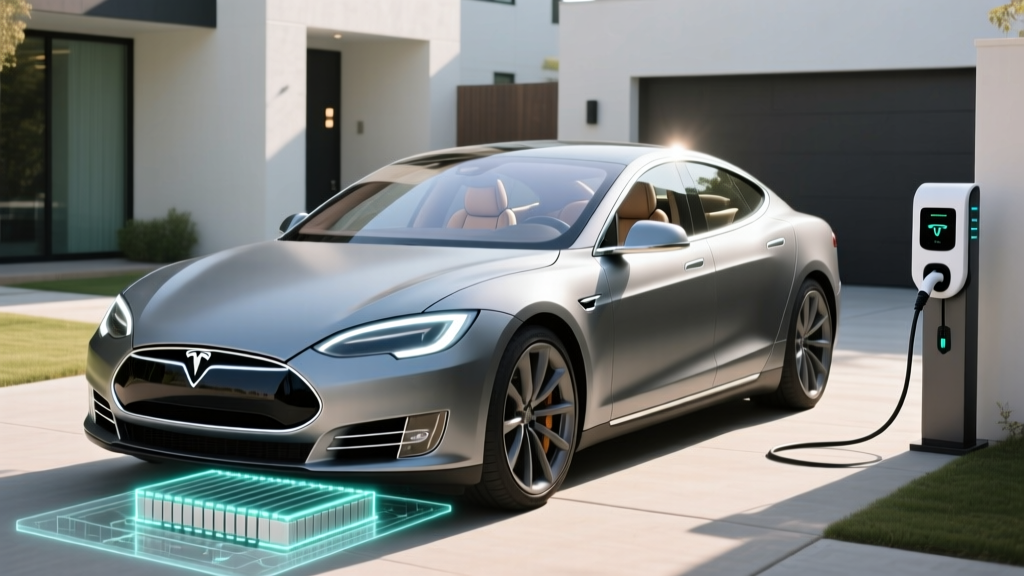
For home charging, a Wall Connector or equivalent Level 2 station at 48 amps delivers 11.5 kW, adding roughly 44 miles of range per hour. A full charge from near-empty takes about 7–8 hours. Most owners plug in nightly and wake up with a full battery, which is the core advantage of home Level 2 charging.
Third Row and Cargo: The Practical Limits
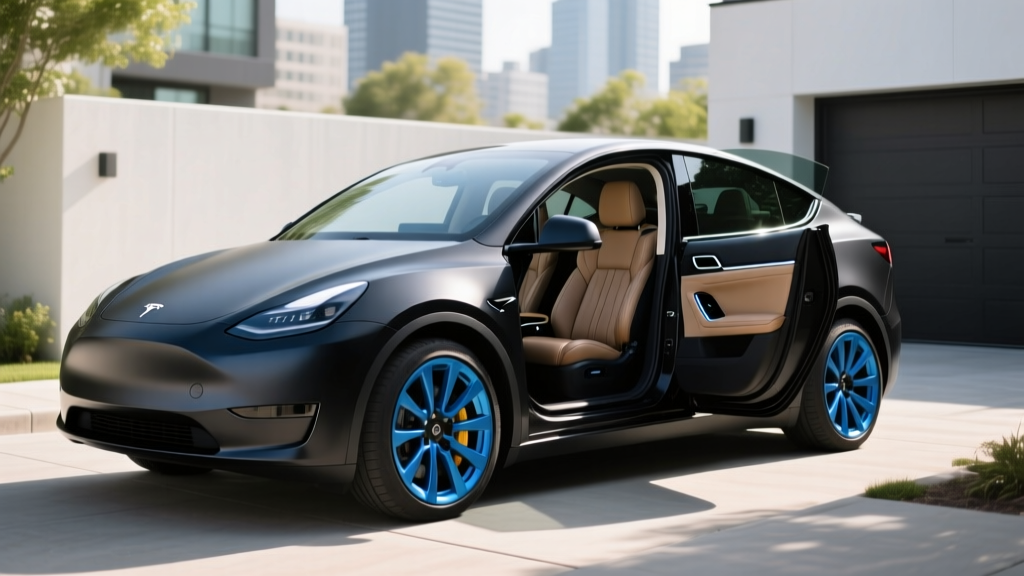
Let's address the keyword directly: the 2026 Model Y third row exists, and it works — but within strict boundaries. The two third-row seats are rear-facing, accessed by tilting and sliding the second-row bench forward. They are best suited for children up to about 5'2" tall or for very short trips with flexible adults.
Third-row measurements that matter:
- Legroom: 26.5 inches — roughly 4 inches less than a Kia EV9's third row
- Headroom: Adequate for children; adults will find the sloping roofline restrictive
- Cargo behind 3rd row: 12.8 cu ft — enough for a few grocery bags or two small carry-ons
- Cargo with 3rd row folded: 34.3 cu ft — competitive with 5-seat midsize SUVs
- Maximum cargo (all rear rows folded): 72.1 cu ft
The tradeoff is clear. With the third row deployed, you sacrifice most of the Model Y's already-moderate cargo area. This configuration works for school runs, playdates, or the occasional extra passengers on a short errand. It does not work for road trips with seven people and luggage. If you regularly need seven seats with usable cargo space, a larger vehicle like the Kia EV9 or a three-row minivan is a better fit.
One practical note: the third-row seats fold flat independently, giving you flexibility to carry five passengers plus expanded cargo — a configuration the 5-seat model cannot offer.
Performance, Tech, and Driver Assistance
The 2026 Model Y Long Range AWD produces 384 horsepower from its dual-motor setup, reaching 60 mph in 4.8 seconds. That is brisk for a family crossover and comfortably quicker than most gas-powered competitors in the segment. The Performance trim (5-seat only) drops that to 3.5 seconds with 510 hp, but it does not offer the third-row option.
Infotainment and tech highlights:
- 15.4-inch center touchscreen running Tesla's latest software with an AMD Ryzen processor
- Rear 8-inch touchscreen for second-row passengers (added with the Juniper refresh)
- Ventilated front seats, ambient lighting, and power-folding second row (Juniper updates)
- Over-the-air updates continuously add features post-purchase
- No Apple CarPlay or Android Auto — Tesla's native system handles navigation, media, and phone integration
Driver assistance — Autopilot and FSD:
Standard Autopilot includes traffic-aware cruise control and autosteer on highways. FSD Supervised adds automatic lane changes, traffic-light and stop-sign recognition, and enhanced navigation on city streets. Both systems are competitive with BlueCruise and Super Cruise in highway scenarios, though Tesla's camera-only approach (no LiDAR or radar) draws ongoing debate about performance in heavy rain or low-visibility conditions.
Pricing, Tax Credits, and Total Cost
| Trim / Configuration | MSRP | Est. Federal Credit | Effective Price |
|---|---|---|---|
| Long Range RWD (5-seat) | $44,990 | Up to $7,500* | ~$37,490 |
| Long Range AWD (5-seat) | $48,990 | Up to $7,500* | ~$41,490 |
| Long Range AWD (7-seat) | $51,490 | Up to $7,500* | ~$43,990 |
| Performance (5-seat only) | $52,490 | Up to $7,500* | ~$44,990 |
*Federal tax credit eligibility under IRS §30D depends on buyer income limits (AGI caps: $150K single / $225K head of household / $300K joint), vehicle MSRP caps ($80,000 for SUVs — all Model Y trims qualify), and battery critical-mineral and component sourcing requirements that change annually. The credit can be transferred to the dealer as a point-of-sale discount. Verify current-year eligibility with a tax professional before purchase.
The 7-seat Model Y Long Range AWD at $51,490 MSRP sits well under the $80,000 SUV MSRP cap for the §30D credit. Whether you receive the full $7,500 depends on your income and on Tesla's battery-sourcing compliance for the 2026 model year — Tesla has maintained credit eligibility for the Model Y in recent years, but the critical-mineral requirements tighten annually. Always confirm eligibility at the point of sale.
Five-year ownership cost context: According to EPA efficiency figures and national average electricity and gas prices, a Model Y owner charging primarily at home saves roughly $4,000–$5,500 in fuel costs over five years compared to a similarly sized gas SUV averaging 25 MPG combined. Insurance premiums for the Model Y tend to run 15–25% higher than segment averages — get quotes before purchasing.
How It Compares: Model Y 7-Seat vs. the Competition
The three-row electric SUV market has expanded, but direct competitors near the Model Y's price point remain limited:
| Attribute | 2026 Model Y LR AWD (7-seat) | 2026 Kia EV9 (Air/Land) | 2026 VW ID.4 (no 3rd row) |
|---|---|---|---|
| Starting Price (7-seat) | $51,490 | ~$56,900 | N/A (5-seat only) |
| EPA Range | 315 mi | ~270–304 mi | ~275 mi |
| 3rd-Row Legroom | 26.5 in | ~30.0 in | N/A |
| Cargo (behind 3rd) | 12.8 cu ft | ~20.0 cu ft | N/A |
| Peak DC Charge | 250 kW | ~236 kW | ~175 kW |
| Charging Network | Supercharger + NACS | NACS (Supercharger access) | NACS (Supercharger access) |
| 0–60 mph | 4.8 sec | ~7.7 sec (RWD) | ~7.7 sec |
Bottom line: The Model Y 7-seat is the most affordable and most efficient way to get seven seats in an EV. The Kia EV9 offers a far more usable third row and significantly more cargo space, but starts roughly $5,000 higher and sacrifices some range and charging speed. If third-row usability is your top priority, the EV9 wins. If you need seven seats only occasionally and value range, efficiency, and Supercharger access, the Model Y is the stronger pick.
Pros and Cons
Pros
- Lowest price for a 7-seat EV in the US market
- Class-leading 315-mile EPA range and efficiency
- Access to Tesla Supercharger network (most reliable DC network)
- Strong performance: 4.8-sec 0–60 with AWD
- Continuous OTA updates improve the vehicle post-purchase
- Heat pump standard for better cold-weather efficiency
Cons
- Third row is children-only; unusable for adults on longer trips
- Minimal cargo space (12.8 cu ft) with third row deployed
- No Apple CarPlay or Android Auto
- Insurance premiums above segment average
- Camera-only driver assist struggles in heavy rain/fog
- FSD Supervised remains expensive ($8,000) and is not autonomous
Who Should Buy the 2026 Model Y With the Third Row?
Choose the Model Y 7-seat if:
- You need extra seats 1–3 times per month for short trips (school carpool, playdates)
- Your third-row passengers will primarily be children under 12
- Range, charging speed, and efficiency are top priorities
- You want Supercharger network reliability for road trips
- You want the most affordable 7-seat EV available
Look elsewhere if:
- You regularly carry 6–7 adults or teenagers
- You need substantial cargo space with all seats in use
- You prefer traditional infotainment with CarPlay/Android Auto
- Third-row comfort on long trips is a priority (consider the Kia EV9 or a PHEV minivan)
Frequently Asked Questions
What is the real-world range of the 2026 Model Y 7-seat?
The EPA rates it at 315 miles. Expect 250–275 miles on highway road trips at 70–75 mph, and 220–240 miles in sustained cold weather below 30°F. City driving with regenerative braking can match or slightly exceed the EPA estimate.
How fast does the Model Y charge at home and on the road?
On a Level 2 home charger at 11.5 kW, you add about 44 miles per hour, with a full charge taking 7–8 hours. On a 250 kW DC fast charger (Tesla Supercharger V3/V4), 10–80% takes approximately 25 minutes with a preconditioned battery. Charge speed tapers significantly above 80% — plan to charge to 80% on road trips for the best time efficiency.
Does the 2026 Model Y qualify for the $7,500 federal EV tax credit?
The Model Y is eligible under IRS §30D, but your personal eligibility depends on income (AGI caps: $150K/$225K/$300K), and the vehicle must meet battery-sourcing requirements that tighten each year. The credit can be applied as a point-of-sale discount. Confirm current-year eligibility with your dealer and a tax professional before finalizing your purchase.
Is the third row practical for adults?
No. With 26.5 inches of legroom and a sloping roofline, the third row is realistically for children up to about 5'2" or for very brief trips with flexible adults. For regular adult use in the third row, the Kia EV9 or a three-row SUV/minivan is significantly more comfortable.
How does the Model Y 7-seat compare to the Kia EV9?
The Model Y is cheaper (~$51K vs ~$57K), more efficient (315 vs ~300 mi range), and charges faster (250 vs 236 kW peak). The EV9 has a far more usable third row (~30 in legroom), more cargo room behind the third row (~20 vs 12.8 cu ft), and a more traditional SUV driving feel. Choose the Model Y for efficiency and price; choose the EV9 for space and comfort.
What is the battery warranty on the Model Y?
Tesla covers the battery and drive unit for 8 years or 120,000 miles, whichever comes first, with a minimum 70% capacity retention guarantee. The basic vehicle warranty is 4 years or 50,000 miles.
Can I tow with the 7-seat Model Y?
Yes. The Model Y Long Range AWD has a maximum towing capacity of 3,500 pounds when properly equipped with the factory tow package. Towing will reduce range by approximately 30–50% depending on trailer weight and conditions.