The Verdict: Tesla's Most Affordable SUV Gets a Juniper Refresh
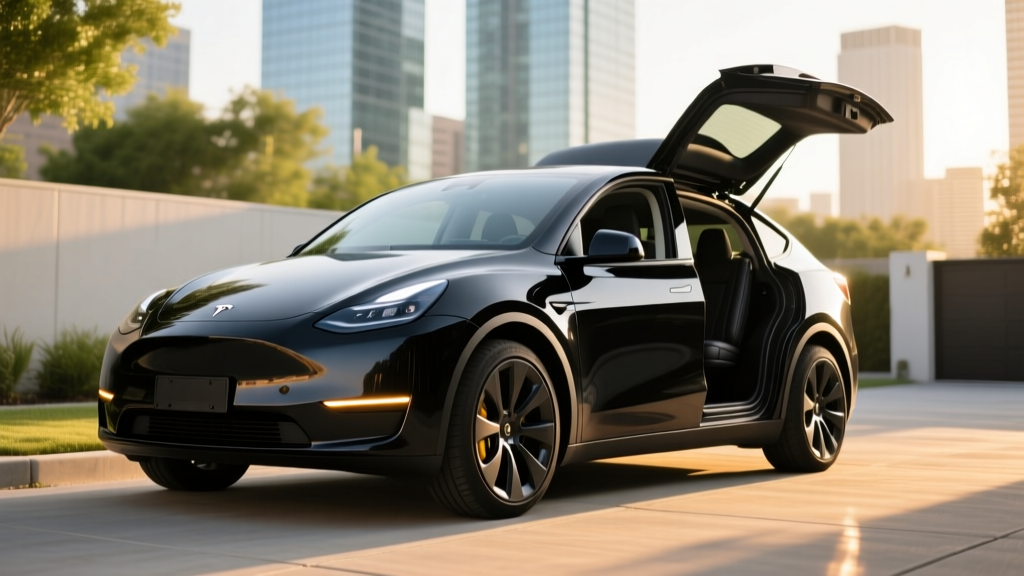
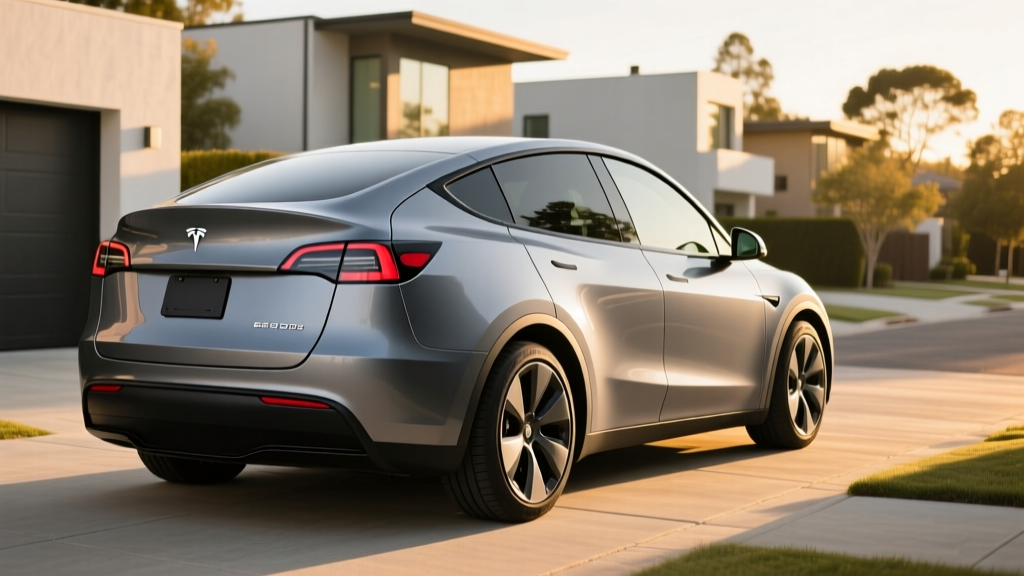
The 2026 Tesla Model Y Rear-Wheel Drive represents the entry point into Tesla's best-selling vehicle following the comprehensive "Juniper" redesign. With an EPA-estimated 321 miles of range, a starting MSRP of $44,990, and access to the Supercharger network now opened to NACS-native competitors, the RWD Model Y remains the default compact electric SUV for cost-conscious buyers who want maximum range per dollar. But with the Hyundai Ioniq 5, Ford Mustang Mach-E, and Chevrolet Equinox EV all undercutting it on price, the question is whether Tesla's efficiency advantage and software ecosystem still justify the premium.
| Spec | 2026 Model Y RWD |
|---|---|
| EPA Range | 321 miles |
| Battery (Usable) | ~60 kWh, LFP chemistry |
| Drivetrain | Rear-Wheel Drive (single motor) |
| Horsepower | 295 hp |
| 0–60 mph | 6.5 seconds |
| Peak DC Fast Charge | 250 kW |
| 10–80% DC Charge Time | ~25 minutes |
| Level 2 Home Charge | 11.5 kW (~44 mi/hr) |
| EPA Efficiency | 134 MPGe combined (25 kWh/100 mi) |
| Cargo (rear seats up) | 30.2 cu ft |
| Cargo (rear seats folded) | 72.1 cu ft |
| Base MSRP | $44,990 |
| Federal Tax Credit (§30D) | Up to $7,500 (eligibility varies) |
| Battery Warranty | 8 years / 100,000 miles |
Range & Efficiency: 321 Miles EPA, But What Happens in the Real World?
EPA Sticker: 321 miles
Real-World Highway (70 mph, 75°F): ~275–290 miles
Real-World Cold Weather (30°F, mixed driving): ~230–250 miles
Real-World City/Commuter (55 mph, mild): ~300–315 miles
The Model Y RWD uses a ~60 kWh usable lithium iron phosphate (LFP) battery pack. LFP chemistry trades some energy density for longer cycle life, better thermal stability, and lower cost — which is why Tesla can offer the RWD variant at a lower price while still delivering over 300 miles EPA. The Juniper refresh improved aerodynamics (drag coefficient reportedly near 0.22 Cd) and thermal management, contributing to the 134 MPGe combined rating per fueleconomy.gov.
Efficiency in practice is where the Model Y shines. At 25 kWh per 100 miles, it sips electrons more frugally than nearly every competing electric SUV. The Ioniq 5 RWD Standard Range achieves a similar MPGe figure but carries a smaller battery, while the Mach-E Select RWD sits at roughly 105 MPGe combined. This efficiency translates directly to lower charging costs and longer intervals between stops on road trips.
One caveat for LFP owners: cold weather hits harder than with NMC packs. Expect 25–30% range reduction in sustained sub-freezing temperatures, partly because LFP cells require more energy for thermal preconditioning. Using Tesla's scheduled departure feature and preconditioning while plugged in mitigates this substantially.
Charging Speed: 250 kW Peak With a Predictable Curve
| Charging Level | Power / Rate | Speed |
|---|---|---|
| Level 1 (120V household) | ~1.4 kW | ~5 miles per hour |
| Level 2 (240V, 48A Wall Connector) | 11.5 kW | ~44 miles per hour |
| DC Fast Charge (V3 Supercharger) | Peak 250 kW | 10–80% in ~25 min |
| DC Fast Charge (V4 Supercharger) | Peak 250 kW | 10–80% in ~25 min |
Tesla rates the Model Y RWD at a peak 250 kW on DC fast charging. In real-world testing at V3 Superchargers, the pack ramps quickly to ~240–250 kW between 5–15% state of charge, then begins a gradual taper. By 50% SoC, expect roughly 150–170 kW; by 80%, the rate drops to approximately 60–70 kW. The 10–80% session typically completes in 24–27 minutes when the battery is properly preconditioned (which the navigation system triggers automatically when you route to a Supercharger).
For home charging, Tesla's Gen 2 Wall Connector on a 60-amp circuit delivers 11.5 kW (48 amps continuous). That replenishes the ~60 kWh pack from 10% to full in roughly 5.5 hours — easily overnight for any commuter. If your home electrical panel only supports a 40-amp circuit (32 amps continuous), you'll see about 7.7 kW, or roughly 30 miles per hour of charging. Most daily driving requires far less; the average American drives 37 miles per day, which the Model Y RWD replaces in under an hour on Level 2.
LFP batteries tolerate daily charging to 100% better than NMC packs, and Tesla explicitly recommends setting the charge limit to 100% for LFD-equipped vehicles at least once per week for cell balancing. This is a meaningful ownership advantage — no need to baby the battery at 80% for daily use.
Performance & Driving Dynamics
The single rear-mounted motor produces 295 horsepower and propels the Model Y RWD from 0–60 mph in 6.5 seconds. That's adequate for highway merging and passing but noticeably less urgent than the Long Range AWD (5.0 seconds) or Performance variant (3.5 seconds). For most commuters and families, the RWD's torque delivery — instant and linear, as with all EVs — feels more than sufficient in daily driving.
Ride quality improved substantially with the Juniper update. Tesla retuned the suspension, added acoustic laminated glass, and improved seat cushioning. The result is a noticeably quieter, more compliant cabin at highway speeds compared to the pre-2025 Model Y. The steering remains precise if somewhat numb, and the low center of gravity keeps body roll well-controlled through corners.
Regenerative braking is strong and consistent. Tesla removed the adjustable regen setting several years ago, so one-pedal driving is the default experience. Most owners adapt within a week and rarely touch the friction brake pedal in normal driving.
Interior, Tech & Driver Assistance
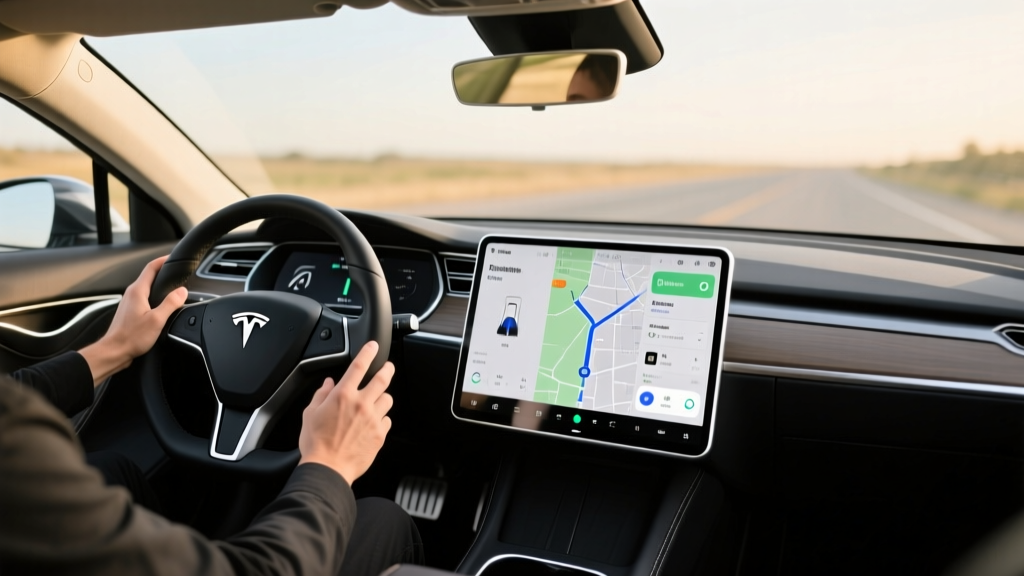
The Juniper interior is sparser than ever — a single 15.4-inch center touchscreen handles all infotainment, climate, and vehicle controls. There is no instrument cluster; speed and navigation appear on the main display. A new 8-inch rear touchscreen gives back-seat passengers climate and media control. The minimalist approach polarizes: some buyers love the clean aesthetic, others miss physical buttons for volume and temperature.
Notable tech features:
- Tesla Autopilot (Level 2 SAE driver assist) with Traffic-Aware Cruise Control and Autosteer included standard
- Full Self-Driving (Supervised) available as a $8,000 add-on or $99/month subscription — still requires active driver supervision at all times
- Native NACS charge port with access to 6,000+ Tesla Supercharger stalls nationwide
- Over-the-air software updates that regularly add features and refinements
- Sentry Mode dashcam surveillance, Dog Mode cabin climate, and Camp Mode
- HEPA air filtration with Bioweapon Defense Mode
SAE Automation Level: Tesla Autopilot and FSD (Supervised) are Level 2 driver-assistance systems. The driver must keep hands on the wheel and eyes on the road at all times. These systems do not make the vehicle self-driving. Only Level 4 services like Waymo operate without a human driver in defined operational domains.
Notable drawbacks: No physical buttons or stalks (turn signals are now on the steering wheel face, a controversial Juniper change). The panoramic glass roof lacks a shade and can make the cabin feel warm in direct summer sun. Rear-seat headroom is tighter than in the Ioniq 5 or Equinox EV due to the sloping roofline. The absence of Apple CarPlay and Android Auto remains a dealbreaker for some buyers, though Tesla's native navigation and media apps are robust.
Pricing, Tax Credits & Ownership Cost
| Item | Amount |
|---|---|
| Base MSRP (RWD) | $44,990 |
| Destination Fee | $1,390 |
| Typical As-Tested (w/ FSD subscription, no add-ons) | $46,380 |
| Federal Tax Credit (§30D, if eligible) | Up to $7,500 |
| Effective Price After Max Credit | ~$38,880 |
Federal tax credit eligibility under IRS §30D depends on several factors that change periodically:
- MSRP Cap: SUVs must have a base MSRP under $80,000 — the Model Y RWD clears this easily
- Buyer Income Cap: Modified AGI must not exceed $150,000 (single), $225,000 (head of household), or $300,000 (joint filers)
- Battery Sourcing: Critical minerals and battery components must meet escalating domestic-content thresholds; Tesla sources some LFP cells from CATL (China), which may affect partial credit eligibility — check the latest fueleconomy.gov credit lookup before purchasing
- Point-of-Sale Transfer: Eligible buyers can transfer the credit to the dealer at purchase, reducing the out-of-pocket price immediately rather than waiting for a tax refund
The Model Y's 5-year total cost of ownership benefits from low electricity costs (~$0.13/kWh national average means roughly $3.25 per 100 miles driven vs. $12–14 for a comparable gas SUV), minimal maintenance (no oil changes, infrequent brake pad replacement thanks to regen), and strong resale values. Insurance premiums, however, tend to run 15–25% higher than comparable non-Tesla SUVs — get a quote before committing.
How It Compares: Model Y RWD vs. Key Rivals
| Spec | 2026 Model Y RWD | 2026 Ioniq 5 RWD Std Range | 2026 Mach-E Select RWD |
|---|---|---|---|
| EPA Range | 321 mi | 220 mi | 250 mi |
| Battery | ~60 kWh LFP | 58 kWh NMC | 72 kWh NMC |
| 0–60 mph | 6.5 sec | 7.4 sec | 6.3 sec |
| Peak DC Charge | 250 kW | 240 kW | 150 kW |
| 10–80% Time | ~25 min | ~18 min | ~38 min |
| Base MSRP | $44,990 | $42,600 | $42,995 |
| Cargo (behind rear seats) | 30.2 cu ft | 27.2 cu ft | 29.7 cu ft |
| MPGe Combined | 134 | 117 | 105 |
The Model Y RWD wins decisively on range and efficiency. The Ioniq 5 counters with faster peak charging (its 800V architecture enables a blistering 10–80% in ~18 minutes), more distinctive styling, and physical controls. The Mach-E offers a more traditional crossover feel and Ford dealer service access but trails significantly on charging speed and efficiency.
Choose the Model Y RWD if: You prioritize maximum range, best-in-class efficiency, Supercharger network access, and Tesla's software ecosystem.
Choose the Ioniq 5 if: You want the fastest DC charging, a more distinctive design, physical buttons, and a lower starting price — and you don't mind less range.
Choose the Mach-E if: You prefer a traditional dealership experience, want BlueCruise hands-free highway driving, and value a more car-like driving position.
Who Should Buy the 2026 Model Y RWD?
This variant is ideal for:
- Commuters driving 30–80 miles daily who can charge at home overnight — the 321-mile range means charging just 2–3 times per week even without home charging
- Small families who need cargo versatility (72.1 cu ft with seats folded handles strollers, bikes, and Costco runs easily) but don't require AWD
- Road-trippers who value the Supercharger network's reliability and density for long-distance travel
- Cost-optimizers who want the most range per dollar in the compact electric SUV segment
This variant is not ideal for buyers in heavy snow regions (RWD with winter tires is workable but AWD is preferable), those who tow frequently (1,500-lb towing capacity is limited), or anyone who demands Apple CarPlay or physical climate controls.
Pros & Cons at a Glance
Pros
- Class-leading 321-mile EPA range
- Best-in-segment efficiency (134 MPGe)
- Supercharger network access with NACS native port
- LFP battery tolerates daily 100% charging
- Strong OTA update pipeline adds features over time
- Juniper refresh improved ride and cabin quietness
- Spacious cargo area with flat floor
Cons
- No physical buttons or stalks — steep learning curve
- Turn signals on steering wheel face are unintuitive for many
- No Apple CarPlay or Android Auto
- Rear headroom limited by coupe-like roofline
- Insurance premiums above segment average
- LFP battery loses more range in extreme cold vs. NMC
- FSD remains Level 2 despite the name
Frequently Asked Questions
What is the real-world range of the 2026 Model Y RWD?
Expect approximately 275–290 miles on the highway at 70 mph in mild weather, and 300+ miles in city commuting. In sustained cold (below 30°F), plan for 230–250 miles. The EPA rates it at 321 miles, which is achievable in optimal conditions at moderate speeds.
How fast does it charge at home and on the road?
On a Level 2 home charger (11.5 kW), you'll add roughly 44 miles per hour, fully replenishing overnight. At a Tesla V3 or V4 Supercharger, the pack peaks at 250 kW and charges from 10–80% in about 25 minutes with proper preconditioning.
Does the 2026 Model Y RWD qualify for the $7,500 federal tax credit?
It can, but eligibility depends on your income (AGI caps apply), the vehicle's battery component and critical mineral sourcing at the time of purchase, and MSRP (the Model Y clears the $80,000 SUV cap). Check the latest eligibility on fueleconomy.gov and consult a tax professional. The credit can be transferred at point of sale to reduce your purchase price immediately.
Is the Model Y RWD worth it vs. the Long Range AWD?
If you live in a mild climate, don't need AWD, and want the lowest price and longest range, the RWD is the smarter buy. The Long Range AWD ($49,990) adds dual motors, all-wheel drive, and a 5.0-second 0–60 time, but costs $5,000 more and sacrifices ~20 miles of EPA range. For snow-belt buyers, the AWD premium is justified.
How long will the LFP battery last?
LFP cells are rated for 3,000+ full charge cycles before degrading to 80% capacity. At 321 miles per cycle, that equates to nearly 1 million theoretical miles — far more than the car's chassis will last. Tesla warranties the battery for 8 years or 100,000 miles (whichever comes first) against degradation below 70% capacity.
What are the biggest drawbacks of the Juniper Model Y?
The removal of turn-signal stalks (replaced by steering-wheel-face buttons) is the most controversial change and takes genuine adaptation. The lack of any physical climate or volume controls frustrates some drivers. And the glass roof without a shade can make the cabin warm in Southern summers — aftermarket shades are a common owner purchase.