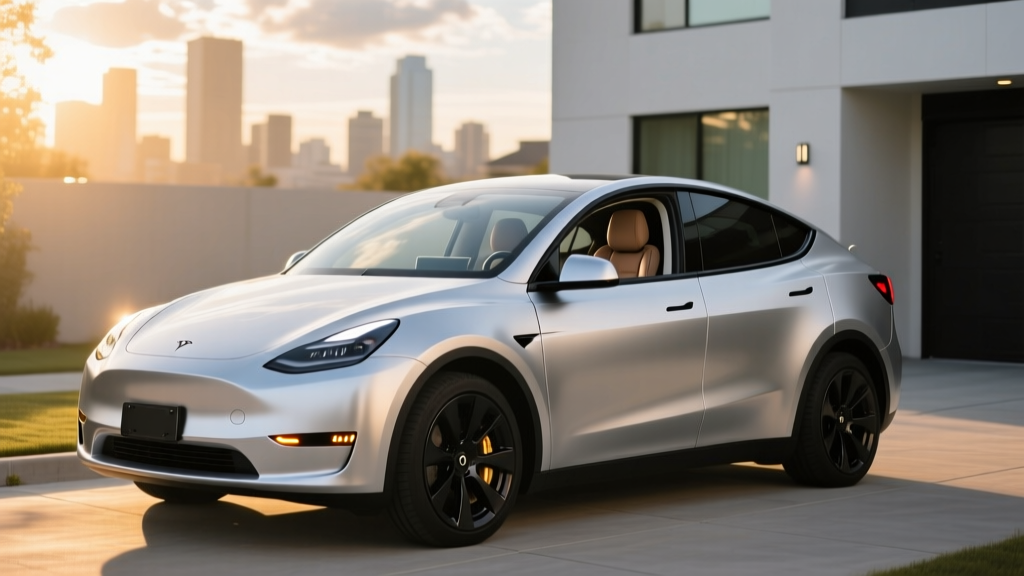
The Tesla Model Y entered 2026 with its most significant refresh since launch — internally codenamed Juniper — bringing updated styling, a revised interior, improved suspension tuning, and the debut of the Quicksilver exterior colorway. The 2026 Tesla Model Y Quicksilver isn't a separate trim; it's a premium metallic paint option available across the Long Range AWD and Performance variants. But beneath that striking silver-blue finish lies a substantially reworked crossover that addresses many of the previous generation's complaints around ride quality, cabin noise, and charging infrastructure compatibility.
We've spent time with the 2026 Model Y Long Range AWD in Quicksilver to break down exactly what buyers need to know: real-world range versus EPA estimates, charging speeds across DC fast-charging and home Level 2, federal tax credit eligibility under current IRS §30D rules, and how it stacks up against the Hyundai Ioniq 5, Ford Mustang Mach-E, and Kia EV6.
2026 Model Y Quicksilver: Key Specs at a Glance
| Specification | Value |
|---|---|
| EPA Estimated Range | 320 miles |
| Battery Capacity (Usable) | ~78 kWh (NMC chemistry) |
| Max DC Fast Charge Rate | 250 kW (peak) |
| 10–80% DC Fast Charge Time | ~25 minutes |
| Level 2 Home Charging | 11.5 kW (~44 miles/hr) |
| 0–60 mph | 4.8 seconds |
| Horsepower | 384 hp (dual motor) |
| Drivetrain | AWD (dual motor) |
| Efficiency | 122 MPGe combined / 28 kWh/100mi |
| Cargo Volume (rear seats up) | 30.2 cu ft |
| Cargo Volume (rear seats folded) | 72.1 cu ft |
| Rear Legroom | 41.6 inches |
| Base MSRP (Long Range AWD) | $48,990 |
| Quicksilver Paint Add-On | $2,000 |
| Battery & Drive Unit Warranty | 8 years / 120,000 miles |
Real-World Range: What to Actually Expect
Real-World Highway (70–75 mph, moderate temps): ~265–280 miles
Real-World Cold Weather (below 32°F, mixed driving): ~220–250 miles
City/Commuter (regenerative braking heavy): ~290–310 miles
The EPA's 320-mile estimate for the 2026 Model Y Long Range AWD represents a modest bump over the pre-refresh model, thanks in part to improved aerodynamics and a slightly larger usable battery buffer. But as with every EV, the sticker number tells only part of the story.
In real-world highway testing at sustained speeds of 70–75 mph in 65–75°F conditions, expect roughly 265–280 miles before needing to charge. The Model Y's efficiency shines in stop-and-go city driving where regenerative braking recaptures energy — here, approaching 300+ miles is realistic. The biggest range killer remains cold weather. Lithium-ion NMC batteries lose efficiency in freezing temperatures, and cabin heating draws significant power even with the standard heat pump. Budget for a 20–30% range reduction in sustained sub-freezing conditions.
The Juniper refresh also improved thermal management preconditioning. When you navigate to a Supercharger, the battery now preheats more aggressively, which helps preserve range in cold climates and improves charging speeds upon arrival. According to fueleconomy.gov, the combined MPGe rating sits at 122, which translates to roughly 28 kWh per 100 miles — competitive with the segment.
Charging Speed: DC Fast, Level 2, and the NACS Advantage
Tesla's proprietary NACS (North American Charging Standard) connector is now the de facto industry standard, with Ford, GM, Rivian, and others adopting it through 2025–2026. For the 2026 Model Y, this means seamless access to the entire Supercharger network — still the most reliable DC fast-charging infrastructure in North America.
| Charging Level | Power (kW) | Speed / Time |
|---|---|---|
| Level 1 (120V household) | ~1.4 kW | ~3–4 miles per hour |
| Level 2 (240V home, 48A) | 11.5 kW | ~44 miles per hour |
| DC Fast Charge (Supercharger V3/V4) | 250 kW peak | 10–80% in ~25 min |
| DC Fast Charge (CCS adapter, 3rd-party) | ~150–175 kW typical | 10–80% in ~35–40 min |
The 250 kW peak DC fast-charge rate is not sustained across the entire session. The Model Y's charge curve is aggressive in the 10–50% state-of-charge window, pulling close to peak rates, then progressively tapering above 60% and sharply above 80%. This is standard behavior for NMC chemistry to protect battery longevity. Plan your road-trip stops around 10–80% charges for the fastest throughput; charging from 80–100% can add another 20+ minutes and is best reserved for overnight at home.
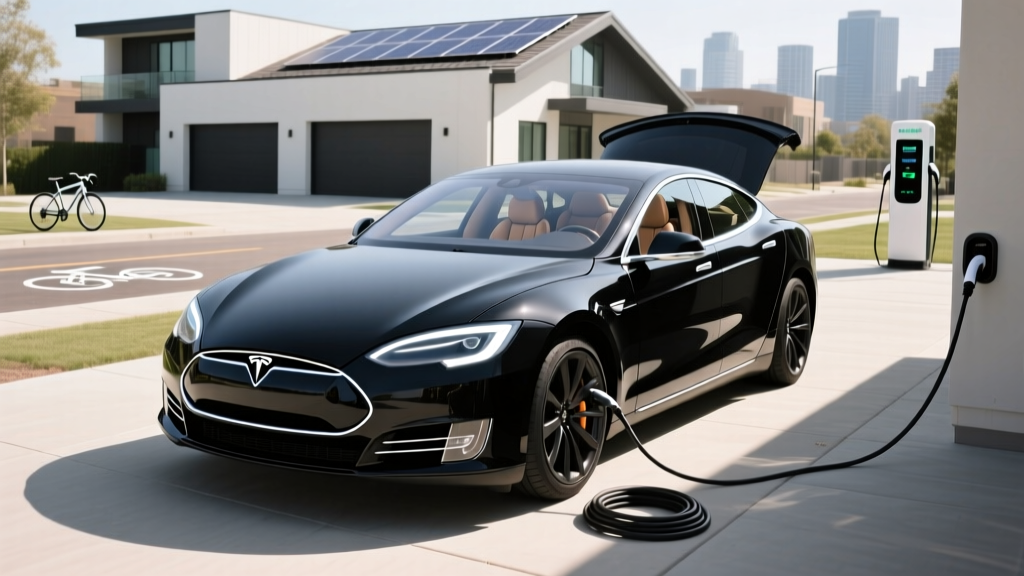
At home on a 240V Level 2 wall connector (48-amp circuit, requiring a 60-amp breaker), the Model Y adds roughly 44 miles of range per hour. A full overnight charge from 20% to 80% takes approximately 5–6 hours — easily managed while you sleep. Installation costs for a home Level 2 setup typically range from $500 to $2,000 depending on panel capacity and run length; homes with older 100-amp electrical panels may need a $1,500–$3,000 panel upgrade.
Performance, Ride Quality, and the Juniper Difference
The 2026 Model Y Long Range AWD delivers 384 horsepower from its dual-motor setup, achieving a 4.8-second 0–60 mph time. That's brisk for a family crossover and more than adequate for highway merging and passing. The Performance variant shaves that to roughly 3.5 seconds, but at the cost of some range and ride comfort.
Where the Juniper refresh earns its keep is in ride quality. Tesla reworked the suspension with frequency-selective dampers, added acoustic laminated glass across all windows, and improved sound deadening throughout the floor and firewall. The result is a noticeably quieter cabin at highway speeds and less harshness over expansion joints and potholes. It's still firm compared to a Hyundai Ioniq 5, but the gap has closed substantially.
Steering remains quick and precise, and the low center of gravity (battery pack under the floor) keeps body roll well-controlled. One-pedal driving via regenerative braking is intuitive after a brief adjustment period, and the updated traction control system handles wet and light snow conditions confidently with the standard all-season tires.
Interior, Tech, and Cargo Practicality
The 2026 Model Y's interior received a welcome overhaul. The minimalist ethos remains — a single 15.4-inch center touchscreen handles nearly all vehicle functions — but material quality has improved with softer-touch surfaces, ventilated front seats (finally standard), ambient lighting, and a rear-seat entertainment screen. The controversial yoke steering option has been dropped; a conventional round wheel is standard.
Tech highlights include:
- Tesla Autopilot (standard): Adaptive cruise control, lane-keeping assist, automatic emergency braking — SAE Level 2 driver assistance, requiring continuous driver supervision
- Full Self-Driving (Supervised) ($8,000 option or $99/month): Adds auto lane change, navigate on Autopilot, traffic light/stop sign recognition — still Level 2, not autonomous
- Over-the-air updates that regularly add features and improve existing ones
- Sentry Mode and dashcam recording using the vehicle's external cameras
- Dog Mode, Camp Mode, and Theater Mode for versatile stationary use
Cargo space remains a Model Y strong suit: 30.2 cubic feet behind the rear seats and 72.1 cubic feet with them folded — enough for a week's worth of family luggage or a Costco run without Tetris. The front trunk (frunk) adds a modest but useful 4.1 cubic feet for charging cables or a small bag. Rear legroom at 41.6 inches comfortably fits adults, and the panoramic glass roof (now with a power-retractable shade) keeps the cabin airy.
Pricing, Trims, and Federal Tax Credit Eligibility
The 2026 Model Y is offered in two primary trims, with the Quicksilver metallic paint available on both:
| Trim | Base MSRP | With Quicksilver Paint |
|---|---|---|
| Long Range AWD | $48,990 | $50,990 |
| Performance AWD | $53,990 | $55,990 |
The Quicksilver paint is a $2,000 premium — a multi-coat metallic that shifts between silver and pale blue depending on light conditions. It's eye-catching and has quickly become one of the most popular color choices since its introduction.
Federal Tax Credit (§30D) Eligibility: The 2026 Model Y Long Range AWD qualifies for up to $7,500 under the IRS §30D Clean Vehicle Credit, but eligibility is not automatic. Per IRS guidelines, buyers must meet all of the following:
- MSRP Cap: Vehicle MSRP must not exceed $80,000 for SUVs — the Model Y clears this easily
- Income Cap: Modified adjusted gross income must not exceed $150,000 (single), $225,000 (head of household), or $300,000 (joint filers)
- Battery Sourcing: A percentage of critical minerals and battery components must be sourced from the U.S. or free-trade-agreement partners — Tesla has progressively shifted supply chains to meet this, but verify the specific VIN's eligibility at fueleconomy.gov before purchasing
- Point-of-Sale Transfer: As of 2024, the credit can be transferred to the dealer at purchase, reducing your out-of-pocket cost immediately rather than waiting for tax filing
With the full $7,500 credit applied, the effective price of a Long Range AWD in Quicksilver drops to approximately $43,490 — a compelling value for a 320-mile AWD crossover with this level of tech and performance. Always consult a tax professional to confirm your personal eligibility.
Pros and Cons: Honest Assessment
Pros
- 320-mile EPA range; competitive for the segment
- Access to Tesla Supercharger network — the most reliable DC fast-charging system in North America
- Improved ride quality and cabin quietness with Juniper refresh
- Best-in-class cargo volume for a compact electric crossover
- Over-the-air updates keep the vehicle current post-purchase
- Federal tax credit eligible (up to $7,500 with income/sourcing requirements met)
- Strong resale value relative to EV segment average
Cons
- Touchscreen-dependent controls frustrate some drivers (no physical buttons for climate, mirrors, or glovebox)
- 250 kW peak charge rate trails the Hyundai Ioniq 5 and Kia EV6 (both 800V architecture, ~350 kW capable)
- FSD (Supervised) remains a $8,000 upsell for Level 2 functionality that competitors include at lower cost
- Quicksilver paint adds $2,000 to an already premium-priced vehicle
- No Apple CarPlay or Android Auto — Tesla's proprietary infotainment only
- Rear visibility is limited; relies heavily on backup camera
How It Compares: Model Y Quicksilver vs. Key Rivals
The compact electric crossover segment is crowded in 2026. Here's how the Model Y Long Range AWD stacks up against its three closest competitors:
| Spec | Tesla Model Y LR AWD | Hyundai Ioniq 5 Long Range AWD | Ford Mustang Mach-E ER AWD | Kia EV6 Long Range AWD |
|---|---|---|---|---|
| EPA Range | 320 mi | 290 mi | 305 mi | 282 mi |
| Battery (usable kWh) | ~78 | ~77.4 | ~88 | ~77.4 |
| Peak DC Charge kW | 250 | 350 | 150 | 350 |
| 10–80% Time | ~25 min | ~18 min | ~38 min | ~18 min |
| 0–60 mph | 4.8 sec | 5.1 sec | 5.6 sec | 5.0 sec |
| Cargo (rear up, cu ft) | 30.2 | 27.2 | 29.7 | 24.4 |
| Base MSRP (AWD) | $48,990 | $49,500 | $48,000 | $48,700 |
The Model Y wins on range and cargo space. The Ioniq 5 and EV6 dominate on DC fast-charging speed thanks to their 800-volt architecture — a meaningful advantage on road trips if you frequently charge at 350 kW-capable stations. The Mach-E trails on charging speed but offers a more traditional interior layout with physical controls and Apple CarPlay. Your priority — range, charging speed, cargo, or cabin familiarity — will determine the right pick.
Who Should Buy the 2026 Model Y Quicksilver?
Choose the Model Y Quicksilver if:
- You prioritize maximum range and cargo space in a compact electric crossover
- You live near or frequently travel on routes with Tesla Supercharger coverage
- You value OTA software updates and a tech-forward ownership experience
- You want a distinctive, premium exterior color that stands out from standard white/black/silver
- You qualify for the full §30D tax credit and want the most range per dollar after incentives
Look elsewhere if:
- Fastest possible DC charging is your top priority (consider Ioniq 5 or EV6)
- You need Apple CarPlay/Android Auto integration
- You prefer physical buttons and knobs over touchscreen-only controls
- You want a more plush, luxury-oriented ride (consider the BMW iX or Genesis GV70 Electrified)
Frequently Asked Questions
What is the real-world range of the 2026 Tesla Model Y Quicksilver?
The EPA rates it at 320 miles, but real-world highway driving at 70–75 mph yields approximately 265–280 miles. Cold weather (below 32°F) can reduce that to 220–250 miles. City driving with heavy regenerative braking can approach 290–310 miles.
How fast does the 2026 Model Y charge at home and on the road?
At home on a 240V Level 2 charger (48A), it adds about 44 miles of range per hour, or roughly 11.5 kW. On a Tesla Supercharger V3/V4, it peaks at 250 kW and charges from 10–80% in approximately 25 minutes. Using a CCS adapter at third-party stations, expect slower speeds of 150–175 kW typical.
Does the 2026 Model Y qualify for the $7,500 federal EV tax credit?
It can, but eligibility depends on your income (under $150K single / $300K joint), the vehicle's battery sourcing compliance, and MSRP (under $80K for SUVs — the Model Y qualifies). The credit can be applied at point of sale. Verify your specific VIN's eligibility at fueleconomy.gov and consult a tax professional.
Is the Quicksilver color worth the $2,000 premium?
That's subjective, but Quicksilver is one of Tesla's most visually striking paint options — a multi-coat metallic that shifts between silver and blue. It also tends to hold resale value slightly better than no-cost colors. If you plan to keep the vehicle 5+ years, the cost amortizes modestly. If resale appearance matters, it's a defensible choice.
Is Tesla Autopilot or FSD self-driving?
No. Both Autopilot (standard) and Full Self-Driving Supervised ($8,000 option) are SAE Level 2 driver-assistance systems. The driver must remain fully attentive, hands on or near the wheel, and ready to take over at any moment. True autonomous driving (Level 4) is currently only available via robotaxi services like Waymo in limited metro areas.
How does the Model Y's warranty compare?
Tesla covers the battery and drive units for 8 years or 120,000 miles (whichever comes first), with a guarantee of at least 70% battery capacity retention over that period. The basic vehicle limited warranty is 4 years or 50,000 miles. This is competitive with the segment; Hyundai and Kia offer 10-year/100,000-mile battery warranties, which is more generous.