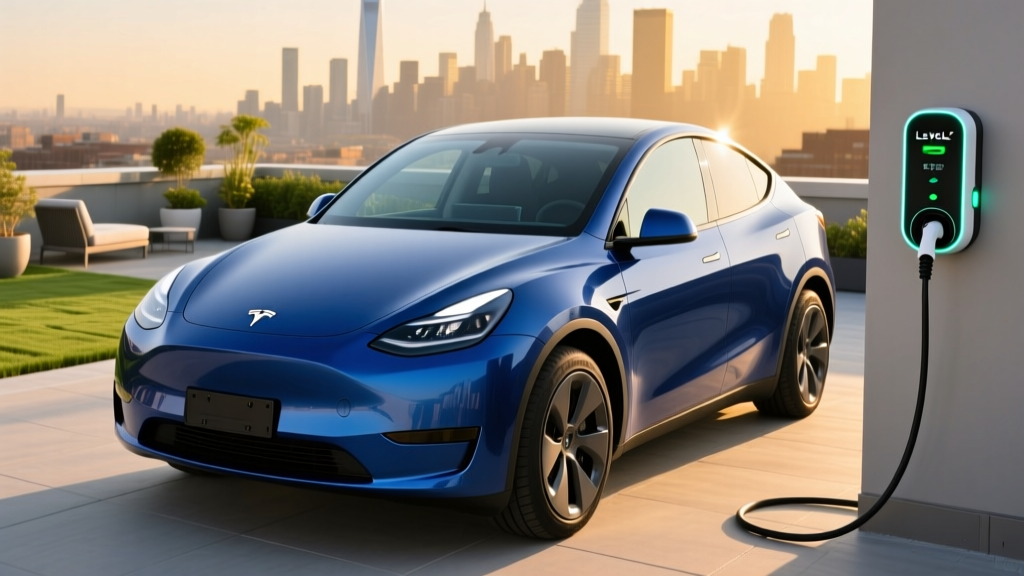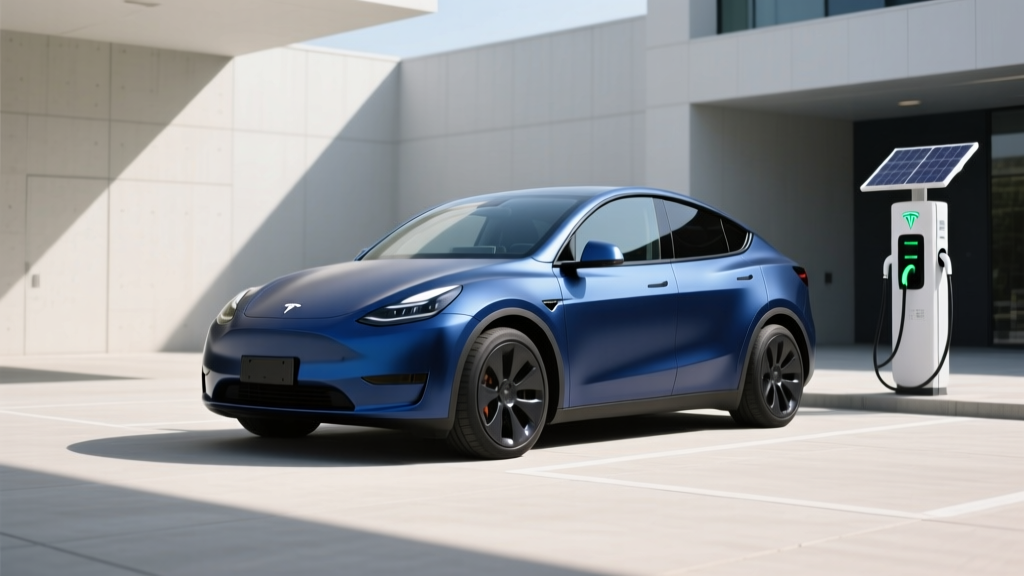
The Tesla Model Y remains the best-selling electric vehicle in the United States for good reason: it threads the needle between crossover practicality, Supercharger network access, and relative affordability. But with the refreshed "Juniper" generation now fully rolled out for the 2026 model year, buyers need current data — not recycled 2023 specs. This profile breaks down every dimension, range figure, charging curve reality, and tax-credit nuance you need before signing a purchase agreement.
2026 Tesla Model Y Dimensions and Exterior Footprint
The 2026 Model Y rides on the same platform as its predecessor but with subtle dimensional tweaks from the Juniper refresh that affect aerodynamics, ground clearance, and interior packaging. Here are the exact measurements buyers cross-shopping against the Hyundai Ioniq 5, Ford Mustang Mach-E, and Chevrolet Equinox EV need to know:
| Measurement | Value |
|---|---|
| Wheelbase | 113.8 in (2,890 mm) |
| Overall Length | 188.6 in (4,790 mm) |
| Overall Width (mirrors folded) | 77.9 in (1,978 mm) |
| Overall Width (mirrors extended) | 83.8 in (2,129 mm) |
| Overall Height | 63.9 in (1,624 mm) |
| Ground Clearance | 6.6 in (168 mm) |
| Curb Weight (Long Range AWD) | 4,398 lbs (1,995 kg) |
| Drag Coefficient (Cd) | 0.23 |
| Turning Circle | 39.4 ft (12.0 m) |
The 0.23 Cd is a meaningful improvement over the pre-refresh 0.25 figure and directly contributes to the Model Y's highway efficiency advantage over bluffier competitors like the Kia EV9 (Cd 0.27) or Rivian R1S (Cd 0.30). At 77.9 inches wide with mirrors folded, the Model Y will fit standard US single-car garage bays (typically 96 inches wide), but owners with tight older garages should measure before committing — the side mirrors are notably wide when deployed for highway visibility.
Interior Volume, Cargo, and Passenger Space
The Juniper refresh brought a reworked dashboard, ventilated front seats, and a rear-seat touchscreen, but the fundamental interior architecture — and its packaging trade-offs — remains. The Model Y's sloping roofline sacrifices some rear headroom versus boxier crossovers, while the absence of a transmission tunnel creates genuinely flat floor space.
| Measurement | Front | Second Row | Third Row (7-seat option) |
|---|---|---|---|
| Headroom | 41.0 in | 38.7 in | 33.5 in |
| Legroom | 41.8 in | 37.3 in | 26.5 in |
| Shoulder Room | 58.4 in | 56.1 in | 40.6 in |
| Hip Room | 53.8 in | 51.3 in | 38.0 in |
Cargo volume remains a Model Y strong suit:
- Behind third row (7-seat): 12.8 cu ft
- Behind second row (5-seat): 30.2 cu ft
- Second row folded (5-seat): 72.1 cu ft
- Front trunk (frunk): 4.1 cu ft
- Sub-trunk storage: 2.8 cu ft
The 72.1 cu ft maximum cargo figure competes directly with the Toyota RAV4 (69.8 cu ft gas) and edges past the Ford Mustang Mach-E (59.7 cu ft). However, the sloping roofline means tall items like standing floor lamps or bicycle boxes require strategic angling — the Ioniq 5's boxier hatch is easier to load vertically. The optional third row is best understood as child-only seating: 26.5 inches of legroom makes it unsuitable for adults on anything beyond a short school run.
Battery, Range, and Real-World Efficiency
The 2026 Model Y is offered in three primary trims in the US market, each with distinct battery chemistry and range profiles. Tesla does not publish official battery capacity figures, but teardown data and EPA test documentation confirm the following:
| Trim | Battery Chemistry | Usable Capacity | EPA Range | MPGe (City/Hwy/Combined) | kWh/100 mi |
|---|---|---|---|---|---|
| Long Range RWD | NMC (Nickel Manganese Cobalt) | ~75 kWh | 320 mi | 127 / 112 / 120 | 28 |
| Long Range AWD | NMC | ~75 kWh | 307 mi | 122 / 108 / 115 | 29 |
| Performance AWD | NMC | ~75 kWh | 285 mi | 115 / 100 / 108 | 31 |
The EPA 320-mile figure for the Long Range RWD is measured on a blended city/highway cycle. In sustained 75 mph highway driving at 70°F, expect approximately 270-285 miles before hitting 10% SoC. In cold weather (below 32°F), range drops to roughly 230-255 miles due to cabin heating demands and increased battery internal resistance — even with the Model Y's standard heat pump. City driving with heavy regenerative braking can actually exceed the EPA figure, sometimes reaching 330+ miles in mild weather stop-and-go traffic.
Sources: EPA Fuel Economy, real-world highway testing.
The NMC chemistry in all US-spec 2026 Model Y trims prioritizes energy density over cycle life. Tesla's battery management system (BMS) buffers approximately 4-5 kWh at the top and bottom of the pack to prevent deep cycling, which is why the "usable" capacity is lower than the gross cell capacity. For buyers seeking LFP chemistry (which supports routine 100% charging without degradation concern), the US Model Y lineup no longer offers it — that option was limited to prior-year Standard Range RWD models that have been discontinued.
Charging Speed: DC Fast Charge, Level 2, and Level 1
Charging speed is where the 2026 Model Y's Juniper refresh delivers measurable gains. Tesla upgraded the thermal management system to sustain higher charge rates longer on the DC fast-charging curve.
| Charging Method | Max Power | Rate / Time | Connector |
|---|---|---|---|
| DC Fast Charge (V4 Supercharger) | 250 kW peak | 10-80% in ~22 min; 175 mi in 15 min | NACS (native) |
| DC Fast Charge (CCS adapter) | ~175 kW peak | 10-80% in ~30 min | CCS1 via Tesla adapter |
| Level 2 (Tesla Wall Connector, 48A) | 11.5 kW | ~44 mi/hr; 0-100% in ~7 hr | NACS |
| Level 2 (standard 240V/32A mobile) | 7.7 kW | ~30 mi/hr; 0-100% in ~10 hr | NACS |
| Level 1 (120V household) | ~1.4 kW | ~3-5 mi/hr | NACS |
Charging curve reality: The 250 kW peak is not sustained. The Model Y holds approximately 230-250 kW from 10% to roughly 35% SoC, then tapers progressively. From 50% to 80%, expect roughly 100-130 kW. Above 80%, charging slows dramatically to protect the NMC cells — a 80-100% top-off can take as long as the 10-80% session. This is physics, not a Tesla-specific flaw; all NMC packs behave similarly. For road trips, plan stops around the 10-80% window and skip the final 20% unless you're at your overnight destination.
The native NACS port is a significant 2026 advantage. Every Tesla Supercharger stall in North America works natively, and the expanding network of third-party NACS chargers (Electrify America, EVgo, ChargePoint) now supports the Model Y without adapters. The Tesla Supercharger network remains the most reliable DC fast-charging ecosystem in the US, with uptime consistently above 95%.
Performance and Drivetrain
| Trim | Drivetrain | Horsepower | Torque (lb-ft) | 0-60 mph | Top Speed |
|---|---|---|---|---|---|
| Long Range RWD | Rear-Wheel Drive (single motor) | 346 hp | 389 | 5.6 sec | 125 mph |
| Long Range AWD | Dual Motor AWD | 384 hp | 376 | 4.6 sec | 125 mph |
| Performance AWD | Dual Motor AWD | 510 hp | 487 | 3.5 sec | 155 mph |
The Long Range RWD is the efficiency champion and the trim most buyers should default to unless AWD traction is non-negotiable for snow-belt commuting. The 5.6-second 0-60 time is brisk by any mainstream crossover standard and eliminates any merging hesitation on highway on-ramps.
All trims feature Tesla's one-pedal driving mode with strong regenerative braking (up to ~0.25g deceleration), a heat pump for cabin and battery thermal management, and the latest Hardware 4 (HW4) computer supporting Autopilot and Full Self-Driving (Supervised). The Performance trim adds adaptive dampers, larger 21-inch wheels, and track-tuned brake cooling — but those wheels reduce EPA range by ~35 miles versus the standard 19-inch aero wheels.
Tesla Autopilot and Full Self-Driving (Supervised) are SAE Level 2 driver-assistance systems. Despite the "Self-Driving" branding, the driver must remain fully engaged, hands on or near the wheel, and eyes on the road at all times. The vehicle does not handle all driving scenarios independently. Only Level 4 robotaxi services (Waymo, Zoox) operate without a human driver — and those are geofenced to specific cities. FSD (Supervised) is a $8,000 option or $99/month subscription in 2026.
Pricing, Trims, and Federal Tax Credit Eligibility
| Trim | Base MSRP | As-Tested (common config) | Est. §30D Credit | Effective Price |
|---|---|---|---|---|
| Long Range RWD | $44,990 | $46,490 (w/ paint + tow) | Up to $7,500* | ~$37,490 - $38,990 |
| Long Range AWD | $47,990 | $50,490 (w/ FSD sub) | Up to $7,500* | ~$40,490 - $42,990 |
| Performance AWD | $52,490 | $54,990 (w/ 21" wheels) | Up to $7,500* | ~$44,990 - $47,490 |
*Federal §30D tax credit eligibility is not automatic. For 2026, the IRS clean vehicle credit requires all of the following:
- MSRP cap: Vehicle base price must not exceed $80,000 for SUVs/trucks (all Model Y trims qualify)
- Buyer income cap: Modified AGI must not exceed $150,000 (single), $225,000 (head of household), or $300,000 (married filing jointly)
- Battery sourcing: Critical minerals and battery components must meet escalating domestic/free-trade-partner percentages — Tesla's Austin-built Model Y has generally qualified for the full $7,500 in recent model years, but sourcing rules tighten annually and buyers should verify current eligibility at fueleconomy.gov before purchase
- Point-of-sale transfer: The credit can be transferred to the dealer at purchase, reducing the purchase price directly rather than waiting for tax filing — Tesla supports this at checkout
- One credit per vehicle, one EV credit per taxpayer per year
IRS §30D rules are subject to change, and battery-sourcing requirements become stricter each calendar year. A Model Y that qualifies for the full $7,500 in January may face partial or zero credit by December if Tesla's supply chain shifts. Always confirm eligibility on the week of your purchase order — not based on what you read online months prior. Consult a tax professional for your specific situation.
Warranty, Ownership Costs, and Long-Term Value
| Coverage | Term |
|---|---|
| Basic Vehicle Limited Warranty | 4 years / 50,000 miles |
| Battery & Drive Unit Warranty | 8 years / 120,000 miles (Long Range); 8 yr / 100,000 mi (base) |
| Battery Capacity Retention Guarantee | Minimum 70% SoH over warranty term |
| Roadside Assistance | 4 years / 50,000 miles |
The 70% State of Health (SoH) retention floor over 8 years is consistent with industry norms (Hyundai offers 70% over 10 years/100,000 miles; Chevrolet offers 70% over 8 years/100,000 miles). Real-world fleet data from high-mileage Tesla owners suggests NMC packs typically retain 85-90% capacity at 100,000 miles when owners avoid habitual 100% charging and DC fast-charge only on road trips. Daily charging to 80% on Level 2 is the single most impactful habit for long-term battery health.
Insurance premiums remain a Model Y pain point. National average full-coverage premiums run $2,400-$3,200 annually depending on state, age, and driving record — roughly 30-50% higher than a comparably priced Toyota RAV4 Hybrid. Get quotes before ordering; the savings versus gas can evaporate if insurance isn't factored in.
Standout Tech and Notable Drawbacks
- Access to 6,000+ Tesla Supercharger stalls across North America — still the gold standard for road-trip charging reliability
- Over-the-air updates continuously add features (recent additions: adaptive headlights, improved cabin preconditioning, dashcam enhancements)
- Class-leading efficiency at 28 kWh/100 mi (Long Range RWD)
- 15.4-inch center touchscreen with excellent UI responsiveness and integrated navigation with real-time charger availability
- Standard power liftgate, heated/ventilated front seats, heated rear seats, and HEPA air filtration
- Frunk + sub-trunk storage adds 6.9 cu ft of hidden cargo space
- No Apple CarPlay or Android Auto — Tesla's native infotainment only
- Rear visibility is compromised by the sloping roofline and thick C-pillars; the cabin camera helps but isn't a full substitute
- Ride quality on 21-inch Performance wheels is notably firm on rough pavement
- Build quality, while improved, still shows occasional panel-gap inconsistency versus legacy automakers
- No physical buttons for climate, mirrors, or glovebox — all touchscreen-controlled, which is distracting while driving
- FSD (Supervised) costs $8,000 extra and remains a Level 2 assist, not a hands-off system
Who the 2026 Model Y Suits Best
- Choose the Model Y Long Range RWD if: You commute 30-60 miles daily, have home Level 2 charging, prioritize efficiency and range over AWD traction, and want the lowest entry price.
- Choose the Model Y Long Range AWD if: You live in a snow-belt state, regularly drive on wet or unpaved roads, or need the confidence of dual-motor traction for mountain passes.
- Choose the Model Y Performance if: You value sub-4-second acceleration and sport handling, accept the 35-mile range penalty, and mostly drive on well-maintained roads.
- Look elsewhere if: You need true 7-seat family hauling (consider the Kia EV9), want Apple CarPlay (Hyundai Ioniq 5, Ford Mach-E), need 350+ miles of range (Lucid Gravity), or want LFP chemistry for worry-free 100% daily charging.
2026 Tesla Model Y vs. Key Competitors
| Spec | Tesla Model Y LR AWD | Hyundai Ioniq 5 Limited AWD | Ford Mustang Mach-E Premium AWD |
|---|---|---|---|
| EPA Range | 307 mi | 290 mi | 290 mi |
| Battery | ~75 kWh NMC | 84 kWh NMC | 91 kWh NMC |
| DC Fast Charge Peak | 250 kW | 238 kW (800V) | 150 kW |
| 10-80% Time | ~22 min | ~18 min | ~38 min |
| 0-60 mph | 4.6 sec | 5.0 sec | 5.1 sec |
| Cargo (rear seats up) | 30.2 cu ft | 27.2 cu ft | 29.7 cu ft |
| Starting MSRP | $47,990 | $56,400 | $51,995 |
| Apple CarPlay | No | Yes (wireless) | Yes (wireless) |
The Model Y's pricing advantage is substantial — undercutting the Ioniq 5 Limited by over $8,000 while offering more range and cargo. The Ioniq 5 fights back with faster 800V charging, CarPlay, and a more comfortable ride, but its smaller cargo area and higher price are meaningful trade-offs. The Mach-E's slower DC charging (150 kW peak) is its most significant weakness for road-trip-heavy buyers.
Frequently Asked Questions
What is the real-world range of the 2026 Tesla Model Y?
The EPA rates the Long Range RWD at 320 miles and the Long Range AWD at 307 miles. In real-world highway driving at 75 mph in mild weather, expect 270-285 miles (LR RWD) or 260-275 miles (LR AWD). In freezing temperatures, subtract another 15-20%, bringing realistic winter range to 230-255 miles. City driving with regenerative braking can exceed EPA estimates in mild conditions.
How fast does the 2026 Model Y charge at home and on the road?
On a Tesla V4 Supercharger, the Model Y peaks at 250 kW and charges from 10-80% in approximately 22 minutes. At home with a Tesla Wall Connector (48A, 11.5 kW), you'll add roughly 44 miles per hour of charging — enough to fully replenish overnight on a standard 240V circuit. Level 1 (120V household) adds only 3-5 miles per hour and is suitable only for emergency top-offs or very low-mileage drivers.
Does the 2026 Model Y qualify for the $7,500 federal EV tax credit?
All 2026 Model Y trims fall under the $80,000 SUV MSRP cap and are assembled in Austin, Texas, which has historically qualified them for the full $7,500 under IRS §30D. However, eligibility depends on your income (must be under $150K single / $300K joint), the vehicle's battery-sourcing compliance at time of purchase, and your prior EV credit usage. Verify current status at fueleconomy.gov and confirm with Tesla at order time. The credit can be applied as a point-of-sale discount.
Is the 2026 Model Y worth buying versus the Hyundai Ioniq 5 or Ford Mach-E?
The Model Y wins on price, range, cargo volume, and Supercharger network access — making it the default recommendation for buyers who road-trip regularly or want the lowest total cost of ownership. The Ioniq 5 is the better pick if you prioritize ride comfort, 800V ultra-fast charging, Apple CarPlay, and a more distinctive design. The Mach-E appeals to buyers who want a more traditional driving feel and dealership service network, but its slower 150 kW DC charging is a real road-trip limitation.
What are the biggest drawbacks of the 2026 Model Y?
The most common owner complaints center on the lack of Apple CarPlay/Android Auto, the touchscreen-only interface for basic controls (climate, mirrors, glovebox), firm ride quality on Performance trims with 21-inch wheels, and insurance premiums that run 30-50% higher than comparable gas crossovers. Rear visibility is also limited by the roofline design.
Does the 2026 Model Y have a third row, and is it practical?
A third row is available as a $3,000 option on the Long Range AWD trim, bringing total seating to seven. However, with only 26.5 inches of third-row legroom and 33.5 inches of headroom, it is strictly suitable for small children on short trips. Cargo behind the third row drops to 12.8 cu ft. Families regularly hauling more than five people should consider the three-row Kia EV9 instead.
What battery warranty does Tesla offer?
Tesla covers the Model Y's battery and drive unit for 8 years or 120,000 miles (whichever comes first) on Long Range and Performance trims, and 8 years/100,000 miles on base trims. The warranty guarantees a minimum of 70% battery capacity retention over that period. If capacity drops below 70% within the warranty window, Tesla will repair or replace the battery at no cost.