Quick Answer: Should You Wait for the 2026 Mercedes GLC EV?
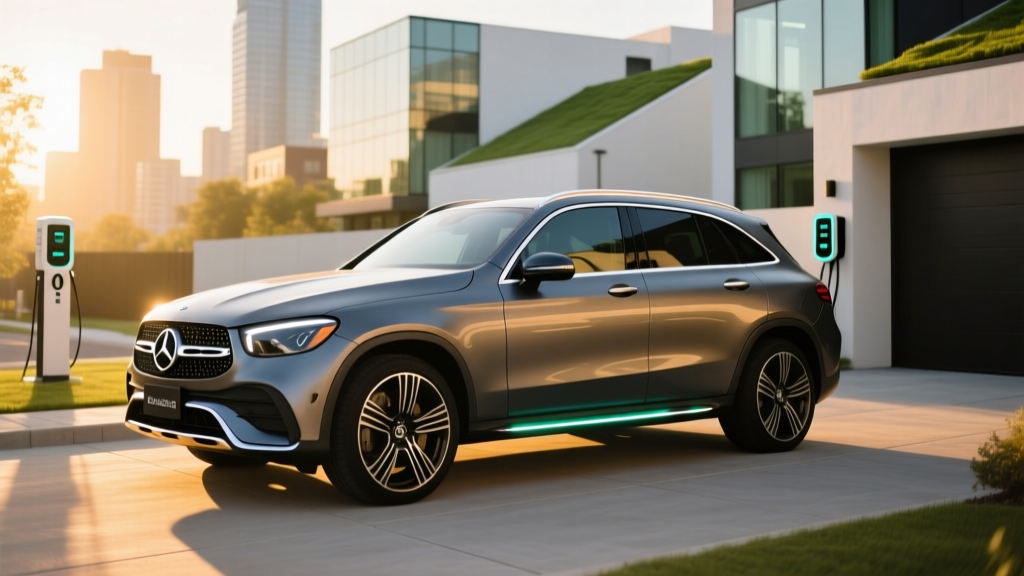
The 2026 Mercedes-Benz GLC EV is the battery-electric successor to the popular compact luxury SUV, built on the brand's dedicated MB.EA platform with an 800-volt architecture. It is expected to deliver an EPA-estimated range of approximately 300–330 miles from a ~85–92 kWh usable battery (NMC chemistry), peak DC fast charging near 250 kW (10–80% in roughly 20 minutes), and a starting MSRP in the $58,000–$62,000 range before destination. The GLC EV will compete directly with the BMW iX3, Audi Q6 e-tron, and Tesla Model Y in the luxury electric compact SUV segment.
Bottom line: If you want a premium compact SUV with Mercedes build quality, fast 800V charging, and daily-drivable range, the GLC EV is worth serious consideration — but only if you have reliable Level 2 home charging and understand that the federal tax credit is far from guaranteed due to battery-sourcing and MSRP cap rules.
What the 2026 Mercedes GLC EV Actually Offers
Mercedes-Benz has confirmed the next-generation GLC will offer a fully electric variant on its new MB.EA (Mercedes-Benz Electric Architecture) platform. This is not a converted gas vehicle — it is a ground-up EV design, which means a flat floor, optimized weight distribution, and a structurally integrated battery pack. The 2026 GLC EV slots between the smaller EQA/EQB and the larger EQE SUV in Mercedes' electric lineup, targeting buyers who want the GLC's practical dimensions with zero tailpipe emissions.
Here are the preliminary specifications based on Mercedes' announced platform details and industry reporting. Final EPA numbers will be confirmed closer to the U.S. launch:
| Specification | Estimated Figure |
|---|---|
| Platform | MB.EA (800V architecture) |
| Battery (usable) | ~85–92 kWh (NMC) |
| EPA Range (est.) | ~300–330 miles |
| Real-World Highway Range | ~250–280 miles |
| Cold-Weather Range (20°F) | ~220–260 miles |
| Peak DC Fast Charge | ~250 kW |
| 10–80% DC Fast Charge | ~20 minutes (est.) |
| Level 2 Charge Rate | ~11–22 kW (AC) |
| Motor Config | RWD & AWD (4MATIC) options |
| 0–60 mph (AWD est.) | ~5.0–5.5 seconds |
| Horsepower (AWD est.) | ~350–400 hp |
| Base MSRP (est.) | $58,000–$62,000 |
| Battery Warranty | 8 years / 100,000 miles |
Real-World Range Reality Check
The EPA sticker may say 320 miles, but plan your road trips around 250–280 miles at sustained highway speeds (70–80 mph). In winter conditions below 30°F, expect a further 15–25% reduction, bringing usable range down to roughly 220–260 miles. The 800V system's preconditioning feature helps — always activate navigation to a charger 20–30 minutes before arrival to warm the battery and sustain peak charge rates.
Charging: What 800V Means for Your Daily Routine
The GLC EV's 800-volt architecture is the headline feature. Here is what it translates to in practical terms:
| Charging Level | Power | Miles Added per Hour | Typical Use Case |
|---|---|---|---|
| Level 1 (120V) | ~1.4 kW | ~4–5 mi/hr | Emergency/overnight trickle |
| Level 2 (240V, 48A) | ~11.5 kW | ~35–40 mi/hr | Home overnight charging |
| Level 2 (240V, 80A) | ~19.2 kW | ~58–65 mi/hr | High-power home/workplace |
| DC Fast Charge | Peak ~250 kW | ~750+ mi/hr (peak) | Road trips; 10–80% in ~20 min |
Key distinction: kW (kilowatts) measures charging power — how fast energy flows. kWh (kilowatt-hours) measures battery capacity — how much energy the pack stores. A 250 kW peak rate doesn't mean you sustain that speed for the full session. Like all EVs, the GLC EV's charge curve tapers significantly above 80% State of Charge to protect battery longevity. Expect the 80–100% top-off to add another 15–20 minutes.
For home charging, a Level 2 wallbox on a 60-amp circuit (delivering 48 amps continuous) will fully replenish the battery in roughly 8–9 hours — ideal for overnight charging. Most owners will wake up to a full battery every morning, which is the single biggest ownership convenience advantage over public-charging-only scenarios.
2026 GLC EV vs. Gas GLC: The Real Cost Comparison
Most GLC EV shoppers are cross-shopping the conventional GLC 300 (starting ~$48,000). Here is a 5-year cost comparison using realistic assumptions: 15,000 miles/year, $3.50/gallon gas, $0.14/kWh home electricity, and current maintenance estimates.
| Cost Category | GLC EV (est.) | Gas GLC 300 (est.) |
|---|---|---|
| Purchase Price (base) | $60,000 | $48,000 |
| Federal Tax Credit (§30D) | $0–$7,500* | $0 |
| Fuel / Electricity (5 yrs) | $5,250 | $11,250 |
| Maintenance (5 yrs) | $1,800 | $4,500 |
| Insurance (5 yrs, avg) | $10,500 | $8,500 |
| Estimated Depreciation | $24,000 | $18,000 |
| 5-Year Total (approx.) | $97,550–$90,050 | $90,250 |
*The §30D federal tax credit of up to $7,500 depends on battery critical-mineral sourcing, buyer income caps ($150K single / $300K joint), and the vehicle's MSRP staying under the $80,000 SUV cap. Mercedes has not yet confirmed full U.S. battery-sourcing compliance for the GLC EV. Always verify current eligibility at IRS.gov before purchasing.
The numbers show a near-breakeven scenario over five years, with the EV pulling ahead if you qualify for the full credit, charge primarily at home, and benefit from lower maintenance (no oil changes, fewer brake replacements due to regenerative braking, no transmission fluid). The gas GLC wins on lower upfront cost and more predictable depreciation — though EV depreciation is improving as the market matures.
Federal Tax Credit: Will the GLC EV Qualify?
This is the most misunderstood part of EV buying. The IRS §30D Clean Vehicle Credit is not a guaranteed $7,500 off every EV. For the 2026 GLC EV, several hurdles apply:
- MSRP Cap: SUVs must have a base MSRP at or below $80,000. The GLC EV's expected ~$58K–$62K starting price clears this easily — but a fully loaded AMG variant may not.
- Buyer Income Cap: Modified AGI must not exceed $150,000 (single), $225,000 (head of household), or $300,000 (joint). Above these thresholds, you get $0.
- Battery Sourcing: The credit splits into two halves — $3,750 for critical minerals and $3,750 for battery component assembly — each with escalating U.S./FTA-country sourcing thresholds. As of 2026, these requirements are stringent.
- Point-of-Sale Transfer: If eligible, you can transfer the credit to the dealer at purchase, reducing your out-of-pocket cost immediately rather than waiting for tax filing.
- FEOC Restriction: Vehicles with battery components from a "foreign entity of concern" (e.g., certain Chinese suppliers) may be disqualified entirely.
Mercedes sources battery cells from multiple global suppliers. Until the automaker publishes GLC EV-specific battery sourcing documentation, treat any credit estimate as preliminary. Consult a tax professional before factoring the credit into your budget.
First-Time EV Buyer: What You Need to Know Before Ordering
If the GLC EV is your first electric vehicle, here are the practical realities that no brochure will tell you:
Home Charging Is Non-Negotiable for Convenience
Without Level 2 home charging, EV ownership shifts from "wake up with a full tank every day" to "plan your life around public chargers." Budget $800–$2,500 for a quality Level 2 wallbox installation (equipment + licensed electrician + permit). If your home has a 200-amp electrical panel with spare capacity, expect the lower end. A panel upgrade to 200A or 400A can add $2,000–$5,000.
Public Charging Works, But Reliability Varies
Mercedes is building its own Mercedes-Benz Charging Network with high-power stations across North America. You will also have access to Electrify America, EVgo, and — with a NACS adapter or native NACS port (expected on 2026 models) — the Tesla Supercharger network. Still, plan for occasional out-of-service chargers on road trips. Always have a backup charging option mapped.
Your Driving Pattern Determines Whether an EV Makes Sense
The GLC EV excels for daily commutes under 80 miles, suburban errands, and road trips where you can plan charging stops. It is less ideal if you regularly drive 400+ miles in a single day through rural areas with sparse charging infrastructure, or if you lack any home or workplace charging option.
Common Misconceptions About the GLC EV
| Myth | Fact |
|---|---|
| "The battery will need replacing in 5 years." | Modern NMC batteries degrade ~10–15% over 8 years/100,000 miles. Mercedes warranties the pack for 8 years/100,000 miles at a minimum 70% capacity retention. Most packs last the vehicle's lifetime. |
| "It charges as fast as a gas car refuels." | A 10–80% DC fast charge takes ~20 minutes at peak conditions. That is longer than a gas stop, but most charging happens at home overnight while you sleep — so you rarely wait at all. |
| "The $7,500 tax credit applies to everyone." | Eligibility depends on your income, the vehicle's MSRP, and battery sourcing. Many luxury EV buyers exceed income caps or find their chosen model doesn't meet sourcing requirements. |
| "EVs are cheaper to own from day one." | Higher upfront cost and insurance premiums mean breakeven typically occurs at year 3–5, depending on local electricity rates, gas prices, and tax credit eligibility. |
| "Cold weather makes EVs unusable." | Range drops 15–25% in sub-freezing temps, but preconditioning, heat pumps, and seat/steering wheel heaters mitigate this. Millions of EV owners in Norway, Canada, and the northern U.S. drive year-round. |
Decision Framework: Is the 2026 GLC EV Right for You?
Choose the 2026 Mercedes GLC EV if:
- You have Level 2 home charging (or can install it) and drive under 250 miles daily.
- You want a luxury compact SUV with 800V fast-charging capability for road trips.
- You value Mercedes interior quality, MBUX infotainment, and advanced driver-assist features.
- You can absorb the ~$10,000–$15,000 premium over the gas GLC 300 for lower running costs and a quieter, smoother drive.
- You qualify for at least a partial §30D tax credit based on income and sourcing rules.
Stick with the Gas GLC 300 or Consider a PHEV Alternative if:
- You have no access to home or workplace charging.
- You frequently drive 400+ miles in a single day through areas with limited DC fast-charging infrastructure.
- Your budget is firmly under $50,000 and you cannot absorb the EV premium.
- You live in an area with extreme cold (below 0°F regularly) and lack a garage — range loss and charging slowdowns will be more pronounced.
- You want maximum flexibility without planning charging stops on long trips — consider the GLC 300 plug-in hybrid as a bridge option with ~40 miles of electric-only range.
Frequently Asked Questions
What is the expected range of the 2026 Mercedes GLC EV?
Mercedes targets an EPA-estimated range of approximately 300–330 miles for the most efficient RWD configuration. Real-world highway driving at 70–80 mph will yield closer to 250–280 miles, and cold-weather driving (below 30°F) may reduce that to 220–260 miles. These are preliminary estimates pending final EPA certification.
How long does it take to charge the GLC EV at home?
On a Level 2 home charger (240V, 48 amps / ~11.5 kW), a full charge from empty takes approximately 8–9 hours. Most owners charge overnight and never deplete the battery fully, so a typical daily top-up of 30–50% takes 3–5 hours.
Will the 2026 GLC EV use NACS or CCS for charging?
Mercedes-Benz has committed to adopting the NACS (North American Charging Standard) connector for its U.S. vehicles, granting access to the Tesla Supercharger network. The 2026 GLC EV is expected to feature a native NACS port. CCS adapters will be available for legacy Electrify America and other CCS stations.
Is the GLC EV eligible for the $7,500 federal tax credit?
Eligibility is not guaranteed. The vehicle must meet battery critical-mineral sourcing and component assembly requirements under IRS §30D, and the buyer must fall under income caps ($150K single / $300K joint). The base MSRP is expected to clear the $80,000 SUV cap. Mercedes has not yet published final sourcing documentation — verify before purchasing.
How does the GLC EV compare to the Tesla Model Y?
The Model Y starts significantly lower (~$44,000) and offers similar range (~320 miles EPA for Long Range). The GLC EV differentiates on interior materials, ride refinement, NVH isolation, and the Mercedes dealer/service experience. If premium luxury is your priority, the GLC EV wins. If value and Supercharger network access are paramount, the Model Y remains the benchmark.
What happens if the battery degrades?
Mercedes warranties the high-voltage battery for 8 years or 100,000 miles, guaranteeing a minimum of 70% capacity retention. If degradation exceeds this threshold within the warranty period, Mercedes will repair or replace the pack at no cost. Real-world data from similar NMC packs suggests most batteries retain 85–90% capacity at the 100,000-mile mark.