The Short Answer
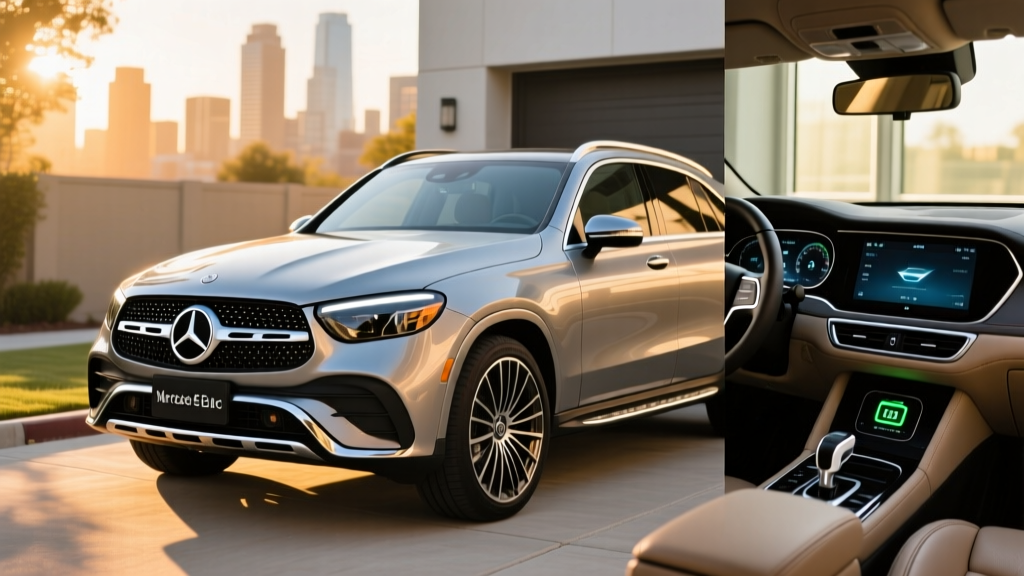
The 2026 Mercedes-Benz GLC Electric (internationally badged EQC on the MMA platform) is a compact luxury EV SUV targeting roughly 300 miles of EPA range, an 800-volt architecture enabling up to 220 kW DC fast charging (10–80% in approximately 27 minutes), and a starting MSRP near $62,000. It competes directly with the BMW iX3, Audi Q6 e-tron, and Tesla Model Y. For buyers with Level 2 home charging and a commute-heavy driving pattern, it can meaningfully undercut the gas GLC 300 on fuel and maintenance costs over five years — but upfront pricing, insurance premiums, and federal tax credit eligibility under IRS §30D sourcing rules require careful verification before purchase.
What Is the 2026 Mercedes GLC Electric?
The 2026 GLC Electric is Mercedes-Benz's next-generation compact luxury EV SUV, built on the brand's modular Mercedes-Benz Modular Architecture (MMA). It replaces the first-generation EQC that was never widely sold in the U.S. and slots into one of the most competitive segments in the luxury market. Unlike its predecessor, which rode a modified gas-car platform, the 2026 model is engineered from the ground up for electrification with an 800V electrical system — a significant upgrade that enables faster DC charging and improved efficiency.
Mercedes has confirmed the MMA platform supports both battery-electric and range-extended configurations, though the U.S.-bound GLC Electric is expected as a pure BEV at launch. The vehicle features a next-generation MBUX infotainment system, Level 2 driver assistance (Mercedes-Benz Driver Assistance Package, not autonomous driving), and a heat pump for improved cold-weather efficiency.
Range, Battery, and Charging Specs
Based on Mercedes' preliminary MMA platform disclosures and European testing data, here is what U.S. buyers should expect for the 2026 GLC Electric:
| Specification | Expected Value |
|---|---|
| Battery Capacity (usable) | ~85 kWh (NMC chemistry) |
| EPA Range (est.) | ~300 miles (AWD variant) |
| Real-World Highway Range | ~250–270 miles (70+ mph, moderate temps) |
| Cold-Weather Range (20°F) | ~210–240 miles (with heat pump engaged) |
| DC Fast Charge Peak | Up to 220 kW (800V architecture) |
| 10–80% DC Fast Charge | ~27 minutes (under ideal conditions) |
| Level 2 AC Charge Rate | 11 kW (estimated ~9 hrs for 0–100%) |
| Motor Output (AWD) | ~380 hp / 516 lb-ft torque (est.) |
| 0–60 mph | ~5.0 seconds (est.) |
| MPGe (combined, est.) | ~95–105 MPGe |
Real-World Range Reality Check
The ~300-mile EPA estimate assumes mixed driving at moderate speeds and temperatures. In real-world testing of comparable 85 kWh luxury EVs, sustained highway driving at 75 mph typically yields 250–270 miles before needing a charge. In sub-freezing conditions, even with a heat pump (which the MMA platform includes), expect a 15–25% range reduction. Plan road trips around 200–220 miles between DC fast-charging stops in winter for a comfortable buffer.
Understanding kW vs. kWh: The 85 kWh battery stores energy (like a fuel tank size). The 220 kW peak charge rate is how fast energy flows in (like a pump speed). Peak charge rate is not sustained — the GLC Electric will likely taper from 220 kW above 50% state of charge, dropping to 80–100 kW by 70%, and below 40 kW past 85%. This charge-curve taper is why 10–80% time is a more useful metric than peak kW alone.
EV vs. Gas GLC 300: Cost Comparison
The gas-powered 2025 GLC 300 starts around $48,000 and achieves an EPA-rated 25 MPG combined. Here's how the 2026 GLC Electric stacks up over a 5-year, 60,000-mile ownership period:
| Cost Category | GLC Electric (est.) | GLC 300 Gas (est.) |
|---|---|---|
| Base MSRP | $62,000 | $48,000 |
| Estimated Tax Credit (§30D) | $0–$7,500* | $0 |
| Fuel/Energy (60k mi) | $3,600–$5,400** | $8,400*** |
| Maintenance (5 yr) | $1,200–$1,800 | $3,500–$4,500 |
| Insurance (5 yr avg) | $12,500–$15,000 | $9,500–$12,000 |
| 5-Year Total (before depreciation) | $69,300–$84,200 | $61,400–$64,500 |
* Federal §30D credit eligibility depends on battery critical-mineral sourcing, buyer income caps ($150k single / $300k joint), and MSRP caps ($80,000 for SUVs). Verify current-year rules at IRS.gov.
** Based on $0.12–$0.18/kWh home charging and 3.0–3.5 miles/kWh efficiency.
*** Based on $3.50/gallon premium and 25 MPG combined.
The EV's fuel and maintenance savings are substantial — roughly $3,000–$5,000 over five years — but they don't fully erase the $14,000 MSRP gap unless the full $7,500 tax credit applies and insurance costs moderate. Luxury EV insurance premiums remain 15–30% higher than comparable gas models due to repair complexity and battery replacement costs.
Home Charging and Ownership Practicalities
The 2026 GLC Electric's 11 kW onboard charger means a full charge from empty takes roughly 9 hours on a Level 2 home charger. Most owners who plug in nightly will wake up to a full battery every morning — effectively eliminating routine "fueling" stops.
Home charging setup costs: A 48-amp Level 2 wallbox (such as a ChargePoint Home Flex or Emporia Vue) costs $500–$750 for equipment. Professional installation by a licensed electrician runs $800–$2,500 depending on panel proximity and whether a 200-amp service upgrade is needed. Total: $1,300–$3,250. If your home has a 100-amp panel, a service upgrade to 200 amps can add $1,500–$3,000.
Without home charging: If you rely solely on public DC fast charging, costs rise significantly. Networks like Electrify America and EVgo charge $0.35–$0.55/kWh in most metro areas, pushing your 60,000-mile energy cost to $6,000–$9,000 — narrowing or eliminating the savings advantage over gas. Public charging reliability also remains a concern, with studies showing 10–20% of non-Tesla DC chargers experiencing out-of-service events. The GLC Electric uses the NACS connector (Mercedes adopted the Tesla-standard plug for North America beginning in 2025), granting access to Tesla Supercharger stations via native compatibility.
Common Misconceptions, Corrected
| Myth | Fact |
|---|---|
| "EV batteries need replacing every 5 years" | Mercedes warranties the high-voltage battery for 8 years / 100,000 miles with a 70% capacity retention threshold. NMC batteries in liquid-cooled systems typically degrade 10–15% over 8 years based on industry data. |
| "The GLC Electric is self-driving" | Mercedes' Driver Assistance Package is SAE Level 2. The driver must remain fully engaged with hands on the wheel and eyes on the road at all times. It is not autonomous. |
| "Charging always takes hours" | On a 220 kW DC fast charger, 10–80% takes ~27 minutes — enough time for a meal break on a road trip. Home Level 2 charging happens overnight while you sleep. |
| "EVs are worse in cold weather" | Range drops 15–25% in freezing temps, but the GLC Electric's heat pump mitigates this significantly vs. resistive heating. Preconditioning the battery while plugged in preserves range and improves charge speed. |
| "I'll definitely get the $7,500 tax credit" | Under current IRS §30D rules, eligibility requires meeting critical-mineral and battery-component sourcing thresholds, buyer income limits, and the $80,000 SUV MSRP cap. These rules change — confirm before purchasing. |
Who Should Buy the 2026 GLC Electric?
The GLC Electric is not the right EV for everyone. Here's a practical decision framework:
Choose the GLC Electric If:
- You have Level 2 home charging access (garage or dedicated parking with 240V outlet). This is the single biggest ownership advantage.
- Your daily commute is under 80 miles round-trip. You'll charge 2–3 times per week at home and rarely visit a public charger.
- You value cabin quietness and instant torque. The electric powertrain delivers smooth, silent acceleration that a turbocharged 4-cylinder GLC 300 cannot match.
- You want the latest Mercedes tech. The MMA platform debuts the newest MBUX generation with over-the-air updates and advanced thermal management.
- You qualify for the §30D tax credit. This can bring the effective price to ~$54,500, narrowing the gap with the gas GLC significantly.
Consider the Gas GLC 300 or a PHEV Instead If:
- You lack reliable home or workplace charging. Sole reliance on public charging erodes cost savings and adds inconvenience.
- You regularly drive 300+ miles in a single day in cold climates. Winter highway range may dip below 220 miles, requiring multiple charging stops.
- You're budget-constrained on purchase price. The $14,000+ MSRP gap over the gas GLC 300 takes years of fuel savings to recoup.
- You tow frequently. While the GLC Electric will likely offer 3,500 lbs towing capacity, towing cuts EV range by 30–50%, making long-distance towing impractical.
Pricing, Trims, and Tax Credit Eligibility
Mercedes has not published final U.S. trim-level pricing for the 2026 GLC Electric as of early 2026, but based on MMA platform positioning and competitive analysis:
| Trim (Expected) | Est. MSRP | Key Features |
|---|---|---|
| GLC 300e (Base) | $62,000–$65,000 | AWD, 85 kWh, MBUX, Level 2 ADAS, heat pump |
| GLC 350e (Mid) | $68,000–$72,000 | Added: AMG Line styling, premium audio, larger wheels |
| GLC 400e / AMG variant | $78,000–$85,000 | Performance tune, adaptive suspension, luxury interior |
Federal tax credit checklist (§30D, 2026 rules):
- Buyer AGI must not exceed $150,000 (single) / $300,000 (joint filing)
- Vehicle MSRP must not exceed $80,000 for SUVs
- Battery must meet critical-mineral sourcing thresholds (percentage increases annually)
- Battery components must meet North American assembly thresholds
- Credit can be transferred to dealer at point of sale for an immediate price reduction
- Verify eligibility at IRS.gov or consult a tax professional — rules are subject to change
The base and mid trims fall under the $80,000 SUV MSRP cap, but the top AMG variant may exceed it, disqualifying it from the federal credit. Battery sourcing compliance is the variable most likely to affect eligibility, as Mercedes sources cells from multiple global suppliers.
Warranty and Long-Term Battery Outlook
Mercedes-Benz provides a high-voltage battery warranty of 8 years or 100,000 miles, guaranteeing a minimum of 70% state of health (SoH) over that period. The bumper-to-bumper warranty covers 4 years / 50,000 miles, consistent with the brand's standard coverage.
For context, real-world data from comparable liquid-cooled NMC battery packs (such as those in the Hyundai Ioniq 5 and Kia EV6) show approximately 8–12% degradation over 100,000 miles under normal use patterns. Factors that accelerate degradation include frequent DC fast charging above 150 kW, regularly charging to 100% and leaving the vehicle at full state of charge in hot weather, and aggressive driving cycles. For maximum battery longevity, charge to 80% for daily use and reserve 100% charges for road trips.
Battery replacement cost, if needed out of warranty, is estimated at $15,000–$22,000 for an 85 kWh pack based on current luxury EV replacement pricing — a figure worth considering for second-owner buyers or those planning to keep the vehicle beyond the warranty period.
Frequently Asked Questions
Does the 2026 Mercedes GLC Electric qualify for the $7,500 federal tax credit?
It depends. The base and mid trims are expected to fall under the $80,000 MSRP cap for SUVs. However, eligibility also requires meeting critical-mineral and battery-component sourcing rules that tighten annually, plus buyer income limits. The point-of-sale transfer option allows you to apply the credit as an immediate discount at the dealer. Always verify current-year eligibility on IRS.gov before finalizing a purchase.
How long does it take to charge the GLC Electric at home?
On a Level 2 (240V) home charger at 11 kW, a full 0–100% charge takes approximately 9 hours. Most owners who plug in each evening will only need to replenish 20–40 kWh (3–4 hours) to restore a day's driving. On a standard 120V Level 1 outlet, expect roughly 3–4 miles of range added per hour — sufficient only for emergency trickle charging.
Can I use Tesla Superchargers with the 2026 GLC Electric?
Yes. Mercedes-Benz adopted the NACS (North American Charging Standard) connector for its North American EVs beginning in 2025. The 2026 GLC Electric features a native NACS port, providing direct access to Tesla's Supercharger network without an adapter — a significant advantage over CCS-equipped competitors that require adapter solutions.
What's the real highway range at 75 mph?
Based on testing of comparable 85 kWh luxury EV SUVs with similar aerodynamics, expect approximately 250–270 miles of real-world range at sustained 75 mph in moderate (65–75°F) conditions. In winter at 20°F, that drops to roughly 210–240 miles with the heat pump active. For road-trip planning, budget 200–220 miles between stops in cold weather for a comfortable safety margin.
Is the GLC Electric more expensive to insure than the gas GLC?
Generally, yes. Luxury EVs carry insurance premiums 15–30% higher than their gas counterparts due to higher repair costs, specialized labor requirements, and battery replacement risk. Expect annual premiums of $2,500–$3,500 depending on your location, driving record, and coverage level. Get quotes from multiple insurers before purchasing — EV-specific insurance programs from companies like Lemonade and Root sometimes offer more competitive rates.
How does the GLC Electric compare to the BMW iX3 and Audi Q6 e-tron?
All three compete in the compact luxury EV SUV segment with similar range targets (~280–310 miles EPA) and pricing ($60,000–$75,000). The GLC Electric's 800V architecture gives it a charging-speed advantage over the current BMW iX3 (400V). The Audi Q6 e-tron also uses 800V and shares the PPE platform with the Porsche Macan Electric. Key differentiators come down to interior preference, ADAS features, and dealer network quality in your area.