Quick Verdict: The Luxury EV Sedan That Prioritizes Comfort Over Drama
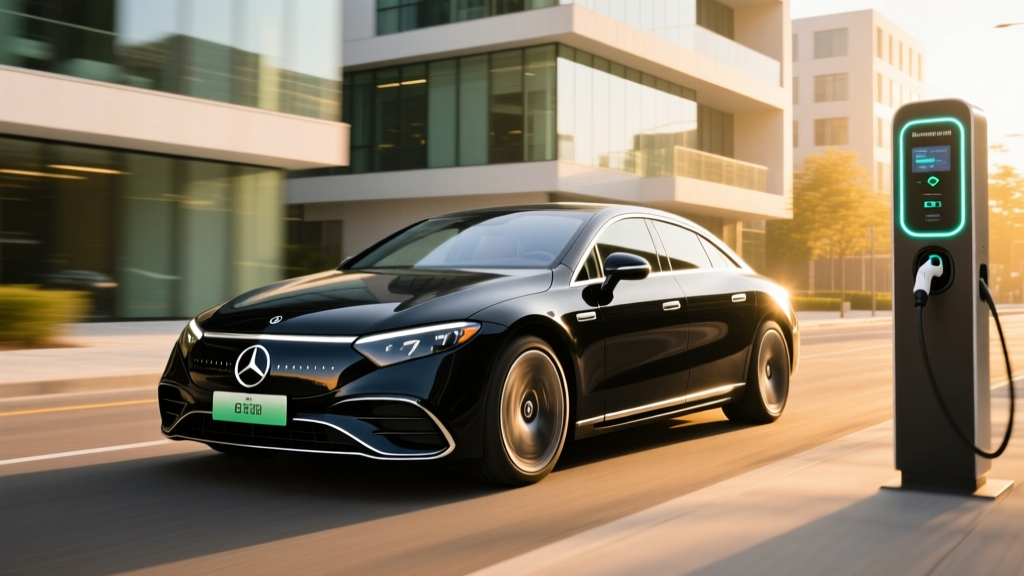
The 2026 Mercedes EQS remains the benchmark for full-size electric luxury sedans — not because it's the quickest or the most aggressive, but because it executes the grand-touring EV mission better than almost anything else on sale. With an EPA-estimated range reaching 390 miles on the EQS 450+, a cabin that redefines digital luxury via the MBUX Hyperscreen, and ride quality that makes potholes feel like suggestions rather than impacts, this is the electric equivalent of an S-Class in all the ways that matter.
But the 2026 EQS isn't for everyone. Its six-figure pricing, polarizing cab-forward styling, and the reality that Mercedes-Benz sedans have faced steep depreciation all demand honest scrutiny. If you're cross-shopping against the Tesla Model S, BMW i7, or Lucid Air, this review gives you the exact numbers you need to decide.
2026 Mercedes EQS Specs at a Glance
| Specification | EQS 450+ Sedan | EQS 450 4MATIC | EQS 580 4MATIC | AMG EQS |
|---|---|---|---|---|
| Base MSRP | $104,400 | $108,400 | $127,350 | $149,900 |
| EPA Range | 390 mi | 370 mi | 350 mi | 315 mi |
| Battery (usable) | 118 kWh NMC lithium-ion | |||
| Horsepower | 355 hp | 355 hp | 536 hp | 649 hp (751 w/ Race Start) |
| 0-60 mph | 5.9 sec | 5.3 sec | 4.1 sec | 3.4 sec |
| Drivetrain | RWD (single motor) | AWD (dual motor) | AWD (dual motor) | AWD (dual motor, AMG-tuned) |
| Max DC Fast Charge | 200 kW peak | |||
| 10-80% DCFC Time | ~31 minutes | |||
| Level 2 Charge Rate | 9.6 kW (adds ~28 mi/hr) | |||
| Efficiency (MPGe) | 97 MPGe | 93 MPGe | 89 MPGe | 79 MPGe |
| Efficiency (kWh/100mi) | 35 | 36 | 38 | 43 |
Range and Efficiency: What the EPA Sticker Doesn't Tell You
Real-World Expectation: Expect 320–350 miles on mixed highway driving at 70+ mph. In freezing temperatures (below 32°F), plan for 260–290 miles. City driving with regenerative braking can approach or slightly exceed the EPA figure.
The 2026 EQS carries forward the same 118 kWh usable battery pack (NMC chemistry — nickel manganese cobalt, chosen for its higher energy density versus LFP) that debuted with the platform refresh. This is one of the largest battery packs in any production passenger vehicle, and the 390-mile EPA figure for the rear-wheel-drive 450+ remains near the top of the luxury EV sedan segment.
But EPA ratings are measured under controlled conditions. In our experience with this platform, sustained highway driving at 75–80 mph drops real-world range to roughly 82–88% of the sticker figure. The EQS's 0.20 drag coefficient — the lowest of any production car when it launched — still helps, but physics wins at high speed. Cold weather compounds this: battery chemistry slows down below freezing, and cabin heating draws significant energy even with the EQS's standard heat pump. If you live in Minnesota or Montana, budget for 25–30% range loss in deep winter.
The efficiency story is strong for a vehicle this size. At 35 kWh per 100 miles (450+), the EQS sips electrons more frugally than the BMW i7 xDrive60 (38 kWh/100mi) and trades blows with the Tesla Model S Long Range. Per fueleconomy.gov, the 450+ achieves 97 MPGe combined — exceptional for a 5,800-pound sedan.
Charging Speed: DC Fast Charging and Home Setup
The EQS supports a peak DC fast-charge rate of 200 kW via its CCS1 connector (NACS adapter included for Tesla Supercharger access). Mercedes claims a 10–80% charge time of approximately 31 minutes under optimal conditions — battery preconditioned, moderate ambient temperature, and a charger capable of sustaining 350 kW+.
| Charging Level | Power (kW) | Time / Rate | Notes |
|---|---|---|---|
| Level 1 (120V) | ~1.4 kW | ~3–4 mi/hr | Emergency/trickle only; full charge takes days |
| Level 2 (240V, 40A) | 9.6 kW | ~28 mi/hr (~12 hrs 0–100%) | Standard home charging; overnight refill |
| DC Fast Charge | 200 kW peak | ~31 min (10–80%) | Rate tapers above 80% SoC; preconditioning critical |
Charging curve reality check: The 200 kW peak is exactly that — a peak. The EQS sustains roughly 180–200 kW between 10–40% SoC, then gradually tapers to ~120 kW by 60%, and drops further to ~50–70 kW above 80%. This is normal lithium-ion behavior to protect battery longevity, but it means that last 20% (80–100%) can take nearly as long as the first 70%. On road trips, plan your stops around 10–80% charges and skip topping off to 100% unless you're parking overnight.
For home charging, the onboard 9.6 kW charger means a full Level 2 session (using a 48-amp hardwired wallbox on a 60-amp circuit) replenishes roughly 28 miles of range per hour. A full 0–100% charge takes approximately 12 hours — fine for overnight, but don't expect to arrive home empty and leave full the next morning if you've depleted the entire pack. Most owners charge between 20–80% daily, which takes about 7–8 hours and is ideal for NMC battery longevity.
The included NACS adapter opens access to Tesla's Supercharger network (17,000+ stalls in North America), which meaningfully expands road-trip charging options beyond Electrify America, EVgo, and ChargePoint. As of 2026, Mercedes has also continued to roll out its own Mercedes-Benz High Power Charging Network stations across major US corridors, offering 400 kW chargers with covered, well-lit stalls and integrated Plug & Charge payment.
Performance and Driving Dynamics
The EQS lineup offers a clear performance ladder. The base 450+ uses a single rear-mounted motor producing 355 hp and 419 lb-ft of torque — adequate for highway merging and effortless cruising, with a 5.9-second 0–60 mph time that won't embarrass anyone. The dual-motor 450 4MATIC adds all-wheel grip and shaves 0.6 seconds off that time.
The 580 4MATIC is where the EQS reveals its performance potential: 536 hp, 631 lb-ft, and a 4.1-second 0–60 time that moves this 5,800-pound luxury barge with genuine urgency. At the top, the AMG EQS delivers 649 hp (or 751 hp with Race Start launch control) and a 3.4-second sprint — supercar territory in a car with rear-seat massage.
Ride quality is where the EQS truly earns its luxury credentials. The standard AIRMATIC air suspension with adaptive damping absorbs road imperfections with S-Class-level composure. Rear-axle steering (standard, up to 10 degrees) shrinks the turning circle to a compact-car-like 35.4 feet and adds low-speed agility that defies the vehicle's 207-inch length. The steering itself is light and precise if not communicative — this is a grand tourer, not a sports sedan, and that's the right call for the segment.
Regenerative braking offers three levels via steering-wheel paddles (D+, D, D-, D Auto) plus a strong one-pedal driving mode. D Auto uses navigation and sensor data to intelligently modulate regen based on traffic ahead — one of the best-executed adaptive regen systems in the EV market.
Interior, Tech, and Cargo
The MBUX Hyperscreen dominates the dashboard — a 56-inch curved glass panel spanning pillar to pillar that houses a 17.7-inch central OLED touchscreen, a 12.3-inch driver cluster, and a 12.3-inch passenger display. It's visually stunning and mostly intuitive, though the sheer number of submenus can overwhelm first-time users. Wireless Apple CarPlay and Android Auto are standard, as is the "Hey Mercedes" voice assistant, which handles complex multi-step commands better than most competitors.
Passenger space is generous but the cab-forward "one-bow" design creates a trade-off. Front legroom is excellent at 41.7 inches, and rear legroom measures 40.7 inches — competitive with the BMW i7. However, the sloping roofline cuts rear headroom to 37.8 inches, which taller passengers will notice. The rear seats recline and offer heating, ventilation, and massage on higher trims, plus available rear-axle entertainment screens.
Cargo capacity stands at 22 cubic feet in the trunk — larger than most luxury sedans thanks to the liftback/hatchback design, which provides a wide opening for loading. There is no front trunk (frunk); the space under the hood houses electronics and the HVAC system. For comparison, the Tesla Model S offers 28 cu ft (including its frunk), while the BMW i7 provides 17.7 cu ft in a conventional trunk.
Driver assistance: The EQS comes standard with Active Distance Assist DISTRONIC (adaptive cruise), Active Steering Assist (lane centering), Active Lane Change Assist, and Active Brake Assist. This is an SAE Level 2 system — the driver must remain engaged with hands on the wheel at all times. The available DRIVE PILOT system is a certified Level 3 system for limited conditions (traffic jams under 40 mph on divided highways in approved states like Nevada and California), allowing hands-off, eyes-off driving in those specific scenarios. Outside those narrow parameters, you're driving.
Pricing, Trims, and Federal Tax Credit Eligibility
| Trim | Base MSRP | As-Tested (Typical) | Federal §30D Credit | Effective Price |
|---|---|---|---|---|
| EQS 450+ Sedan | $104,400 | $112,000–$118,000 | $0 (exceeds MSRP cap) | $104,400+ |
| EQS 450 4MATIC Sedan | $108,400 | $116,000–$122,000 | $0 (exceeds MSRP cap) | $108,400+ |
| EQS 580 4MATIC Sedan | $127,350 | $138,000–$148,000 | $0 (exceeds MSRP cap) | $127,350+ |
| AMG EQS Sedan | $149,900 | $160,000–$175,000 | $0 (exceeds MSRP cap) | $149,900+ |
Destination charges add $1,150. Popular options that push as-tested prices higher include the AMG Line exterior package ($3,500–$5,000), the Executive Rear Seat package ($4,000+), 21-inch wheels ($1,500), and the Warmth & Comfort package ($1,200). It's not difficult to push an EQS 580 past $150,000 with options.
State and local incentives may still apply — California's CVRP, Colorado's state credit, and various utility rebates can offset $1,000–$5,000 depending on your jurisdiction. Check your state's energy office and local utility for current programs.
Ownership Costs: Warranty, Insurance, and Depreciation
Mercedes-Benz provides a 4-year/50,000-mile new-vehicle limited warranty and an 8-year/100,000-mile high-voltage battery warranty that guarantees the battery will retain at least 70% of its original capacity. If degradation exceeds 30% within that window, Mercedes will repair or replace the battery. The powertrain (electric motors, power electronics) is covered under the standard 4-year/50,000-mile warranty.
Insurance costs are steep. Expect annual premiums of $3,200–$4,800 depending on your state, driving record, and coverage level — roughly 30–50% higher than a comparable gas-powered S-Class, driven by high repair costs for the battery pack and aluminum body structure.
Depreciation is the EQS's weakest ownership metric. First-generation EQS models (2022–2023) have experienced some of the steepest depreciation in the luxury EV segment — 40–50% value loss within two years is not uncommon. This makes the EQS a strong used EV buy but a painful new-car purchase from a total-cost-of-ownership perspective. If you plan to lease, the depreciation is Mercedes Financial's problem, not yours.
Maintenance costs are lower than a gas S-Class (no oil changes, fewer brake replacements thanks to regen), but Mercedes-Benz service labor rates remain premium. Budget $800–$1,200 annually for cabin air filters, brake fluid, tire rotation, and software updates after the warranty period.
Pros and Cons
Pros
- Class-leading EPA range of 390 miles (450+)
- Exceptional ride quality with standard air suspension and rear-axle steering
- MBUX Hyperscreen is visually impressive and feature-rich
- Available Level 3 DRIVE PILOT in approved conditions
- Whisper-quiet cabin with outstanding NVH isolation
- Spacious liftback trunk (22 cu ft) with practical hatch opening
- Strong DC fast-charging access via CCS + NACS adapter for Superchargers
Cons
- No federal tax credit eligibility (MSRP far exceeds $55K sedan cap)
- Severe depreciation — 40–50% in first two years typical
- Polarizing exterior design; cab-forward styling isn't for everyone
- Hyperscreen learning curve; too many submenus for simple tasks
- No front trunk (frunk) — missed cargo opportunity
- Rear headroom compromised by sloping roofline for taller passengers
- High insurance premiums ($3,200–$4,800/year)
- Heavy at ~5,800 lbs — tire wear is a real cost factor
How the 2026 EQS Compares to Key Rivals
vs. Tesla Model S Long Range ($79,990): The Model S is quicker (3.1 sec 0–60), cheaper, and has access to the full Supercharger network natively. But the EQS crushes it on ride quality, cabin materials, and noise isolation. If luxury and comfort matter more than performance-per-dollar, the EQS wins.
vs. BMW i7 xDrive60 ($119,300): Closer fight. The i7 has a more conventional (and to many, more attractive) design, a slightly more intuitive iDrive 8.5 interface, and available Level 2+ Highway Assistant. The EQS counters with more range (390 vs. 318 mi EPA), a larger battery, and superior rear-seat luxury. The i7 is the driver's choice; the EQS is the passenger's choice.
vs. Lucid Air Grand Touring ($125,600): The Lucid delivers an extraordinary 516 miles of EPA range and sharper handling in a smaller package. But its service-center network is thin, its interior quality doesn't match Mercedes, and its brand is unproven long-term. The EQS is the safer bet for buyers who value dealer support and build consistency.
Who Should Buy the 2026 Mercedes EQS?
Choose the EQS if:
- You prioritize ride comfort, cabin silence, and luxury over outright performance
- You want a true 350+ mile real-world range for road trips without frequent stops
- You're leasing (to avoid depreciation pain) or buying CPO/used
- You value Mercedes dealer network support for service and warranty claims
- Available Level 3 DRIVE PILOT in traffic jams appeals to your commute
Look elsewhere if:
- You need the federal $7,500 tax credit to justify your EV purchase
- You want sport-sedan handling (consider the BMW i7 or Porsche Taycan)
- Maximum range is your top priority (Lucid Air offers 516 mi EPA)
- You're buying new and plan to sell within 3 years (depreciation will hurt)
- Conventional sedan styling matters to you
Frequently Asked Questions
What is the real-world range of the 2026 Mercedes EQS?
The EPA rates the EQS 450+ at 390 miles. In real-world mixed driving at highway speeds, expect 320–350 miles. In freezing weather, plan for 260–290 miles. City driving with regenerative braking can match or slightly exceed the EPA figure.
How fast does the 2026 EQS charge?
On a DC fast charger, the EQS peaks at 200 kW and charges from 10–80% in approximately 31 minutes with battery preconditioning. At home on a Level 2 (9.6 kW) charger, it adds about 28 miles of range per hour, with a full charge taking roughly 12 hours.
Does the 2026 Mercedes EQS qualify for the federal EV tax credit?
No. Under current IRS §30D rules, new electric sedans must have an MSRP of $55,000 or less to qualify for the $7,500 federal credit. The least expensive EQS starts at $104,400, well above the cap. State and local incentives may still apply — check your jurisdiction.
How much does the 2026 EQS cost after incentives?
The base EQS 450+ starts at $104,400 plus a $1,150 destination charge. With popular options, expect $112,000–$118,000 for a well-equipped 450+. No federal credit applies, but state incentives (typically $1,000–$5,000) may reduce the effective price slightly.
Is the 2026 EQS worth buying over the Tesla Model S or BMW i7?
It depends on your priorities. The EQS offers the best ride comfort and cabin luxury in the segment, plus top-tier range. The Model S is faster, cheaper, and has native Supercharger access. The BMW i7 handles better and has more conventional styling. For pure comfort-focused luxury EV ownership — especially if leasing — the EQS is the strongest pick.
What is the battery warranty on the 2026 EQS?
Mercedes-Benz covers the high-voltage battery for 8 years or 100,000 miles, whichever comes first. The warranty guarantees at least 70% capacity retention. If the battery degrades beyond 30% within that window, Mercedes will repair or replace it at no cost.
Can the EQS use Tesla Superchargers?
Yes. The 2026 EQS includes a NACS adapter that enables access to Tesla's Supercharger network. The vehicle's native CCS1 port also works with Electrify America, EVgo, ChargePoint, and the growing Mercedes-Benz High Power Charging Network.