Quick Answer: Should You Buy the 2026 CLA EV?
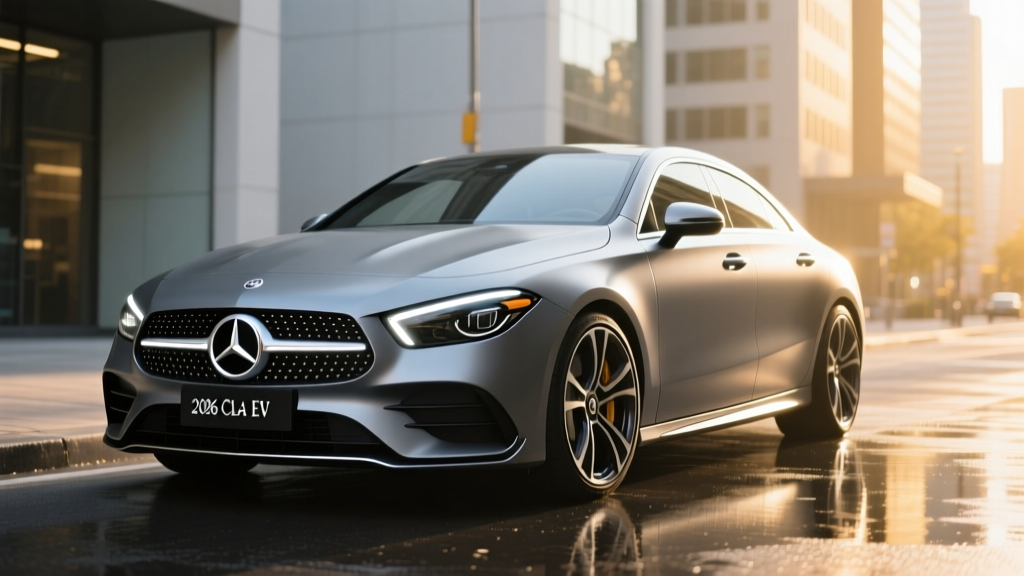
The 2026 Mercedes-Benz CLA EV is the brand's first production vehicle on the new Mercedes-Benz Modular Architecture (MMA), targeting an EPA-estimated range exceeding 400 miles with an 85 kWh battery and an expected starting price near $45,000. It's a compelling option if you want a compact luxury EV sedan with strong range and fast 800-volt charging — but availability begins in late 2025 for the 2026 model year, and final EPA certification, exact pricing, and federal tax-credit eligibility remain unconfirmed as of early 2026. If you need guaranteed access to the §30D credit or require immediate delivery, competitors like the Tesla Model 3 and Hyundai Ioniq 6 are in showrooms now with proven specs.
What Is the 2026 CLA EV and Who Is It For?
The 2026 CLA EV replaces the previous-generation CLA (which was offered as both a gasoline and mild-hybrid model) with a fully electric sedan built on Mercedes' dedicated MMA platform. Unlike the older MFA2-based vehicles, MMA was designed from the ground up for battery-electric powertrains, enabling an 800-volt electrical architecture, a flat floor for interior packaging, and significantly improved energy efficiency.
Mercedes has positioned the CLA as its entry-luxury sedan — smaller and more affordable than the EQE or EQS, aimed at younger professionals and first-time luxury-EV buyers who find a Tesla Model 3 too ubiquitous or want a more traditionally styled Mercedes cabin. The concept previewed at IAA 2023 promised a WLTP range of over 750 km (~466 miles), though US EPA figures will be lower. Based on typical WLTP-to-EPA conversion ratios of roughly 15-20%, we project an EPA range in the 380-420 mile window for the rear-wheel-drive variant.
| Specification | Estimated / Announced Value |
|---|---|
| Platform | Mercedes-Benz Modular Architecture (MMA) |
| Battery (usable) | ~85 kWh (NMC chemistry, CATL cells) |
| EPA Range (est.) | 380-420 mi (RWD); AWD TBD |
| WLTP Range (announced) | >750 km (~466 mi) |
| Electrical Architecture | 800V |
| Peak DC Fast Charge | ~250 kW |
| 10-80% DC Charge (est.) | ~22 minutes |
| Level 2 Charge Rate | 11 kW (48A) / ~22 kW onboard charger option |
| Drivetrain | RWD standard; AWD available |
| Horsepower (RWD est.) | ~268 hp |
| 0-60 mph (est.) | ~6.5 sec (RWD) |
| Base MSRP (est.) | ~$45,000-$48,000 |
| Battery Warranty | 8 years / 100,000 miles (Mercedes standard) |
| Federal Tax Credit (§30D) | Eligibility TBD — depends on battery sourcing |
Sources: Mercedes-Benz Group, fueleconomy.gov. Specs marked as estimated are based on manufacturer announcements and industry analysis; final EPA certification pending.
Range, Efficiency, and Real-World Expectations
The headline number for the 2026 CLA EV is efficiency. Mercedes claims the MMA platform achieves an energy consumption as low as 12 kWh/100 km under WLTP testing — roughly equivalent to 5.2 miles per kWh, which would be class-leading for a luxury sedan. For context, the Tesla Model 3 Long Range achieves about 4.1 mi/kWh (25 kWh/100mi) on the EPA cycle, and the Hyundai Ioniq 6 SE Long Range hits about 4.4 mi/kWh.
If the CLA EV delivers even 4.0 mi/kWh on the EPA cycle with its ~85 kWh usable battery, that yields approximately 340 miles. A more optimistic 4.7 mi/kWh (closer to the WLTP claim) would push it to 400 miles. Real-world results will depend heavily on conditions:
EPA Estimated Range: ~380-420 mi (pending certification)
Real-World Highway (70-80 mph): Expect ~310-350 mi. Aerodynamic drag at sustained highway speed reduces efficiency by 15-20% versus combined-cycle testing.
Cold Weather (below 32°F): Expect ~260-310 mi. Lithium-ion batteries lose 20-30% of usable capacity in freezing temperatures without preconditioning. The MMA platform's heat pump (standard on the concept) should mitigate some loss, but physics wins in sub-zero driving.
Charge-Curve Reality: Peak 250 kW charging only sustains from roughly 10-50% SoC. Above 80%, expect tapering to 50-80 kW, making the final 20% significantly slower. Plan DC stops for 10-80%, not 10-100%.
Charging: 800V Architecture and What It Means
The 800-volt architecture is the CLA EV's most consequential technical feature. Higher voltage allows faster charging at lower current, reducing heat buildup and enabling sustained peak rates. At a 350 kW DC fast charger (such as Electrify America's latest stations or Tesla Supercharger V4 with NACS adapter access), the CLA EV should accept its peak ~250 kW rate for a meaningful portion of the session.
| Level | Power | Miles Added per Hour | Typical Use Case |
|---|---|---|---|
| Level 1 (120V) | ~1.4 kW | ~5-6 mi/hr | Emergency / overnight trickle |
| Level 2 (240V, 48A) | 11 kW | ~44 mi/hr | Home / workplace daily charging |
| Level 2 (240V, high-power) | ~22 kW | ~88 mi/hr | Optional onboard charger; requires 100A circuit |
| DC Fast Charge | ~250 kW peak | ~155 mi in 10 min | Road-trip stops; 10-80% in ~22 min |
Home charging setup: Most CLA EV buyers will install a Level 2 wallbox (such as a ChargePoint Home Flex or Emporia V2) on a 60A circuit delivering 48A continuous (11.5 kW). This fully replenishes the 85 kWh battery in roughly 8-9 hours — ideal for overnight charging. Installation costs typically range from $500-$1,500 for a straightforward panel-adjacent mount, or $2,000-$4,000 if your electrical panel needs upgrading to 200A service or the run is long.
Connector note: Mercedes has confirmed NACS (Tesla-style) adoption for North American vehicles beginning with the MMA generation. This means native access to Tesla Superchargers — a significant infrastructure advantage over CCS-only vehicles. Verify connector type at purchase, as early production vehicles in other markets may ship with CCS2.
Cost Breakdown: CLA EV vs. Gas CLA vs. Key EV Rivals
The purchase decision for the 2026 CLA EV isn't just about the sticker price — it's about five-year total cost of ownership. Below, we compare the CLA EV against its own gasoline predecessor (2025 CLA 250) and two key EV rivals.
| Category | 2026 CLA EV (est.) | 2025 CLA 250 (gas) | Tesla Model 3 LR | Hyundai Ioniq 6 SE LR |
|---|---|---|---|---|
| Base MSRP | $46,000 | $44,350 | $47,740 | $42,450 |
| Federal Tax Credit (§30D) | $0-$7,500* | $0 | $7,500 | $7,500 |
| Effective Purchase Price | $38,500-$46,000 | $44,350 | $40,240 | $34,950 |
| Fuel/Energy (60k mi) | $3,600** | $9,000*** | $3,900** | $3,400** |
| Maintenance (5 yr) | $1,800 | $4,500 | $1,900 | $2,000 |
| Insurance (5 yr avg) | $12,500 | $10,000 | $11,500 | $10,800 |
| Est. Depreciation | $18,000 | $16,000 | $17,500 | $15,000 |
| Total 5-Year Cost | $74,400-$81,900 | $83,850 | $75,040 | $66,150 |
*CLA EV §30D eligibility depends on battery-component and critical-mineral sourcing under current IRS rules. Mercedes has not confirmed US-market battery sourcing as of early 2026.
**Based on $0.15/kWh home charging average; actual varies by utility rate and public-charging mix.
***Based on 30 MPG combined and $3.50/gal regular unleaded.
The CLA EV's five-year cost lands between the Model 3 and the gas CLA, heavily dependent on tax-credit qualification. If the full $7,500 point-of-sale credit applies, the CLA EV becomes competitive with the Model 3 Long Range on total cost while offering a more premium cabin and Mercedes dealer service network. Without the credit, the Ioniq 6 SE delivers comparable range and efficiency at roughly $15,000 less over five years.
Common Misconceptions About the 2026 CLA EV
| Myth | Fact |
|---|---|
| "It's just an electric CLA with the same body." | The CLA EV uses the all-new MMA platform with a dedicated EV skateboard, 800V architecture, and redesigned interior. It shares no structural components with the old MFA2-based CLA. |
| "750 km of range means I'll get 466 miles in the US." | The 750 km figure is WLTP, which tests at lower average speeds. US EPA testing is more demanding. Expect 380-420 mi EPA — still excellent, but not 466. |
| "It qualifies for the $7,500 federal tax credit." | Unconfirmed. §30D requires specific battery-component and critical-mineral sourcing thresholds. Mercedes uses CATL cells, which may face restrictions under current sourcing rules. Verify on IRS.gov before purchasing. |
| "I can charge it at any Tesla Supercharger." | While Mercedes is adopting NACS, access depends on the specific Supercharger generation and Tesla's network integration timeline. Confirm compatibility at delivery. |
| "EVs cost more to insure, so this will be unaffordable." | EV insurance premiums run 10-25% higher than equivalent gas cars on average, but the gap is narrowing. Shop quotes from multiple carriers — some now offer EV-specific discounts. |
| "The battery will need replacing in 5-7 years." | Modern NMC batteries with active thermal management (standard on MMA) typically retain 85-90% capacity at 100,000 miles. Mercedes warranties the battery for 8 years/100,000 miles with a minimum 70% capacity retention threshold. |
First-Time EV Buyer Considerations
If the 2026 CLA EV is your first electric vehicle, several ownership realities differ fundamentally from a gas car:
Home charging is essential for convenience. Over 80% of EV charging happens at home. If you live in an apartment without charging access or park on the street, relying on public DC fast charging will cost roughly 2-3x more per mile than home charging and add significant time to your routine. Confirm your charging situation before committing.
Electrical panel capacity matters. A Level 2 charger draws 48A continuous, requiring a 60A breaker. If your home has a 100A panel already near capacity, you'll need a panel upgrade ($1,500-$3,000) or a smart-load-management device like a NeoCharge Smart Splitter that shares a dryer circuit.
Preconditioning the battery matters for fast charging. Navigate to a DC fast charger using the CLA EV's built-in navigation, and the thermal management system will precondition the battery to optimal temperature — enabling peak 250 kW rates. Cold-soaking and then fast-charging without preconditioning can cut peak rates by 40-50%.
Regenerative braking changes your driving. The CLA EV offers adjustable regen levels, including a one-pedal-driving mode that recovers energy on deceleration and brings the car to a stop without touching the brake pedal. This takes 1-2 weeks to adapt to but reduces brake wear dramatically — expect brake pads to last 80,000+ miles.
Tire costs are higher. EVs are heavier (the CLA EV will likely weigh ~4,400 lbs) and deliver instant torque, which accelerates tire wear by 20-30% compared to equivalent gas vehicles. Budget $800-$1,200 for a set of EV-optimized tires every 30,000-40,000 miles.
Decision Framework: Is the 2026 CLA EV Right for You?
Choose the 2026 CLA EV if:
- You want a compact luxury sedan with 400+ miles of range and don't want a Tesla
- You have reliable home Level 2 charging access (garage or dedicated parking spot)
- You value Mercedes build quality, MBUX infotainment, and the dealer service network
- You drive 200+ miles round-trip occasionally and need fast 800V DC charging to minimize stops
- You're willing to pay a $5,000-$10,000 premium over the Ioniq 6 or Model 3 for the badge and cabin
Look elsewhere if:
- You need a vehicle today — CLA EV production and US deliveries are still ramping in early 2026
- Federal tax-credit eligibility is essential to your budget and the CLA EV doesn't qualify under §30D sourcing rules
- You lack home charging and your area has sparse DC fast-charging infrastructure
- You prioritize maximum cargo space — a sedan trunk limits utility versus a Model Y or Ioniq 5 hatchback
- You regularly drive in extreme cold (below 0°F) where range loss of 30%+ makes 400 mi feel like 280 mi
Consider these alternatives:
- Tesla Model 3 Long Range — Proven EPA 363 mi, Supercharger network, $47,740 MSRP, confirmed $7,500 credit
- Hyundai Ioniq 6 SE Long Range — EPA 361 mi, 800V charging, $42,450 MSRP, confirmed $7,500 credit, lower total cost
- BMW i4 eDrive40 — EPA 301 mi, similar luxury positioning, $57,900 MSRP, confirmed credit eligibility
- Volvo EX30 — Smaller, more affordable luxury EV at ~$36,000, but only 265 mi EPA range
Frequently Asked Questions
When will the 2026 CLA EV be available in the US?
Mercedes began production of MMA-based vehicles in late 2025, with US deliveries expected to begin in the first half of 2026. Exact timing varies by market and trim. Check with your local Mercedes dealer for allocation updates.
Will the CLA EV qualify for the $7,500 federal tax credit?
This is unconfirmed. Under IRS §30D rules, eligibility depends on battery-component manufacturing location and critical-mineral sourcing thresholds that change annually. The CLA EV's MSRP (estimated ~$45,000) falls under the $55,000 sedan cap, and buyer income limits ($150,000 single / $300,000 joint) apply. Verify the specific VIN on the IRS qualified-vehicle list before purchase. The credit can be transferred to the dealer at point of sale as a purchase-price reduction.
Does the CLA EV use NACS or CCS connectors?
Mercedes has committed to NACS (Tesla-style) for North American MMA vehicles. This should provide native Supercharger access. However, confirm the connector at delivery, as early production or imported vehicles could differ.
How does the CLA EV compare to the Mercedes EQE sedan?
The EQE is a larger, more expensive midsize luxury sedan (EPA 230-305 mi depending on trim, $74,900+ MSRP). The CLA EV offers more range, faster charging, and a lower price — but less interior space and a less premium positioning. If you don't need the E-Class-level cabin, the CLA EV is the smarter buy.
What is the battery chemistry and will it degrade quickly?
The CLA EV uses NMC (nickel-manganese-cobalt) chemistry supplied by CATL. NMC offers high energy density but is more sensitive to sustained 100% SoC storage than LFP. Best practice: charge to 80% daily, 100% only for long trips. Mercedes warranties the battery at 8 years/100,000 miles with a 70% minimum capacity retention guarantee.
Can I charge the CLA EV at Tesla Superchargers?
Yes, provided the vehicle ships with a NACS port (expected for US-market vehicles). Mercedes is part of the OEM coalition that adopted NACS, and the Supercharger network is progressively opening to non-Tesla NACS-equipped vehicles. Confirm your vehicle's port type and Tesla app integration at delivery.
Is the CLA EV self-driving?
No. The CLA EV will offer Mercedes' latest driver-assistance suite (likely branded Drive Pilot or a variant), which operates at SAE Level 2 — meaning the driver must remain engaged, hands on or near the wheel, and eyes on the road at all times. Mercedes has demonstrated Level 3 capability (conditional hands-off) in Germany on specific highway segments, but US Level 3 approval is limited and jurisdiction-dependent. This is not a Level 4 autonomous vehicle.