The Quick Verdict on the 2026 Mercedes-Benz CLA Electric
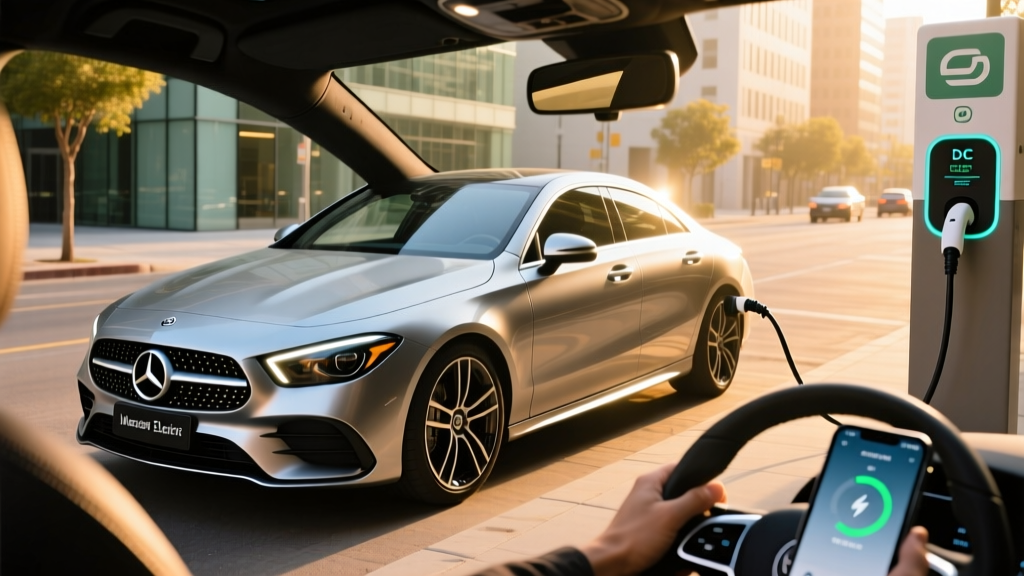
The 2026 Mercedes-Benz CLA Electric is a compact luxury EV sedan built on the new Mercedes-Benz Modular Architecture (MMA). Based on the Concept CLA Class and confirmed production specifications, it targets an EPA-estimated range exceeding 400 miles from an approximately 85 kWh usable battery (NMC chemistry). DC fast charging peaks near 250 kW, enabling a 10–80% charge in roughly 20 minutes. Pricing is expected to start around $47,000 before incentives, positioning it against the Tesla Model 3, BMW i4, and Hyundai Ioniq 6. The CLA Electric will also be offered alongside a mild-hybrid MMA variant, giving buyers a direct EV-versus-hybrid choice on the same platform.
Range, Battery, and Efficiency: What the Numbers Actually Mean
Mercedes-Benz has confirmed that the production CLA Electric will use a new-generation battery pack with silicon-oxide anode technology, reducing weight while improving energy density. The targeted WLTP range figure exceeds 750 km (~466 miles), but US buyers should anchor expectations to the EPA cycle, which is more demanding.
| Specification | 2026 CLA Electric (Estimated) |
|---|---|
| Battery Capacity (usable) | ~85 kWh (NMC) |
| WLTP Range | > 750 km (~466 mi) |
| EPA Range (projected) | ~400–420 mi |
| Real-World Highway (70 mph) | ~320–350 mi |
| Cold-Weather Range (20°F) | ~280–310 mi |
| Efficiency (target) | ~4.2–4.5 mi/kWh (~130+ MPGe) |
| Drivetrain | RWD (AWD variant expected) |
| 0–60 mph | ~5.5 sec (RWD), ~4.2 sec (AWD est.) |
Real-World Range Reality Check: The EPA sticker will likely read 400+ miles, but sustained highway driving at 75–80 mph typically costs 15–20% of rated range in any sedan-class EV. Add winter temperatures below freezing and you're looking at 280–310 miles between charges. That's still exceptional — enough for a Dallas-to-Houston trip with margin — but don't plan road trips around the WLTP number.
The MMA platform's 800-volt electrical architecture is a key efficiency enabler. Higher voltage means lower current for the same power, reducing resistive losses in the motors and wiring. Mercedes also confirmed a standard heat pump, which recovers waste heat from the drivetrain to warm the cabin — a critical feature for preserving range in cold climates where resistive heating can consume 3–5 kW continuously.
Charging Speed and Infrastructure: 800V Architecture in Practice
The 800V system allows the CLA Electric to accept DC fast charging at rates that meaningfully reduce stop times on road trips. Here's what charging looks like across different scenarios:
| Charging Level | Power (kW) | Speed (miles of range per hour) | Typical Use Case |
|---|---|---|---|
| Level 1 (120V outlet) | ~1.4 kW | ~4–5 mi/hr | Emergency / overnight trickle |
| Level 2 (240V, 48A home) | ~11.5 kW | ~38–45 mi/hr | Daily home charging |
| DC Fast Charge (peak) | ~250 kW | ~800+ mi/hr (sustained ~15 min) | Road-trip stops |
| DC Fast Charge (150 kW station) | ~150 kW | ~500 mi/hr | Common public chargers |
The headline 250 kW peak rate will only be sustained in the 10–40% state-of-charge window. As with all modern EVs, the charge curve tapers significantly above 60% SoC to protect battery longevity. Expect the 10–80% session to take approximately 20 minutes at a capable 350 kW station (such as Electrify America or EVgo Hypercharger locations), but 25–30 minutes at a 150 kW unit.
Mercedes has adopted the NACS (Tesla) charging connector for North American models starting in the 2025–2026 model years, meaning the CLA Electric will natively access Tesla Supercharger stalls without an adapter. This dramatically expands the available fast-charging network — over 17,000 Supercharger stalls in the US alone, on top of CCS networks via Tesla's Magic Dock or third-party adapters.
EV vs. Gas CLA: 5-Year Cost Comparison
The CLA Electric doesn't exist in a vacuum. Mercedes will also sell a mild-hybrid MMA-based CLA, and the outgoing gas CLA 250 remains a benchmark. Here's how the economics stack up over five years and 75,000 miles of driving:
| Cost Factor | CLA Electric (est.) | CLA 250 Gas (28 MPG combined) |
|---|---|---|
| Purchase Price (base MSRP) | ~$47,000 | ~$40,000 |
| Federal Tax Credit (§30D) | Up to $7,500 (see eligibility below) | $0 |
| Effective Purchase Price | ~$39,500 | $40,000 |
| Fuel/Energy (75K miles) | ~$2,800 (at $0.14/kWh avg) | ~$9,400 (at $3.50/gal avg) |
| Maintenance (5 yr) | ~$1,200 | ~$3,500 |
| Insurance (5 yr avg) | ~$11,500 | ~$9,800 |
| Estimated Depreciation (5 yr) | ~$20,000 | ~$18,000 |
| Total 5-Year Cost | ~$75,000 | ~$80,700 |
The EV wins on total cost primarily through fuel and maintenance savings — roughly $8,900 over five years — though higher insurance premiums (EVs typically cost 15–20% more to insure due to repair complexity and parts cost) and potentially steeper depreciation partially offset the advantage. Your actual numbers depend heavily on local electricity rates, driving patterns, and whether you qualify for the full tax credit.
§30D Federal Tax Credit Eligibility (2026 Rules)
- MSRP cap: Sedans must be under $55,000 (the CLA Electric base should qualify; loaded trims may not)
- Income cap: AGI ≤ $150,000 (single), $225,000 (head of household), $300,000 (joint)
- Battery sourcing: Critical minerals and battery components must meet phased-in domestic/free-trade-partner thresholds per IRS §30D rules
- Point-of-sale transfer: You can transfer the credit to the dealer for an immediate price reduction (requires dealer registration)
- Consult a tax professional — sourcing requirements are complex and subject to annual updates
Home Charging Setup: What You'll Actually Need
To unlock the CLA Electric's daily convenience — waking up to a full battery every morning — you'll want a Level 2 home charger. Here's what that involves:
| Component | Cost Range | Notes |
|---|---|---|
| Level 2 Charger (48A, hardwired) | $500–$800 | ChargePoint Home Flex, Wallbox Pulsar Plus, or Mercedes Wallbox |
| Electrician Labor | $600–$2,000 | Depends on panel proximity, conduit run length |
| Permit & Inspection | $100–$300 | Required in most jurisdictions |
| Electrical Panel Upgrade (if needed) | $1,500–$3,500 | Required if panel lacks capacity for a 60A circuit |
| Total Typical Install | $1,200–$3,100 | Without panel upgrade: $1,200–$2,100 |
The CLA Electric's ~11.5 kW onboard charger means you'll need a 60-amp circuit (48A continuous draw) to get maximum Level 2 speed. A 200-amp home panel can usually accommodate this, but older homes with 100-amp service will likely need an upgrade. Always have a licensed electrician perform a load calculation before committing to equipment.
If home charging isn't an option — apartment dwellers, street parkers — the CLA Electric's fast-charging capability and NACS access make public charging viable, but you'll pay more (typically $0.30–$0.50/kWh at DC fast stations vs. $0.12–$0.16/kWh at home) and absorb the time cost of 20–30 minute stops 2–3 times per week.
Smart Driving Tech: SAE Level 2, Not Self-Driving
SAE Automation Level: 2 (Partial Driving Automation)
The CLA Electric will feature Mercedes-Benz's latest Driver Assistance Package, including active lane-keeping, adaptive cruise with stop-and-go, and the brand's semi-autonomous highway driving system. The driver must remain engaged, hands on or near the wheel, and eyes on the road at all times. This is not autonomous driving.
Mercedes has been cautious in its ADAS marketing compared to competitors. The brand's Drive Pilot system — a certified Level 3 system for specific highway conditions — is available in limited markets and may expand to the MMA platform, but expect it as a high-cost option or restricted to S-Class/EQS-class vehicles initially. For the CLA, assume Level 2 driver-assist with robust lane-centering and adaptive cruise, competitive with BMW's Driving Assistant Professional but a step behind Tesla's FSD Supervised in terms of feature ambition (not necessarily reliability).
What Level 2 Does NOT Do:
- It will not navigate complex urban intersections without driver input
- It will not handle construction zones, faded lane markings, or unmapped roads reliably
- It does not relieve you of legal liability in a collision
- It requires continuous driver supervision — camera-based monitoring will enforce this
Decision Framework: Should You Buy the CLA Electric, the Hybrid, or Wait?
Buy the 2026 CLA Electric If:
- You have reliable home or workplace Level 2 charging access
- Your daily commute is under 80 miles round-trip (you'll rarely need public charging)
- You take 2–4 road trips per year of 200–400 miles (the 400-mi range + 20-min fast charge handles this well)
- You qualify for the §30D tax credit, bringing effective pricing near the gas CLA
- You value the lowest per-mile energy cost and minimal scheduled maintenance
Choose the MMA Hybrid CLA Instead If:
- You lack consistent charging access (apartment, street parking, no workplace chargers)
- You regularly drive 500+ miles in a single day through charging-sparse regions
- You live in an extreme cold climate (sub-zero winters) where EV range loss compounds with heating demand
- The $7,000+ upfront premium isn't offset by your tax situation or state incentives
Wait If:
- You want confirmed EPA numbers and real-world third-party testing before committing
- You're targeting the AWD performance variant (likely arriving after initial launch)
- Current lease deals on the outgoing gas CLA offer significantly better near-term economics
Common Misconceptions About the CLA Electric
| Myth | Fact |
|---|---|
| "400+ miles of range means I'll always get 400 miles" | Real-world highway driving at 75 mph yields ~320–350 miles; winter drops this to ~280–310. Plan accordingly. |
| "EV batteries need replacing every few years" | Modern NMC packs retain ~90% capacity at 100,000 miles. Mercedes warrants the battery for 8 years/100,000 miles (typically ≥70% retention threshold). |
| "I can charge at any public station" | With NACS, you'll have excellent Supercharger access, but older CHAdeMO stations and some CCS-only locations may require adapters or be incompatible. |
| "The $7,500 tax credit is automatic" | You must meet income caps, the vehicle must meet MSRP caps, and battery sourcing requirements must be satisfied. Many buyers qualify for partial or no credit. |
| "Electricity is free so driving costs nothing" | Public DC fast charging at $0.40/kWh costs ~$0.10/mile — cheaper than gas but not free. Home charging at $0.14/kWh runs ~$0.035/mile. |
What First-Time EV Buyers Should Know Before Ordering
The 2026 CLA Electric will be a compelling entry into the compact luxury EV segment, but the transition from gas to electric involves behavioral changes that no spec sheet fully captures:
Charging is a routine, not an event. Most EV owners plug in at home every night, just like a phone. You'll visit a gas station 2–3 times per year for road trips instead of 30–40 times per year. The trade-off: you need to plan road-trip charging stops in advance using apps like PlugShare or A Better Routeplanner.
Preconditioning matters. The CLA Electric's battery thermal management system can pre-warm the pack before you arrive at a fast charger (set via navigation). This is essential for achieving peak charge rates in cold weather — without it, a cold battery may accept only 50–80 kW instead of 250 kW, doubling your stop time.
Regenerative braking changes how you drive. Expect a one-pedal driving mode that recovers energy during deceleration, reducing brake wear to near-zero for daily driving. Brake pads on EVs often last 100,000+ miles because friction brakes are rarely used.
Insurance will likely be higher. EV repair costs are higher on average (specialized parts, high-voltage safety protocols, fewer certified body shops). Budget 15–20% more than an equivalent gas sedan for comprehensive/collision coverage.
The 2026 Mercedes-Benz CLA Electric represents the brand's most accessible long-range EV to date, built on a purpose-designed platform rather than a converted gas architecture. If your driving patterns and charging situation align, it offers genuine cost savings, exceptional range, and the refinement Mercedes buyers expect — with the honest caveat that real-world range, charging logistics, and insurance costs require deliberate planning.
Frequently Asked Questions
When will the 2026 Mercedes-Benz CLA Electric be available in the US?
Mercedes-Benz has confirmed production begins in 2025 for global markets, with US deliveries expected in early-to-mid 2026 as a 2026 model-year vehicle. Exact timing depends on EPA certification and port logistics.
Will the CLA Electric qualify for the $7,500 federal tax credit?
Eligibility depends on final battery sourcing, your income, and the trim's MSRP. The base model should fall under the $55,000 sedan cap, but higher trims may exceed it. Battery component and critical mineral sourcing rules are updated annually by the IRS — verify eligibility at point of sale.
How does the CLA Electric compare to the Tesla Model 3 Long Range?
The Model 3 LR offers ~341 EPA miles, starts around $42,000, and has access to the full Supercharger network. The CLA Electric targets ~400+ EPA miles and Mercedes luxury refinement at a ~$5,000 premium. If range and luxury are priorities, the CLA edges ahead; if value and proven software, the Model 3 remains strong.
Can I charge the CLA Electric at Tesla Superchargers?
Yes. Mercedes has adopted the NACS connector for North American vehicles, meaning native Supercharger access without an adapter. You'll also have access to Electrify America, EVgo, and other networks (some may require a CCS-to-NACS adapter).
What is the battery warranty on the 2026 CLA Electric?
Mercedes-Benz typically provides an 8-year/100,000-mile high-voltage battery warranty with a capacity retention threshold of 70% or higher. Final warranty terms for the MMA-platform CLA will be confirmed closer to launch.