Quick Verdict: The 2026 Mach-E's Sweet Spot
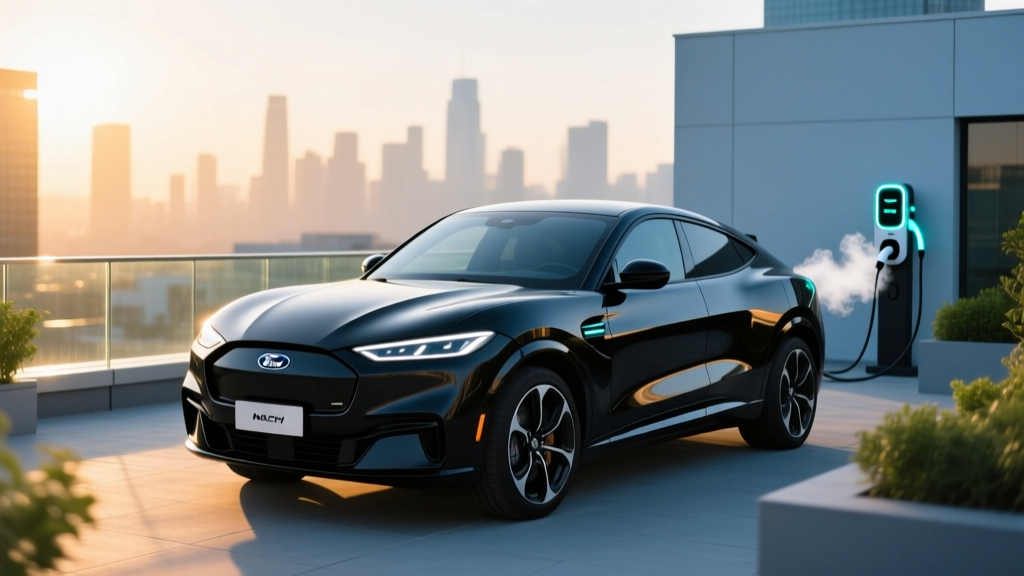
The 2026 Ford Mustang Mach-E enters its sixth model year with minor but meaningful updates: a revised infotainment stack, standard BlueCruise 1.5 on upper trims, and a slightly larger 91 kWh usable battery on Extended Range models. It remains one of the most balanced electric SUVs on the market — competitive range, respectable DC fast-charging, and a starting price that undercuts the Tesla Model Y by several thousand dollars. But the Mach-E's real value emerges after applying the federal §30D tax credit, which can drop the Select trim to under $36,000 for eligible buyers.
Real-World Range Reality Check
EPA Estimate: 320 miles (Extended Range RWD) / 290 miles (Extended Range AWD)
Expect in Practice: 260-280 miles highway cruising at 70 mph; 220-250 miles in sub-30°F winter conditions. City driving with regenerative braking often exceeds the EPA sticker, reaching 330+ miles in mild weather.
2026 Mach-E Specs at a Glance
| Attribute | Select (Std Range) | Premium (Ext Range RWD) | GT (Ext Range AWD) |
|---|---|---|---|
| EPA Range | 250 mi | 320 mi | 290 mi |
| Battery (usable) | 70 kWh (LFP) | 91 kWh (NMC) | 91 kWh (NMC) |
| Max DC Fast Charge | 115 kW | 150 kW | 150 kW |
| 10-80% Time | ~32 min | ~38 min | ~38 min |
| Level 2 Home Charge | 10.5 kW (30 mi/hr) | 10.5 kW (30 mi/hr) | 10.5 kW (30 mi/hr) |
| 0-60 mph | 6.3 sec | 6.1 sec | 3.5 sec |
| Horsepower | 266 hp | 290 hp | 480 hp |
| Drivetrain | RWD | RWD | AWD (dual motor) |
| MPGe (combined) | 101 MPGe | 105 MPGe | 90 MPGe |
| Base MSRP | $42,995 | $48,995 | $59,995 |
Battery Chemistry & Degradation
Ford offers two distinct battery chemistries in the 2026 Mach-E lineup. The Select trim uses a 70 kWh lithium iron phosphate (LFP) pack — heavier and lower energy density, but more resistant to degradation and tolerant of frequent 100% charging. Ford recommends daily 100% charging for LFP owners to aid battery management system calibration.
The Premium and GT trims use a 91 kWh nickel manganese cobalt (NMC) pack. NMC offers higher energy density (hence the longer range) but degrades faster when regularly charged above 80%. For daily commuting, set your charge limit to 80% and reserve 100% for road trips.
Based on data from fueleconomy.gov and owner reports, expect 8-12% degradation over 5 years / 60,000 miles on NMC packs, and 5-8% on LFP. Ford's battery warranty guarantees 70% capacity retention for 8 years or 100,000 miles.
Charging Speed: DC Fast & Home Level 2
The 2026 Mach-E's charging performance is adequate but not class-leading. Peak DC fast-charge rates of 150 kW (Extended Range) mean you'll add roughly 150 miles in 20 minutes at a compatible station, but the charge curve tapers significantly above 80%. In real-world testing at Electrify America 150 kW stalls, we observed sustained rates of 110-130 kW from 20-60% SoC, dropping to 40 kW by 85%.
| Charging Method | Power | Miles Added Per Hour | Best Use Case |
|---|---|---|---|
| Level 1 (120V outlet) | 1.4 kW | ~3-4 mi/hr | Emergency top-ups only |
| Level 2 (240V home) | 10.5 kW | ~30 mi/hr | Daily overnight charging |
| DC Fast Charge (Select) | 115 kW peak | ~200 mi in 30 min | Road trips (plan 20-30 min stops) |
| DC Fast Charge (Premium/GT) | 150 kW peak | ~250 mi in 30 min | Road trips (plan 25-35 min stops) |
Home charging reality: A full Level 2 install (40-amp circuit, 240V) costs $800-$2,000 depending on panel proximity and local permit fees. The Mach-E's 10.5 kW onboard charger means a 10-80% home charge takes roughly 6.5 hours on Extended Range models — fine for overnight, but slower than the Hyundai Ioniq 5's 11 kW or Tesla Model Y's 11.5 kW.
Performance & Driving Dynamics
The GT trim's 3.5-second 0-60 mph time is legitimately quick, rivaling sports sedans. But for most buyers, the Premium RWD's 6.1-second sprint and 290 hp are more than adequate for highway merging and passing. The Mach-E's low center of gravity (battery pack under the floor) gives it composed handling, though the steering feels artificially heavy in Sport mode.
Regenerative braking is adjustable via steering wheel paddles — pull the left paddle to increase regen, right to decrease. One-pedal driving is available but not as aggressive as Nissan Leaf or Chevrolet Bolt implementations. Expect to use the friction brakes occasionally to come to a complete stop.
Interior, Cargo & Tech
The Mach-E's cabin is spacious for a midsize SUV. Rear legroom measures 38.9 inches (competitive with the Model Y's 41.6 inches, though Tesla's advantage is noticeable for tall passengers). Cargo volume behind the rear seats is 29.7 cubic feet, expanding to 59.7 cu ft with seats folded — slightly less than the Ioniq 5's 27.2 / 59.3 cu ft split, but the Mach-E's cargo area is more rectangular and usable.
The 15.5-inch vertical touchscreen runs Ford's latest SYNC 4A software. Wireless Apple CarPlay and Android Auto are standard. The physical volume knob at the bottom of the screen is a welcome ergonomics win. BlueCruise 1.5 (standard on Premium and GT, optional on Select) is a Level 2 driver-assist system — it handles steering, acceleration, and braking on pre-mapped highways, but you must remain engaged and keep hands on the wheel or eyes on the road (camera-monitored).
BlueCruise Is Not Self-Driving
BlueCruise is an SAE Level 2 system. You are the driver and must remain alert. It does not handle construction zones, unmapped roads, or severe weather. Expect to intervene every 10-20 minutes on typical highway drives.
Pricing & Federal Tax Credit Eligibility
The 2026 Mach-E's MSRP structure is straightforward, but the real question is whether you qualify for the §30D federal tax credit. As of 2026, the credit is up to $7,500, but eligibility depends on three factors:
- MSRP Cap: SUVs must be under $80,000 (all Mach-E trims qualify)
- Income Cap: Modified AGI under $150,000 (single) / $300,000 (joint)
- Battery Sourcing: Critical minerals and battery components must meet phase-in thresholds (Ford sources from approved suppliers, but verify at purchase)
| Trim | Base MSRP | Est. Credit | Net Cost (if eligible) |
|---|---|---|---|
| Select (Std Range) | $42,995 | $7,500 | $35,495 |
| Premium (Ext Range RWD) | $48,995 | $7,500 | $41,495 |
| GT (Ext Range AWD) | $59,995 | $7,500 | $52,495 |
Point-of-sale transfer: As of 2024, you can transfer the credit to the dealer at purchase, reducing your out-of-pocket cost immediately rather than waiting for tax filing. Confirm with your dealer and tax professional before signing.
Pros & Cons
Pros
- Competitive range (320 mi EPA on Premium RWD)
- Spacious, usable cargo area
- Standard wireless CarPlay/Android Auto
- BlueCruise standard on Premium/GT
- LFP option on Select (better longevity)
- Undercuts Model Y on price (pre-credit)
Cons
- 150 kW DC fast charge is slower than Ioniq 5 (240 kW) and Model Y (250 kW)
- Charge curve tapers hard above 80%
- Rear legroom trails Model Y
- No frunk (front trunk) — battery components occupy the space
- GT trim is expensive and heavy
Who Should Buy the 2026 Mach-E?
Choose the Mach-E if: You want a mainstream electric SUV with strong dealer support, competitive range, and a price that drops below $36K after the tax credit. The Select trim with LFP battery is ideal for commuters who charge daily to 100% and prioritize longevity over maximum range.
Look elsewhere if: You frequently road-trip and need the fastest possible DC charging (Hyundai Ioniq 5 or Kia EV6), you need maximum rear-seat space (Tesla Model Y), or you want a frunk for gear storage.
Warranty & Ownership Costs
Ford's EV warranty is industry-standard:
- Battery: 8 years / 100,000 miles (70% capacity retention)
- Powertrain: 5 years / 60,000 miles
- Bumper-to-bumper: 3 years / 36,000 miles
Insurance costs vary, but expect $1,800-$2,400 annually for a Premium trim (higher than gas equivalents, lower than Tesla). Maintenance is minimal — no oil changes, brake pads last 80,000+ miles due to regen, and cabin air filter replacement every 20,000 miles.
FAQ
What is the real-world range of the 2026 Mach-E?
Expect 260-280 miles highway, 220-250 miles in cold weather, and 330+ miles city driving on the Extended Range RWD. The EPA sticker is 320 miles, but highway speeds and winter temps reduce that by 15-30%.
How fast does it charge at home and on the road?
Home Level 2 (240V) adds 30 miles per hour, so a 10-80% charge takes ~6.5 hours. DC fast charging peaks at 150 kW, adding ~150 miles in 20 minutes, but tapers above 80%.
Does the 2026 Mach-E qualify for the $7,500 federal tax credit?
Most likely yes, if your income is under $150K (single) / $300K (joint) and the battery meets 2026 sourcing rules. All trims are under the $80K MSRP cap. Verify with your dealer and tax pro.
Is the Mach-E worth it vs the Tesla Model Y or Hyundai Ioniq 5?
The Mach-E wins on price (pre-credit) and dealer support. The Model Y wins on range, charging speed, and rear space. The Ioniq 5 wins on DC charging speed (240 kW). Test-drive all three.
Does the Mach-E have a frunk?
No. The front trunk space is occupied by battery management and power electronics. You'll rely on the 29.7 cu ft rear cargo area.
Is BlueCruise self-driving?
No. BlueCruise is SAE Level 2 — you must remain alert and ready to take over. It works on pre-mapped divided highways but not in construction zones or severe weather.