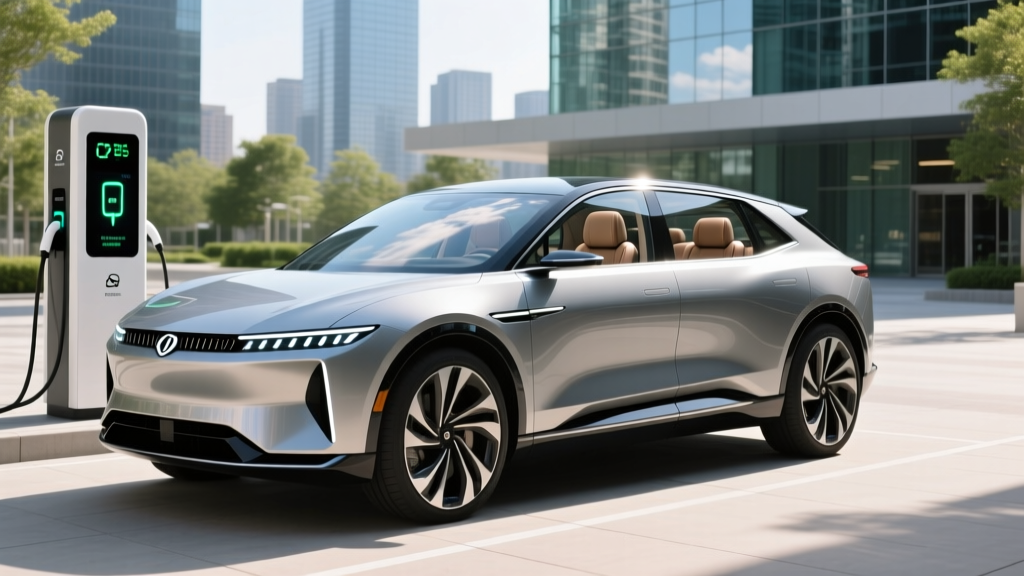
The 2026 Lucid Gravity SUV arrives with a promise that sounds too good on paper: a three-row luxury electric SUV that can crack 440 miles of EPA-estimated range while still hitting 60 mph in the low-three-second range. After examining Lucid's published specifications, EPA filings, and early production data, we can confirm the numbers are real — but translating them to daily ownership requires some nuance. This review breaks down the Gravity's range, charging behavior, interior packaging, pricing, and tax-credit reality so you can decide whether this flagship SUV earns a spot in your garage.
Range and Efficiency: 440 Miles on Paper, What to Expect in Practice
The 2026 Lucid Gravity Grand Touring carries an EPA-estimated range of 440 miles on its largest battery configuration. That figure places it at the top of the three-row electric SUV segment, outdistancing the Rivian R1S (up to ~410 miles with the Max Pack) and the Tesla Model X (up to ~348 miles). Lucid achieves this through a combination of a large battery pack, exceptionally low drag coefficient for an SUV, and the company's proprietary miniaturized drive units that reduce parasitic losses.
EPA Combined Range: 440 miles (Grand Touring AWD, 19" wheels)
Real-World Highway (65–75 mph, mild weather): ~360–390 miles
Real-World Highway (cold weather, 20–35°F): ~290–330 miles
Mixed Commute (city + suburban): ~400–430 miles
Note: Equipping the available 22" or 23" wheels reduces EPA range by approximately 20–35 miles. Cold-weather range loss of 20–30% is consistent with industry-wide NMC battery behavior. A heat pump is standard on the Gravity, which helps mitigate winter cabin-heating energy draw.
Efficiency is rated at approximately 108 MPGe combined (roughly 31 kWh/100 miles) for the Grand Touring AWD. For a vehicle of this size and weight, that is a strong efficiency figure, though it trails the smaller Lucid Air sedan due to the Gravity's taller profile and greater mass. Expect real-world highway efficiency closer to 34–37 kWh/100 mi depending on speed and terrain.
Battery Pack: Capacity, Chemistry, and Longevity
The 2026 Gravity uses a ~118 kWh usable battery pack (gross capacity approximately 122 kWh) based on NMC (nickel manganese cobalt) lithium-ion chemistry. Lucid has not adopted LFP (lithium iron phosphate) for the Gravity, which makes sense given the energy-density requirements for achieving 440 miles in a heavy three-row SUV. NMC chemistry offers higher energy density per kilogram but carries slightly faster long-term degradation compared to LFP and requires more careful state-of-charge management for optimal longevity.
Lucid's battery management system (BMS) includes a top and bottom buffer to protect against overcharge and deep discharge — a practice that preserves cell health over thousands of cycles. The company's thermal management system uses liquid cooling and heating loops integrated into the battery enclosure, enabling both fast charging preconditioning and cold-weather range preservation.
Charging Speed: DC Fast Charge and Home Level 2
The Gravity supports a peak DC fast-charge rate of 300 kW on compatible chargers (350 kW-class stations from Electrify America, EVgo, and Ionity-type infrastructure). Lucid quotes a 10–80% charge time of approximately 20 minutes under ideal thermal conditions with battery preconditioning active.
| Charge Level | Power / Voltage | Speed (Approx.) | Notes |
|---|---|---|---|
| Level 1 (120V household) | ~1.4 kW | ~4–5 miles per hour | Emergency/trickle only; ~90+ hours for full charge |
| Level 2 (240V home / public) | 11.5 kW (onboard charger) | ~36–40 miles per hour | Full charge in ~10–11 hours; ideal overnight |
| DC Fast Charge (CCS/NACS) | Up to 300 kW peak | ~10–80% in ~20 min | Preconditioning required; tapers above 80%; ~15–20 min adds ~200 mi |
A critical detail for buyers: the Gravity ships with a NACS (Tesla-style) charge port as standard for the 2026 model year, granting native access to Tesla's Supercharger network (now open to non-Tesla vehicles via the NACS standard). A CCS adapter is available for legacy Electrify America and other CCS-equipped stations. The 11.5 kW onboard AC charger is competitive — it means a home Level 2 wall connector on a 48-amp circuit will replenish roughly 36–40 miles of range per hour, fully charging the pack overnight.
On the real-world charging curve, expect the Gravity to sustain 250–290 kW between 10–50% SoC, then taper progressively through the 50–80% window. Charging from 80–100% slows dramatically (typical of NMC chemistry) and should be avoided on road trips unless you genuinely need the final 20%.
Performance: Powertrain, Acceleration, and Towing
The 2026 Gravity is offered in multiple configurations. The volume-selling Grand Touring AWD uses a dual-motor all-wheel-drive setup producing approximately 800 horsepower and rocketing from 0–60 mph in roughly 3.5 seconds. A more powerful Sapphire variant is expected to push output beyond 1,000 hp with a sub-3.0-second 0–60 time, though Lucid has not yet confirmed full Sapphire SUV availability for the 2026 model year.
| Spec | Gravity Pure (RWD) | Gravity Grand Touring (AWD) |
|---|---|---|
| EPA Range | ~440 mi (est.) | ~440 mi (AWD, 19" wheels) |
| Battery (usable) | ~118 kWh, NMC | ~118 kWh, NMC |
| Horsepower | ~600 hp | ~800 hp |
| 0–60 mph | ~5.0 sec | ~3.5 sec |
| Drivetrain | RWD (single motor) | AWD (dual motor) |
| Max DC Charge | 300 kW | 300 kW |
| 10–80% DC Time | ~20 min | ~20 min |
| Towing Capacity | Up to 6,000 lbs | Up to 6,000 lbs |
| MPGe (combined) | ~112 MPGe | ~108 MPGe |
Towing is rated at up to 6,000 pounds when properly equipped — sufficient for a mid-size boat trailer, horse trailer, or camping trailer. Note that towing will cut range roughly in half under highway conditions (expect ~200–230 miles at 65 mph with a heavy trailer), which is consistent with every EV in this class.
Interior, Cargo, and Three-Row Packaging
The Gravity seats up to seven passengers across three rows (a six-seat configuration with second-row captain's chairs is available). Lucid designed the SUV on a dedicated EV skateboard platform, which allows a flat floor and maximizes interior volume without a transmission tunnel.
Cargo capacity: approximately 60+ cubic feet behind the second row (five-seat mode) and over 110 cubic feet with the second and third rows folded. A front trunk (frunk) adds roughly 8–10 cubic feet of sealed, drainable storage — useful for wet gear or charging cables.
Legroom is generous in the first two rows (estimated ~41" front, ~38" second row), while the third row accommodates adults on shorter trips but is best suited for children on long drives — a common compromise in this segment that also applies to the Rivian R1S and Tesla Model X.
The cabin features a 34-inch curved glass cockpit display spanning the driver's instrument cluster and infotainment, running Lucid's proprietary operating system. Wireless Apple CarPlay and Android Auto are standard. A 21-speaker Surreal Sound Pro audio system is available on higher trims.
Pricing, Trims, and Federal Tax Credit Eligibility
The 2026 Lucid Gravity lineup starts at approximately $79,900 MSRP for the Pure RWD trim and climbs through the Grand Touring AWD (~$94,900) and up to the expected Sapphire variant (pricing TBA). Destination charges add approximately $1,500.
| Trim | Base MSRP | Federal §30D Credit | Effective Price (if eligible) |
|---|---|---|---|
| Pure RWD | $79,900 | Up to $7,500* | ~$72,400 |
| Grand Touring AWD | $94,900 | Up to $7,500* | ~$87,400 |
| Sapphire (expected) | TBA (est. $125,000+) | Up to $7,500* | TBA |
*Federal tax credit (IRS §30D) eligibility for the Gravity depends on several conditions:
- SUV MSRP cap: The §30D cap for SUVs/vans/pickups is $80,000. The Pure trim qualifies on MSRP; the Grand Touring and Sapphire exceed the cap and are NOT eligible for the new-vehicle credit.
- Buyer income limits: Modified adjusted gross income must not exceed $300,000 (joint), $225,000 (head of household), or $150,000 (single) for the tax year of delivery or the prior year.
- Battery sourcing requirements: The credit is split into two halves ($3,750 for critical minerals, $3,750 for battery component assembly). Lucid must meet escalating domestic-content thresholds each year. Check IRS.gov Clean Vehicle Credits for the latest qualifying VIN list.
- Point-of-sale transfer: Eligible buyers can transfer the credit to the dealer at purchase for an immediate price reduction rather than waiting to claim it on their tax return.
In practice, only the Gravity Pure RWD at $79,900 is likely eligible for the full §30D credit, and only if Lucid's battery supply chain meets the 2026 sourcing thresholds. Always verify the specific VIN on the fueleconomy.gov credit lookup tool before purchasing.
Driver Assistance and Technology
The Gravity comes standard with Lucid's DreamDrive Pro suite of driver-assistance features, which includes adaptive cruise control, lane-centering steering, automatic emergency braking, blind-spot monitoring, and a 360-degree camera system. DreamDrive Pro operates at SAE Level 2, meaning the driver must remain fully attentive with hands on or near the wheel at all times.
Lucid's DreamDrive Pro is a Level 2 driver-assist system. It does NOT replace an attentive driver. You are legally and operationally responsible for the vehicle at all times. No hands-free, eyes-off capability is offered on the 2026 Gravity. This is consistent with every consumer-available ADAS system (Tesla Autopilot/FSD Supervised, Ford BlueCruise, GM Super Cruise) — all remain Level 2 under SAE J3016 definitions.
Lucid has signaled that future over-the-air (OTA) updates may expand DreamDrive capabilities, but no Level 3 or Level 4 functionality has been announced or certified for the Gravity as of the 2026 model year.
Warranty and Ownership Costs
Lucid backs the 2026 Gravity with:
- Basic vehicle warranty: 4 years / 50,000 miles
- Battery and drive unit warranty: 8 years / 100,000 miles (minimum 70% capacity retention guaranteed)
- Corrosion warranty: 12 years / unlimited miles
The 8-year/100,000-mile battery warranty is industry-standard and matches competitors like Tesla, Rivian, and BMW. The 70% capacity-retention threshold means Lucid will repair or replace the pack if degradation exceeds 30% within the warranty period — though real-world NMC data from Lucid Air owners suggests most packs retain 90%+ capacity over the first 50,000 miles with proper charging habits (avoiding prolonged 100% SoC storage and frequent DC fast charging to full).
Estimated 5-year ownership costs are competitive with other luxury electric SUVs. Electricity costs for the Gravity average approximately $0.04–$0.06 per mile at residential rates ($0.14–$0.18/kWh national average), compared to $0.12–$0.16 per mile for a comparable gasoline SUV at $3.50/gallon. Insurance premiums for the Gravity are expected to run higher than average due to its MSRP and repair complexity — budget $2,500–$4,000 annually depending on your profile and state.
Who Should Buy the 2026 Lucid Gravity?
- You need three rows AND maximum electric range for long family road trips
- You value efficiency and technology over rugged off-road capability
- You have access to reliable home Level 2 charging and/or live near NACS Supercharger corridors
- You want a luxury SUV that stands apart from the ubiquitous Tesla Model X
- You need serious off-road capability (Rivian R1S is more trail-capable)
- Your budget tops out below $75,000 (consider the Kia EV9 or Hyundai Ioniq 9)
- You want a proven multi-year service network (Lucid's service center footprint is still expanding)
- You need guaranteed hands-free highway driving today (GM's Super Cruise or Ford's BlueCruise offer hands-free on mapped roads, albeit still Level 2)
Pros and Cons at a Glance
- Class-leading 440-mile EPA range in a three-row SUV
- 300 kW DC fast charging with ~20-minute 10–80% time
- NACS native — direct Tesla Supercharger access
- Exceptional efficiency for its size (~108 MPGe)
- Spacious frunk + flat-floor interior packaging
- 6,000-lb towing capacity
- Stunning 34-inch curved glass cockpit
- Only Pure trim qualifies for §30D credit (MSRP cap)
- Lucid's service center network is still growing
- Third row is tight for adults on long journeys
- No hands-free driving mode (Level 2 only)
- High insurance costs expected
- Real-world highway range drops ~15–20% vs. EPA
- 22"/23" wheel options reduce range noticeably
Frequently Asked Questions
What is the real-world range of the 2026 Lucid Gravity?
The EPA rates the Gravity Grand Touring AWD at 440 miles combined. In real-world highway driving at 70 mph in mild weather, expect approximately 360–390 miles. In cold weather (below freezing), that drops to roughly 290–330 miles. City and suburban driving with regenerative braking recovers more energy and gets closer to the EPA sticker, often 400+ miles.
How fast does the Lucid Gravity charge at home and on the road?
On a 300 kW-capable DC fast charger with preconditioning, the Gravity goes from 10–80% in approximately 20 minutes, adding roughly 200 miles in about 15 minutes. At home on a 240V Level 2 charger (48 amps), the 11.5 kW onboard charger adds about 36–40 miles per hour, fully replenishing the pack in roughly 10–11 hours — ideal for overnight charging.
Does the 2026 Lucid Gravity qualify for the $7,500 federal EV tax credit?
Only the Gravity Pure RWD at $79,900 MSRP meets the §30D SUV MSRP cap of $80,000. The Grand Touring ($94,900) and Sapphire (est. $125,000+) exceed the cap and are ineligible. Even for the Pure, the buyer must meet income limits ($300K joint / $150K single) and Lucid's battery must meet 2026 critical-mineral and component-sourcing thresholds. Verify the VIN on fueleconomy.gov before purchase and consult a tax professional.
Is the Lucid Gravity worth buying over the Rivian R1S or Tesla Model X?
The Gravity wins on range (440 vs. ~410 for the R1S Max, ~348 for the Model X) and efficiency. The Rivian R1S is the better choice if you plan to off-road or want a more established adventure-oriented brand with a growing service footprint. The Tesla Model X offers the most mature Supercharger-native experience and available hands-free-capable FSD Supervised (still Level 2), but its range and interior quality trail the Gravity. Your decision should hinge on which capability — range, off-road, or tech ecosystem — matters most.
What are the biggest drawbacks of the 2026 Lucid Gravity?
The primary limitations are Lucid's still-expanding service network (fewer physical service centers than Tesla or legacy luxury brands), the MSRP-cap issue that excludes most trims from the federal tax credit, a third row that's best for children, and the absence of any hands-free driving mode. Insurance costs are also expected to be above average for the segment.
Can I tow with the Lucid Gravity?
Yes — the Gravity is rated to tow up to 6,000 pounds when properly equipped with the factory tow package. However, towing significantly reduces range. Expect roughly 200–230 miles of highway range with a loaded 5,000–6,000 lb trailer at 65 mph, which is typical for electric SUVs in this towing class.