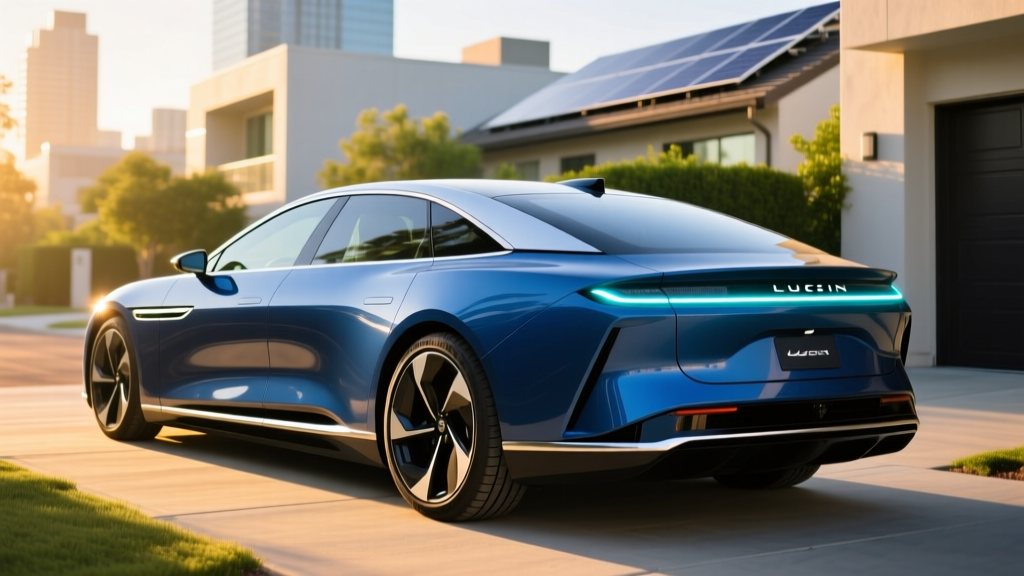
If you're searching for a Lucid for sale, you're likely looking at the Air — the company's flagship luxury sedan that continues to set the benchmark for electric-vehicle range and efficiency. Now in its 2026 model year, the Lucid Air lineup spans from the accessible Pure to the ultra-high-performance Sapphire, with pricing that stretches from under $70,000 to over a quarter-million dollars. But range stickers and horsepower figures only tell part of the story. This profile gives you the real-world data, charging realities, and tax-credit nuances you need before signing a purchase agreement.
2026 Lucid Air Lineup at a Glance
Lucid offers the Air in four primary trims for 2026. The Pure and Touring share a single-motor rear-wheel-drive architecture focused on efficiency, while the Grand Touring adds dual-motor all-wheel drive. The Sapphire sits at the apex as a limited-production tri-motor hyper-sedan. Battery chemistry across the lineup is NMC (nickel manganese cobalt), optimized for energy density rather than the LFP chemistry you'd find in some lower-cost EVs.
| Spec | Pure | Touring | Grand Touring | Sapphire |
|---|---|---|---|---|
| EPA Range | 419 mi | 411 mi | 512 mi | 427 mi |
| Battery (usable) | 88 kWh | 88 kWh | 112 kWh | 118 kWh |
| Chemistry | NMC | NMC | NMC | NMC |
| Drivetrain | RWD | RWD | AWD (Dual-Motor) | AWD (Tri-Motor) |
| Horsepower | 430 hp | 620 hp | 819 hp | 1,234 hp |
| 0–60 mph | 5.2 sec | 3.4 sec | 3.0 sec | 1.89 sec |
| Peak DC Charge | 200 kW | 200 kW | 300 kW | 300 kW |
| 10–80% DC Time | ~30 min | ~30 min | ~25 min | ~25 min |
| Base MSRP | $69,900 | $78,900 | $110,900 | $249,000 |
| MPGe (combined) | 140 MPGe | 136 MPGe | 131 MPGe | 109 MPGe |
Real-World Range: What to Actually Expect
The Grand Touring's 512-mile EPA estimate remains the highest of any production EV sold in the US. In real-world mixed driving, owners consistently report 440–480 miles on a full charge. Highway-only driving at 75 mph typically yields 380–420 miles. In cold weather (below 32°F), expect a 15–25% range reduction, dropping the Grand Touring to roughly 340–380 miles. The Pure and Touring, with smaller batteries, see real-world ranges of approximately 350–380 miles in mild conditions.
Lucid's efficiency advantage is genuine. The Air's miniaturized drive units and 900V+ electrical architecture allow it to extract more miles per kWh than virtually any competitor. Per fueleconomy.gov, the Pure achieves roughly 25 kWh/100 mi in combined driving — a figure that translates directly to lower charging costs and less frequent stops on road trips. However, no EV achieves its EPA sticker on the highway at sustained speeds in winter conditions, and the Air is no exception.
Charging Speed and Infrastructure
Lucid's 900V electrical architecture enables some of the fastest DC charging in the industry, but sustained speed depends heavily on the trim and the charger you're plugged into.
| Charge Level | Pure / Touring | Grand Touring / Sapphire |
|---|---|---|
| Level 1 (120V, 1.4 kW) | ~4 mi/hr | ~4 mi/hr |
| Level 2 (240V, 11.5 kW) | ~38 mi/hr | ~38 mi/hr |
| DC Fast (peak) | 200 kW | 300 kW |
| DC 10–80% | ~30 min | ~25 min |
| Mi added in 15 min (peak) | ~120 mi | ~200 mi |
A critical nuance: the Grand Touring and Sapphire can peak at 300 kW, but that rate only holds between roughly 10–40% State of Charge (SoC). Above 60%, the charge curve tapers significantly, dropping below 150 kW past 80%. This is standard lithium-ion behavior, but it means your average charging speed on a 10–80% session is closer to 200–220 kW, not the headline 300 kW figure. You'll also need a 350 kW-capable DC fast charger — such as those from Electrify America or IONITY — to access these peak rates. On a 150 kW station, all trims will charge at approximately the same speed.
For home charging, the onboard 11.5 kW AC charger adds about 38 miles of range per hour. A full charge on the Grand Touring's 112 kWh battery takes roughly 10–11 hours from empty on a Level 2 home charger — easily handled overnight. Installation of a 48-amp Level 2 home charger typically costs $800–$2,000 depending on panel capacity and run length.
Pricing, Trims, and Federal Tax Credit Eligibility
The Lucid Air's pricing structure has stabilized for 2026, with the Pure acting as a genuine entry point into luxury EV ownership. However, federal tax credit eligibility under IRS §30D rules is complex and varies by trim and buyer circumstances.
| Trim | Base MSRP | As-Tested (typical) | MSRP Cap Eligible? | Est. After Credit |
|---|---|---|---|---|
| Pure | $69,900 | $72,000–$75,000 | Yes (sedan cap: $55,000) | No — exceeds $55K sedan cap |
| Touring | $78,900 | $82,000–$86,000 | No | No — exceeds $55K sedan cap |
| Grand Touring | $110,900 | $118,000–$125,000 | No | No — exceeds $55K sedan cap |
| Sapphire | $249,000 | $255,000+ | No | No — exceeds $55K sedan cap |
Under current §30D rules, new sedans must have an MSRP at or below $55,000 to qualify for the up-to-$7,500 federal tax credit. Every 2026 Lucid Air trim exceeds this threshold. The Air does not qualify for the new-vehicle federal EV tax credit. Buyers may still benefit from state and local incentives, utility rebates, and potential employer or charging-network credits. If you're considering a used Lucid Air, the §25E used clean vehicle credit (up to $4,000, income-capped) may apply to models priced at $25,000 or below — though no Air currently meets that price point on the used market. Always consult a tax professional and verify current rules at IRS.gov.
Interior, Cargo, and Technology
The Air's cabin is minimalist and screen-forward, dominated by a 34-inch curved glass cockpit display that spans the driver's instrument cluster and infotainment system. A lower retractable touchscreen handles climate, navigation, and media controls. The DreamDrive Pro ADAS suite (standard on Touring and above, optional on Pure) includes adaptive cruise, lane-centering, automated parking, and a suite of LiDAR and camera sensors. This is an SAE Level 2 driver-assistance system — the driver must remain engaged and hands-on or eyes-on at all times. It is not autonomous driving.
Interior space is genuinely generous for a sedan. Rear-seat legroom measures approximately 37.4 inches, competitive with full-size luxury sedans. Cargo volume comes in at 32 cubic feet total — 16.2 cu ft in the trunk and 15.8 cu ft in the front trunk (frunk). That frunk is one of the largest in any EV and makes the Air surprisingly practical for road trips, airport runs, and weekly grocery hauls.
Notable drawbacks: The infotainment system, while visually impressive, has drawn criticism for sluggish response times and an absence of wireless Apple CarPlay/Android Auto (wired only). The sedan's low roofline also means rear headroom is tighter than in crossover competitors, and the panoramic glass roof, while beautiful, provides limited shade options on bright days.
Efficiency and Ownership Costs
Efficiency is where Lucid's engineering pays tangible dividends. At 140 MPGe combined (Pure), the Air extracts more range per dollar of electricity than any luxury EV competitor. At a national average residential electricity rate of ~$0.16/kWh, fully charging the Pure's 88 kWh battery costs roughly $14.08 — good for about 350 real-world miles. That's approximately $0.04 per mile, compared to roughly $0.12–$0.15 per mile for a gasoline luxury sedan averaging 25 MPG at $3.50/gallon.
Lucid's warranty coverage includes:
- Basic Vehicle: 4 years / 50,000 miles
- Battery & Powertrain: 8 years / 100,000 miles (capacity retention threshold: 70%)
- Roadside Assistance: 4 years / 50,000 miles
The 8-year/100,000-mile battery warranty is industry-standard for luxury EVs, matching BMW, Mercedes, and Porsche. The 70% capacity retention threshold means Lucid guarantees the battery will hold at least 70% of its original capacity over the warranty period — consistent with competitors. Independent long-term data on Lucid battery degradation is still limited given the brand's relative youth (first deliveries in late 2021), but NMC chemistry in a thermally managed pack with Lucid's conservative buffer strategy suggests degradation should track with industry norms of 1–2% per year under typical use.
How It Compares: Lucid Air vs. Key Rivals
If you're evaluating a Lucid Air for sale, you're likely cross-shopping these competitors:
- Tesla Model S (Long Range): EPA 402 mi, starts at ~$74,990. More Supercharger access, faster infotainment, but lower range and efficiency than the Air Grand Touring. Aging interior.
- Mercedes-Benz EQS 450+: EPA 390 mi, starts at ~$105,550. More traditional luxury feel, better rear-seat comfort, but significantly less range and slower charging.
- BMW i7 eDrive50: EPA 318 mi, starts at ~$106,695. Superb build quality and ride comfort, but 200 fewer miles of range than the Grand Touring.
- Porsche Taycan: EPA 283–318 mi (depending on trim), starts at ~$92,000. Superior driving dynamics, but far less range. Different buyer profile.
- Class-leading EPA range (512 mi Grand Touring)
- Best-in-class efficiency (lowest kWh/100 mi in luxury segment)
- Genuinely spacious cabin with large frunk
- Ultra-fast 300 kW DC charging (GT/Sapphire)
- 900V architecture future-proofs charging capability
- Sapphire variant offers hypercar performance in a sedan
- No federal tax credit eligibility (all trims exceed $55K sedan cap)
- Infotainment can be sluggish; no wireless phone projection
- Limited service center network vs. Tesla or legacy luxury brands
- Low roofline compromises rear headroom for tall passengers
- Brand is young — long-term reliability data still limited
- Resale value uncertainty compared to established luxury marques
Who Should Buy the Lucid Air?
Choose the Lucid Air Pure if: You want maximum range per dollar in a luxury sedan, primarily commute and take moderate road trips, and don't need AWD. At ~$70K, it's the value play.
Choose the Touring if: You want the Pure's efficiency but need more passing power and premium features, and you don't need the full 512-mile range.
Choose the Grand Touring if: You regularly take 300+ mile road trips, want AWD for inclement weather, and value having the longest-range EV on the market. This is the Air's sweet spot for most luxury-EV buyers.
Choose the Sapphire if: You want sub-2-second 0–60 performance, exclusivity, and don't care about price. This is a low-volume halo car, not a rational purchase.
Look elsewhere if: You need crossover/SUV cargo flexibility, prioritize an established dealer/service network, or your budget depends on the federal tax credit.
Frequently Asked Questions
What is the real-world range of the Lucid Air?
The Grand Touring delivers approximately 440–480 miles in real-world mixed driving, with highway-only range around 380–420 miles. The Pure and Touring typically achieve 350–380 miles in mixed use. Cold weather (below freezing) reduces range by 15–25% across all trims.
How fast does the Lucid Air charge at home and on the road?
On a Level 2 home charger (240V, 48A), the Air adds approximately 38 miles of range per hour, with a full charge taking 8–11 hours depending on battery size. On DC fast chargers, the Grand Touring and Sapphire peak at 300 kW, achieving a 10–80% charge in roughly 25 minutes. The Pure and Touring peak at 200 kW with 10–80% in about 30 minutes.
Does the Lucid Air qualify for the $7,500 federal EV tax credit?
No. Under current IRS §30D rules, new sedans must have an MSRP at or below $55,000 to qualify. All 2026 Lucid Air trims exceed this cap. State and local incentives may still apply. Consult a tax professional and verify at IRS.gov.
Is the Lucid Air worth buying over a Tesla Model S or Mercedes EQS?
If range and efficiency are your top priorities, the Air (especially the Grand Touring) has no equal. The Tesla Model S offers better charging infrastructure access and a more mature software experience, while the Mercedes EQS delivers a more traditional luxury interior. The Air trades some infotainment polish and service-network breadth for best-in-class range.
What are the biggest concerns with buying a Lucid?
Lucid's service center network is still expanding, so coverage in rural areas is limited. Infotainment responsiveness has been a common complaint. As a young brand, long-term reliability and resale value carry more uncertainty than legacy luxury automakers. However, the 8-year/100,000-mile battery warranty provides meaningful protection.
What battery chemistry does the Lucid Air use?
All 2026 Lucid Air trims use NMC (nickel manganese cobalt) lithium-ion cells, chosen for their high energy density. This enables the Air's exceptional range but means the battery is not LFP (lithium iron phosphate), which offers longer cycle life at lower energy density but would add weight and reduce range.
Can the Lucid Air use Tesla Superchargers?
Lucid has committed to NACS (North American Charging Standard) adoption, and newer 2025+ models include native NACS ports or adapter compatibility. Verify with your dealer whether the specific 2026 Air you're considering has a native NACS port or requires a CCS-to-NACS adapter for Tesla Supercharger access.