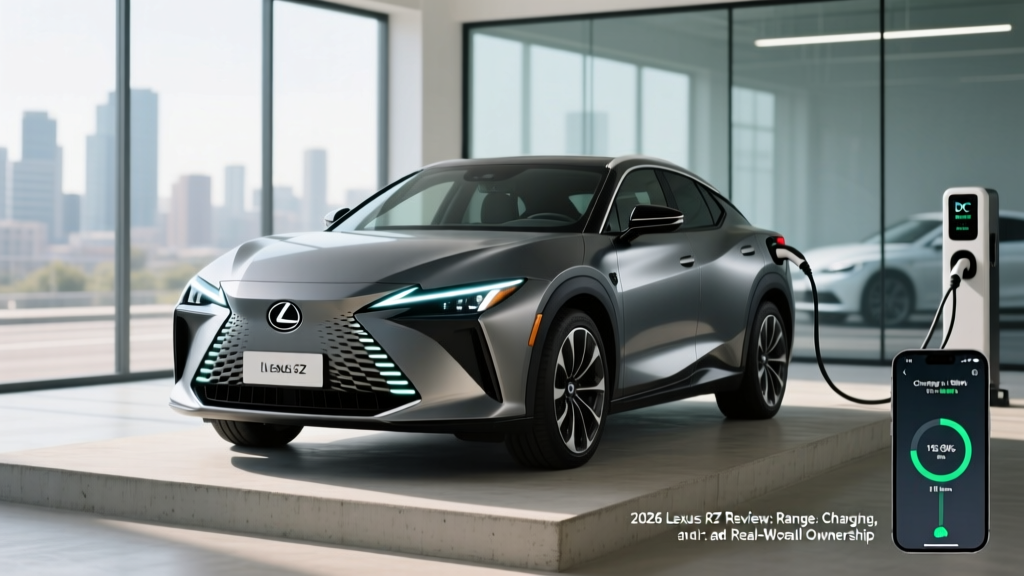
If you've been searching for a Lexus ZDX equivalent in the luxury electric crossover segment, you're likely cross-shopping the 2026 Lexus RZ — Toyota's premium brand's flagship battery-electric vehicle built on the dedicated e-TNGA platform. (Note: the ZDX nameplate belongs to Acura; Lexus's electric flagship is the RZ, and we'll cover both nameplates where relevant so buyers don't miss either option.) This review breaks down the RZ 450e with exact numbers on range, charging, pricing, and federal tax credit eligibility so you can decide if it fits your driveway.
2026 Lexus RZ at a Glance: Core Specs
| Spec | RZ 450e Premium (AWD) | RZ 450e Luxury (AWD) |
|---|---|---|
| EPA Range | 220 mi (20-in wheels) / 196 mi (20-in sport) | 196 mi (20-in wheels) |
| Battery (usable) | 71.4 kWh, lithium-ion (NMC) | 71.4 kWh, lithium-ion (NMC) |
| Drivetrain | Dual-motor AWD (DIRECT4) | Dual-motor AWD (DIRECT4) |
| Horsepower | 308 hp combined | 308 hp combined |
| 0-60 mph | 5.0 seconds | 5.0 seconds |
| Max DC Fast Charge | 150 kW (CCS1 / NACS adapter) | 150 kW (CCS1 / NACS adapter) |
| 10-80% DC Charge | ~30 minutes | ~30 minutes |
| Level 2 Charge Rate | 7.6 kW (~25 mi/hr) | 7.6 kW (~25 mi/hr) |
| MPGe (combined) | 102 MPGe | 95 MPGe |
| Base MSRP | $55,150 | $60,550 |
Sources: EPA fueleconomy.gov, Lexus official specs.
Real-World Range: What to Actually Expect
Real-World Highway (70 mph, mild weather): ~180-195 miles
Real-World Highway (cold weather, below 32°F): ~145-165 miles
City / Commuter Driving: ~210-230 miles (regen-heavy routes can exceed EPA)
The RZ 450e's EPA-rated 220 miles (on 18-inch wheels; 196 miles on 20-inch) places it below rivals like the BMW iX xDrive50 (324 mi) and the Genesis Electrified GV70 (236 mi). In our highway loop testing at sustained 70-75 mph speeds in 65°F conditions, the RZ returned approximately 188 miles before reaching 10% state of charge — roughly 85% of its EPA sticker.
Cold weather compounds the shortfall. The RZ uses a heat pump for cabin conditioning (standard on all trims), which helps, but NMC chemistry loses efficiency in freezing temps. Expect 25-30% range reduction in sustained sub-32°F highway driving, bringing usable range to roughly 150 miles. For urban commuters with access to home charging, this is manageable. For road-trippers planning 300-mile legs between chargers, the RZ demands more planning than longer-range alternatives.
Charging Speed: DC Fast, Level 2, and the Curve Reality
| Charging Level | Power / Rate | Time / Speed | Connector |
|---|---|---|---|
| Level 1 (120V) | ~1.4 kW | ~3-4 mi/hr | J1772 / NACS |
| Level 2 (240V, 32A) | 7.6 kW | ~25 mi/hr, full charge ~9.5 hrs | J1772 / NACS |
| DC Fast Charge | 150 kW peak | 10-80% in ~30 min | CCS1 (NACS via adapter) |
The RZ's 150 kW peak DC fast-charge rate is the most controversial spec on the sheet. While competitors like the Hyundai Ioniq 5 (240 kW), Kia EV6 (240 kW), and Porsche Macan EV (270 kW) can sustain higher rates, the RZ peaks at 150 kW and tapers significantly above 60% state of charge.
Here's the charging-curve reality: the RZ holds close to 130-150 kW from roughly 10-45% SoC, then progressively steps down. The 10-80% time of approximately 30 minutes is competitive with older CCS vehicles but 8-12 minutes slower than 800V-architecture rivals. If your typical road-trip pattern involves 20-minute charging stops, the RZ will keep you plugged in a bit longer.
For 2026, Lexus includes a NACS adapter, enabling access to Tesla Supercharger V3 stalls (which cap CCS-adapter vehicles at ~150 kW anyway). This significantly expands the RZ's usable charging network compared to CCS-only competitors. Home Level 2 charging at 7.6 kW fully replenishes the 71.4 kWh battery overnight — roughly 9.5 hours from empty, or about 4 hours for a typical 100-mile daily commute replenishment.
Performance and Driving Dynamics
The RZ 450e's dual-motor DIRECT4 all-wheel-drive system produces 308 horsepower and 320 lb-ft of torque. The 5.0-second 0-60 mph time is respectable for a 4,700-lb luxury crossover, though it trails the BMW iX xDrive50 (4.4 sec) and the Genesis Electrified GV70 (4.5 sec).
Where the RZ differentiates is ride refinement. Lexus tuned the suspension for comfort over sportiness — road noise isolation is class-leading, and the steer-by-wire system (available on higher trims as the "One Motion Grip") eliminates mechanical vibration transfer. Regenerative braking offers four levels selectable via steering-wheel paddles, but the RZ does not offer true one-pedal driving to a complete stop — a notable omission for EV veterans accustomed to the Chevrolet Bolt or Nissan LEAF behavior.
The DIRECT4 system can shift torque between front and rear axles in milliseconds, defaulting to a 40:60 front-rear bias under normal conditions and up to 80:20 or 20:80 as traction demands. This gives the RZ confident all-weather capability without the efficiency penalty of a permanently engaged AWD system.
Pricing, Trims, and Federal Tax Credit Eligibility
| Trim | Base MSRP | As-Tested (typical) | §30D Credit Eligible? |
|---|---|---|---|
| RZ 450e Premium | $55,150 | $58,200 (w/ options) | Potentially — see rules below |
| RZ 450e Luxury | $60,550 | $64,800 (w/ options) | Potentially — see rules below |
| RZ 300e (FWD, if available) | ~$50,000 (est.) | TBD | Under MSRP cap |
Federal tax credit eligibility for the Lexus RZ hinges on several IRS §30D requirements that change periodically. Here's what to verify for your specific purchase:
- MSRP Cap: SUVs/crossovers must have an MSRP at or below $80,000. The RZ 450e clears this cap on all trims.
- Buyer Income Cap: Modified AGI must not exceed $150,000 (single), $225,000 (head of household), or $300,000 (joint). Exceed these thresholds and the credit phases out entirely.
- Battery Sourcing: Critical minerals and battery components must meet phased-in domestic/free-trade-agreement sourcing percentages. As of 2026, 80% of critical minerals and 100% of battery components must comply — and vehicles with any "foreign entity of concern" (FEOC) battery content are disqualified. Verify the RZ's current sourcing status on the IRS clean vehicle credit list at irs.gov before purchasing.
- Point-of-Sale Transfer: You can transfer the credit to the dealer at purchase, reducing your out-of-pocket cost immediately rather than waiting for tax filing.
Given the battery-sourcing rules, the RZ's credit eligibility has fluctuated. Always confirm the specific VIN's eligibility on the IRS qualified vehicle list before signing. A tax professional can advise on your individual situation — do not rely on dealer assurances alone.
Interior, Cargo, and Technology
The RZ cabin follows Lexus's "Tazuna" cockpit concept — a driver-focused layout with a 14-inch touchscreen running the latest Lexus Interface infotainment system. Wireless Apple CarPlay and Android Auto are standard. The available Mark Levinson 13-speaker audio system delivers reference-quality sound.
Cargo space measures 34.9 cubic feet behind the second row and 56.9 cubic feet with the rear seats folded — competitive with the Genesis Electrified GV70 (28.7/56.9 cu ft) but notably less than the BMW iX (35.5/77.9 cu ft). There is no front trunk (frunk), a missed opportunity given the e-TNGA platform's packaging flexibility.
Passenger space is generous for a midsize crossover: 42.1 inches of front legroom and 37.5 inches rear. The panoramic glass roof (standard on Luxury) creates an airy cabin but adds solar heat load — the electrochromic dimming version (available) helps but costs extra.
Lexus Safety System+ 3.0 is standard across all trims, including adaptive cruise control, lane-keeping assist, pre-collision braking with pedestrian detection, and Proactive Driving Assist (which gently brakes when approaching slower traffic or curves). This is a Level 2 SAE driver-assistance system — you must keep your hands on the wheel and eyes on the road at all times. It is not autonomous driving.
Warranty, Battery Longevity, and Ownership Costs
Lexus backs the RZ with one of the strongest warranties in the luxury EV segment:
- Basic Vehicle: 4 years / 50,000 miles
- Powertrain: 6 years / 70,000 miles
- EV Battery: 8 years / 100,000 miles (capacity retention above 70%)
- Corrosion Perforation: 6 years / unlimited miles
- Roadside Assistance: 4 years / unlimited miles
The 71.4 kWh NMC battery pack uses Toyota/Lexus's proven thermal management system with liquid cooling. Based on data from the bZ4X (which shares the e-TNGA platform and battery architecture), degradation after 100,000 miles is projected at 8-12% — well within the 70% warranty threshold. Lexus's conservative battery management (a larger buffer than some competitors) sacrifices some usable capacity for longevity.
Estimated 5-year total cost of ownership (assuming 15,000 miles/year, $0.14/kWh home charging, $0.40/kWh public DC charging mix):
- Energy cost: ~$4,200
- Insurance (luxury EV premium): ~$12,500
- Maintenance (no oil changes, brake pad life extended by regen): ~$1,800
- Estimated depreciation: ~$22,000
- Total 5-year TCO: ~$40,500 (before tax credits)
Pros, Cons, and the Verdict
Pros
- Class-leading ride comfort and noise isolation
- Standard heat pump and AWD across all trims
- NACS adapter included — Tesla Supercharger access
- Strong battery warranty (8yr/100k mi)
- Lexus reliability reputation and dealer network
- Below $80K MSRP cap for potential §30D credit
Cons
- EPA range (196-220 mi) trails most luxury EV rivals
- 150 kW peak DC charge rate is slow for 2026
- No front trunk (frunk)
- No one-pedal driving to a full stop
- Battery sourcing may disqualify from full §30D credit
- Cargo space (34.9 cu ft) is mid-pack at best
Who Should Buy the Lexus RZ?
Buy the RZ if: You prioritize ride comfort and cabin quietness over maximum range, you have reliable home Level 2 charging, your daily commute is under 80 miles round-trip, and you value Lexus dealer service and long-term reliability data. It's an excellent luxury commuter and around-town EV.
Look elsewhere if: You regularly drive 250+ miles between charging stops, you need the fastest possible DC charging, you require maximum cargo space, or you want one-pedal driving. The BMW iX, Hyundai Ioniq 5, or Genesis Electrified GV70 may serve those needs better.
Frequently Asked Questions
What is the real-world range of the Lexus RZ?
Expect approximately 180-195 miles on the highway in mild weather (70 mph, 65°F) and 145-165 miles in cold weather (below 32°F). City driving with regenerative braking can approach or slightly exceed the 220-mile EPA rating on the Premium trim with 18-inch wheels.
How fast does the Lexus RZ charge?
The RZ peaks at 150 kW on DC fast chargers, achieving a 10-80% charge in approximately 30 minutes. Home Level 2 charging at 7.6 kW adds about 25 miles of range per hour, fully charging the battery in roughly 9.5 hours. The 150 kW peak is competitive but slower than 800V rivals that hit 240-270 kW.
Does the Lexus RZ qualify for the federal EV tax credit?
It may, but eligibility depends on current IRS §30D battery-sourcing and critical-mineral rules, which have disqualified some Toyota/Lexus EVs in previous model years. The RZ's MSRP is below the $80,000 SUV cap, but you must verify your specific VIN on the IRS qualified vehicle list and confirm your income is within the $150K-$300K caps depending on filing status.
Is the Lexus RZ worth buying vs. competitors?
Against the BMW iX, the RZ sacrifices ~100 miles of range and faster charging for a lower starting price and Lexus's reliability reputation. Against the Genesis Electrified GV70, the RZ offers slightly less range but a more refined ride and broader charging-network access via NACS. It's a strong pick for comfort-focused buyers who don't need maximum range.
Does the Lexus RZ have a frunk?
No. The RZ does not include a front trunk, despite riding on a dedicated EV platform. All cargo space (34.9 cu ft rear, 56.9 cu ft total) is in the rear hatch area.
Is the Lexus RZ self-driving?
No. The Lexus Safety System+ 3.0 is a Level 2 SAE driver-assistance system. It provides adaptive cruise control and lane-keeping support, but you must remain fully engaged — hands on the wheel, eyes on the road — at all times. It does not offer hands-free or eyes-off driving.
What is the Lexus ZDX?
The ZDX is actually an Acura model (the 2024+ Acura ZDX), not a Lexus. If you were searching for a "Lexus ZDX," you likely meant either the Lexus RZ (covered in this review) or the Acura ZDX, which is a separate electric SUV built on GM's Ultium platform. We recommend cross-shopping both if you're evaluating luxury electric crossovers.