The Short Answer on the 2026 Lexus ES EV
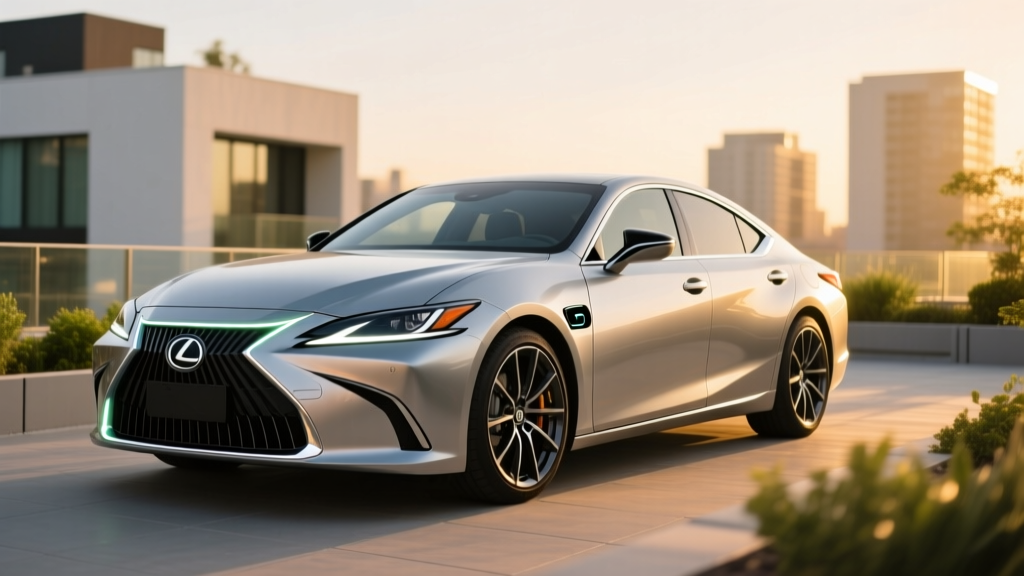
As of early 2026, Lexus has not yet released final EPA-certified specifications for a fully electric ES sedan. Toyota's luxury division has confirmed that an electrified ES successor is in development, built on a dedicated EV platform, but the exact model name, battery size, range, and pricing remain preliminary. Based on the TZ platform architecture shared with upcoming Toyota EVs and Lexus's current RZ 450e benchmark, industry estimates point to a 71–95 kWh battery, 250–320 miles of EPA range, a starting MSRP around $55,000–$62,000, and DC fast charging peaking near 150–180 kW. This guide breaks down what buyers should expect, how an electric ES compares to the current ES 300h hybrid, and whether it fits your ownership profile — using data from comparable Lexus and platform-mate EVs already on sale.
Where the 2026 Lexus ES EV Stands Right Now
Lexus has been methodical — some would say slow — in its EV rollout. The Lexus RZ 450e, the brand's first dedicated EV, arrived for the 2023 model year with a 72.8 kWh battery and 220 miles of EPA range. Since then, Lexus has signaled a broader EV lineup, including sedan offerings that would logically slot into the ES nameplate's position as the brand's volume luxury sedan.
The current ES 300h hybrid sedan continues through 2026, offering up to 44 MPG combined. Any electric ES variant would need to deliver meaningfully more range and faster charging than the RZ 450e to be competitive against the BMW i5, Mercedes EQE, and Genesis Electrified G80.
What this means for buyers: If you need a car today, the ES 300h hybrid is available and proven. If you're set on a battery-electric Lexus sedan, you're looking at a wait — and should use this time to prepare your home charging setup and evaluate whether an EV fits your driving pattern.
Estimated Specs: What Platform Data Tells Us
While final specs are unconfirmed, we can make informed projections based on Toyota's e-TNGA platform evolution and competitor benchmarks in the midsize luxury EV sedan segment.
| Specification | Estimated Figure | Basis |
|---|---|---|
| Battery Capacity (usable) | 75–90 kWh | Segment norm; RZ 450e uses 72.8 kWh |
| Battery Chemistry | NMC (likely), LFP possible for base trim | Toyota has announced LFP adoption for cost-reduced models |
| EPA Range (est.) | 260–320 miles | Comparable to BMW i5 eDrive40 (295 mi), Genesis Electrified G80 (282 mi) |
| Peak DC Fast Charge Rate | 150–180 kW | RZ 450e peaks at ~150 kW; platform upgrade expected |
| 10–80% DC Charge Time (est.) | 25–32 minutes | Based on charge curve of similar NMC packs |
| Level 2 AC Charging | 11 kW onboard charger | Segment standard for luxury EVs |
| Drivetrain | RWD base / AWD optional | Follows BMW i5, Mercedes EQE layout |
| Horsepower (est.) | 250–350 hp | ES 300h produces 215 hp; EV variant likely higher |
| 0–60 mph (est.) | 5.5–6.5 seconds | Lexus prioritizes refinement over performance |
| Starting MSRP (est.) | $55,000–$62,000 | ES 300h starts at ~$44,000; EV premium of $10–18K typical |
| Battery Warranty | 8 years / 100,000 miles | Standard Lexus hybrid/EV battery coverage |
Critical caveat: These figures are estimates based on platform analysis and competitor benchmarking. Lexus has not published official EPA or SAE-certified numbers. Treat any pre-announcement spec sheet as preliminary until the EPA's fueleconomy.gov database is updated.
EV vs. Hybrid: How an Electric ES Would Compare to the ES 300h
The ES 300h is one of the most efficient luxury sedans on the market. An EV variant would need to justify a higher purchase price against a hybrid that already delivers excellent real-world economy.
| Factor | ES 300h (2026) | ES EV (Estimated) |
|---|---|---|
| Starting MSRP | ~$44,000 | ~$55,000–$62,000 |
| Fuel / Energy Cost per Mile | ~$0.11/mi (gas at $3.50/gal, 44 MPG) | ~$0.04–$0.06/mi (home L2 at $0.13/kWh) |
| Annual Fuel/Energy (12,000 mi) | ~$1,320 | ~$480–$720 |
| 5-Year Fuel/Energy Cost | ~$6,600 | ~$2,400–$3,600 |
| Maintenance (5-yr est.) | ~$2,500 (oil changes, filters, brakes) | ~$1,200 (no oil, regen saves brakes) |
| EPA Range / Tank | ~594 mi (13.2 gal tank, 44 MPG) | ~260–320 mi (est.) |
| Refueling / Recharge Time | 5 minutes at any gas station | 25–32 min (10–80% DC); 7–9 hrs (Level 2 home) |
| Cold-Weather Range Loss | Minimal (~5%) | 15–30% in sub-freezing temps |
| Federal Tax Credit (§30D) | Not eligible | Up to $7,500 (subject to sourcing, income, MSRP caps) |
| 5-Year Estimated Total Cost | ~$53,100 (purchase + fuel + maintenance) | ~$58,600–$66,800 (less up to $7,500 credit) |
The math: Even with a $7,500 federal tax credit, the ES EV would carry a higher 5-year cost than the ES 300h for most buyers. The hybrid's lower purchase price and exceptional efficiency make it difficult for an EV to achieve cost parity over a typical ownership period — unless electricity costs are very low, annual mileage is very high, or state incentives stack on top of federal credits.
Federal Tax Credit: Will the ES EV Qualify?
Under current IRS §30D rules for 2026, the federal clean vehicle credit offers up to $7,500, but eligibility depends on several factors that are difficult to predict for an unreleased model:
- MSRP cap: Sedans must have an MSRP at or below $55,000 to qualify. If the ES EV starts above this threshold (likely for most trims), only the base model might qualify — if at all.
- Buyer income limits: Adjusted gross income must not exceed $150,000 (single), $225,000 (head of household), or $300,000 (joint).
- Battery sourcing: A percentage of critical minerals and battery components must be sourced from the U.S. or free-trade-agreement partners. Toyota's supply chain has been evolving, but compliance varies by model and model year.
- Point-of-sale transfer: Eligible buyers can transfer the credit to the dealer at purchase, reducing the out-of-pocket price immediately rather than waiting for tax filing.
- Final assembly: Vehicle must undergo final assembly in North America.
Practical outlook: Given that the ES EV will likely start near or above the $55,000 sedan cap, full credit eligibility is uncertain. Buyers should consult a tax professional and check the IRS's updated qualifying vehicle list once Lexus publishes official pricing.
Real-World Ownership: What First-Time EV Buyers Must Plan For
If you've never owned an EV, the ownership experience differs from a hybrid in ways that go beyond the fuel pump. Here's what to evaluate before committing:
Home Charging Access
Level 2 home charging (240V, 7–11 kW) is the backbone of convenient EV ownership. Without it, daily life with an EV becomes significantly harder. Expect to budget $800–$2,500 for a quality Level 2 charger and professional installation, assuming your electrical panel has capacity. If you need a panel upgrade (100A to 200A), add $1,500–$3,500.
If you cannot install home charging (apartment, street parking, HOA restrictions), an EV is substantially less convenient than the ES 300h hybrid. Public DC fast charging costs $0.30–$0.50/kWh — roughly double the cost of gas per mile in some markets — and adds 25–35 minutes to your routine multiple times per week.
Climate and Range Reality
EPA range estimates assume moderate temperatures and mixed driving. In real-world conditions:
- Highway driving at 75+ mph: Expect 10–15% less range than the EPA sticker.
- Cold weather (below 32°F): Range drops 15–30% due to battery chemistry and cabin heating demands. A heat pump (expected on the ES EV) mitigates this somewhat, but doesn't eliminate the loss.
- Mountain driving: Regenerative braking on descents partially offsets uphill consumption, but net range still decreases on sustained climbs.
For a 280-mile EPA-rated ES EV, plan for ~220–240 miles of usable range in mixed real-world conditions, and as low as ~190–210 miles in winter highway driving.
Charging Curve Reality
Peak DC fast-charge rates (e.g., 180 kW) are sustained only between roughly 10–50% state of charge. Above 80%, charging slows dramatically to protect battery health. A "10–80% in 28 minutes" claim may translate to 45+ minutes for a 10–95% fill on a road trip. The ES 300h, by contrast, refills its 13.2-gallon tank in under 5 minutes at any station.
Common Misconceptions — Fact-Checked
| Myth | Fact |
|---|---|
| "EVs are always cheaper to own than hybrids." | Not true for moderate-mileage drivers. The ES 300h's low purchase price and 44 MPG often beat EV economics over 5 years, especially without full tax credit eligibility. |
| "Fast charging is as quick as filling up with gas." | Even at 180 kW, a 10–80% charge takes 25–32 minutes. Gas takes under 5. Road trips will take longer in an EV. |
| "The battery will need expensive replacement within a few years." | Modern NMC and LFP batteries are warrantied for 8 years/100,000 miles at 70%+ capacity retention. Most packs last well beyond warranty. Lexus/Toyota has an exceptional track record with hybrid battery longevity. |
| "All EVs qualify for the $7,500 federal tax credit." | Many don't. Sedans face a $55,000 MSRP cap, and battery sourcing rules disqualify some models. Always verify on the IRS qualifying list before purchasing. |
| "I can charge from any regular outlet quickly." | Level 1 (120V) charging adds only 3–5 miles of range per hour. A full charge from empty could take 24+ hours. Level 2 (240V) is essential for daily use. |
Decision Framework: Should You Wait for the ES EV or Buy the ES 300h Now?
Choose the ES 300h Hybrid If:
- You need a car within the next 6 months and don't want to wait for an unannounced model.
- You lack reliable home charging access (apartment, street parking, no garage).
- Your annual mileage is under 12,000 miles — the fuel savings of an EV won't offset the price premium.
- You regularly drive in extreme cold (below 10°F) where EV range loss is most pronounced.
- You take frequent long road trips and don't want to plan around DC fast-charging stops.
- You want a proven, immediately available luxury sedan with 44 MPG and a sub-$45,000 starting price.
Wait for the ES EV (or Consider a Competitor) If:
- You have home Level 2 charging and your daily commute is under 80 miles round-trip.
- Your annual mileage exceeds 15,000 miles, making the per-mile energy savings meaningful.
- You live in a state with additional EV incentives (e.g., California, Colorado, Massachusetts) that stack with the federal credit.
- You value silent, vibration-free electric driving and instant torque for city and suburban use.
- You're willing to wait 12–18+ months for Lexus to finalize specs, pricing, and availability.
- You want to future-proof against potential urban low-emission zone restrictions.
Consider a Competitor Now If:
- You want a luxury electric sedan today: the BMW i5 eDrive40 (295 mi EPA, ~$67,000), Genesis Electrified G80 (282 mi, ~$80,000), or Mercedes EQE 350+ (305 mi, ~$75,000) are all available with confirmed specs.
Frequently Asked Questions
Has Lexus officially announced the 2026 ES EV?
Lexus has confirmed that an electrified next-generation ES is in development, but as of early 2026, no official specifications, pricing, or on-sale date have been published. All figures in this guide are estimates based on platform data and competitor analysis.
Will the ES EV use the same platform as the RZ 450e?
Likely an evolved version. Toyota has been developing next-generation EV architectures with improved battery packaging and charging speeds. The ES EV would need significantly more range and faster charging than the RZ 450e's 220-mile EPA rating to compete in the luxury sedan segment.
What battery chemistry will the ES EV use?
Unconfirmed. Toyota has announced plans to use LFP (lithium iron phosphate) chemistry in more affordable models for its cost, safety, and cycle-life advantages, while reserving NMC (nickel manganese cobalt) for higher-range variants. The ES EV could offer both depending on trim.
How does the ES EV compare to the Tesla Model S?
The Model S is a larger, more expensive, and more performance-oriented vehicle (starting ~$80,000, up to 402 mi EPA range). The ES EV would target a more traditional luxury sedan buyer — quieter, more comfort-focused, and likely priced $15,000–$25,000 lower than the Model S.
Is the ES 300h hybrid being discontinued?
Not as of 2026. The ES 300h continues in the Lexus lineup and is expected to remain available alongside any future EV variant, at least in the near term. Lexus has taken a multi-powertrain approach rather than an abrupt EV-only transition.
What should I do now if I'm interested in a Lexus EV sedan?
Install Level 2 home charging if you haven't already — it's useful for any current or future EV. Test-drive the RZ 450e to experience Lexus's EV driving dynamics. And if you need a car soon, the ES 300h hybrid remains an outstanding luxury sedan with minimal compromises.