The Bottom Line on the 2026 Lexus ES Electric
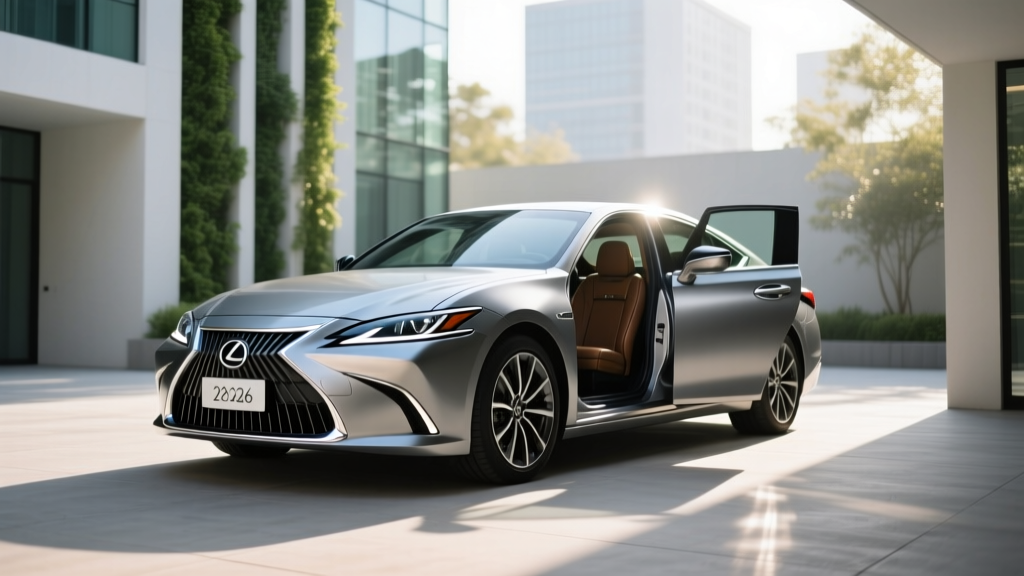
The 2026 Lexus ES Electric is the first battery-electric version of Lexus's long-running luxury sedan, built on the same dedicated EV platform introduced with the RZ 450e. Based on Lexus's announced product roadmap and the architecture shared with the next-generation Toyota bZ sedan lineup, we expect an EPA-estimated range between 280 and 320 miles, a starting MSRP in the $55,000–$60,000 range, and DC fast-charging capability peaking around 150 kW. The ES Electric is positioned to compete with the BMW i5, Mercedes-Benz EQE, and Tesla Model S while retaining the ES nameplate's hallmark ride comfort and quiet cabin. If you currently own or are considering a gas-powered ES 350, the electric variant trades roughly $8,000–$12,000 in upfront cost for significantly lower fuel and maintenance expenses over a five-year ownership period.
What We Know About the 2026 Lexus ES Electric So Far
Lexus confirmed an electrified ES sedan as part of its broader commitment to offering an electrified option across its entire lineup. The ES Electric rides on an evolution of the e-TNGA platform — the same dedicated battery-electric architecture underpinning the RZ 450e and the bZ4X — but with refinements aimed at improving range efficiency and charging speed over those earlier applications.
Here is what the preliminary data points suggest, based on Lexus's current EV powertrain technology and competitive positioning:
| Specification | Estimated Figure | Notes |
|---|---|---|
| Battery Capacity (usable) | ~75–85 kWh | Likely NMC chemistry for energy density |
| EPA-Estimated Range | 280–320 miles | Depends on trim and drivetrain (FWD vs AWD) |
| Drivetrain | FWD standard, AWD optional | Dual-motor AWD reduces range ~15–20 mi |
| Peak DC Fast Charge Rate | ~150 kW | 10–80% in approximately 28–32 minutes |
| Level 2 AC Charging | 11 kW onboard charger | ~7–8 hours for a full charge at 48A/240V |
| 0–60 mph | ~5.5–6.5 seconds | Performance tuned for comfort, not sport |
| Horsepower | ~250–340 hp | FWD single-motor vs AWD dual-motor |
| Estimated Base MSRP | $55,000–$60,000 | Before destination, before incentives |
| Battery Warranty | 8 years / 100,000 miles | Lexus standard EV battery coverage |
Important caveat: These figures are preliminary estimates based on Lexus's existing EV hardware and competitive segment benchmarks. Final EPA-certified range, pricing, and powertrain specs will be confirmed closer to the vehicle's on-sale date. We will update this guide as official data becomes available from Lexus and fueleconomy.gov.
Real-World Range Expectations
If the ES Electric achieves an EPA rating of ~300 miles, plan for approximately 250–270 miles of real-world highway driving at 70–75 mph, and as low as 210–230 miles in freezing temperatures (below 32°F). EV range drops 15–30% in cold weather due to cabin heating demands and reduced battery chemistry efficiency. If your commute is under 60 miles round-trip and you charge at home nightly, this range is more than adequate — but road-trippers should plan charging stops every 200–220 miles in winter conditions.
ES Electric vs. Gas ES 350 vs. ES Hybrid: The Numbers
The ES has been one of Lexus's best-selling sedans for years, offered as the V6-powered ES 350 and the ES 300h hybrid. Here is how the incoming EV variant compares on the metrics that matter for ownership cost:
| Metric | ES Electric (Est.) | ES 350 (Gas) | ES 300h (Hybrid) |
|---|---|---|---|
| Starting MSRP | $55,000–$60,000 | ~$44,000 | ~$44,500 |
| EPA Efficiency | ~105–115 MPGe | 26 MPG combined | 44 MPG combined |
| Annual Fuel/Energy Cost* | ~$600–$800 | ~$2,200 | ~$1,300 |
| 5-Year Fuel/Energy Cost | $3,000–$4,000 | $11,000 | $6,500 |
| Maintenance (5-Year Est.) | ~$1,500 | ~$3,500 | ~$3,200 |
| Tailpipe Emissions | None | ~4.6 tons CO₂/yr | ~2.7 tons CO₂/yr |
| Estimated Federal Tax Credit | Up to $7,500** | None | None |
*Based on 15,000 miles/year, $0.16/kWh national average for electricity, and $3.50/gallon regular unleaded. Your actual costs depend on local electricity rates and gas prices. Source: fueleconomy.gov for gas/hybrid MPG figures.
**Federal §30D tax credit eligibility depends on MSRP caps ($55,000 for sedans), buyer income limits ($150,000 single / $300,000 joint AGI), battery sourcing requirements, and point-of-sale transfer rules. Verify current eligibility at IRS.gov before purchasing.
Charging at Home and on the Road: What ES Electric Owners Should Plan For
Charging access is the single most important ownership variable for any EV. Here is the realistic breakdown for the ES Electric:
| Level | Power (kW) | Miles Added Per Hour | Typical Use Case |
|---|---|---|---|
| Level 1 (120V outlet) | 1.4 kW | ~4–5 miles | Overnight trickle; emergency only |
| Level 2 (240V / 48A) | 11 kW | ~32–38 miles | Home daily charging; full overnight refill |
| DC Fast Charge | Up to 150 kW (peak) | ~180–220 mi/hr (peak) | Road trips; 10–80% in ~30 minutes |
Home Charging Installation Costs
If you have a garage or dedicated parking spot with access to your electrical panel, expect the following for a Level 2 home charger installation:
| Item | Cost Range |
|---|---|
| Level 2 EVSE hardware (e.g., ChargePoint Home Flex, Wallbox Pulsar Plus) | $400–$700 |
| Electrician labor (240V / 50A circuit run) | $800–$2,500 |
| Electrical permit | $50–$200 |
| Panel upgrade (if needed — 100A to 200A service) | $1,500–$3,500 |
| Total (no panel upgrade) | $1,250–$3,400 |
| Total (with panel upgrade) | $2,750–$6,900 |
Most homes with modern 200-amp electrical service can accommodate a Level 2 charger without a panel upgrade. If your home has older 100-amp service, budget for the upgrade — and always get a quote from a licensed electrician before committing to hardware.
Public Charging Reality
The ES Electric will use the NACS (North American Charging Standard) connector, aligning with Lexus parent company Toyota's commitment to the Tesla-designed plug. This gives ES Electric owners access to the Tesla Supercharger network — currently the most reliable and expansive DC fast-charging network in the US — via native NACS compatibility, eliminating the need for a CCS-to-NACS adapter.
At a 150 kW-capable Supercharger or Electrify America station, expect a 10–80% session to take approximately 28–32 minutes. Note that charging speed tapers significantly above 80% SoC to protect battery health — charging from 80–100% can take as long as the 10–80% session. For road trips, plan to charge to 80% and move on rather than waiting for a full charge.
Tax Credits, Incentives, and True Cost of Ownership
The IRS §30D Clean Vehicle Credit remains the most significant financial incentive for EV buyers in 2026, but qualifying is not automatic. Here is what applies to the ES Electric:
§30D Federal Tax Credit Checklist (2026 Rules)
- MSRP cap for sedans: Vehicle MSRP must not exceed $55,000. Higher-trim ES Electric models may exceed this cap, disqualifying them from the credit.
- Buyer income limits: Modified AGI must not exceed $150,000 (single filers), $225,000 (head of household), or $300,000 (joint filers).
- Battery sourcing: The vehicle must meet critical mineral and battery component sourcing thresholds that increase each year. Lexus's supply chain compliance will determine eligibility — confirm at the point of sale.
- Point-of-sale transfer: Eligible buyers can transfer the credit to the dealer at purchase, reducing the purchase price upfront rather than waiting for a tax refund.
- Assembly: Vehicle must undergo final assembly in North America.
If the base-trim ES Electric comes in at or below the $55,000 MSRP cap and meets sourcing requirements, the effective price after the maximum $7,500 credit could drop to approximately $47,500–$52,500 — much closer to a well-equipped gas ES 350. However, mid-grade and Luxury trims will likely exceed the cap.
| Cost Category | ES Electric (Base, after credit) | ES 350 (Gas) |
|---|---|---|
| Purchase Price (after incentives) | ~$50,000 | ~$44,000 |
| Fuel / Energy (5 years) | $3,500 | $11,000 |
| Maintenance (5 years) | $1,500 | $3,500 |
| Insurance (5-year est.) | $9,500 | $7,500 |
| Home Charger Install | $2,000 | $0 |
| 5-Year Total | ~$66,500 | ~$66,000 |
The five-year totals are remarkably close. The ES Electric's higher purchase price and insurance premiums are nearly offset by dramatic fuel and maintenance savings. By year six and beyond, the EV pulls ahead as fuel savings compound and the gas car requires more frequent service (transmission fluid, spark plugs, timing components).
Who Should Buy the ES Electric — and Who Shouldn't
Decision Framework: Is the 2026 Lexus ES Electric Right for You?
Choose the ES Electric if:
- You have reliable home Level 2 charging access (garage, driveway, or workplace charger)
- Your daily driving is under 80 miles round-trip, with occasional road trips under 300 miles
- You value cabin silence, smooth acceleration, and low running costs over outright sport performance
- You want to reduce your carbon footprint and your electricity comes from a relatively clean grid
- You qualify for the §30D tax credit (income and MSRP requirements met)
Stick with the ES 350 or ES 300h hybrid if:
- You live in an apartment or condo without charging access and rely on street parking
- You frequently drive 400+ mile trips in regions with sparse DC fast-charging infrastructure
- You live in an area with extreme cold (sustained sub-zero temperatures) where range loss is most severe
- You plan to keep the vehicle 10+ years and are concerned about long-term battery replacement costs ($8,000–$15,000 out of warranty)
- The ES Electric's trim you want exceeds the $55,000 MSRP tax-credit cap, making the price gap too large
Common Misconceptions About the Lexus ES Electric
| Myth | Fact |
|---|---|
| "The battery will need replacing in 5 years." | Modern NMC batteries are engineered for 200,000+ miles with 70–80% capacity retention. Lexus warranties the battery for 8 years / 100,000 miles against excessive degradation. |
| "Charging takes too long for road trips." | A 10–80% DC fast charge takes ~30 minutes — roughly the time for a rest stop, meal, or coffee break. With NACS access to Tesla Superchargers, stops are predictable and reliable. |
| "EVs are worse in cold weather." | Range does drop 15–30% in freezing temps, but preconditioning (warming the battery while plugged in) mitigates charging-speed loss. The ES Electric's heat pump (expected) reduces cabin-heating energy draw significantly. |
| "I'll save money no matter what." | Upfront cost is higher, insurance premiums run 15–25% more for EVs, and savings depend on your electricity rate vs. local gas prices. Run the numbers for your specific situation. |
| "The ES Electric will be self-driving." | Lexus Safety System+ is a Level 2 driver-assistance system per SAE International definitions. You must remain engaged, hands on or near the wheel, at all times. It is not autonomous. |
What First-Time EV Buyers Should Know Before Ordering
If the ES Electric is your first EV, these practical considerations will shape your ownership experience far more than the spec sheet:
- Test your home electrical capacity first. Before ordering, have an electrician assess your panel. A 200-amp service with available capacity is ideal. If you need a panel upgrade, start that project early — it can take weeks to schedule.
- Learn your electricity rate structure. Many utilities offer time-of-use (TOU) plans where charging between 10 PM and 6 AM costs 40–60% less than peak hours. Setting your ES Electric to charge during off-peak windows can cut your annual energy cost to under $500.
- Download charging apps before delivery day. PlugShare, ChargePoint, EVgo, and the Tesla app (for Supercharger access) are essential. Map the DC fast chargers along your most common routes so you know your options.
- Don't obsess over 100% charges. For daily driving, charge to 80% and use regenerative braking to maximize efficiency. Reserve 100% charges for road-trip mornings. This habit extends long-term battery health.
- Budget for higher insurance. EV insurance premiums average 15–25% above equivalent gas vehicles due to higher repair costs and battery replacement values. Get quotes before purchasing.
Frequently Asked Questions
When will the 2026 Lexus ES Electric be available to order?
Lexus has confirmed the ES Electric as part of its electrified lineup expansion. Exact order-bank opening and first-delivery dates have not been announced as of this writing. We expect ordering to open in late 2025 or early 2026, with deliveries beginning shortly after. Check your local Lexus dealer or lexus.com for updates.
Will the ES Electric qualify for the $7,500 federal tax credit?
It depends on the trim. The §30D credit caps eligible sedans at a $55,000 MSRP. If the base ES Electric trim starts at or below that threshold and meets battery-sourcing and buyer-income requirements, it should qualify. Higher trims will likely exceed the cap. Always confirm eligibility with your dealer and cross-reference the IRS clean vehicle credit page at the time of purchase.
How does the ES Electric compare to the BMW i5 or Mercedes EQE?
The BMW i5 eDrive40 starts around $67,000 with an EPA range of ~295 miles, while the Mercedes EQE 350+ starts near $75,000 with ~305 miles of range. If the ES Electric lands in the $55,000–$60,000 range with comparable range, it undercuts both German rivals significantly on price while offering Lexus's reputation for long-term reliability. The trade-off is that the BMW and Mercedes offer more powerful performance variants and more advanced driver-assist technology.
Can I charge the ES Electric at Tesla Superchargers?
Yes. Lexus (via Toyota) has adopted the NACS connector for its EVs. The ES Electric will charge natively at Tesla Supercharger stations without requiring an adapter, giving owners access to over 20,000 Supercharger stalls across North America.
What happens if the battery degrades significantly?
Lexus covers the high-voltage battery with an 8-year / 100,000-mile warranty (10 years / 150,000 miles in California and states that follow CARB standards). If capacity drops below approximately 70% within the warranty period, Lexus will repair or replace the battery at no cost. Out of warranty, a full battery replacement is estimated at $8,000–$15,000, though real-world data from similar platforms suggests most batteries retain 85–90% capacity at 150,000 miles.
Is the Lexus ES Electric better than the ES 300h hybrid?
It depends on your situation. The ES 300h hybrid gets an EPA-estimated 44 MPG combined, costs roughly $10,000 less upfront, requires no charging infrastructure, and has zero range anxiety on long trips. The ES Electric offers lower running costs (especially with cheap home electricity), a smoother and quieter drive, zero tailpipe emissions, and potentially lower five-year total cost if you qualify for the tax credit. If you have home charging and mostly drive under 200 miles daily, the EV is the stronger long-term play. If you lack charging access or frequently drive 400+ miles, the hybrid remains the pragmatic choice.