Quick Verdict: A Luxury EV That Prioritizes Comfort Over Cutting-Edge
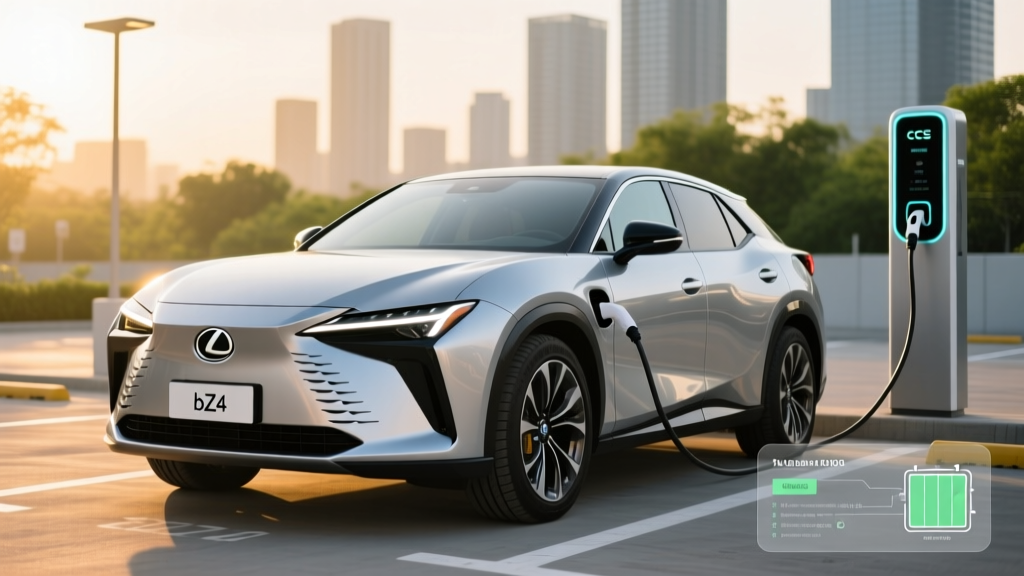
The 2026 Lexus bZ4X occupies a distinct space in the electric crossover segment. It doesn't chase the longest range or the fastest charge times — instead, it delivers the refined ride quality, cabin quietness, and build integrity that Lexus buyers expect, wrapped in an all-electric package. With an EPA-estimated range up to 252 miles, available all-wheel drive, and a starting MSRP around $43,070, the bZ4X targets luxury-minded commuters who value comfort and reliability over spec-sheet dominance. But how does it hold up when you look past the badge?
Range and Efficiency: EPA Numbers vs. Real-World Reality
The 2026 Lexus bZ4X comes in two drivetrain configurations, each with a different battery and range profile:
| Drivetrain | EPA Range | Real-World Expectation |
|---|---|---|
| FWD (71.4 kWh usable) | 252 miles | ~210–230 mi highway; ~180–200 mi in cold weather (below 32°F) |
| AWD (72.8 kWh usable) | 228 miles | ~190–210 mi highway; ~165–185 mi in cold weather |
Note: Real-world range depends on speed, terrain, temperature, and HVAC use. Highway driving at 70+ mph typically reduces range by 10–15% versus the EPA combined cycle. Cold weather with cabin heating can cut range by 20–30%.
Efficiency ratings land at approximately 119 MPGe combined for the FWD model (roughly 28 kWh/100 mi) and 112 MPGe combined for the AWD variant (about 30 kWh/100 mi), per fueleconomy.gov. These figures place the bZ4X mid-pack among electric crossovers — behind the Hyundai Ioniq 5 (117 MPGe combined, but with more range from a larger battery option) and the Tesla Model Y (around 123 MPGe combined), but comparable to the Subaru Solterra, its platform twin.
The battery uses lithium-ion cells with an NMC (nickel manganese cobalt) chemistry, which prioritizes energy density over the cycle-life longevity of LFP (lithium iron phosphate) packs found in some competitors. Lexus includes a battery management system with active thermal conditioning, which helps preserve long-term State of Health (SoH) — but unlike some rivals, the bZ4X does not offer an active liquid cooling system optimized for repeated DC fast-charging sessions.
Charging Speed: DC Fast-Charge and Home Level 2
Charging performance is where the bZ4X faces its most pointed criticism in the EV market. Here's exactly what the numbers look like:
| Charging Level | Power / Rate | Time / Speed |
|---|---|---|
| Level 1 (120V household) | ~1.4 kW | ~3–4 miles of range per hour |
| Level 2 (240V home/public) | ~6.6 kW (onboard charger) | ~20–23 miles of range per hour; full charge in ~10–11 hours |
| DC Fast Charge (CCS/NACS adapter) | Peak ~150 kW | 10–80% in approximately 30 minutes |
The bZ4X's peak DC fast-charge rate of ~150 kW is its weakest competitive metric. Rivals like the Hyundai Ioniq 5 and Kia EV6 can peak at 240 kW on 800V architecture, completing a 10–80% session in roughly 18 minutes. The bZ4X's 400V architecture and conservative charge curve mean you'll spend noticeably longer at public fast chargers — especially on road trips where multiple stops compound.
One practical note on the charge curve: the bZ4X sustains its peak rate only through roughly 30–40% State of Charge (SoC), then tapers progressively. Charging from 80% to 100% on DC fast charge is slow enough that you should plan to do it only on Level 2 at home or overnight.
For 2026, Lexus has adopted the NACS (North American Charging Standard) port on new models or provides a CCS-to-NACS adapter, granting access to Tesla's Supercharger network — a significant practical advantage for road-trip charging infrastructure. Verify adapter inclusion with your dealer at purchase, as this has been a running change across model years.
Performance and Drivetrain
| Spec | FWD | AWD (Dual-Motor) |
|---|---|---|
| Horsepower | 201 hp | 214 hp |
| Torque | 196 lb-ft | 248 lb-ft |
| 0–60 mph | ~7.1 seconds | ~5.8 seconds |
| Drivetrain | Single motor, front | Dual motor, AWD |
| Top Speed | ~112 mph (electronically limited) | ~112 mph |
The bZ4X is not a performance EV, and it doesn't pretend to be. The AWD model's 5.8-second 0–60 time is adequate for merging and passing, but it won't thrill anyone coming from a Tesla Model Y Performance (3.5 seconds) or even a Ford Mustang Mach-E GT. What the bZ4X does deliver is a smooth, linear torque delivery and an impressively quiet cabin — hallmarks of Lexus tuning.
The AWD system uses independent front and rear motors with a torque-distribution strategy managed by Lexus's X-MODE system, which includes settings for snow, mud, and light off-road conditions. This isn't a trail vehicle, but it handles gravel roads and winter commuting with confidence.
Interior, Cargo, and Technology
Inside, the bZ4X reflects Lexus's approach to luxury: high-quality materials, thoughtful ergonomics, and a focus on comfort rather than screen-dominated minimalism.
Key interior dimensions:
- Front legroom: 42.1 inches
- Rear legroom: 35.6 inches
- Cargo volume (behind rear seats): 27.7 cu ft
- Cargo volume (rear seats folded): 56.9 cu ft
- No front trunk (frunk) — the space is occupied by HVAC and power electronics
The rear seat is comfortable for two adults but tight for three across. Cargo space is competitive with the Subaru Solterra (identical platform) but trails the Hyundai Ioniq 5 (behind which offers more usable volume thanks to a flatter load floor and available frunk).
Infotainment and tech highlights:
- 12.3-inch touchscreen with wireless Apple CarPlay and Android Auto
- Wireless phone charging pad
- Available panoramic fixed glass roof (no shade — expect cabin heat in summer)
- Head-up display (available on higher trims)
- Cloud-based navigation with over-the-air updates
- Available radiant heater panels in front doors (supplements HVAC, reduces battery drain in cold weather — a clever efficiency feature)
The panoramic glass roof deserves a specific callout: it's fixed and lacks a retractable shade. In warm climates, this increases cabin heat soak and forces the HVAC to work harder, which in turn reduces range. Consider this carefully if you live in the Sun Belt.
Pricing, Trims, and Federal Tax Credit Eligibility
| Trim | MSRP (approx.) | Est. After §30D Credit* |
|---|---|---|
| Premium (FWD) | $43,070 | ~$35,570 |
| Premium (AWD) | $46,640 | ~$39,140 |
| Luxury (AWD) | $50,550 | ~$43,050 |
*Tax credit estimates assume full $7,500 eligibility under IRS §30D. Actual eligibility depends on buyer income, battery sourcing, and MSRP caps. Verify with a tax professional and the IRS clean vehicle credit page.
- MSRP cap: SUVs/crossovers must have an MSRP ≤ $80,000 — the bZ4X qualifies on all trims.
- Buyer income cap: Modified AGI ≤ $150,000 (single) or ≤ $300,000 (joint). Buyers above these thresholds are ineligible.
- Battery sourcing: Critical minerals and battery components must meet phased-in domestic/free-trade-partner sourcing thresholds. The bZ4X's battery is manufactured by Primearth EV Energy (a Toyota-Panasonic JV) with cells produced in Japan and China. Sourcing compliance varies by model year — confirm current-year eligibility on the IRS qualified vehicles list before purchase.
- Point-of-sale transfer: Eligible buyers can transfer the credit to the dealer at purchase, reducing the upfront price rather than waiting for a tax refund.
Warranty and Long-Term Ownership
Lexus backs the bZ4X with the brand's strong warranty coverage:
- Basic vehicle warranty: 4 years / 50,000 miles
- Powertrain warranty: 6 years / 70,000 miles
- Hybrid/EV battery warranty: 8 years / 100,000 miles (covers capacity below 70% of original — a common industry threshold)
- Complimentary maintenance: 2 years / 25,000 miles
- Roadside assistance: 4 years / unlimited miles
The 70% capacity retention threshold on the battery warranty is worth noting: it means Lexus will repair or replace the battery if it degrades below 70% of its original usable capacity within 8 years or 100,000 miles. Some competitors (like Hyundai/Kia) offer 10-year/100,000-mile battery warranties, which provides a longer safety net for high-mileage drivers.
For long-term ownership, NMC battery chemistry in the bZ4X is expected to retain approximately 85–90% capacity after 100,000 miles under normal use patterns, based on data from similar Toyota/Lexus hybrid battery systems. Avoiding habitual DC fast-charging and keeping the battery between 20–80% SoC for daily use will maximize longevity.
Driver Assistance and Safety
The Lexus Safety System+ 3.0 included on the bZ4X is a Level 2 driver-assistance system. This means the vehicle can manage steering, acceleration, and braking under certain conditions, but the driver must remain fully engaged — hands on or near the wheel, eyes on the road. This is NOT autonomous or self-driving.
Standard safety and driver-assist features include:
- Pre-Collision System with pedestrian and cyclist detection
- Full-Speed Dynamic Radar Cruise Control (adaptive cruise)
- Lane Tracing Assist (lane centering)
- Road Sign Assist
- Proactive Driving Assist (gentle braking/steering in low-speed scenarios)
- Available 360-degree camera and digital rearview mirror
The bZ4X earned a Top Safety Pick+ rating from the IIHS (Insurance Institute for Highway Safety), with "Good" ratings across crashworthiness categories. Confirm current-year ratings on the IIHS and NHTSA sites as new model-year results are published.
Pros, Cons, and Who Should Buy the Lexus bZ4X
- Exceptional ride comfort and cabin quietness — true Lexus refinement
- Strong standard safety suite (Lexus Safety System+ 3.0)
- AWD with X-MODE for confident winter and light-trail driving
- Radiant door heaters reduce HVAC battery drain in cold climates
- Lexus reliability reputation and dealer network
- Under $80K MSRP on all trims — eligible for §30D credit (sourcing permitting)
- Range (228–252 mi EPA) trails key rivals (Ioniq 5, Model Y, EV6)
- DC fast-charging peaks at ~150 kW — 10–80% in ~30 min vs. 18 min for 800V competitors
- No frunk (front trunk) for additional storage
- Panoramic glass roof lacks a shade — heat issue in warm climates
- Rear seat is tighter than some mid-size electric crossovers
- Battery sourcing may affect §30D eligibility — verify before purchase
- Choose the bZ4X if: You prioritize ride comfort, cabin quietness, and Lexus brand trust over maximum range. Your daily commute is under 60 miles round-trip. You have reliable home Level 2 charging and rarely road-trip more than 200 miles without overnight stops.
- Look elsewhere if: You need 300+ miles of range for frequent road trips. You want the fastest DC charging available. You live in a hot climate and dislike glass-roof heat. You need maximum rear-seat and cargo space for a growing family.
Frequently Asked Questions
What is the real-world range of the 2026 Lexus bZ4X?
The EPA rates the FWD model at 252 miles and the AWD at 228 miles. In real-world highway driving at 70+ mph, expect roughly 210–230 miles (FWD) or 190–210 miles (AWD). In freezing temperatures with cabin heating, those numbers drop to approximately 180–200 miles (FWD) and 165–185 miles (AWD).
How fast does the bZ4X charge at home and on the road?
On a Level 2 home charger (240V, 6.6 kW onboard charger), the bZ4X gains about 20–23 miles of range per hour, completing a full charge in roughly 10–11 hours. On a DC fast charger, it peaks at approximately 150 kW, reaching 10–80% in about 30 minutes. This is slower than 800V competitors like the Ioniq 5 and EV6.
How much does the 2026 bZ4X cost after tax credits?
The FWD Premium trim starts at approximately $43,070. If you qualify for the full $7,500 §30D federal tax credit (income, MSRP, and battery sourcing requirements all met), the effective price drops to roughly $35,570. AWD and Luxury trims range from ~$39,140 to ~$43,050 after the credit. Eligibility varies — confirm with the IRS qualified vehicle list and your tax advisor.
Does the Lexus bZ4X qualify for the $7,500 federal EV tax credit?
The bZ4X's MSRP is well under the $80,000 SUV cap, so it clears that hurdle. However, eligibility also depends on the buyer's modified adjusted gross income (≤$150K single / ≤$300K joint) and whether the battery's critical minerals and components meet current-year domestic sourcing thresholds. Battery sourcing compliance has been in flux for Toyota/Lexus products — always check the IRS qualified clean vehicle list for the specific model year before committing to a purchase.
Is the Lexus bZ4X worth buying vs. the Hyundai Ioniq 5 or Tesla Model Y?
It depends on your priorities. If ride comfort, cabin quietness, and Lexus brand loyalty are paramount, the bZ4X delivers. If you need longer range (Ioniq 5 offers up to 303 mi EPA), faster DC charging (Ioniq 5 at 240 kW peak, 10–80% in ~18 min), or more cargo space, those competitors have clear advantages. The bZ4X is a comfort-first EV, not a spec-sheet leader.
Does the bZ4X have a front trunk (frunk)?
No. The space under the hood is occupied by power electronics and HVAC components. All storage is in the rear cargo area (27.7 cu ft behind the rear seats, 56.9 cu ft with seats folded).
What battery chemistry does the bZ4X use?
The bZ4X uses NMC (nickel manganese cobalt) lithium-ion cells manufactured by Primearth EV Energy. NMC offers higher energy density than LFP (lithium iron phosphate) but typically has a shorter cycle life. With proper charging habits (20–80% daily, limited DC fast-charging), NMC packs retain strong capacity over the warranty period.