Quick Verdict: Is the 2026 Kia Niro EV Worth It?
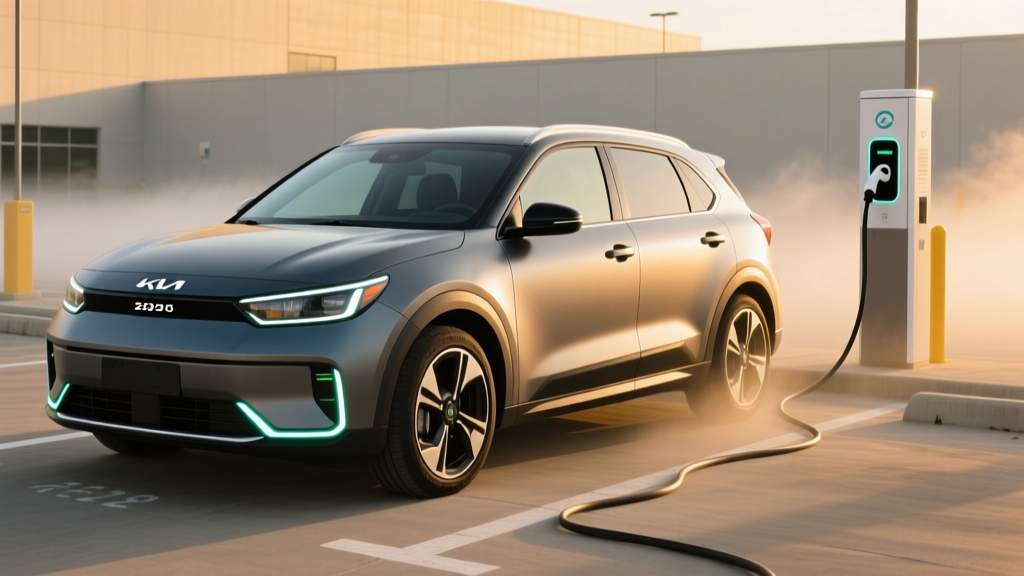
The 2026 Kia Niro EV delivers an EPA-estimated 239 miles of range from its 64.8 kWh battery, peaks at roughly 85 kW on DC fast charging (10–80% in about 45 minutes), and starts at $39,600 before incentives. It's a practical, spacious compact crossover for buyers with reliable home charging access and mostly local-to-regional driving needs. If you frequently road-trip 300+ miles through areas with sparse charging infrastructure, or if you live in a cold climate where real-world range drops 20–30%, a PHEV or a faster-charging EV like the Hyundai Ioniq 5 may serve you better. Federal §30D tax credit eligibility depends on battery sourcing, your income, and MSRP caps — check current IRS rules before counting on $7,500 off.
Range, Battery, and Real-World Efficiency
The 2026 Niro EV carries over the 64.8 kWh (usable) lithium-ion polymer battery pack from the current generation. Kia rates it at 239 miles of combined EPA range across both Wind and Wave trims. Efficiency lands at approximately 113 MPGe combined, or about 29 kWh per 100 miles — competitive for the segment but not class-leading.
EPA vs. Real-World Range: What to Actually Expect
| Condition | Estimated Range | Notes |
|---|---|---|
| EPA Combined | 239 mi | Official sticker figure |
| Highway (70 mph, 75°F) | ~200–215 mi | EVs lose efficiency at sustained highway speeds |
| City / Suburban Mixed | ~230–250 mi | Regen braking recovers energy in stop-and-go |
| Cold Weather (20°F, highway) | ~160–185 mi | Battery resistance + cabin heating; heat pump helps |
| Cold Weather, City | ~190–210 mi | Lower speeds offset some cold-weather losses |
The Niro EV includes a heat pump on all trims, which mitigates cold-weather range loss compared to resistance-heater EVs. Still, expect a 20–30% reduction in freezing temperatures — plan charging stops accordingly.
| Spec | Value |
|---|---|
| EPA Range (Combined) | 239 miles |
| Battery Capacity (Usable) | 64.8 kWh |
| Battery Chemistry | NMC (Nickel Manganese Cobalt) |
| Peak DC Fast Charge Rate | ~85 kW |
| 10–80% DC Fast Charge Time | ~45 minutes |
| Level 2 Charge Rate (240V) | 10.9 kW |
| Level 2 Full Charge Time | ~6 hours 20 min |
| Motor Output | 201 hp / 188 lb-ft torque |
| 0–60 mph | ~7.2 seconds |
| Drivetrain | FWD (single motor) |
| EPA Efficiency | 113 MPGe combined |
| Cargo Volume (rear seats up) | 18.5 cu ft |
| Cargo Volume (rear seats folded) | 51.3 cu ft |
| Base MSRP (Wind trim) | $39,600 |
| Wave Trim MSRP | $44,600 |
| Battery Warranty | 10 years / 100,000 miles |
| Basic Warranty | 5 years / 60,000 miles |
Charging Speed and Infrastructure Reality
The Niro EV's charging capability is its most discussed limitation. Kia uses a CCS1 connector (or NACS on the latest models via adapter/Tesla Supercharger access, depending on production date). The DC fast-charging peak of approximately 85 kW means the Niro EV won't match the 150–240 kW rates of competitors built on 800V architectures like the Ioniq 5 or Porsche Macan EV.
| Charge Level | Power (kW) | Miles Added per Hour | Use Case |
|---|---|---|---|
| Level 1 (120V household) | ~1.4 kW | ~4–5 mi/hr | Overnight trickle; emergency top-off |
| Level 2 (240V, 48A home charger) | 10.9 kW | ~36 mi/hr | Daily home charging; full charge overnight |
| DC Fast Charge (CCS/NACS) | Up to ~85 kW peak | ~230 mi/hr (peak) | Road trips; expect taper above 80% SoC |
On a road trip, the 45-minute 10–80% charge time means you'll spend roughly 30–40 minutes per stop if you charge to 80% (recommended for battery longevity). The charge curve tapers significantly above 80% — going from 80–100% can take nearly as long as 10–80%. For highway trips of 250+ miles, plan one DC fast-charge stop per leg.
For daily driving, home Level 2 charging is the game-changer. A full overnight charge at 10.9 kW adds roughly 239 miles in about 6.5 hours — more than enough for any daily commute. If you lack home or workplace charging access, the Niro EV's slower DC rate makes public-charging-dependent ownership more frustrating than with faster-charging EVs.
2026 Kia Niro EV vs. Gas and Hybrid Alternatives
Many Niro shoppers cross-shop the Niro Hybrid and Niro PHEV. Here's how the numbers stack up against each other and a comparable gas compact crossover like the Honda HR-V.
| Metric | Niro EV (Wind) | Niro Hybrid | Honda HR-V (Gas) |
|---|---|---|---|
| Starting MSRP | $39,600 | $28,400 | $26,400 |
| EPA Range / Fuel Economy | 239 mi / 113 MPGe | 53 MPG combined | 28 MPG combined |
| Fuel/Energy Cost per Mile | ~$0.04 (home charging) | ~$0.07 (gas) | ~$0.13 (gas) |
| Annual Fuel/Energy Cost (12k mi) | ~$480 | ~$840 | ~$1,560 |
| 5-Year Fuel/Energy Cost | ~$2,400 | ~$4,200 | ~$7,800 |
| Maintenance (5-year est.) | ~$1,200 | ~$2,500 | ~$3,000 |
| Estimated Federal Tax Credit | Up to $7,500* | Up to $3,500** | $0 |
| 5-Year Total Cost of Ownership*** | ~$40,800 | ~$35,100 | ~$37,200 |
* §30D credit eligibility depends on battery sourcing, buyer income, and MSRP caps. Verify at IRS.gov.
** PHEV credit varies; standard HEV does not qualify for §30D.
*** Includes purchase price, fuel/energy, maintenance, insurance (est.), minus tax credit. Excludes depreciation.
The data reveals a nuanced picture: the Niro EV saves $5,400 on fuel and $1,800 on maintenance over five years compared to a gas crossover. With the full $7,500 tax credit applied as a point-of-sale reduction, the Niro EV's effective purchase price drops to ~$32,100 — very close to the gas alternative. However, the Niro Hybrid undercuts both on upfront price and still delivers strong fuel economy without any charging infrastructure requirement.
Total Ownership Cost Breakdown
Let's break down what owning a 2026 Niro EV actually costs over five years and 60,000 miles, assuming home charging and moderate driving.
| Category | Cost | Notes |
|---|---|---|
| Purchase Price (MSRP) | $39,600 | Before incentives |
| Federal Tax Credit (§30D) | –$7,500* | Point-of-sale transfer; eligibility varies |
| Home Level 2 Charger Install | $800–$2,000 | Equipment + electrician; panel upgrade extra |
| Energy (Home Charging) | ~$2,400 | At $0.13/kWh national average |
| Public DC Fast Charging | ~$600 | ~15 road-trip charges at $0.40/kWh |
| Insurance (5-year est.) | ~$7,500 | EV premiums run 15–25% higher on average |
| Maintenance | ~$1,200 | Cabin filter, tire rotation, brake fluid; no oil changes |
| Tires (1 replacement set) | ~$800 | EVs wear tires faster due to torque and weight |
| Total (after credit) | ~$44,400–$46,000 | Varies by electricity rate, insurance, install |
* Tax credit eligibility is not guaranteed. Verify income caps ($150k single / $300k joint), MSRP cap ($80k for SUVs), and battery sourcing requirements at IRS.gov or consult a tax professional.
The biggest variable is electricity cost. At $0.13/kWh (national residential average), charging the Niro EV's 64.8 kWh battery from empty costs about $8.42 — yielding 239 miles for less than $10. In states with higher rates (California at ~$0.30/kWh), that rises to ~$19.44 per full charge, still substantially cheaper than $40+ for a tank of gas in a comparable crossover.
Federal Tax Credit and Incentive Eligibility
The §30D clean vehicle credit can reduce the Niro EV's effective price by up to $7,500, but eligibility hinges on multiple requirements that change periodically:
- MSRP Cap: Vehicle must have MSRP at or below $80,000 for SUVs/crossovers — the Niro EV qualifies at both trim levels.
- Buyer Income Cap: Modified adjusted gross income must not exceed $150,000 (single), $225,000 (head of household), or $300,000 (married filing jointly).
- Battery Component Sourcing: Increasing percentages of battery components must be manufactured or assembled in North America (thresholds increase annually through 2029).
- Critical Minerals Sourcing: Increasing percentages of critical minerals must be sourced from the U.S. or FTA partners.
- FEOC Restriction: Battery components and critical minerals cannot come from Foreign Entities of Concern (primarily targeting Chinese supply chains).
- Point-of-Sale Transfer: You can transfer the credit to the dealer for an immediate price reduction at purchase, or claim it on your tax return.
Because sourcing requirements tighten yearly, a Niro EV that qualifies for the full $7,500 in early 2026 may see partial eligibility later. Always verify current status on fueleconomy.gov before purchasing.
Common Misconceptions About the Niro EV
| Myth | Fact |
|---|---|
| "The Niro EV can't road trip — 85 kW charging is too slow." | 85 kW adds ~150 miles in 30 minutes. It's slower than 800V rivals but adequate for 2–3 DC stops on a 500-mile trip. |
| "EV batteries need replacing every 5 years." | Kia's 10-year/100,000-mile battery warranty covers capacity below ~65%. Real-world NMC degradation typically shows 8–12% loss over 5 years based on fleet data. |
| "I need a 200-amp electrical panel upgrade for home charging." | Many homes with 100–150A panels can support a 48A Level 2 charger. An electrician will assess your panel's available capacity — upgrades cost $1,500–$4,000 only when needed. |
| "The Niro EV has no frunk, so it's less practical." | True — no front trunk. But 18.5 cu ft rear cargo (51.3 cu ft folded) exceeds most compact crossovers, gas or electric. |
| "EVs are worse in winter." | Range drops 20–30% in freezing temps, but the Niro EV's heat pump, heated seats (Wave trim), and preconditioning mitigate this. Traction and handling are unaffected. |
First-Time EV Buyer: What You Must Know
If the Niro EV is your first electric vehicle, prepare for a fundamentally different ownership rhythm:
Home charging is essential. Public-only charging with an 85 kW EV is inconvenient and expensive. Budget $800–$2,000 for a Level 2 home charger installation (48A, hardwired, on a dedicated 60A circuit). If you rent or live in a condo without charging access, consider a PHEV instead.
Preconditioning matters. Use the Kia Access app to warm or cool the cabin while plugged in. This preserves range and, in cold weather, warms the battery for faster DC charging.
Tire wear accelerates. The Niro EV's instant 188 lb-ft of torque and ~3,800-lb curb weight wear tires 15–25% faster than a gas equivalent. Budget for a replacement set around 35,000–45,000 miles.
Regenerative braking replaces most brake use. Expect original brake pads to last 80,000+ miles. Use the steering wheel paddle shifters to adjust regen intensity, or enable one-pedal-style driving at the highest setting.
Insurance costs more. EV insurance premiums average 15–25% higher than gas equivalents due to repair costs and battery replacement risk. Get quotes before purchasing — IIHS Top Safety Pick ratings can help with some carriers.
Decision Framework: Is the Niro EV Right for You?
Choose the Niro EV if:
- You have reliable home or workplace Level 2 charging access
- Your daily commute is under 80 miles round-trip
- You take road trips of 300 miles or fewer most of the time
- You want a spacious, practical crossover under $45,000
- You qualify for the §30D tax credit (income + sourcing rules)
- You value Kia's 10-year battery warranty for peace of mind
Choose the Niro PHEV instead if:
- You lack home charging and rely on public infrastructure
- You frequently drive 400+ miles between charging opportunities
- You live in a region with extreme cold and sparse DC chargers
- You want EV-like daily commuting (33 miles electric-only) with gas-car road-trip flexibility
Look at a faster-charging EV (Ioniq 5, Tesla Model Y) if:
- You road-trip frequently and want 10–80% in under 20 minutes
- You want access to the Tesla Supercharger network natively (NACS)
- You need AWD for snow or towing
Frequently Asked Questions
Does the 2026 Kia Niro EV qualify for the $7,500 federal tax credit?
Potentially. The Niro EV's MSRP is under the $80,000 SUV cap, so it clears that hurdle. However, the full $7,500 credit depends on battery component sourcing (North America manufacturing/assembly thresholds) and critical mineral sourcing (U.S. or FTA partner requirements), both of which tighten annually. Your personal income must also fall below IRS caps. Verify current eligibility on fueleconomy.gov and consult a tax professional before relying on the credit.
How long does it take to charge the Niro EV at home?
On a Level 2 home charger (240V, 48A, 10.9 kW), a full 0–100% charge takes approximately 6 hours and 20 minutes. Most owners plug in overnight and wake to a full battery. On a standard 120V outlet (Level 1), expect about 4–5 miles of range per hour of charging — useful for overnight top-offs but not practical for full recharges.
What is the real-world highway range of the Niro EV?
Expect approximately 200–215 miles at sustained 70 mph highway speeds in moderate temperatures (65–80°F). In freezing conditions, highway range drops to roughly 160–185 miles. The EPA combined rating of 239 miles reflects a mix of city and highway driving — city driving with regenerative braking often exceeds the EPA estimate.
Does the Niro EV have all-wheel drive?
No. The 2026 Niro EV is front-wheel drive only with a single 201-hp motor. If AWD is a requirement for snow or towing, consider the Hyundai Ioniq 5, Tesla Model Y, or Kia EV6, all of which offer dual-motor AWD configurations.
How does the Niro EV compare to the Kia EV6?
The EV6 is built on Kia's E-GMP 800V platform, enabling peak DC charging up to ~240 kW (10–80% in ~18 minutes) and offering AWD, more power (up to 576 hp on GT), and longer range (up to 310 miles EPA). However, the EV6 starts around $42,600, has less cargo space (24.4 cu ft behind rear seats but a lower roofline), and positions as a sportier, lower-riding crossover. The Niro EV prioritizes practicality, upright seating, and lower cost.
What happens if the Niro EV battery degrades?
Kia's battery warranty covers the pack for 10 years or 100,000 miles, replacing or repairing it if capacity falls below approximately 65% of original. Real-world data from earlier Niro EV model years suggests NMC packs lose about 8–12% capacity over 5 years of typical use. Full battery replacement outside warranty currently costs $10,000–$15,000 including labor, though prices are expected to decline as battery costs fall industry-wide.