The Kia EV9 remains one of the few mainstream three-row electric SUVs on the market, and for 2026, Kia has shuffled the trim lineup to offer more choice across a wider price band. Whether you're eyeing the entry-level Light RWD or the fully loaded GT-Line AWD, the differences in range, charging speed, and performance are significant enough to sway your decision. This guide dissects every 2026 Kia EV9 trim with the exact numbers buyers need — EPA range, battery chemistry, DC fast-charge curves, real-world efficiency, and federal tax credit eligibility under current IRS §30D rules.
2026 Kia EV9 Trim Lineup at a Glance
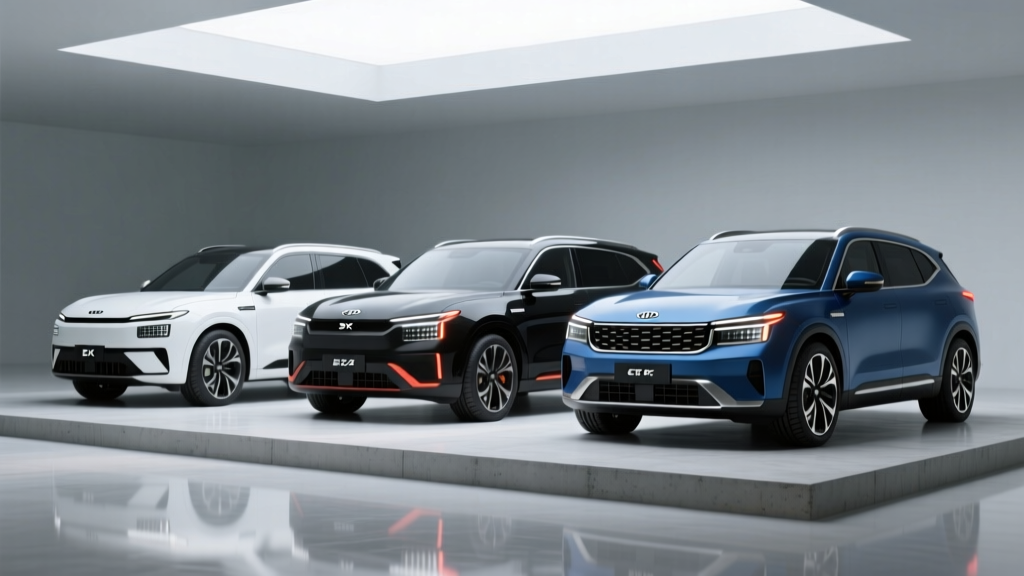
Kia offers the 2026 EV9 across five primary trims, split between rear-wheel-drive (RWD) and all-wheel-drive (AWD) configurations. The RWD models use a single motor on the rear axle; AWD models add a front motor for dual-motor traction and substantially more horsepower. All trims share the same battery pack architecture, but the usable capacity and efficiency differ by drivetrain.
| Trim | Drivetrain | HP / lb-ft | 0-60 mph | EPA Range | MSRP |
|---|---|---|---|---|---|
| Light RWD | RWD (single motor) | 215 hp / 258 lb-ft | 7.8 s | 304 mi | $56,395 |
| Wind RWD | RWD (single motor) | 215 hp / 258 lb-ft | 7.8 s | 304 mi | $60,695 |
| Land AWD | AWD (dual motor) | 379 hp / 516 lb-ft | 5.0 s | 282 mi | $65,395 |
| GT-Line AWD | AWD (dual motor) | 379 hp / 516 lb-ft | 5.0 s | 278 mi | $72,495 |
| GT-Line Prestige AWD | AWD (dual motor) | 379 hp / 516 lb-ft | 5.0 s | 278 mi | $75,995 |
All prices include the $1,395 destination charge. Kia has kept the EV9's MSRP structure relatively stable for 2026, though dealer markups in high-demand markets remain a variable to watch.
Battery, Chemistry, and Efficiency
Every 2026 EV9 trim uses a 99.8 kWh usable lithium-ion battery pack (100.0 kWh gross). Kia sources NMC (nickel-manganese-cobalt) cells for the EV9, supplied primarily by SK On. NMC chemistry offers higher energy density than LFP (lithium iron phosphate), which is why Kia can fit nearly 100 kWh into the EV9's platform without excessive weight — but it also means the pack is more sensitive to sustained 100% State of Charge storage. For daily driving, Kia recommends charging to 80% and only using 100% for long trips.
Efficiency varies by drivetrain. The RWD models achieve an EPA-rated 89 MPGe combined (roughly 34 kWh/100 mi), while AWD trims drop to 83 MPGe combined (approximately 37 kWh/100 mi). On the highway, expect real-world consumption to rise to 38-42 kWh/100 mi depending on speed, temperature, and terrain — a factor that directly cuts into range.
The EPA rates the RWD EV9 at 304 miles and the AWD at 278-282 miles. In real-world mixed driving at 70-75 mph highway speeds, expect roughly 260-275 miles from RWD trims and 240-255 miles from AWD trims. In cold weather (below 30°F), range can drop 20-30%, bringing AWD models down to approximately 190-210 miles per charge. The EV9's heat pump (standard on all trims) helps mitigate cabin-heating energy draw, but battery chemistry inherently loses efficiency in freezing temperatures. Plan road trips around 220-240 miles between stops in moderate weather, and 180-200 miles in winter.
Charging Speed: DC Fast Charge and Home Level 2
Charging speed is where the EV9's 800-volt architecture pays dividends. Kia rates the EV9 for a peak DC fast-charge rate of 236 kW, and in controlled testing, the SUV sustains above 200 kW from roughly 10% to 55% State of Charge before tapering. The 10-80% charge takes approximately 24 minutes on a 350 kW-capable charger — competitive with the Hyundai Ioniq 5 and significantly faster than the Rivian R1S or Volkswagen ID. Buzz.
One practical note: the EV9's charge curve tapers sharply above 85% SoC. Charging from 80-100% on DC fast charge can add another 20+ minutes. For road trips, plan to charge to 80% and move on — it's faster overall than waiting for a full pack.
| Charging Level | Power (kW) | Speed / Time | Notes |
|---|---|---|---|
| Level 1 (120V household) | ~1.4 kW | ~4 mi/hr | Emergency/trickle only; full charge in ~70 hrs |
| Level 2 (240V, 48A home) | 11.5 kW | ~28 mi/hr | Full charge in ~9 hrs; recommended daily method |
| DC Fast Charge (350 kW station) | Peak 236 kW | 10-80% in ~24 min | Requires CCS or NACS adapter; tapers above 80% |
For 2026, the EV9 ships with a CCS1 port. Kia has confirmed NACS (Tesla-style) adoption for future model years, and a NACS adapter is available for Supercharger access through Kia's partnership with Tesla's network. Level 2 home charging at 11.5 kW requires a 60-amp dedicated circuit — factor in $500-$1,500 for a quality Level 2 EVSE (like the ChargePoint Home Flex or Emporia Level 2) plus electrician installation, which typically runs $800-$2,000 depending on panel proximity and local permit costs.
Performance and Drivetrain Differences
The RWD trims (Light, Wind) deliver 215 horsepower and 258 lb-ft of torque from the rear motor. Acceleration is adequate — 0-60 mph in 7.8 seconds — but the EV9 RWD is tuned for efficiency and comfort, not sportiness. It's perfectly suited for suburban commuting and highway cruising, where the instant torque makes merging effortless even if the 0-60 time doesn't thrill.
The AWD trims (Land, GT-Line, GT-Line Prestige) add a front motor for a combined 379 horsepower and 516 lb-ft of torque. The 0-60 mph time drops to 5.0 seconds — genuinely quick for a 5,100-pound three-row SUV. The AWD system also provides meaningful traction benefits in snow and rain, and the additional regenerative braking capacity from the front motor slightly improves city efficiency.
All EV9 trims feature multi-link rear suspension, and the ride quality is composed without being floaty. The GT-Line trims add adaptive dampers, which firm up in Sport mode but don't dramatically change the EV9's comfort-oriented character. Towing capacity is 2,000 lbs (RWD) and 5,000 lbs (AWD) when properly equipped — enough for a small boat or light camper, but not a large travel trailer.
Interior Space, Cargo, and Technology
The EV9's three-row layout offers genuine adult usability in all three rows — a rarity in the EV SUV segment. Second-row legroom is 42.8 inches, and the third row provides 32.0 inches, which accommodates adults on shorter trips. Cargo volume behind the third row is 20.2 cu ft; fold the third row for 43.5 cu ft, and fold both rear rows for 81.7 cu ft. The front trunk (frunk) adds a modest 1.8 cu ft on RWD models and 0.6 cu ft on AWD (the front motor consumes space).
Tech highlights across all trims include a 12.3-inch digital instrument cluster and a 12.3-inch infotainment touchscreen running Kia's latest Connect system with wireless Apple CarPlay and Android Auto. The Land trim and above add a head-up display, digital key, and Kia's Highway Driving Assist 2 (HDA2) — a Level 2 driver-assistance system with adaptive cruise control, lane centering, and lane-change assist. HDA2 is competent on interstates but requires hands-on-wheel supervision at all times; it is not a self-driving system.
The GT-Line Prestige adds premium features including a 14-speaker Meridian audio system, ventilated second-row seats, a digital rearview mirror, and remote smart parking assist. Notable drawbacks across the lineup include the EV9's touch-capacitive climate controls (which lack physical buttons and can be distracting while driving) and the absence of a spare tire — Kia provides a tire repair kit instead.
Pricing, Trims, and Federal Tax Credit Eligibility
The 2026 Kia EV9 starts at $56,395 for the Light RWD and tops out at $75,995 for the GT-Line Prestige AWD. The mid-range Land AWD at $65,395 is the volume seller and the trim most buyers cross-shop against the Tesla Model X, Rivian R1S, and Hyundai Ioniq 9.
Federal tax credit eligibility for the EV9 is nuanced. Under current IRS §30D rules, the credit is worth up to $7,500, split between a $3,750 critical-minerals requirement and a $3,750 battery-component requirement. The EV9's battery sourcing has been a moving target: Kia has worked to localize battery component manufacturing and critical-mineral supply chains through SK On's U.S. plants. As of early 2026, select EV9 trims qualify for a partial or full credit, but eligibility depends on the specific vehicle's VIN and its battery supply-chain compliance at time of manufacture.
Additionally, §30D imposes buyer income caps ($150,000 single / $300,000 joint modified AGI) and an MSRP cap of $80,000 for SUVs — all EV9 trims fall under the MSRP cap. The credit can now be transferred to the dealer at point of sale, effectively reducing your purchase price at signing rather than waiting for a tax refund.
| Trim | MSRP | Est. §30D Credit | Effective Price |
|---|---|---|---|
| Light RWD | $56,395 | Up to $7,500* | ~$48,895 |
| Wind RWD | $60,695 | Up to $7,500* | ~$53,195 |
| Land AWD | $65,395 | Up to $7,500* | ~$57,895 |
| GT-Line AWD | $72,495 | Up to $7,500* | ~$64,995 |
| GT-Line Prestige AWD | $75,995 | Up to $7,500* | ~$68,495 |
*Credit amount varies by VIN-specific battery sourcing compliance and buyer income eligibility. Verify with your dealer and a tax professional before purchase. Check the latest eligibility on fueleconomy.gov.
Warranty Coverage
Kia backs the 2026 EV9 with a competitive warranty package:
- Basic vehicle: 5 years / 60,000 miles
- Powertrain: 10 years / 100,000 miles
- EV battery: 10 years / 100,000 miles (covers capacity loss below 70% of original)
- Roadside assistance: 5 years / 60,000 miles
The 70% capacity-retention threshold is standard for the industry but worth noting: if your EV9's battery degrades to 69% of its original capacity within 10 years or 100,000 miles, Kia will repair or replace it. In practice, NMC packs in liquid-cooled systems like the EV9's typically retain 85-90% capacity after 100,000 miles based on data from similar Hyundai/Kia platforms.
How the EV9 Compares to Key Rivals
The EV9's most direct competitors are the Tesla Model X (more range and Supercharger access, but higher pricing and polarizing styling), the Rivian R1S (more off-road capable and adventure-focused, but pricier and less third-row space), and the Hyundai Ioniq 9 (mechanically similar, slightly different styling and feature packaging). Against the Volkswagen ID. Buzz, the EV9 offers more range and faster charging, though the ID. Buzz leans into minivan practicality and nostalgia.
- You need three rows with usable adult space and want the best value in the segment
- Fast DC charging (24 min, 10-80%) is a priority for road trips
- You prefer a traditional SUV design with strong warranty coverage
- You need 350+ miles of range (consider the Tesla Model X or Lucid Gravity)
- You want a spare tire for remote-area driving (Rivian R1S offers one)
- You want hands-free highway driving (GM's Super Cruise or Ford's BlueCruise offer eyes-off Level 2 on mapped roads)
Pros and Cons
- Genuine three-row usability with adult-capable third row
- 800V architecture enables 236 kW peak DC fast charging
- 5,000-lb towing capacity on AWD trims
- Strong 10-year/100,000-mile battery warranty
- Under $80K MSRP cap — eligible for §30D credit across all trims
- Heat pump standard on all trims for cold-weather efficiency
- Real-world highway range falls 30-40 miles below EPA sticker
- No spare tire — only a tire repair kit
- Touch-capacitive climate controls lack physical buttons
- RWD trims feel underpowered for the vehicle's weight
- NACS adapter required for Tesla Supercharger access (not native port)
- GT-Line Prestige pushes close to $76K before options
Frequently Asked Questions
What is the real-world range of the 2026 Kia EV9?
The EPA rates the RWD at 304 miles and AWD at 278-282 miles. In real-world highway driving at 70-75 mph, expect 260-275 miles (RWD) or 240-255 miles (AWD). In cold weather below 30°F, range drops an additional 20-30%.
How fast does the EV9 charge at home and on the road?
On a Level 2 home charger (11.5 kW / 48A), the EV9 adds about 28 miles of range per hour, fully charging overnight in roughly 9 hours. On a 350 kW DC fast charger, it peaks at 236 kW and charges from 10-80% in approximately 24 minutes.
Does the 2026 Kia EV9 qualify for the federal EV tax credit?
Select EV9 trims qualify for up to $7,500 under IRS §30D, depending on VIN-specific battery sourcing compliance and buyer income limits ($150K single / $300K joint AGI). All trims fall under the $80K SUV MSRP cap. The credit can be applied at point of sale. Verify eligibility on fueleconomy.gov and with your tax professional.
Is the Kia EV9 worth buying over the Tesla Model X or Rivian R1S?
The EV9 offers the best value in the three-row EV SUV segment, undercutting the Model X and R1S by $15,000-$30,000 while providing comparable space and faster charging than most rivals. However, the Model X offers more range, and the R1S provides better off-road capability. If value and daily usability are your priorities, the EV9 Land AWD at ~$57,895 after the tax credit is hard to beat.
Which Kia EV9 trim is best for families?
The Land AWD ($65,395) hits the sweet spot: dual-motor AWD for all-weather safety, 282 miles of EPA range, HDA2 driver assist, and premium features like the head-up display — without the GT-Line's price premium. For budget-conscious families, the Wind RWD at $60,695 offers the same range and most key features at a lower cost.