Quick Verdict: Is Leasing the 2026 Kia EV9 the Smartest Move?
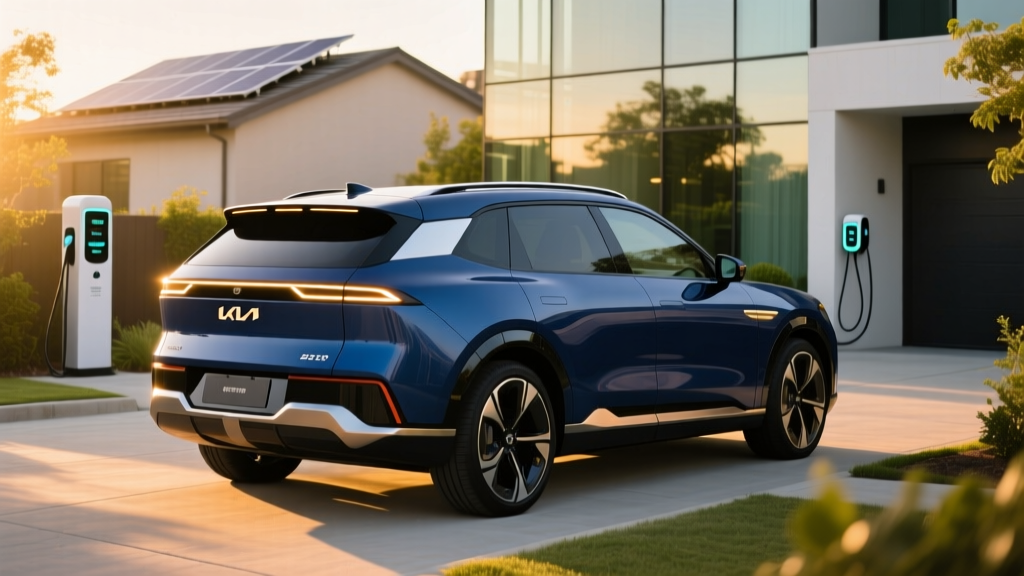
The 2026 Kia EV9 remains one of the only mainstream three-row electric SUVs on the market, and leasing one can unlock financial advantages that outright buying cannot — particularly around the federal EV tax credit. With a starting MSRP around $54,900 for the Light RWD trim and climbing to $73,900+ for the GT-Line AWD, the EV9 sits in a price bracket where every incentive matters. This guide breaks down the real math behind a 2026 Kia EV9 lease, including five-year total cost of ownership, federal and state incentives, charging costs, insurance realities, and depreciation trends.
| Spec | Light RWD | GT-Line AWD |
|---|---|---|
| EPA Range | 304 mi (est. ~260-280 mi real-world hwy) | 270 mi (est. ~230-250 mi real-world hwy) |
| Battery (usable) | 76.1 kWh (NMC) | 99.8 kWh (NMC) |
| Peak DC Fast Charge | ~210 kW | ~210 kW |
| 10–80% DC Charge Time | ~24 min | ~24 min |
| Level 2 Charge Rate | 10.9 kW | 10.9 kW |
| Horsepower | 215 hp | 379 hp |
| 0–60 mph | 7.6 sec | 4.5 sec |
| MPGe (combined) | 88 MPGe | 83 MPGe |
| Base MSRP | $54,900 | $73,900 |
| Battery/Powertrain Warranty | 10 yr / 100,000 mi | 10 yr / 100,000 mi |
Real-world range note: EPA estimates assume mixed driving at moderate temperatures. In our experience with Hyundai Motor Group's E-GMP platform, expect highway-only range to drop 10–15% below the EPA sticker, and cold-weather (below 30°F) range loss of 20–30% is typical. A Light RWD EV9 rated at 304 miles EPA may deliver closer to 210–240 miles on a freezing winter highway drive.
2026 Kia EV9 Lease: How the Federal Tax Credit Works Through Leasing
One of the most important things to understand about a 2026 Kia EV9 lease is how the federal EV tax credit interacts with lease agreements. Under current IRS rules for the §30D Clean Vehicle Credit, the credit is technically claimed by the entity that owns the vehicle — which in a lease is the leasing company (the lessor), not you. However, most major automakers, including Kia, pass the credit's value through to the lessee in the form of a capitalized cost reduction (effectively lowering your monthly payment).
This is significant because buying the EV9 outright subjects you to strict buyer income caps and MSRP caps under §30D. But when the credit flows through the lessor under the commercial clean vehicle credit (§45W), some of those individual buyer restrictions may not apply in the same way. Always confirm with your dealer and a tax professional how the credit is being applied to your specific lease agreement.
§30D Federal Tax Credit Eligibility Checklist (2026 Rules — Purchase)
- Credit amount: Up to $7,500 ($3,750 for critical minerals + $3,750 for battery components)
- MSRP cap (SUVs/trucks/vans): Vehicle MSRP must not exceed $80,000 — all EV9 trims qualify
- Buyer income cap (modified AGI): $300,000 joint / $225,000 head of household / $150,000 single
- Battery sourcing: Critical minerals and battery components must meet phased-in domestic/free-trade-partner sourcing thresholds that tighten annually — check IRS.gov clean vehicle credit page for current-year requirements
- Point-of-sale transfer: Eligible buyers can transfer the credit to the dealer at purchase for an immediate price reduction (effective Jan 2024+)
- Lease loophole: Leased vehicles may qualify under §45W commercial credit, potentially bypassing buyer income caps — confirm with dealer and tax advisor
For the 2026 Kia EV9, the MSRP cap is not an issue — even the top GT-Line AWD at ~$73,900 clears the $80,000 SUV threshold. The battery sourcing requirements are the variable that changes year to year. Kia sources battery cells primarily from SK On, which has U.S. manufacturing in Georgia, but the exact critical-mineral and component percentages determine whether you get the full $7,500 or a partial $3,750. Verify current eligibility on the fueleconomy.gov tax credit lookup.
Five-Year Total Cost of Ownership: 2026 Kia EV9 vs. Gasoline Three-Row SUV
To understand whether a 2026 Kia EV9 lease makes financial sense, we need to model the full five-year cost against a comparable gasoline three-row SUV. For this comparison, we'll use the Kia Telluride (a natural cross-shop) with an MSRP around $40,000 and EPA combined fuel economy of 22 MPG.
Assumptions: 15,000 miles/year (75,000 miles over 5 years), home Level 2 charging at $0.14/kWh national average, gasoline at $3.60/gallon, EV9 Light RWD lease at ~$599/month (36-month term, $3,999 due at signing, with lease credit pass-through applied).
| Cost Category | 2026 Kia EV9 (Lease + Renew) | Kia Telluride (Purchase) |
|---|---|---|
| Vehicle acquisition (5 yr) | $39,900 (two lease terms est.) | $40,000 (purchase) |
| Federal tax credit applied | −$7,500 (passed through lease) | −$0 (no EV credit) |
| Fuel / energy cost (75k mi) | $3,480 (electricity) | $12,270 (gasoline) |
| Maintenance (5 yr) | $1,200 | $3,500 |
| Insurance (5 yr avg) | $11,400 ($2,280/yr) | $8,400 ($1,680/yr) |
| Depreciation / equity lost | N/A (lease — no equity) | ~$18,000 (est. resale ~$22,000) |
| Net 5-Year Cost | ~$48,480 | ~$76,170 |
Important caveats: The EV9 lease column assumes you renew into a second lease after 36 months, so you never build equity. The Telluride column reflects purchase with depreciation — you still own an asset worth roughly $22,000 after 5 years. Insurance is notably higher on the EV9, which we'll explain below. And electricity costs vary dramatically: if you charge on a time-of-use plan at $0.08/kWh overnight, your 5-year energy cost drops to ~$1,990. If you rely on DC fast charging at $0.40/kWh, it jumps to ~$5,690.
Charging vs. Gasoline: The Per-Mile Cost Breakdown
The fuel savings of the EV9 are where the ownership math starts to look compelling. The Light RWD EV9 achieves 88 MPGe combined, which translates to roughly 34 kWh per 100 miles of driving. Here's what that costs under different charging scenarios:
| Scenario | Cost Per Mile | Annual Cost (15k mi) |
|---|---|---|
| EV9 — Home L2 at $0.08/kWh (off-peak) | $0.027 | $408 |
| EV9 — Home L2 at $0.14/kWh (avg) | $0.048 | $714 |
| EV9 — Home L2 at $0.22/kWh (peak/CA) | $0.075 | $1,122 |
| EV9 — Public DCFC at $0.40/kWh | $0.136 | $2,040 |
| Telluride — Gasoline at $3.60/gal, 22 MPG | $0.164 | $2,455 |
| Telluride — Gasoline at $4.50/gal, 22 MPG | $0.205 | $3,068 |
Even at the national average electricity rate of $0.14/kWh, the EV9 costs roughly $0.05 per mile to fuel versus $0.16+ per mile for the Telluride. Over 75,000 miles, that's an $8,790 energy savings. However, if you cannot charge at home and rely entirely on public DC fast chargers, the savings nearly disappear — a critical consideration for apartment dwellers or those without garage access.
Home Level 2 installation typically costs $800–$2,000 for a quality 48-amp charger (like the ChargePoint Home Flex or Emporia V2) plus electrician labor and permits. If your home has a 200-amp electrical panel with spare capacity, expect the lower end of that range. A panel upgrade to 200A can add $1,500–$3,000. Many utilities offer rebates of $200–$500 for Level 2 charger installation — check with your local provider.
Maintenance Savings: What You Won't Pay For
EVs eliminate many routine maintenance items that gasoline vehicles require. The EV9's electric powertrain has far fewer moving parts than the Telluride's V6 engine and 8-speed automatic transmission. Here's a realistic maintenance comparison over 5 years / 75,000 miles:
| Maintenance Item | EV9 Cost | Telluride Cost |
|---|---|---|
| Oil changes (every 7,500 mi) | $0 | $500 (10 changes) |
| Transmission fluid | $0 | $200 |
| Brake pads (front + rear) | $0–$300 (regen extends life) | $800–$1,200 |
| Engine air filter | $0 | $150 |
| Cabin air filter | $150 | $150 |
| Tire rotation/replacement | $1,200 (heavier EV = faster wear) | $900 |
| Coolant / misc. | $100 | $300 |
| Total (5 yr) | ~$1,450–$1,750 | ~$3,000–$3,400 |
The regenerative braking system on the EV9 means you'll use the friction brakes far less frequently — many EV owners report original brake pads lasting 80,000–100,000+ miles. The trade-off is tire wear: the EV9's curb weight of 4,800–5,300 lbs (depending on trim) puts more stress on tires, and EV-specific tires tend to cost 20–30% more than standard all-season rubber. Budget for a set of four EV-rated tires around year 4.
Insurance Cost Reality: Why the EV9 Costs More to Insure
Insurance is one area where EV ownership genuinely costs more, and it's important to be transparent about this. The 2026 Kia EV9 will typically cost 25–40% more to insure than a comparably priced gasoline SUV. Based on national averages and quotes from major carriers, expect annual premiums of $2,100–$2,600 for the EV9 versus $1,500–$1,900 for the Telluride.
Why the premium gap? Several factors:
- Higher repair costs: EV battery packs and power electronics are expensive to replace after collision damage. Even minor rear-end impacts can trigger battery safety inspections that add thousands to a claim.
- Specialized labor: High-voltage system repairs require certified EV technicians, and fewer shops have this capability, driving up labor rates.
- Vehicle price: The EV9's higher MSRP means higher comprehensive and collision payouts.
- Parts availability: EV-specific body panels and battery modules may have longer lead times, increasing rental car costs on claims.
To mitigate this, get quotes from at least three insurers before signing the lease. Some carriers (like State Farm and USAA) have been more competitive on EV premiums, and bundling with homeowners insurance typically saves 10–15%. Also check whether your state offers an EV insurance discount — a few insurers now offer green vehicle credits.
Depreciation and Resale Value: What History Tells Us
EV depreciation has been a sore spot for early adopters. Data from iSeeCars and Kelley Blue Book shows that EVs depreciated faster than gasoline vehicles in 2023–2025, with some models losing 40–50% of their value in three years. The primary drivers were rapid price cuts on new EVs (notably by Tesla), battery health uncertainty in used EVs, and a slower used-EV market.
For the Kia EV9 specifically, there are reasons for cautious optimism:
- Scarcity premium: The EV9 is one of very few three-row electric SUVs, keeping demand relatively strong in the used market.
- 10-year/100,000-mile battery warranty: Kia's class-leading warranty transfers to second owners, which supports resale confidence.
- Price stability: Kia has not engaged in the aggressive price-cutting that undermined Tesla resale values.
That said, leasing sidesteps the depreciation question entirely. You return the vehicle at lease-end and walk away. If you're concerned about long-term EV value retention — a legitimate concern given how quickly the EV market evolves — leasing is arguably the lower-risk path. You won't build equity, but you also won't absorb a depreciation hit if the next generation of solid-state battery vehicles makes today's EVs look dated by 2029.
State, Local, and Utility Incentives
Beyond the federal credit, many states and utilities offer additional EV incentives. These vary enormously by jurisdiction and change frequently. Examples include:
- California: Up to $2,000 CVRP rebate (income-dependent) + utility TOU rate discounts
- Colorado: State tax credit up to $5,000 for qualifying EVs
- New York: Drive Clean Rebate up to $2,000 (point-of-sale)
- Utility rebates: Many providers (PG&E, ConEdison, Xcel Energy) offer $200–$1,000 for home charger purchase/installation and discounted overnight electricity rates
Check your state energy office and utility provider for current programs. These incentives can stack with the federal credit, potentially reducing your effective lease cost by an additional $1,000–$7,000 depending on where you live. Always verify current availability — programs can exhaust their funding or change eligibility rules mid-year.
Decision Framework: Should You Lease the 2026 Kia EV9?
Choose a 2026 Kia EV9 Lease If:
- You want a three-row electric SUV now and prefer lower monthly payments over building equity
- You can charge at home (Level 2) and drive under 15,000 miles/year (typical lease limit)
- You want to capture the federal tax credit via the lessor pass-through without worrying about personal income caps
- You're uncertain about long-term EV depreciation and prefer to return the vehicle in 3 years
- You value Kia's 10-year/100,000-mile battery warranty coverage during your entire lease term
Consider Buying or a Different Vehicle If:
- You drive more than 15,000 miles/year (lease overage penalties of $0.20–$0.30/mile add up fast)
- You want to build equity and keep the vehicle 7+ years
- You cannot install a home Level 2 charger and would rely entirely on public DC fast charging
- You live in an area with very high electricity rates ($0.25+/kWh) that erode fuel savings
- You need towing capacity beyond 2,500–5,000 lbs (the EV9's max tow rating is lower than body-on-frame SUVs)
Frequently Asked Questions
How much does a 2026 Kia EV9 lease cost per month?
Lease pricing varies by dealer, region, and current incentives. As of early 2026, expect monthly payments in the range of $550–$750 for a 36-month lease with $3,000–$4,000 due at signing, depending on trim. The federal tax credit, when passed through by the lessor, can reduce the capitalized cost by up to $7,500, lowering monthly payments by roughly $100–$150/month. Always get quotes from multiple Kia dealers and confirm how the credit is being applied.
Do I qualify for the $7,500 federal tax credit if I lease?
In a lease, the federal credit technically goes to the leasing company (lessor), not to you directly. However, most manufacturers pass this value through as a cap cost reduction. The advantage is that the lessee's personal income and the vehicle's battery-sourcing requirements may be evaluated differently under the §45W commercial credit that lessors can claim. This "lease loophole" can make the credit accessible to buyers who would be income-capped on a direct purchase. Confirm the specifics with your dealer's finance department and consult a tax professional.
How much will I save on fuel with the EV9 vs. a gas SUV?
At the national average electricity rate of $0.14/kWh and 15,000 miles/year, the EV9 Light RWD costs approximately $714/year to charge at home versus $2,455/year in gasoline for a Telluride at $3.60/gallon. That's an annual fuel savings of about $1,740, or $8,700 over five years. If you have access to off-peak electricity rates ($0.08/kWh), savings increase to over $2,000/year.
Are EVs more expensive to insure than gas cars?
Yes, typically 25–40% more expensive. The 2026 Kia EV9 will likely cost $2,100–$2,600/year to insure versus $1,500–$1,900 for a Telluride. The higher premiums reflect more expensive collision repairs (high-voltage battery safety protocols), specialized labor requirements, and the EV9's higher base MSRP. Shop at least three quotes and ask about EV-specific discounts.
How well does the Kia EV9 hold its resale value?
Three-row electric SUVs are still a small segment, which gives the EV9 a scarcity advantage in the used market. Kia's 10-year/100,000-mile battery warranty (transferable to second owners) also supports resale confidence. However, the broader EV market has seen above-average depreciation in recent years due to rapid technology advancement and new-model price pressure. Leasing eliminates this risk entirely — you return the vehicle at term-end and aren't exposed to residual value fluctuations.
What happens if the EV9 battery degrades during my lease?
Kia covers the EV9's high-voltage battery under a 10-year/100,000-mile warranty that guarantees the battery will retain at least 70% of its original capacity. On a typical 36-month lease putting on 36,000–45,000 miles, meaningful battery degradation is extremely unlikely. NMC chemistry batteries on the E-GMP platform have shown degradation of roughly 5–8% over the first 50,000 miles based on data from the Ioniq 5 and EV6. You'll have full warranty coverage throughout your lease term.
Can I install a home Level 2 charger in my garage for the EV9?
Yes, and it's strongly recommended for EV ownership satisfaction. The EV9 accepts up to 10.9 kW on Level 2 (J1772 connector, or NACS on newer builds), which adds roughly 30–35 miles of range per hour of charging — enough to fully replenish overnight. A 48-amp Level 2 charger on a 240V/60A circuit costs $500–$800 for the unit plus $300–$1,200 for electrician installation, depending on your panel's capacity and the run distance. Check with your utility for installation rebates before hiring an electrician.