Quick Verdict: The 3-Row EV That Actually Fits a Family
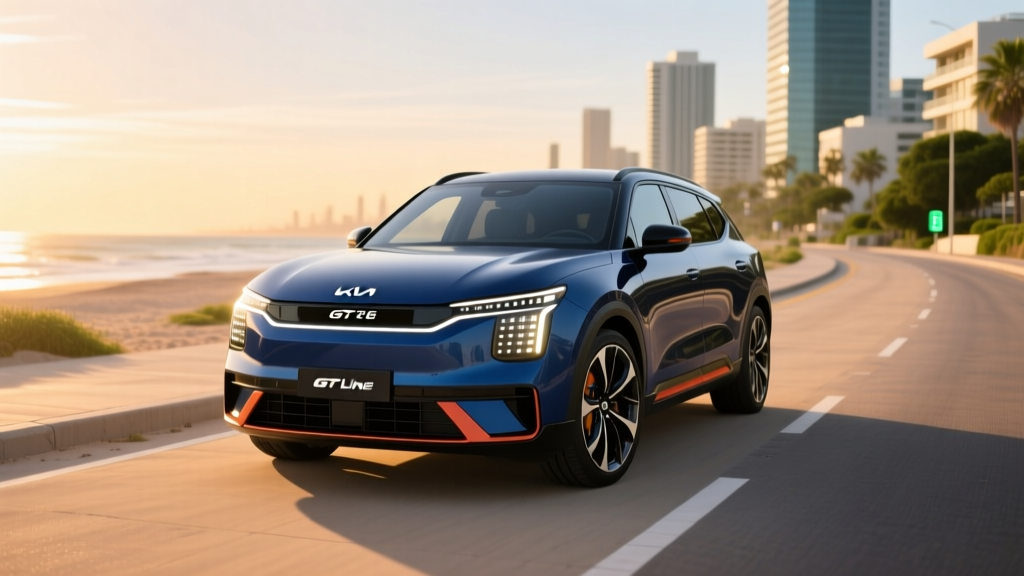
The 2026 Kia EV9 GT-Line occupies a rare position in the EV market: a genuine three-row electric SUV with usable adult-sized third-row seating, 800-volt DC fast charging, and a starting price that undercuts luxury rivals by $15,000 or more. As the flagship trim of Kia's electric SUV lineup, the GT-Line pairs a dual-motor AWD powertrain with sport-tuned suspension and a more aggressive exterior package. But beyond the styling upgrades, does the EV9 GT-Line deliver where it matters most — real-world range, practical charging speeds, and everyday usability?
After examining EPA data, real-world driving reports, and Kia's official specifications, the EV9 GT-Line emerges as the strongest mainstream three-row EV SUV on the market for 2026 — with a few caveats around highway efficiency and cold-weather range loss that buyers need to understand before signing.
Range, Battery & Real-World Efficiency
The 2026 Kia EV9 GT-Line comes equipped with a 100.0 kWh battery pack (usable capacity approximately 96.0 kWh) using NMC (nickel-manganese-cobalt) lithium-ion chemistry. This is a higher-energy-density chemistry compared to LFP, which gives the EV9 its competitive range in a large, heavy vehicle — but it also means Kia recommends daily charging to 80% for optimal long-term battery health, reserving 100% fills for road trips.
EPA Estimated Range: 280 miles (GT-Line AWD)
Real-World Expectation: 240–265 miles in mixed driving; 220–240 miles sustained highway at 70+ mph; 195–220 miles in sub-freezing winter conditions
Efficiency: 83 MPGe combined / 40 kWh per 100 miles (EPA)
Note: The EV9's boxy SUV shape and 5,000+ lb curb weight penalize highway efficiency more than sleeker crossovers. Plan road trips around ~220-mile legs for a safety buffer.
| Spec | Value |
|---|---|
| EPA Range | 280 miles (AWD) |
| Battery (Usable) | ~96.0 kWh (NMC) |
| Drivetrain | Dual-motor AWD |
| Horsepower | 379 hp (GT-Line AWD) |
| Torque | 516 lb-ft |
| 0–60 mph | 4.5 seconds |
| Max DC Fast Charge | 210 kW (800V architecture) |
| 10–80% DC Time | ~24 minutes |
| Level 2 (Home) | 10.9 kW / ~30 mi/hr |
| MPGe (Combined) | 83 MPGe |
| Towing Capacity | 5,000 lbs (AWD) |
| Cargo (Behind 3rd/2nd/1st) | 20.2 / 43.5 / 81.7 cu ft |
The 83 MPGe combined figure is respectable for a vehicle this size, but it trails the Tesla Model X (102 MPGe) and sits in the same ballpark as the Rivian R1S. In practical terms, expect to consume roughly 40 kWh per 100 miles of mixed driving. At the national average electricity rate of ~$0.16/kWh, that works out to about $6.40 per 100 miles — roughly half the fuel cost of a comparable gas-powered three-row SUV at 22 mpg.
Charging Speed: 800V Architecture in Practice
The EV9's 800-volt electrical architecture remains one of its strongest competitive advantages. While most mainstream EVs still use 400V systems (limiting peak charge rates), the EV9 can accept up to 210 kW on a compatible DC fast charger, placing it in the same tier as the Hyundai Ioniq 5 and Porsche Taycan for charging speed.
| Level | Power | Rate | Notes |
|---|---|---|---|
| Level 1 (120V) | 1.4 kW | ~4 mi/hr | Emergency/trickle only; full charge in ~70 hours |
| Level 2 (240V, 48A) | 10.9 kW | ~30 mi/hr | Full charge overnight (~9.5 hrs); requires 60A circuit |
| DC Fast (Peak) | 210 kW | 10–80% in ~24 min | Requires 350 kW-class charger; tapers significantly above 80% |
Charging curve reality check: The 210 kW peak is achieved between roughly 10–55% State of Charge. Beyond 60%, the rate tapers progressively — expect ~150 kW at 65%, dropping to ~90 kW by 80%. Charging from 80–100% on DC fast charging is painfully slow (under 50 kW) and generates excess heat. For battery longevity and time efficiency, plan road-trip stops around the 10–80% window.
At home on a Level 2 charger, the EV9's 10.9 kW onboard charger adds approximately 30 miles of range per hour of charging. A full 0–100% charge takes roughly 9.5 hours — plan to plug in when you get home and the EV9 will be ready by morning. Kia includes a NACS (North American Charging Standard) port on the 2026 model year, giving access to Tesla Supercharger stations in addition to Electrify America, EVgo, and other CCS networks via the native connector.
Performance & Driving Dynamics
The GT-Line's dual-motor AWD powertrain produces 379 horsepower and 516 lb-ft of torque, launching this 5,000+ lb SUV to 60 mph in a brisk 4.5 seconds. That's genuinely quick for a three-row family hauler — faster than a Toyota Highlander Hybrid by over two seconds and on par with the BMW X5 xDrive40i.
The GT-Line trim adds a sport-tuned suspension with slightly firmer damping compared to the standard EV9 trims. Body roll is well-controlled for a tall SUV, though the steering remains light and numb — this is a comfort-oriented vehicle with sport styling, not a sports SUV. The regenerative braking system offers multiple levels adjustable via steering-wheel paddles, including a "i-Pedal" one-pedal driving mode that brings the EV9 to a complete stop without touching the brake pedal.
NVH (noise, vibration, harshness) levels are excellent. At highway speeds, the EV9's cabin is quieter than most luxury crossovers, with minimal wind noise despite the boxy profile. Ride quality on the standard 21-inch GT-Line wheels is firm but compliant; pothole impacts are well-damped.
Interior, Cargo & Passenger Space
The EV9's defining advantage over smaller EV crossovers is genuine three-row practicality. Here's how the space breaks down:
- Front row headroom/legroom: 40.0 / 41.5 inches
- Second row headroom/legroom: 39.0 / 42.8 inches (with slide/recline)
- Third row headroom/legroom: 37.8 / 32.0 inches
- Cargo behind 3rd row: 20.2 cu ft (enough for 3–4 carry-on bags)
- Cargo behind 2nd row (3rd folded): 43.5 cu ft
- Maximum cargo (all rear seats folded): 81.7 cu ft
The third row fits adults up to about 5'10" for short trips. The 32 inches of third-row legroom is tight for long journeys, but it's competitive with the Mazda CX-90 and significantly better than the Tesla Model Y's optional third row (which is essentially children-only). The second-row seats slide fore/aft by several inches, allowing you to trade cargo space for legroom as needed.
The GT-Line interior features synthetic leather upholstery with contrast stitching, a flat-bottom steering wheel, aluminum pedal covers, and ambient lighting. The dual 12.3-inch panoramic display setup handles infotainment and instrument cluster duties. Wireless Apple CarPlay and Android Auto are standard across all trims. The center console retains physical climate control buttons — a practical choice that reviewers and owners consistently praise over touch-only interfaces.
Technology & Driver Assistance
The 2026 EV9 GT-Line comes loaded with Kia's latest suite of driver-assistance and convenience technology:
- Highway Driving Assist 2 (HDA2): SAE Level 2 adaptive cruise + lane centering with lane-change assist. Competent for highway cruising but requires hands-on-wheel supervision at all times.
- Remote Smart Parking Assist: Move the EV9 in/out of tight parking spots via key fob.
- Digital Key 2: Use your smartphone as a key; share access with family members.
- Vehicle-to-Load (V2L): Power external devices (camping gear, tools, tailgate equipment) at up to 3.6 kW from the EV9's battery — both via an interior outlet and an external adapter.
- Over-the-air (OTA) updates: Firmware, navigation, and feature updates delivered wirelessly.
- 14-speaker Meridian premium audio (GT-Line standard).
Kia's Highway Driving Assist 2 is an SAE Level 2 system. The driver must remain attentive, keep hands on the wheel, and be prepared to take over at any moment. It is not autonomous driving. For context, only Level 4 services like Waymo operate without a human driver — and those are limited to geofenced urban areas.
Pricing, Trims & Federal Tax Credit Eligibility
The 2026 Kia EV9 is offered in several trims, with the GT-Line positioned near the top of the lineup:
| Trim | MSRP | Drivetrain | §30D Credit Eligible? |
|---|---|---|---|
| Light (RWD) | ~$56,395 | RWD | Up to $7,500 (if sourcing rules met) |
| Wind (AWD) | ~$61,395 | AWD | Up to $7,500 (if sourcing rules met) |
| GT-Line (AWD) | ~$67,395 | AWD | Up to $7,500 (if sourcing rules met) |
| GT-Line Prestige (AWD) | ~$73,395 | AWD | Up to $7,500 (if sourcing rules met) |
Federal tax credit (§30D) eligibility for the EV9 requires meeting several conditions that change periodically. As of 2026, the key requirements per IRS guidelines include:
- MSRP cap: SUVs/vans must be under $80,000. All EV9 trims qualify.
- Buyer income cap: AGI must not exceed $150,000 (single), $225,000 (head of household), or $300,000 (joint).
- Battery component sourcing: A percentage of battery components must be manufactured or assembled in North America, and critical minerals must be sourced from the U.S. or FTA partners. Kia has been progressively shifting EV9 battery sourcing to the U.S. (SK On's Georgia plant), but verify the specific VIN's eligibility on fueleconomy.gov before purchasing.
- Point-of-sale transfer: The credit can now be applied at the dealership as an immediate price reduction rather than waiting for a tax refund.
If the full $7,500 credit applies, a GT-Line at ~$67,395 effectively drops to ~$59,895 — competitive with a loaded Toyota Grand Highlander Hybrid before fuel savings are factored in. Always confirm credit eligibility with your dealer and a tax professional, as battery-sourcing requirements are updated annually.
Warranty & Long-Term Ownership
Kia backs the 2026 EV9 with one of the strongest warranty packages in the industry:
- Battery & Drive Unit: 10 years / 100,000 miles (whichever comes first)
- New Vehicle Limited: 5 years / 60,000 miles
- Powertrain: 10 years / 100,000 miles
- Roadside Assistance: 5 years / 60,000 miles
- Battery capacity retention: Kia warrants the high-voltage battery against falling below 70% of original capacity during the warranty period
The 10-year battery warranty is a significant confidence signal, particularly compared to the federal minimum of 8 years / 100,000 miles. NMC batteries in 800V architectures with active thermal management have shown strong degradation curves in Kia/Hyundai's smaller platforms — expect approximately 5–8% capacity loss over the first 100,000 miles under normal use patterns (avoiding repeated 100% charges and frequent DC fast charging in extreme heat).
Pros, Cons & Who Should Buy the EV9 GT-Line
- Genuine 3-row seating with usable adult third row
- 800V fast charging: 10–80% in ~24 minutes
- 5,000-lb towing capacity (AWD)
- V2L power output for camping/jobsite use
- 10-year/100,000-mi battery warranty
- NACS port standard (Tesla Supercharger access)
- Physical climate control buttons retained
- Highway efficiency drops significantly above 70 mph
- Cold-weather range loss of 20–30% in sub-freezing temps
- GT-Line pricing pushes into luxury territory
- No frunk (front trunk) — space used by HVAC components
- Infotainment can lag with multiple apps open
- Third-row legroom tight for adults on long trips
- Choose the EV9 GT-Line if: You need three rows for family duty, want 800V fast charging for road trips, value the 10-year warranty, and can charge at home. Ideal for families of 4–6 who take road trips but don't want a minivan.
- Look elsewhere if: You primarily drive highway miles in cold climates (the Rivian R1S Dual-Motor offers more range), you need maximum cargo volume (consider the Rivian R1S or wait for the Hyundai Ioniq 9), or you want a budget EV commuter (the base EV9 Light RWD is $11,000 less).
Frequently Asked Questions
What is the real-world range of the 2026 Kia EV9 GT-Line?
The EPA rates the EV9 GT-Line AWD at 280 miles. In real-world mixed driving, expect 240–265 miles. Sustained highway driving at 70+ mph reduces this to roughly 220–240 miles. In winter conditions below freezing, plan for 195–220 miles of usable range due to battery heating demands and reduced regenerative braking efficiency.
How fast does the EV9 GT-Line charge?
On a 350 kW-class DC fast charger, the EV9 peaks at 210 kW and charges from 10–80% in approximately 24 minutes. At home on a Level 2 (240V/48A) charger, it adds about 30 miles of range per hour, fully charging overnight in roughly 9.5 hours. Level 1 (120V) adds only ~4 miles per hour and is suitable only for emergencies or very low-mileage drivers.
Does the 2026 Kia EV9 qualify for the $7,500 federal tax credit?
It depends on your income, the specific VIN's battery sourcing, and current IRS rules. The EV9's MSRP (under $80,000 for all trims) clears the SUV cap. Buyer income must be under $150K/$225K/$300K depending on filing status. Battery component and critical mineral sourcing requirements must be met — check the specific vehicle on fueleconomy.gov and consult a tax professional before relying on the credit.
Is the EV9 GT-Line worth buying over the Tesla Model X or Rivian R1S?
The EV9 GT-Line offers the best value proposition in the three-row EV SUV segment at ~$67,000 before incentives. The Tesla Model X starts above $80,000 (before options) and has superior range and Supercharger reliability, but its interior quality and panel gaps remain inconsistent. The Rivian R1S is more capable off-road and offers quad-motor performance, but starts higher and has a smaller service network. For most families prioritizing value, warranty, and daily comfort, the EV9 GT-Line is the strongest pick.
Can the EV9 GT-Line tow?
Yes. The AWD EV9 is rated for up to 5,000 lbs of towing capacity — enough for a small boat, utility trailer, or lightweight travel trailer. Note that towing will reduce range by 30–50% depending on trailer weight, aerodynamics, and terrain. Plan charging stops accordingly when towing.
Does the EV9 have a frunk?
No. The EV9 does not include a front trunk. The space under the hood is occupied by HVAC components, the onboard charger, and other powertrain electronics. All cargo must go in the rear cargo area.
Sources: EPA fuel economy data via fueleconomy.gov, Kia Motors America official specifications, IRS §30D clean vehicle credit guidelines via irs.gov.