Quick Verdict: Which 2026 Kia EV6 Trim Fits Your Drive?
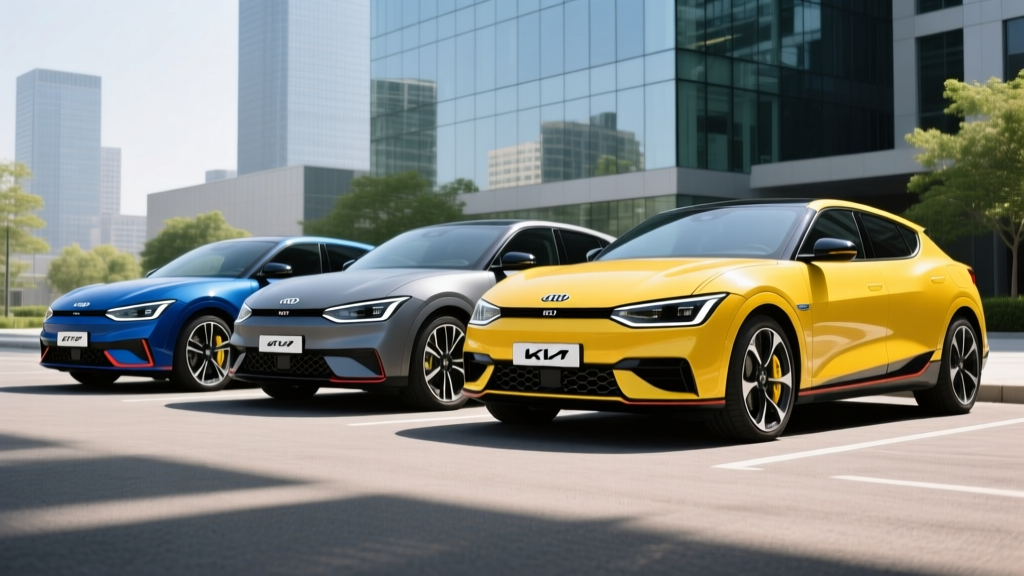
The 2026 Kia EV6 lineup spans four distinct trims, each targeting a different buyer profile. The Light RWD remains the value leader with up to 310 miles of EPA range and a starting MSRP under $44,000, while the GT-Line AWD adds dual-motor traction and a more aggressive stance. At the top, the EV6 GT delivers supercar-rivaling 576 horsepower but sacrifices roughly 70 miles of range to get there.
Across all trims, the EV6's 800-volt E-GMP architecture remains its defining advantage: peak DC fast-charging speeds up to 240 kW mean a 10–80% session takes roughly 18 minutes at a compatible station — a figure most rivals still can't match. For 2026, Kia has refined the infotainment stack and expanded standard ADAS features, but the fundamental trade-offs between trims — range vs. power vs. price — remain the core decision drivers.
2026 Kia EV6 Trim-by-Trim Spec Breakdown
| Spec | Light RWD | Wind RWD | GT-Line AWD | GT |
|---|---|---|---|---|
| EPA Range | 310 mi | 310 mi | 282 mi | 240 mi |
| Battery (usable) | 77.4 kWh | 77.4 kWh | 77.4 kWh | 77.4 kWh |
| Chemistry | NMC | NMC | NMC | NMC |
| Drivetrain | RWD (single motor) | RWD (single motor) | AWD (dual motor) | AWD (dual motor) |
| Horsepower | 225 hp | 225 hp | 320 hp | 576 hp |
| Torque | 258 lb-ft | 258 lb-ft | 446 lb-ft | 545 lb-ft |
| 0–60 mph | 7.2 sec | 7.2 sec | 5.1 sec | 3.4 sec |
| Max DC Charge | 240 kW | 240 kW | 240 kW | 240 kW |
| 10–80% DC Time | ~18 min | ~18 min | ~18 min | ~18 min |
| Level 2 Rate | 10.9 kW | 10.9 kW | 10.9 kW | 10.9 kW |
| MPGe (combined) | 134 MPGe | 134 MPGe | 117 MPGe | 85 MPGe |
| kWh/100 mi | 25 | 25 | 29 | 40 |
| Base MSRP | $43,900 | $47,500 | $52,900 | $63,400 |
Source: fueleconomy.gov and Kia America official specifications. All MSRP figures exclude $1,395 destination charge.
Real-World Range: What the EPA Sticker Doesn't Tell You
EPA Estimate: Up to 310 miles (Light/Wind RWD)
Real-World Expectation:
- Highway (70–75 mph, moderate temps): ~255–275 miles — aerodynamic drag at sustained speed cuts into the EPA mixed-cycle figure
- City/suburban mixed driving: ~290–305 miles — regen braking recovers energy in stop-and-go traffic
- Cold weather (below 32°F): ~220–250 miles — NMC chemistry loses 15–25% capacity in freezing temps, plus cabin heating draws from the pack. The EV6's heat pump (standard on Wind and above) mitigates this somewhat versus resistive heating
The EV6 GT's 240-mile EPA rating drops to roughly 190–200 miles on a cold-weather highway run. If your commute or road-trip pattern regularly involves 200+ miles in winter conditions, the Light or Wind RWD trims are the safer bet. The GT's performance comes at a genuine efficiency cost — 40 kWh/100 mi is thirstier than some full-size electric SUVs.
One factor in the EV6's favor: its battery preconditioning feature warms the pack when you navigate to a DC fast charger, preserving charge speed in cold weather. Make sure to use the nav-based preconditioning rather than arriving at a charger cold.
Charging Speed: 800V Architecture in Practice
Every 2026 EV6 trim shares Kia's 800-volt E-GMP platform, which accepts up to 240 kW at a compatible DC fast charger. Here's what that translates to in real sessions:
| Charging Level | Power | Speed (RWD trims) | Notes |
|---|---|---|---|
| Level 1 (120V household) | ~1.4 kW | ~4 mi/hr | Emergency/trickle only — a full charge takes 55+ hours |
| Level 2 (240V home) | 10.9 kW | ~32 mi/hr | Full charge in ~7.5 hours; requires 48-amp dedicated circuit |
| DC Fast (150 kW station) | ~150 kW peak | 10–80% in ~25 min | Common Electrify America / EVgo rate |
| DC Fast (350 kW station) | ~240 kW peak | 10–80% in ~18 min | Requires CCS-compatible 350 kW stall; charge curve tapers hard above 80% |
The charge curve matters. The EV6 hits its 240 kW peak between roughly 10–55% State of Charge, then progressively tapers. From 80–100%, charging slows to under 40 kW. If you're road-tripping, plan to charge from 10–80% and drive on rather than waiting for a full top-off — the last 20% can add 20+ minutes to your stop.
For 2026, the EV6 retains its native CCS1 port. Kia has confirmed NACS (Tesla-style) adoption for future models, and the EV6 can use a CCS-to-NACS adapter at Tesla Supercharger V3 stalls (which max out around 150 kW for non-Tesla vehicles via adapter). For the fastest sessions, stick to Electrify America or EVgo 350 kW stations.
Home charging at 10.9 kW means a 48-amp Level 2 wallbox is ideal. Budget $500–$1,200 for the charger unit and $800–$2,500 for professional installation depending on your panel capacity and conduit run — confirm with a licensed electrician whether your 200-amp service panel can accommodate the additional 40-amp continuous load.
Pricing, Trims & Federal Tax Credit Eligibility
| Trim | Base MSRP | With Destination | §30D Credit Potential | Effective Price |
|---|---|---|---|---|
| Light RWD | $43,900 | $45,295 | Up to $7,500 | ~$37,795 |
| Wind RWD | $47,500 | $48,895 | Up to $7,500 | ~$41,395 |
| GT-Line AWD | $52,900 | $54,295 | Up to $7,500 | ~$46,795 |
| GT | $63,400 | $64,795 | Up to $7,500 | ~$57,295 |
Federal tax credit caveats (IRS §30D, 2026 rules):
- MSRP cap: The EV6 qualifies as an SUV under IRS vehicle classification, so the MSRP cap is $80,000 — all trims clear this threshold
- Buyer income limits: AGI must not exceed $150,000 (single), $225,000 (head of household), or $300,000 (joint filers)
- Battery sourcing: The full $7,500 requires meeting both critical-mineral and battery-component requirements under current IRS guidance. The EV6's South Korean battery sourcing has historically qualified for the full credit, but IRS rules evolve annually — verify current-year eligibility before purchase
- Point-of-sale transfer: You can elect to transfer the credit to the dealer at purchase, reducing your out-of-pocket cost immediately rather than waiting for tax filing
Consult a tax professional and the IRS clean vehicle credits page for your specific situation. State and utility incentives may stack on top of the federal credit.
Performance & Drivetrain: From Commuter to Track Weapon
The EV6 trim range covers an unusually wide performance envelope:
Light & Wind RWD (225 hp): The single-motor rear-drive setup delivers adequate acceleration for daily driving — 0–60 in 7.2 seconds is quicker than most gas-powered compact crossovers. RWD also means slightly better efficiency and a tighter turning radius. For commuters covering 30–50 miles daily with home charging, these trims offer the best range-per-dollar ratio in the lineup.
GT-Line AWD (320 hp): The dual-motor configuration adds all-weather confidence and drops the 0–60 time to 5.1 seconds. You trade 28 miles of EPA range for the extra traction and power — a worthwhile exchange in snow-belt states or for drivers who regularly carry passengers and cargo. The GT-Line also gets sport-tuned suspension and unique exterior styling cues.
GT (576 hp): This is Kia's halo performance variant. The 3.4-second 0–60 time puts it in Porsche Taycan territory, and the GT-specific torque vectoring and electronic limited-slip differential make it genuinely capable on a twisty road. The trade-off is steep: 240 miles of range and 85 MPGe combined. It's a weekend toy that can daily-drive, not an efficiency champion.
Interior, Cargo & Technology
Passenger space: The EV6's flat-floor E-GMP platform yields generous interior volume. Front legroom measures 41.7 inches; rear legroom is 39.0 inches — competitive with the Hyundai Ioniq 5 and slightly tighter than the Ford Mustang Mach-E's rear seat. The sloping roofline cuts into rear headroom for taller passengers.
Cargo volume: 24.4 cubic feet behind the rear seats, expanding to 50.2 cubic feet with the rear seats folded. The front trunk (frunk) is small — roughly 0.7 cubic feet on AWD trims, enough for a charging cable bag but not a carry-on. RWD trims offer a slightly larger frunk at 1.8 cubic feet.
Infotainment: The 2026 EV6 uses a dual 12.3-inch curved display setup running Kia's latest Connect software. Wireless Apple CarPlay and Android Auto are standard across all trims. The GT-Line and GT add an augmented-reality head-up display and a premium Meridian audio system.
Driver assistance: All trims include Highway Driving Assist 2 (HDA2), which combines adaptive cruise control with lane-centering on divided highways. This is an SAE Level 2 system — you must keep your hands on the wheel and eyes on the road. It does not make the EV6 a self-driving vehicle. GT-Line and GT trims add Remote Smart Parking Assist, which lets you move the car in and out of tight spaces via the key fob.
Pros, Cons & Who Should Buy Which Trim
Pros
- 800V architecture delivers class-leading 18-min DC fast charging
- 310-mile EPA range on RWD trims covers most commutes with margin
- Strong 10-year/100,000-mile powertrain and battery warranty
- Vehicle-to-load (V2L) capability — power devices or a campsite from the pack
- All trims under the $80K SUV MSRP cap for federal tax credit
Cons
- CCS1 port requires adapter for Tesla Supercharger access
- GT trim's 240-mile range is limiting for road trips
- Small frunk across all trims
- Rear headroom compromised by coupe-like roofline
- No NACS native port for 2026 model year
Which EV6 Trim Is Right for You?
- Choose the Light RWD if: You want maximum range and lowest price, commute under 60 miles daily, and have reliable home charging. The ~$37,800 effective price after tax credit makes it one of the best value propositions in the EV market.
- Choose the Wind RWD if: You want the Light's efficiency but need the heat pump, heated/ventilated front seats, and a power liftgate. The $3,600 step-up buys meaningful comfort upgrades.
- Choose the GT-Line AWD if: You live where snow and ice are regular, want sub-5-second acceleration, and can accept a 28-mile range reduction. Ideal for families who need all-weather capability.
- Choose the GT if: Performance is your priority and you have a second vehicle (or short commute) that makes 240 miles of range acceptable. It's a legitimate sports sedan rival at a fraction of a Porsche's price.
Battery Warranty & Long-Term Ownership
Kia covers the EV6's battery and powertrain with a 10-year/100,000-mile warranty, with a capacity retention threshold of 70%. If the battery degrades below 70% of its original 77.4 kWh capacity within that window, Kia will repair or replace it. This is one of the strongest warranties in the segment and provides genuine peace of mind for second-owner buyers and high-mileage commuters.
The NMC (nickel manganese cobalt) chemistry in the EV6 offers high energy density but is more sensitive to sustained high-State-of-Charge storage and extreme heat. Best practices for longevity: charge to 80% for daily use, avoid leaving the car at 100% SoC for extended periods, and use DC fast charging sparingly if you have reliable Level 2 access at home.
NHTSA has given the EV6 a 5-Star Overall Safety Rating, and the IIHS has named it a Top Safety Pick+ when equipped with specific headlight configurations — data points that matter for family buyers and insurance premium calculations.
Frequently Asked Questions
What is the real-world range of the 2026 Kia EV6?
The Light and Wind RWD trims carry a 310-mile EPA rating. Expect roughly 255–275 miles on sustained highway driving in moderate temperatures, and 220–250 miles in freezing conditions. The AWD GT-Line drops to about 230–245 real-world highway miles, while the GT delivers roughly 190–200 miles on a highway run in cold weather.
How fast does the EV6 charge at home and on the road?
At a 350 kW DC fast charger, the EV6 charges from 10–80% in approximately 18 minutes, peaking at 240 kW. On a home Level 2 charger (10.9 kW / 48 amps), you'll add roughly 32 miles of range per hour, meaning a full overnight charge from 10–100% takes about 7.5 hours.
Does the 2026 Kia EV6 qualify for the $7,500 federal tax credit?
All EV6 trims fall under the $80,000 SUV MSRP cap and have historically met the battery-sourcing requirements for the full $7,500 credit under IRS §30D. However, buyer income caps apply ($150K single / $300K joint), and sourcing rules are subject to change. Verify eligibility at purchase and consult a tax professional.
Is the EV6 worth buying over the Hyundai Ioniq 5 or Tesla Model Y?
The EV6 shares its E-GMP platform with the Ioniq 5 but offers a sportier driving position and slightly more rear-seat legroom. The Model Y provides better Supercharger network access (native NACS) and more cargo volume but trails in DC charge speed on non-Tesla chargers. If fast public charging and warranty coverage are top priorities, the EV6 is highly competitive. If Supercharger convenience is paramount, consider the Model Y or wait for Kia's upcoming NACS-native models.
What are the biggest drawbacks of the EV6?
The CCS1 port means you need an adapter for Tesla Superchargers. The GT trim's range is limited for road tripping. The frunk is unusually small. And the sloping roofline reduces rear headroom compared to boxier crossovers like the Ioniq 5 or Ford Mustang Mach-E.
Does the EV6 support vehicle-to-load (V2L)?
Yes. The EV6 includes an interior V2L outlet (standard on Wind and above, available on Light) that can output up to 1,900 watts — enough to power a laptop, small appliance, or campsite lighting. An external V2L adapter is also available for powering devices from the charge port.