Quick Verdict: The Performance EV That Still Works Daily
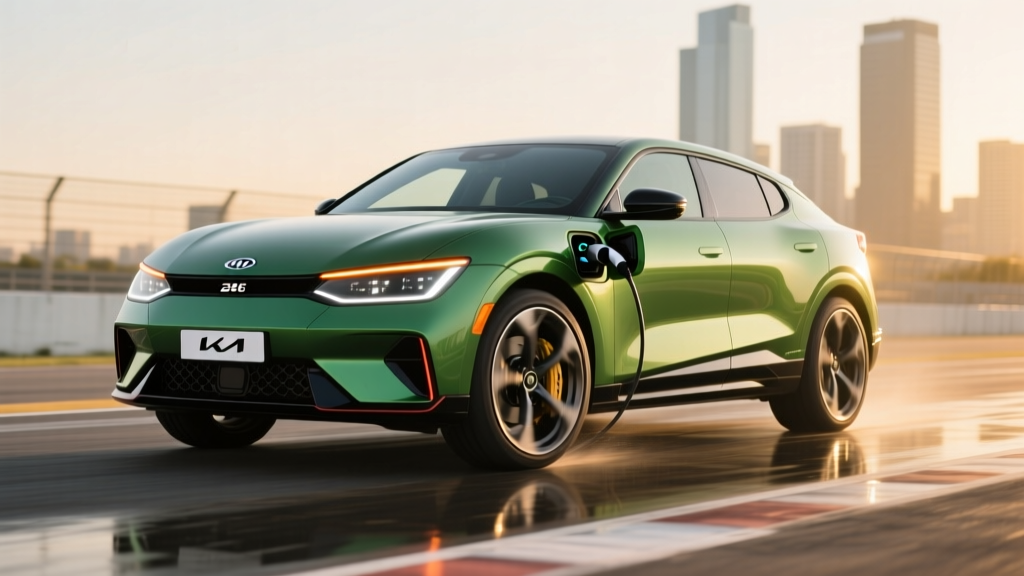
The 2026 Kia EV6 GT occupies a rare position in the electric vehicle market: a dual-motor performance crossover that delivers supercar-rivaling acceleration without sacrificing the practicality buyers need for daily driving. With 576 horsepower, an 800-volt architecture enabling 240 kW peak DC fast charging, and a usable 77.4 kWh NMC battery, the EV6 GT answers the question many performance-minded EV shoppers ask — can a hot electric crossover actually replace a sports sedan and serve as a family hauler?
After examining EPA data, real-world efficiency patterns, and Kia's updated 2026 spec sheet, the answer is a qualified yes. The GT variant trades roughly 30 miles of EPA range compared to the standard Long Range AWD model, but compensates with a 3.4-second 0-60 mph time, track-capable thermal management, and one of the fastest charging curves in its price bracket. For buyers cross-shopping the Tesla Model Y Performance, Ford Mustang Mach-E GT, and Hyundai Ioniq 5 N, the EV6 GT's combination of 800V charging speed and Kia's 10-year powertrain warranty makes a compelling case.
Range and Efficiency: EPA Numbers vs. Real-World Reality
The 2026 Kia EV6 GT carries an EPA-estimated range of 206 miles on a full charge, according to fueleconomy.gov. That figure represents combined city/highway driving under EPA test cycles. For context, the standard EV6 Long Range AWD achieves 282 miles EPA, while the RWD Long Range variant reaches 310 miles — illustrating the efficiency cost of the GT's 576-hp dual-motor setup, stickier performance tires, and more aggressive tuning.
Real-World Range Expectations
EPA Estimate: 206 miles (combined)
Highway driving (70-75 mph, moderate weather): Expect 175–190 miles. The GT's performance-oriented drivetrain and wider 255/40R20 tires increase rolling resistance and aerodynamic drag at sustained speeds.
City/suburban driving with regen: 200–215 miles. Regenerative braking recovers more energy in stop-and-go conditions, partially offsetting the GT's higher mass.
Cold weather (below 32°F): 145–165 miles. Lithium-ion NMC batteries lose 20–30% of usable capacity in freezing temperatures due to increased internal resistance and cabin heating demands. The EV6 GT's heat pump (standard on 2026 models) mitigates some of this loss compared to resistive heating systems.
Practical road-trip planning: Budget for 160–170 miles between DC fast-charge stops to maintain a comfort buffer and avoid the slow tapering portion of the charge curve above 80% SoC.
Efficiency comes in at 85 MPGe combined (40 kWh per 100 miles), which is respectable for a 4,700-lb performance AWD vehicle but trails the Ioniq 5 N's slightly more efficient tuning and the base EV6's 117 MPGe. The efficiency gap is the direct trade-off for the GT's output advantage.
Battery, Chemistry, and Long-Term Durability
The 2026 EV6 GT uses a 77.4 kWh usable capacity (84.0 kWh gross) nickel-manganese-cobalt (NMC) lithium-ion battery pack. Kia sources cells from SK On, a partnership that has matured significantly since the EV6's 2022 launch.
| Specification | Value |
|---|---|
| Battery Chemistry | NMC (Nickel-Manganese-Cobalt) |
| Usable Capacity | 77.4 kWh |
| Gross Capacity | 84.0 kWh |
| System Voltage | 800V nominal (multi-voltage capable) |
| Drivetrain | Dual-motor AWD |
| Total System Output | 576 hp / 545 lb-ft torque |
| 0-60 mph | 3.4 seconds (manufacturer) |
| Top Speed | 161 mph (electronically limited) |
NMC vs. LFP — why it matters here: The EV6 GT uses NMC chemistry rather than the lithium iron phosphate (LFP) found in some standard-range competitors. NMC delivers higher energy density, which is essential for fitting 77.4 kWh of usable capacity into the GT's platform while maintaining weight distribution. The trade-off is that NMC cells are more sensitive to prolonged storage at 100% SoC and extreme heat. For GT owners, Kia recommends keeping daily charge limits at 80% and using the 100% setting only before road trips — a practice that significantly extends long-term battery health.
Kia's battery warranty covers 10 years or 100,000 miles, guaranteeing the pack will retain at least 70% of its original capacity during that period. Independent data from fleet operators suggests NMC packs of this generation typically retain 85–90% capacity at 100,000 miles under normal use, well above the warranty threshold.
Charging Speed: The 800V Advantage in Practice
The 2026 EV6 GT's defining practical advantage is its 800-volt electrical architecture, which enables DC fast charging at up to 240 kW peak on compatible chargers. This places the GT among the fastest-charging EVs available under $70,000, rivaling the Porsche Taycan and Hyundai Ioniq 5 N while outpacing the Tesla Model Y's ~250 kW peak (which is harder to sustain due to the Model Y's 400V architecture on older platforms).
| Charging Level | Power / Rate | Miles Added | Time |
|---|---|---|---|
| Level 1 (120V household) | 1.4 kW | ~3–4 miles/hr | 55+ hours (full) |
| Level 2 (240V home, 48A) | 10.9 kW | ~28 miles/hr | ~7.5 hours (full) |
| DC Fast Charge (350 kW station) | 240 kW peak | ~100 miles in 10 min | ~18 min (10–80%) |
| DC Fast Charge (150 kW station) | ~130 kW avg | ~60 miles in 10 min | ~28 min (10–80%) |
Understanding the charge curve: The 240 kW figure represents peak power, available roughly between 10–55% State of Charge (SoC). Above 55%, the rate tapers progressively — dropping to ~150 kW by 70% and ~80 kW by 85%. This is normal physics: as cells fill, the battery management system reduces current to prevent lithium plating and thermal stress. The 10–80% time of approximately 18 minutes assumes a 350 kW-capable Electrify America or Ionity station and battery preconditioning.
Preconditioning matters: The EV6 GT includes a battery preconditioning feature accessible through the navigation system. When you set a DC fast charger as your destination, the thermal management system warms or cools the battery to optimal temperature before arrival, enabling faster charge acceptance. Without preconditioning — especially in cold weather — your 10–80% time could stretch to 30+ minutes even on a 350 kW charger.
Home charging: The onboard charger accepts up to 10.9 kW on Level 2 (240V, 48 amps), meaning a full overnight charge takes roughly 7.5 hours. Most EV6 GT owners will install a 48-amp Level 2 home station (such as a ChargePoint Home Flex or Emporia V2), which requires a 60-amp dedicated circuit. Expect $800–$2,000 for professional installation depending on panel capacity and conduit runs.
The EV6 GT uses the NACS (North American Charging Standard) connector for the 2026 model year, providing native access to Tesla Supercharger stations (now open to non-Tesla vehicles via the NACS standard) as well as Electrify America, EVgo, and ChargePoint networks with no adapter required.
Performance and Driving Dynamics
The GT's dual-motor AWD system produces 576 horsepower and 545 lb-ft of torque, propelling the 4,706-lb crossover from 0-60 mph in 3.4 seconds — a figure that places it in the territory of a Porsche 911 Carrera or a C8 Corvette from a standing start. Kia's GT mode sharpens throttle mapping, firms the electronically controlled dampers, and enables a drift mode that biases torque to the rear axle.
Beyond straight-line speed, the GT's mechanical upgrades over the standard EV6 include:
- Electronically controlled limited-slip differential (e-LSD) for corner-exit traction
- Upgraded brake system with larger front rotors and higher-capacity calipers to handle the GT's mass at track speeds
- 20-inch alloy wheels wrapped in 255/40R20 Michelin Pilot Sport EV tires (summer compound — plan for dedicated winter tires in snow-belt states)
- Reinforced chassis bracing and retuned adaptive dampers for reduced body roll
The trade-off for this performance is ride firmness. In GT mode, the dampers transmit road imperfections noticeably more than the Long Range AWD model's comfort-oriented tuning. Eco and Normal modes soften the ride substantially, making the GT livable as a daily commuter — but buyers seeking a plush grand-touring experience should test-drive before committing.
Interior, Cargo, and Technology
The EV6 GT shares its interior architecture with the broader EV6 lineup, featuring a dual 12.3-inch curved display panel (instrument cluster and infotainment), a head-up display with augmented-reality navigation overlays, and Kia's latest ccNC (Connected Car Navigation & Cockpit) infotainment system with wireless Apple CarPlay and Android Auto.
| Measurement | Value |
|---|---|
| Cargo Volume (behind rear seats) | 24.4 cu ft |
| Cargo Volume (rear seats folded) | 50.2 cu ft |
| Front Trunk (Frunk) | 0.7 cu ft (minimal — houses electronics) |
| Front Legroom | 41.7 inches |
| Rear Legroom | 39.4 inches |
| Seating Capacity | 5 passengers |
The 24.4 cu ft cargo area behind the rear seats accommodates roughly four carry-on suitcases or a week's groceries for a family of four. Folding the 60/40 split rear bench opens 50.2 cu ft — sufficient for bulky items like a bicycle or camping gear, though it falls short of the Model Y's 76 cu ft maximum.
GT-specific interior features: Suede/Nappa leather sport seats with GT badging, a flat-bottom heated steering wheel, aluminum pedals, and ambient lighting with GT-exclusive color profiles. The GT also includes a premium 14-speaker Meridian audio system as standard.
Driver assistance: The EV6 GT comes equipped with Kia's Highway Driving Assist 2 (HDA2), a Level 2 SAE driver-assistance system combining adaptive cruise control with stop-and-go, lane-centering, and lane-change assist. HDA2 requires continuous driver supervision — it is not a self-driving system. It performs well on divided highways but requires hands-on-wheel confirmation every 30 seconds.
Pricing, Trims, and Federal Tax Credit Eligibility
The 2026 Kia EV6 GT is offered as a single, well-equipped trim with minimal options. Pricing reflects its position as Kia's performance flagship:
| Item | Amount |
|---|---|
| Base MSRP | $61,600 |
| Destination Charge | $1,375 |
| GT Technology Package (HUD, remote parking) | $1,500 |
| As-Tested Price (with options) | $64,475 |
| Federal Tax Credit (§30D, if eligible) | Up to $7,500 |
| Effective Price After Max Credit | ~$54,100–$56,975 |
Federal tax credit eligibility (§30D): The 2026 EV6 GT may qualify for up to $7,500 under the IRS Clean Vehicle Credit, but eligibility depends on multiple requirements that buyers must verify individually. According to IRS guidelines, the key criteria include:
- MSRP Cap: The vehicle must have a manufacturer's suggested retail price at or below $80,000 for SUVs/CUVs. The EV6 GT's $61,600 base MSRP clears this threshold.
- Buyer Income Cap: Modified adjusted gross income (MAGI) must not exceed $150,000 (single filers), $225,000 (head of household), or $300,000 (joint filers) in either the current or prior tax year.
- Battery Component Sourcing: A percentage of battery components must be manufactured or assembled in North America, and critical minerals must meet sourcing thresholds. These percentages increase annually. Verify the EV6 GT's current-year compliance on fueleconomy.gov before purchasing.
- Point-of-Sale Transfer: As of 2024, eligible buyers can transfer the credit to the dealer at purchase, reducing the upfront cost rather than waiting for a tax refund. This requires dealer participation and IRS registration.
Critical caveat: Battery sourcing rules tighten each year. A vehicle that qualifies in January may not qualify by December if Kia's supply chain shifts. Always confirm eligibility at the point of sale using the IRS VIN-lookup tool, and consult a tax professional for your specific situation.
Competitor Comparison: EV6 GT vs. the Field
| Spec | Kia EV6 GT | Tesla Model Y Performance | Hyundai Ioniq 5 N | Ford Mach-E GT |
|---|---|---|---|---|
| EPA Range | 206 mi | 277 mi | 221 mi | 263 mi |
| Horsepower | 576 hp | 456 hp | 640 hp | 480 hp |
| 0-60 mph | 3.4 sec | 3.5 sec | 3.25 sec | 3.3 sec |
| Peak DC Charge | 240 kW | 250 kW | 238 kW | 150 kW |
| 10-80% Time | ~18 min | ~20 min | ~18 min | ~36 min |
| Battery (usable) | 77.4 kWh | ~75 kWh | 80.0 kWh | 75.7 kWh |
| Cargo (rear up) | 24.4 cu ft | 30.2 cu ft | 27.2 cu ft | 29.7 cu ft |
| Base MSRP | $61,600 | $52,490 | $66,250 | $59,995 |
| Powertrain Warranty | 10 yr / 100k mi | 8 yr / 120k mi | 10 yr / 100k mi | 8 yr / 100k mi |
Decision Framework: Which Performance EV Fits You?
Choose the Kia EV6 GT if: You prioritize the fastest DC charging in the segment, value Kia's 10-year/100,000-mile warranty, and want a balance of straight-line thrills with daily-driver comfort. Best for road-trippers who need quick pit stops.
Choose the Tesla Model Y Performance if: Maximum range (277 mi EPA) and Supercharger network reliability are your top priorities, and you prefer a more minimalist interior with OTA update frequency.
Choose the Hyundai Ioniq 5 N if: You're a track enthusiast who wants simulated gear shifts, N-specific drift and launch modes, and the most visceral driving experience — and you're willing to pay a $4,650 premium over the EV6 GT.
Choose the Ford Mach-E GT if: You want a strong value proposition with competitive performance, more cargo space, and a Blue Oval dealer network — but can accept significantly slower DC charging at 150 kW peak.
Pros, Cons, and Ownership Realities
Pros
- Blistering 3.4-second 0-60 mph with dual-motor AWD
- 240 kW peak DC charging — among the fastest in class
- 800V architecture future-proofs for next-gen chargers
- 10-year/100,000-mile powertrain and battery warranty
- NACS connector provides native Supercharger access
- Adaptive dampers balance track capability with daily comfort
- Strong build quality and materials for the price point
Cons
- 206-mile EPA range is the lowest in its competitive set
- Cold-weather range drops to ~145–165 miles realistically
- Firm ride in GT mode may fatigue on rough roads
- Small 0.7 cu ft frunk is essentially unusable
- Cargo space (24.4 cu ft) trails Model Y and Mach-E
- Summer tires are standard — winter tire purchase required in snow states
- Insurance premiums run 15–25% higher than base EV6 trims
Ownership cost note: According to industry estimates, the EV6 GT's total 5-year cost of ownership (including depreciation, insurance, electricity, and maintenance) runs approximately $58,000–$65,000 depending on your state, mileage, and electricity rates. Insurance is the standout cost — performance EVs carry higher premiums due to repair complexity and parts costs. Get quotes before purchasing.
Frequently Asked Questions
What is the real-world range of the 2026 Kia EV6 GT?
The EPA rates the EV6 GT at 206 miles combined. In real-world highway driving at 70-75 mph, expect 175–190 miles. In freezing weather, range can drop to 145–165 miles. City driving with regenerative braking can stretch to 200–215 miles.
How fast does the EV6 GT charge at home and on the road?
At home on a Level 2 (240V, 48A) charger, the EV6 GT charges at 10.9 kW, adding about 28 miles of range per hour and reaching a full charge in roughly 7.5 hours. On a 350 kW DC fast charger, it peaks at 240 kW and charges from 10–80% in approximately 18 minutes when the battery is preconditioned.
Does the 2026 EV6 GT qualify for the federal EV tax credit?
It may qualify for up to $7,500 under IRS §30D, but eligibility depends on your income (MAGI caps: $150K single / $300K joint), the vehicle's MSRP (under the $80K SUV cap — which the GT meets), and current battery sourcing compliance. Rules change annually. Verify on fueleconomy.gov and consult a tax professional before purchasing.
Is the EV6 GT worth buying over the Tesla Model Y Performance?
It depends on your priorities. The Model Y Performance offers 71 more miles of EPA range, more cargo space, and Supercharger network access (though the EV6 GT now has native NACS access too). The EV6 GT counters with faster sustained DC charging, a longer 10-year warranty, and a more engaging driving experience with adaptive dampers and an e-LSD. Test-drive both before deciding.
What is the biggest drawback of the EV6 GT?
Range is the primary compromise. At 206 miles EPA, the GT requires more frequent charging stops on road trips compared to the Model Y Performance (277 mi) or even its own Long Range AWD sibling (282 mi). If your commute exceeds 80 miles round-trip or you road-trip frequently, the range penalty may outweigh the performance gains.
Does the EV6 GT have a heat pump for cold weather?
Yes. The 2026 EV6 GT includes a standard heat pump, which significantly improves cold-weather efficiency compared to resistive cabin heaters. The heat pump extracts ambient heat rather than generating it from the battery, reducing winter range loss by roughly 5–10% compared to vehicles without one.
Can I tow with the EV6 GT?
The 2026 EV6 GT has a maximum towing capacity of 2,700 pounds when properly equipped — sufficient for a small utility trailer or a pair of jet skis, but not for a full-size camper or boat. Towing will also reduce range by 30–50% depending on trailer weight and aerodynamics.
Sources: EPA fuel economy data via fueleconomy.gov, Kia Motors America press specifications, IRS Clean Vehicle Credit guidelines at irs.gov. All specifications reflect 2026 model year data available at time of publication. Tax credit eligibility subject to change — verify current requirements before purchase.