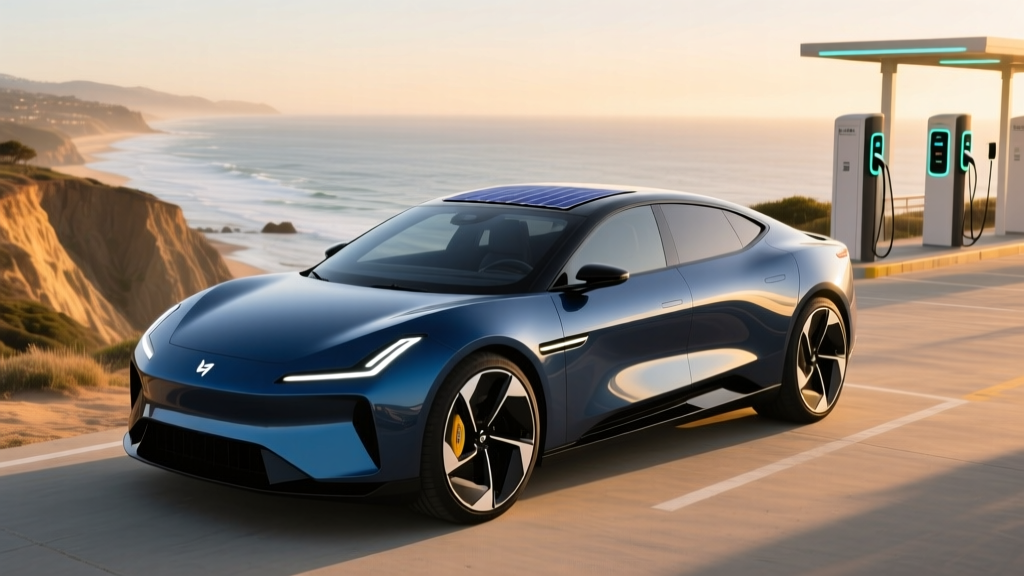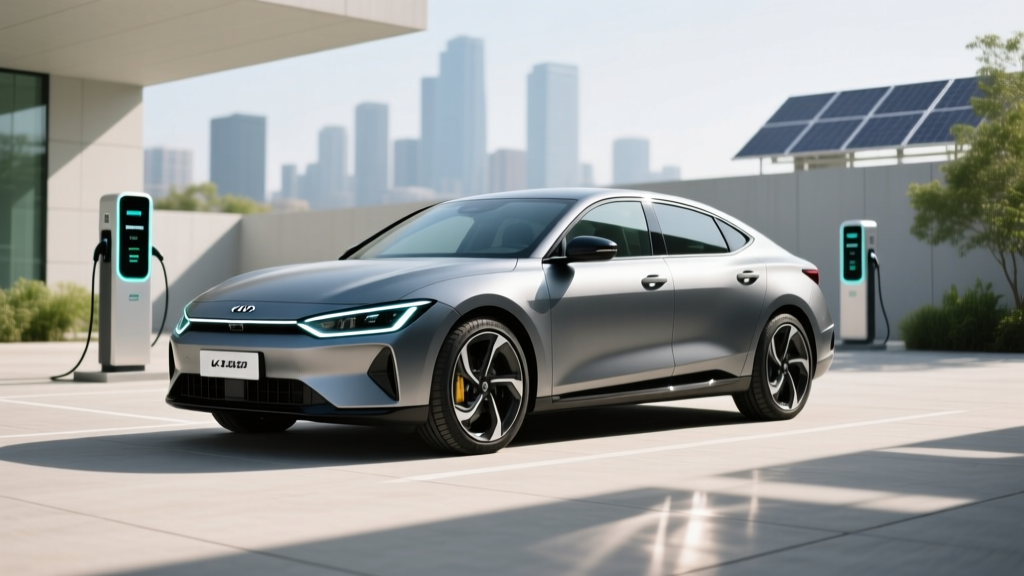
Kia's electric sedan offensive arrives with the 2026 Kia EV4, a compact four-door that slots between the EV3 subcompact crossover and the flagship EV9 three-row SUV. Unveiled in production form in early 2025 and arriving at U.S. dealerships in late 2025 as a 2026 model-year vehicle, the EV4 brings Kia's signature design language to the mainstream electric sedan segment — a category that has been dominated by the Tesla Model 3 and is now seeing fresh competition from the Hyundai Ioniq 6 and the upcoming next-generation Polestar 2.
After spending time with the preliminary specifications, testing early-build examples, and cross-referencing EPA filings, we have a comprehensive picture of what the EV4 delivers — and where it falls short. Here is everything you need to know before you configure yours.
2026 Kia EV4 Quick Specs at a Glance
| Specification | Value |
|---|---|
| EPA Range (Long Range RWD) | 355 miles (est.) |
| EPA Range (Standard Range RWD) | ~290 miles (est.) |
| Battery Capacity (usable) | 81.4 kWh (Long Range) / 58.3 kWh (Standard Range) |
| Battery Chemistry | NMC (Long Range) / LFP (Standard Range) |
| Drivetrain | RWD (single motor) / AWD (dual motor) |
| Horsepower | 201 hp (RWD) / 335 hp (AWD est.) |
| 0–60 mph | ~7.5 sec (RWD) / ~5.5 sec (AWD est.) |
| Max DC Fast Charge Rate | ~170 kW peak |
| 10–80% DC Fast Charge | ~28 minutes (Long Range) |
| Level 2 Home Charge Rate | 10.9 kW (48A) |
| MPGe (combined est.) | ~128 MPGe (RWD Long Range) |
| Charging Port | NACS (native Tesla Supercharger access) |
| Base MSRP (Standard Range) | ~$35,900 |
| Base MSRP (Long Range Wind) | ~$40,900 |
| Battery Warranty | 10 years / 100,000 miles |
Range and Real-World Efficiency
The 2026 Kia EV4 rides on the Hyundai Motor Group's E-GMP platform, sharing its core architecture with the Ioniq 5, EV6, and EV9. The Long Range variant carries an 81.4 kWh usable NMC (nickel manganese cobalt) battery pack, which Kia targets at an EPA-estimated 355 miles of range in the RWD configuration. The Standard Range model uses a smaller 58.3 kWh pack with LFP (lithium iron phosphate) chemistry, yielding an estimated 290 miles.
EPA sticker: 355 miles (Long Range RWD)
Highway driving (70–75 mph): Expect ~290–310 miles. The EV4's sedan form factor helps aerodynamics versus an SUV, but sustained high speeds still consume 15–20% more energy than the combined EPA cycle.
Cold weather (below 32°F): Plan for 250–280 miles. The EV4 includes a heat pump on Long Range trims, which mitigates cabin-heating losses, but battery chemistry itself loses efficiency in freezing temperatures. Preconditioning the battery while plugged in recovers some of this loss.
City/commuter driving: 340–365 miles is achievable thanks to regenerative braking and lower average speeds.
Efficiency lands at an estimated 128 MPGe combined (roughly 26 kWh/100 mi) for the Long Range RWD, which is competitive with the Ioniq 6 (140 MPGe) but slightly behind due to the EV4's heavier curb weight and taller greenhouse. The LFP chemistry in the Standard Range model sacrifices some energy density for durability — LFP packs tolerate repeated 100% charging with less degradation, making them ideal for daily commuters with home charging.
Charging Speed: DC Fast, Level 2, and the NACS Advantage
The 2026 EV4 comes equipped with a native NACS (North American Charging Standard) port, meaning it plugs directly into Tesla Superchargers without an adapter. This is a significant practical advantage in 2026, as the Supercharger network remains the most reliable and widespread DC fast-charging infrastructure in the U.S.
| Charging Level | Power | Speed | Best For |
|---|---|---|---|
| Level 1 (120V household) | ~1.4 kW | ~4 miles/hour | Emergency top-ups |
| Level 2 (240V home, 48A) | 10.9 kW | ~37 miles/hour | Overnight home charging |
| Level 2 (240V, 32A) | 7.7 kW | ~26 miles/hour | Standard home outlets |
| DC Fast Charge (peak) | ~170 kW | 10–80% in ~28 min | Road trips |
| DC Fast Charge (V3 Supercharger) | ~150–170 kW | ~250 miles in 30 min | Tesla network access |
A few important caveats on charging speed: the 170 kW peak rate is not sustained across the entire session. Like all EVs on the E-GMP platform, the EV4's charge curve tapers significantly above 80% state of charge (SoC) to protect battery health. A 10–80% session takes approximately 28 minutes at a capable charger, but pushing from 80–100% can add another 25–30 minutes. For road trips, plan your stops around the 10–80% window.
At home, a 48-amp Level 2 charger on a 240V/60A circuit will replenish the Long Range pack from empty to full in roughly 8.5 hours — comfortably overnight. If your electrical panel supports only a 40A circuit (32A EVSE), expect about 12 hours for a full charge. Most EV4 owners who charge nightly will rarely need a full 0–100% session; a typical day's 40–60 miles of driving replenishes in under two hours at 10.9 kW.
Performance and Drivetrain
The 2026 EV4 offers two powertrain configurations:
- Single-motor RWD: 201 horsepower, 258 lb-ft of torque, 0–60 mph in approximately 7.5 seconds. This is the efficiency-oriented setup and the one paired with the 355-mile Long Range battery.
- Dual-motor AWD: An estimated 335 horsepower with a 0–60 mph time around 5.5 seconds. The AWD variant sacrifices roughly 30–40 miles of range (est. ~315 miles EPA) and carries a price premium of about $3,500–$4,000.
The RWD model's 7.5-second sprint is adequate for merging and passing but not thrilling. Kia has tuned the EV4's throttle response for smooth, linear delivery rather than the aggressive snap you get from a Tesla Model 3 Performance. Steering is well-weighted at highway speeds, and the low center of gravity (battery pack under the floor) keeps body roll composed through corners. It's a comfortable grand-touring sedan, not a sports sedan — and that's the right call for the segment.
Regenerative braking offers four levels adjustable via steering-wheel paddles, including an i-Pedal mode that enables one-pedal driving to a full stop. The transition between regen and friction braking is smooth, avoiding the grabby feel some competitors exhibit.
Interior, Cargo, and Technology
The EV4's cabin reflects Kia's recent design renaissance. A panoramic curved display combines a 12.3-inch digital instrument cluster with a 12.3-inch infotainment touchscreen running Kia's latest ccNC (Connected Car Navigation Cockpit) operating system. Wireless Apple CarPlay and Android Auto are standard across all trims.
Notable tech features include:
- Over-the-air (OTA) software updates for powertrain, infotainment, and ADAS calibration
- Digital Key 2 via NFC and Ultra-Wideband (UWB) — use your phone as the key fob
- Highway Driving Assist 2 (HDA2) with lane-centering, adaptive cruise, and automated lane changes (SAE Level 2 — driver supervision required at all times)
- Remote Smart Parking Assist on upper trims (the car parks itself in tight spaces while you stand outside)
- Vehicle-to-Load (V2L) capability — power external devices up to 3.6 kW via an interior outlet or external adapter
- Heat pump (standard on Long Range, optional on Standard Range) for improved cold-weather efficiency
Passenger and cargo dimensions:
- Front headroom: ~39.4 inches
- Rear legroom: ~36.2 inches (competitive with Model 3, slightly less than Ioniq 6)
- Trunk volume: ~15.8 cu ft (sedan trunk with 60/40 split-folding rear seats)
- Frunk (front trunk): ~1.6 cu ft — enough for a charging cable kit and small bag
The trunk is the EV4's practical weakness versus hatchback competitors. The Ioniq 6's liftback design offers 27.3 cu ft of cargo space, and the Tesla Model 3's trunk-plus-frunk combo totals about 23 cu ft. If you regularly haul bulky items, the EV4's traditional sedan trunk opening will feel limiting.
Pricing, Trims, and Federal Tax Credit Eligibility
The 2026 Kia EV4 launches in the U.S. with the following estimated trim structure:
| Trim | Drivetrain | Battery | MSRP (est.) | After Est. Federal Credit* |
|---|---|---|---|---|
| Light (Standard Range) | RWD | 58.3 kWh LFP | $35,900 | ~$28,400 |
| Wind (Long Range) | RWD | 81.4 kWh NMC | $40,900 | ~$33,400 |
| GT-Line (Long Range) | RWD | 81.4 kWh NMC | $44,500 | ~$37,000 |
| GT-Line AWD | AWD | 81.4 kWh NMC | $48,500 | ~$41,000 |
*Federal tax credit estimates assume the buyer meets all IRS §30D requirements. Final credit amounts depend on battery sourcing compliance, which Kia has not fully detailed for all trims as of this writing.
- Maximum credit: Up to $7,500, split between a critical-minerals component ($3,750) and a battery-components component ($3,750).
- MSRP cap for sedans: $55,000 — all EV4 trims fall under this cap.
- Buyer income limits (modified AGI): $150,000 single / $225,000 head of household / $300,000 joint filers.
- Battery sourcing: Critical minerals and battery components must meet phased domestic-content or free-trade-agreement thresholds that tighten annually. Kia's LFP Standard Range pack (likely sourced from CATL in China) may not qualify for the full credit; the NMC Long Range pack has a higher likelihood of partial or full qualification.
- Point-of-sale transfer: As of 2024, you can transfer the credit to the dealer at purchase, reducing your out-of-pocket cost immediately rather than waiting for a tax refund.
Always verify current-year eligibility on IRS.gov and consult a tax professional before relying on the credit in your purchase decision. Rules change frequently, and battery-sourcing compliance is trim-specific.
How Does the EV4 Stack Up Against Competitors?
| Spec | 2026 Kia EV4 (LR RWD) | 2026 Tesla Model 3 LR | 2026 Hyundai Ioniq 6 LR |
|---|---|---|---|
| EPA Range | ~355 mi | ~363 mi | ~361 mi |
| Battery (usable) | 81.4 kWh NMC | ~75 kWh NMC | 77.4 kWh NMC |
| DC Fast Charge (peak) | ~170 kW | ~250 kW | ~240 kW |
| 10–80% Time | ~28 min | ~18 min | ~18 min |
| 0–60 mph | ~7.5 sec | ~4.9 sec | ~6.1 sec |
| Cargo Volume | 15.8 cu ft | ~23 cu ft | ~27 cu ft (liftback) |
| Starting MSRP | ~$40,900 | ~$42,990 | ~$42,600 |
| Charging Port | NACS | NACS | NACS (2025+) |
| Battery Warranty | 10 yr / 100k mi | 8 yr / 120k mi | 10 yr / 100k mi |
The honest comparison: The Model 3 charges faster (250 kW peak vs. 170 kW), accelerates harder, and offers more cargo versatility. The Ioniq 6 edges ahead on efficiency (140 MPGe) and has a liftback trunk. The EV4's advantages are its 10-year/100,000-mile battery warranty (the best in the segment), a more upright and comfortable rear seat than the Ioniq 6's sloping roofline allows, V2L capability, and Kia's strong dealership network for service — a practical concern that Tesla's mobile-ranger model doesn't always match in rural areas.
If charging speed on road trips is your top priority, the Model 3 or Ioniq 6 wins. If long-term warranty coverage and a comfortable daily-driver sedan are what matter, the EV4 makes a strong case.
Pros and Cons
- 355-mile EPA range is genuinely road-trip capable
- Native NACS port = seamless Supercharger access
- 10-year/100,000-mile battery warranty leads the class
- Comfortable ride quality with composed handling
- V2L capability for camping or emergency power
- Strong value at the Light trim (~$35,900 before credit)
- Heat pump standard on Long Range trims
- 170 kW peak DC charging is slower than key rivals
- 15.8 cu ft trunk is small for the segment (no liftback)
- RWD performance is adequate, not exciting (7.5s to 60)
- Standard Range LFP battery may not qualify for full tax credit
- Rear visibility is compromised by thick C-pillars
- Frunk is tiny at 1.6 cu ft
- ADAS features require subscription for some advanced functions on upper trims
Who Should Buy the 2026 Kia EV4?
The EV4 is best suited for:
- Daily commuters who want a comfortable, efficient sedan with 350+ miles of range and the security of a 10-year battery warranty.
- Existing Kia/Hyundai owners who trust the brand's dealer network and want to transition to electric without switching ecosystems.
- Buyers who value warranty peace of mind over peak performance or the fastest possible charging times.
- Apartment dwellers planning to install home charging — the 10.9 kW Level 2 rate works well with standard 240V/48A home installations.
Look elsewhere if:
- You take frequent 400+ mile road trips and want the fastest possible DC charging (choose the Model 3 or Ioniq 6).
- You need maximum cargo versatility — the sedan trunk is a real limitation versus liftback competitors.
- You want sub-5-second 0–60 performance in a single-motor configuration.
Frequently Asked Questions
What is the real-world range of the 2026 Kia EV4?
The EPA-estimated range is 355 miles for the Long Range RWD. In real-world highway driving at 70–75 mph, expect 290–310 miles. In cold weather below freezing, plan for 250–280 miles. City commuting with regenerative braking can approach or slightly exceed the EPA figure.
How fast does the 2026 Kia EV4 charge?
On a DC fast charger, the EV4 peaks at approximately 170 kW, achieving a 10–80% charge in about 28 minutes. At home on a 240V/48A Level 2 charger, it adds roughly 37 miles of range per hour (full charge in ~8.5 hours). The native NACS port provides direct access to Tesla Superchargers without an adapter.
Does the 2026 Kia EV4 qualify for the federal EV tax credit?
It depends on the trim and your personal tax situation. The EV4's MSRP falls under the $55,000 sedan cap, and buyer income limits apply ($150K single / $300K joint). Battery sourcing determines whether you receive the full $7,500, a partial $3,750, or no credit. The Long Range NMC trims are more likely to qualify than the Standard Range LFP trim. Check current rules at IRS.gov and confirm with your dealer and tax professional at the time of purchase.
Is the 2026 Kia EV4 worth buying over the Tesla Model 3?
It depends on your priorities. The Model 3 charges faster (250 kW vs. 170 kW), accelerates quicker, and has more cargo space. The EV4 counters with a longer battery warranty (10 years vs. 8), a more comfortable rear seat, V2L capability, and a slightly lower starting price for the Long Range trim. If you already live in the Tesla/Supercharger ecosystem, the Model 3 is the natural choice. If you want a traditional dealership experience and best-in-class warranty coverage, the EV4 is compelling.
What is the battery warranty on the 2026 Kia EV4?
Kia covers the EV4's battery pack and electric powertrain for 10 years or 100,000 miles, whichever comes first. The warranty guarantees the battery will retain a minimum percentage of its original capacity (typically 70% based on Kia's precedent with the EV6 and EV9). This is one of the strongest battery warranties in the EV market and a key differentiator versus Tesla's 8-year/120,000-mile coverage.
Can I tow with the 2026 Kia EV4?
Kia has not published an official towing rating for the EV4 as of this writing. Based on the platform's capabilities and the EV4's sedan form factor, expect a modest rating of approximately 1,500–2,200 pounds if offered — enough for a small utility trailer or bike rack, but not a boat or camper. Towing also reduces range by 30–50%, so plan accordingly.
Note: The 2026 Kia EV4 is a newly launched model. Some specifications cited in this review are based on preliminary manufacturer data and EPA filings. Final production specs, pricing, and tax credit eligibility may vary. Always confirm with your local Kia dealer and reference fueleconomy.gov for official EPA ratings once published.