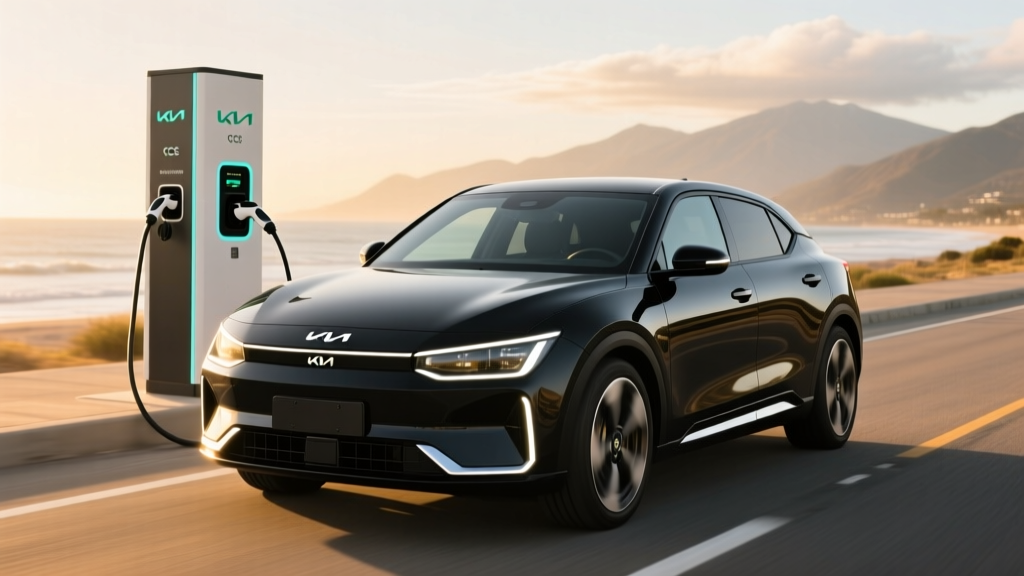
The compact electric sedan segment has been surprisingly thin on options, but the 2026 Kia EV4 aims to change that. Built on Hyundai Motor Group's E-GMP (Electric Global Modular Platform), the EV4 slots below the EV6 and EV9 in Kia's expanding electric lineup, targeting buyers who want a stylish, efficient, and practical electric commuter without crossing into crossover territory. After spending time with the EV4's specs, charging behavior, and packaging, here is the comprehensive breakdown buyers need before putting down a deposit.
Kia EV4 Quick Verdict
The 2026 Kia EV4 is a compact electric sedan that prioritizes efficiency, design, and everyday usability over raw performance. It is not the fastest EV in its class, nor does it offer the longest range, but it delivers a well-rounded package with competitive charging speeds, a premium interior, and a starting price that — when combined with available incentives — makes it one of the most accessible electric sedans on the market. Think of it as the electric successor to the Forte/Cerato, but with the refinement of a platform engineered from the ground up for battery-electric propulsion.
| Specification | 2026 Kia EV4 (Standard Range RWD) | 2026 Kia EV4 (Long Range RWD) |
|---|---|---|
| EPA Est. Range | ~230 miles | ~305 miles |
| Battery (usable) | ~58 kWh (LFP) | ~77.4 kWh (NMC) |
| Peak DC Fast Charge | ~150 kW | ~240 kW |
| 10–80% DC Fast Charge | ~28 minutes | ~18 minutes |
| Level 2 Home Charge (240V) | 10.9 kW (~37 mi/hr) | 10.9 kW (~37 mi/hr) |
| Drivetrain | RWD, single motor | RWD, single motor |
| Horsepower | ~168 hp | ~201 hp |
| 0–60 mph (est.) | ~7.8 seconds | ~6.9 seconds |
| MPGe (combined, est.) | ~130 MPGe | ~117 MPGe |
| Cargo Volume (trunk + frunk) | ~15.5 cu ft + ~1.5 cu ft | ~15.5 cu ft + ~1.5 cu ft |
| Base MSRP (est.) | ~$35,000 | ~$41,000 |
Range and Efficiency: EPA Numbers vs. Real-World Driving
EPA Estimated Range: ~305 miles (Long Range RWD) | ~230 miles (Standard Range RWD)
Real-World Expectation: On mixed highway driving at 70–75 mph, expect approximately 250–270 miles from the Long Range model. In cold weather (below 30°F), range can drop 15–25%, putting realistic winter highway range closer to 200–230 miles. City and suburban driving with frequent regenerative braking opportunities will return results closer to — or sometimes slightly above — the EPA sticker.
The EV4 Long Range's ~305-mile EPA figure is competitive in the compact sedan segment, sitting between the Tesla Model 3 RWD (~272 miles on the base, ~341 on Long Range) and the Hyundai Ioniq 6 SE Long Range (~361 miles). The Standard Range variant's ~230 miles is adequate for daily commuting and moderate road trips but will require more planning on longer journeys.
Efficiency is where the EV4's aerodynamic sedan shape pays dividends. With an estimated ~117 MPGe combined for the Long Range (roughly 29 kWh/100 mi), it is efficient by EV standards, though the slipperier Ioniq 6 still holds the crown in this platform family. The EV4's slightly taller roofline and more upright rear design trade a few efficiency points for improved rear headroom and trunk practicality.
Charging Speed: DC Fast Charging and Home Level 2
| Charging Level | Power / Rate | Speed (Long Range) | Notes |
|---|---|---|---|
| Level 1 (120V household) | ~1.4 kW | ~4–5 miles per hour | Emergency/top-up only |
| Level 2 (240V home/public) | 10.9 kW | ~37 miles per hour | Full charge in ~7–8 hours (Long Range) |
| DC Fast Charge (Standard Range) | Peak ~150 kW | 10–80% in ~28 min | LFP chemistry; flatter charge curve |
| DC Fast Charge (Long Range) | Peak ~240 kW | 10–80% in ~18 min | NMC; strong curve to 55%, tapers above 80% |
The Long Range EV4's 800V E-GMP architecture enables peak charging rates up to ~240 kW at compatible DC fast chargers (such as Electrify America's 350 kW stalls or Tesla Superchargers with the NACS adapter). In practice, the EV4 sustains peak charging rates between roughly 10% and 55% State of Charge (SoC), after which the curve begins to taper. The 10–80% time of approximately 18 minutes is competitive with the Hyundai Ioniq 5 and Kia EV6, making road-trip stops manageable.
The Standard Range model uses LFP (lithium iron phosphate) battery chemistry, which offers a slightly flatter charge curve but a lower peak rate (~150 kW). The trade-off is acceptable: LFP batteries tolerate frequent 100% charging without the degradation concerns of NMC, making the Standard Range ideal for owners who want to charge to full daily.
Home charging note: At 10.9 kW on a Level 2 home charger (requiring a 48-amp circuit on a 60-amp breaker), the Long Range EV4 adds about 37 miles of range per hour. A full overnight charge from 10% takes roughly 7–8 hours. Installation costs for a home Level 2 charger typically range from $800 to $2,500 depending on electrical panel capacity and conduit run — budget for a potential panel upgrade if your home has a 100-amp service. Always consult a licensed electrician for final specifications.
Performance and Driving Dynamics
The EV4 is tuned for comfort and efficiency rather than sportscar acceleration. The Long Range RWD model's ~201 hp and estimated 6.9-second 0–60 mph time is brisk enough for confident highway merging and passing. The Standard Range's ~168 hp and ~7.8-second sprint is more relaxed but entirely adequate for urban and suburban driving.
Ride quality benefits from the E-GMP platform's low center of gravity and multi-link rear suspension. Expect composed handling with a slight comfort bias — the EV4 absorbs road imperfections well but does not encourage aggressive cornering the way a Tesla Model 3 Performance does. Regenerative braking offers multiple levels adjustable via steering-wheel paddles, including a one-pedal driving mode (i-PEDAL) that brings the car to a complete stop without touching the brake pedal.
An AWD dual-motor variant has been announced for future model years but is not available at launch. If all-wheel drive is a priority, the Kia EV6 or Hyundai Ioniq 5 AWD remain the alternatives within the Kia-Hyundai ecosystem.
Interior, Cargo, and Technology
The EV4's interior borrows design cues from the EV9's minimalist, horizontally oriented dashboard. A dual-screen setup (12.3-inch digital instrument cluster and 12.3-inch infotainment touchscreen) dominates the dash, running Kia's latest ccNC (Connected Car Navigation Cockpit) infotainment system with wireless Apple CarPlay and Android Auto, over-the-air updates, and digital key support.
Passenger space: As a compact sedan, rear legroom is estimated at approximately 36 inches — sufficient for adults on shorter trips but tighter than the EV6's crossover proportions. Front legroom is generous at roughly 42 inches. The EV4's sedan trunk offers approximately 15.5 cubic feet of cargo space, supplemented by a small front trunk (frunk) of about 1.5 cubic feet — enough for charging cables or a small bag.
Driver assistance: The EV4 comes equipped with Kia's Highway Driving Assist 2 (HDA2), which combines adaptive cruise control with lane-centering steering. This is an SAE Level 2 driver-assistance system — it requires the driver to remain engaged, hands on or near the wheel, with eyes on the road at all times. It is not autonomous driving. HDA2 performs well on divided highways, handling curves and traffic-speed adjustments competently, but it does not navigate city streets, stoplights, or construction zones independently.
SAE Automation Level: Kia HDA2 = Level 2 (partial driving automation). The driver must continuously supervise the system and be prepared to take over immediately. This is not "self-driving." For context, only driverless robotaxi services like Waymo operate at Level 4 in geofenced areas.
Pricing, Trims, and Federal Tax Credit Eligibility
| Trim (Estimated) | Base MSRP | Est. After §30D Credit* | Key Features |
|---|---|---|---|
| EV4 Light (Std Range) | ~$35,000 | ~$27,500 | 12.3" screens, HDA2, heated front seats, 18" wheels |
| EV4 Wind (Long Range) | ~$41,000 | ~$33,500 | Adds ventilated seats, sunroof, 10.9 kW onboard charger |
| EV4 GT-Line (Long Range) | ~$46,000 | ~$38,500 | Sport styling, HUD, premium audio, HDA2 with lane change |
*Federal tax credit estimates assume eligibility under IRS §30D rules. Actual credit amount depends on battery component and critical-mineral sourcing requirements, buyer income limits, and MSRP caps. Consult IRS.gov and a tax professional before relying on credit figures.
The Kia EV4's pricing positions it aggressively against the Tesla Model 3 (starting around $38,990 for RWD) and the Hyundai Ioniq 6 (starting around $37,500). If the EV4 qualifies for the full $7,500 federal tax credit under IRS §30D, the effective price of the Standard Range Light trim drops to an estimated $27,500 — exceptional value for a new EV with this feature set.
§30D Federal EV Tax Credit Requirements (2026):
- MSRP Cap: Sedans must have an MSRP at or below $55,000 (SUVs/trucks: $80,000). All EV4 trims fall under this cap.
- Buyer Income Cap: Modified AGI must not exceed $150,000 (single), $225,000 (head of household), or $300,000 (joint).
- Battery Sourcing: The $7,500 credit splits into two halves — $3,750 for battery component manufacturing (North America) and $3,750 for critical-mineral sourcing (US or FTA partners). Kia's supply chain determines how much of the credit applies.
- Point-of-Sale Transfer: Eligible buyers can transfer the credit to the dealer at purchase, reducing the upfront price rather than waiting for a tax refund.
- FEOC Restriction: Vehicles with battery components from a "foreign entity of concern" (e.g., certain Chinese suppliers) may lose partial or full credit eligibility.
Warranty and Long-Term Ownership
Kia's warranty coverage is one of the strongest in the industry:
- Battery & Powertrain: 10 years / 100,000 miles (whichever comes first). Covers the high-voltage battery, electric motor, and related powertrain components.
- Battery Capacity Retention: Kia warrants the battery against dropping below 70% of original capacity during the warranty period.
- Bumper-to-Bumper: 5 years / 60,000 miles.
- Roadside Assistance: 5 years / 60,000 miles.
The 10-year battery warranty provides meaningful peace of mind, especially for buyers concerned about long-term degradation. Real-world data from E-GMP vehicles (EV6, Ioniq 5) suggests that NMC batteries in this platform lose approximately 5–8% capacity over the first 100,000 miles under normal use, well within the 70% warranty threshold. LFP batteries in the Standard Range model are expected to degrade even more slowly, with projected losses of 3–5% over the same mileage.
Pros, Cons, and Who Should Buy the EV4
Pros
- Competitive starting price, especially after potential tax credits
- Fast DC charging on Long Range (18 min 10–80%)
- 10-year/100,000-mile battery warranty
- Efficient sedan aerodynamics (~117 MPGe combined)
- Well-equipped interior with dual 12.3" screens and HDA2
- LFP option for buyers who want daily 100% charging without degradation worry
Cons
- Rear legroom is tight compared to crossover alternatives (EV6, Ioniq 5)
- No AWD option at launch
- Standard Range model's ~230-mile range limits road-trip flexibility
- Trunk space (15.5 cu ft) is modest for a sedan; no hatchback versatility
- Frunk is small (~1.5 cu ft) — cable storage only
- Not the quickest in its class (0–60 in ~6.9s Long Range)
Choose the Kia EV4 if: You want a stylish, efficient electric sedan for commuting and moderate road trips, you value Kia's long warranty, and you want a lower entry price than a Tesla Model 3 Long Range or Hyundai Ioniq 6 Long Range.
Choose a competitor if: You need AWD (look at the EV6 or Ioniq 5), maximum range (Ioniq 6 SE at ~361 mi), hatchback cargo flexibility (EV6), or access to the Tesla Supercharger network natively (Model 3, though NACS adapters are widely available for Kia).
Frequently Asked Questions
What is the real-world range of the 2026 Kia EV4?
The Long Range EV4 carries an estimated EPA rating of ~305 miles. In real-world highway driving at 70–75 mph, expect 250–270 miles. In cold weather below 30°F, plan for 200–230 miles. The Standard Range model's ~230-mile EPA figure drops to roughly 175–195 miles in winter highway conditions.
How fast does the Kia EV4 charge?
The Long Range model peaks at ~240 kW on DC fast chargers, achieving a 10–80% charge in approximately 18 minutes. The Standard Range (LFP) peaks at ~150 kW with a 10–80% time of about 28 minutes. At home on a Level 2 (240V, 10.9 kW) charger, both models add roughly 37 miles of range per hour.
Does the Kia EV4 qualify for the federal EV tax credit?
Eligibility depends on current IRS §30D rules. The EV4's sedan MSRP (all trims under $55,000) clears the price cap. Buyer income must fall below IRS thresholds ($150K single / $300K joint). The actual credit amount ($0 to $7,500) depends on battery-component and critical-mineral sourcing compliance. Check fueleconomy.gov for the latest eligibility status and consult a tax professional.
Is the Kia EV4 worth buying vs. the Tesla Model 3 or Hyundai Ioniq 6?
The EV4 offers a lower entry price than both rivals and Kia's superior 10-year warranty. The Model 3 wins on Supercharger network access (though NACS adapters close this gap), performance, and software. The Ioniq 6 wins on maximum range (~361 mi) and aerodynamic efficiency. The EV4 is the value play — best for buyers who want a well-equipped electric sedan without paying a premium.
What battery chemistry does the Kia EV4 use?
The Standard Range EV4 uses LFP (lithium iron phosphate) chemistry — more durable for daily full charges, slightly heavier, and less energy-dense. The Long Range uses NMC (nickel manganese cobalt) for higher energy density and longer range. Both chemistries are covered under Kia's 10-year/100,000-mile battery warranty.
Does the Kia EV4 have a frunk?
Yes, but it is small — approximately 1.5 cubic feet, suitable for storing charging cables or a small soft bag. Do not expect to fit a carry-on suitcase in the frunk.
Is Kia's HDA2 self-driving?
No. HDA2 is an SAE Level 2 driver-assistance system. It combines adaptive cruise control and lane-centering on highways, but the driver must remain fully attentive, with hands on or near the steering wheel and eyes on the road. It cannot navigate city streets, intersections, or construction zones autonomously.
Sources: fueleconomy.gov (EPA range and efficiency data), IRS.gov (§30D tax credit rules), Kia.com (manufacturer specifications). Specifications cited are based on announced/preliminary data for the 2026 model year; final EPA certification and pricing may vary. Verify all figures with Kia and the IRS before purchasing.