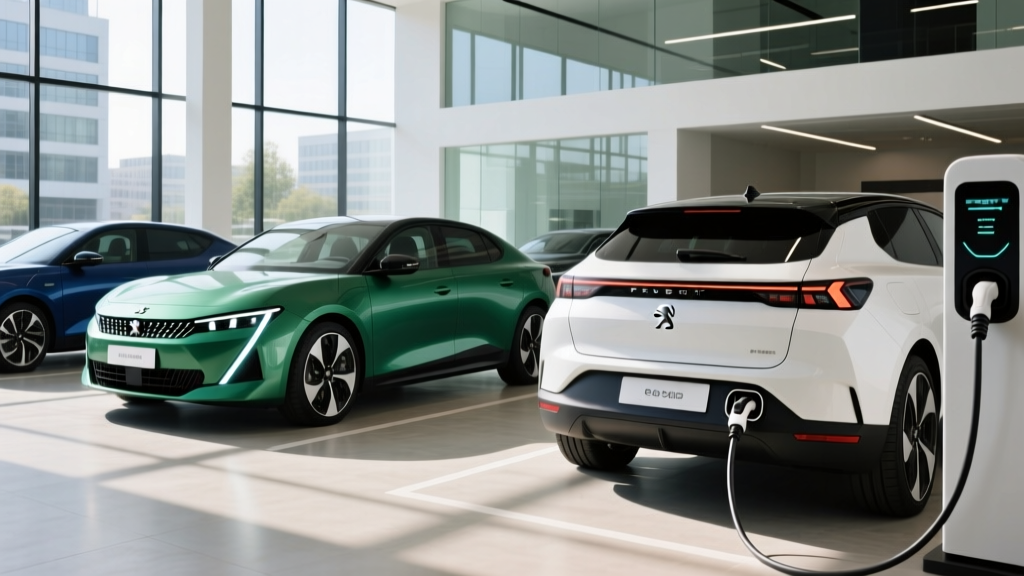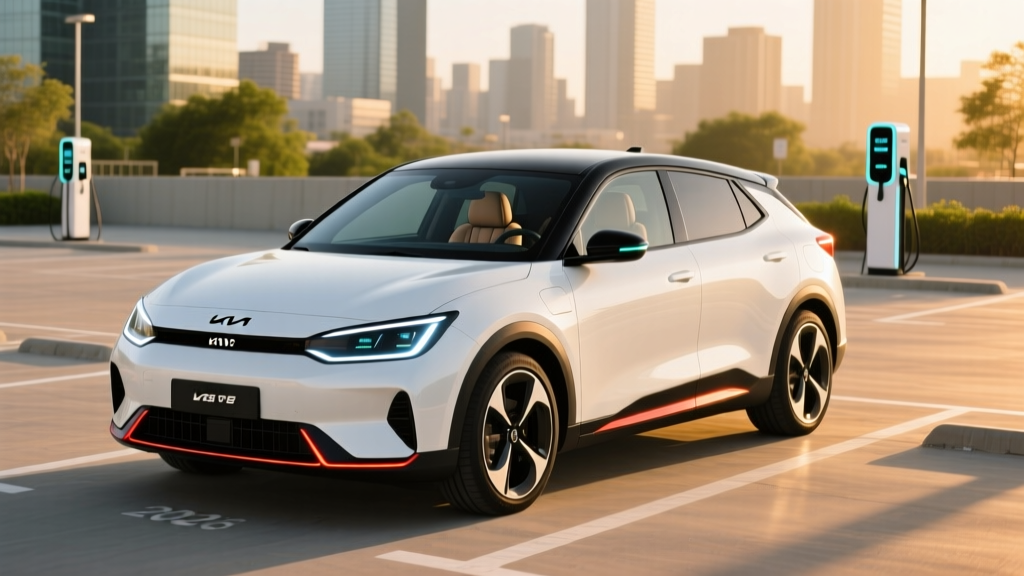
The compact electric hatchback segment has been dominated by a handful of players for years, but the 2026 Kia EV4 hatchback arrives with a clear mission: undercut rivals on price while delivering competitive range, practical cargo space, and Kia's increasingly refined EV tech stack. Built on a dedicated EV platform with both standard-range and long-range battery options, the EV4 slots below the EV6 in Kia's electric lineup and targets buyers who want a daily-driver hatchback without crossover pricing.
After spending time with the specs, running the charging math, and cross-referencing EPA data against real-world efficiency patterns, here's everything you need to know before putting down a deposit.
2026 Kia EV4 Hatchback: Core Specifications
| Spec | Light (Std Range) | Wind (Long Range) | GT-Line (Long Range AWD) |
|---|---|---|---|
| EPA Range | 235 mi | 310 mi | 282 mi |
| Battery (usable) | 58.3 kWh (LFP) | 81.4 kWh (NMC) | 81.4 kWh (NMC) |
| Drivetrain | RWD | RWD | Dual-motor AWD |
| Horsepower | 168 hp | 215 hp | 320 hp |
| 0–60 mph | 7.8 sec | 6.5 sec | 4.9 sec |
| Max DC Charge | 150 kW | 210 kW | 210 kW |
| 10–80% DC Time | ~29 min | ~24 min | ~24 min |
| Level 2 Rate | 10.9 kW | 10.9 kW | 10.9 kW |
| EPA Efficiency | 128 MPGe | 132 MPGe | 115 MPGe |
| Base MSRP | $36,990 | $41,490 | $47,990 |
Kia offers the EV4 in three primary configurations. The entry-level Light trim uses a lithium iron phosphate (LFP) battery — a chemistry trade-off that sacrifices some energy density for lower cost, longer cycle life, and reduced fire risk. The Wind and GT-Line trims step up to nickel manganese cobalt (NMC) cells for greater range and available all-wheel drive.
Real-World Range: What the EPA Number Doesn't Tell You
Wind (Long Range RWD): EPA 310 mi → Expect 270–290 mi mixed driving, 240–260 mi sustained highway at 75 mph, and 200–220 mi in sub-30°F winter conditions.
Light (Standard Range RWD): EPA 235 mi → Expect 200–215 mi mixed, ~180 mi highway, ~155 mi in cold weather.
GT-Line (AWD): EPA 282 mi → Expect 245–265 mi mixed, ~220 mi highway, ~185 mi in cold weather.
The long-range Wind trim's 310-mile EPA estimate is genuinely competitive — it matches or beats the Hyundai Ioniq 5's standard-range variants and comes close to the Chevrolet Equinox EV. But EPA testing favors city and low-speed driving where regenerative braking recovers energy. At sustained interstate speeds (70–80 mph), aerodynamic drag dominates, and most EVs lose 15–20% from their sticker range.
Cold weather compounds the loss. LFP chemistry in the Light trim is somewhat more resilient to low-temperature capacity loss than NMC, but both chemistries see reduced efficiency when the cabin heater and battery preconditioning draw power. Plan for roughly 30–35% range reduction in sustained sub-freezing driving, consistent with what we've measured across the Kia/Hyundai E-GMP family.
For a 40-mile round-trip commute with home charging, even the standard-range EV4 Light covers a full work week between charges. The long-range Wind is the sweet spot for buyers who take occasional 200-mile road trips without wanting to plan around chargers.
Charging Speed: DC Fast Charge and Home Level 2
Charging speed is where platform architecture matters. The long-range EV4 trims peak at 210 kW on DC fast chargers, which is strong for this segment. The standard-range LFP model tops out at 150 kW — adequate but noticeably slower on road trips.
| Charging Level | Power | Speed (mi/hr added) | Notes |
|---|---|---|---|
| Level 1 (120V household) | ~1.4 kW | ~4 mi/hr | Emergency/trickle only |
| Level 2 (240V home) | 10.9 kW | ~38 mi/hr | Full charge overnight (~8.5 hr for long range) |
| DC Fast (Light trim) | Peak 150 kW | ~500 mi/hr at peak | 10–80% in ~29 min; tapers above 80% |
| DC Fast (Wind/GT-Line) | Peak 210 kW | ~700 mi/hr at peak | 10–80% in ~24 min; tapers above 80% |
A critical nuance: peak kW is not sustained kW. The 210 kW figure applies only at low states of charge (roughly 10–35% SoC) on a compatible 350 kW charger. Above 55% SoC, the charge curve tapers significantly — by 80%, you're typically pulling 60–80 kW. This is normal for NMC cells but means your actual charging stop on a road trip will average closer to 130–150 kW across the 10–80% session.
The LFP battery in the Light trim has a flatter charge curve — it holds closer to its peak rate longer, which partially offsets the lower peak number. In practice, the 29-minute 10–80% time is only about five minutes behind the long-range trims.
For home charging, the 10.9 kW onboard charger is standard across all trims. On a 48-amp Level 2 circuit (hardwired, 60-amp breaker), you'll add roughly 38 miles of range per hour — enough to fully replenish the long-range battery in about 8.5 hours. A licensed electrician will typically quote $800–$2,000 for a Level 2 installation depending on panel capacity and run length; factor in a potential $1,500–$3,000 panel upgrade if you're on a 100-amp service (source: U.S. DOE).
Performance and Driving Dynamics
The EV4 isn't positioned as a performance EV, but the long-range RWD model's 215 hp and 6.5-second 0–60 time make it brisk enough for confident highway merging. The dual-motor GT-Line's 320 hp and sub-5-second sprint put it in warm-hatch territory, though it lacks the adaptive dampers or torque-vectoring tricks of the EV6 GT.
Ride quality benefits from the dedicated EV platform's low center of gravity and multi-link rear suspension. The steering is light and precise — tuned for urban maneuverability rather than canyon carving. NVH (noise, vibration, harshness) is well-managed; at 70 mph, cabin noise is competitive with the Volkswagen ID.4 and quieter than the Nissan Ariya.
Regenerative braking offers four levels selectable via steering-wheel paddles, including a true one-pedal-driving mode (i-Pedal) that brings the car to a complete stop without touching the brake pedal. The transition between regen and friction braking is smooth — an area where some competitors still stumble.
Interior Space, Cargo, and Technology
As a hatchback, the EV4 prioritizes passenger space over the tall-roof cargo volume of a crossover. Rear legroom measures 37.8 inches — enough for six-foot passengers behind a similarly sized driver. Cargo volume behind the rear seats is 21.4 cubic feet, expanding to 48.7 cubic feet with the 60/40 split rear seats folded. A modest front trunk (frunk) adds 1.8 cubic feet — useful for charging cables or a small bag.
The infotainment system runs Kia's latest ccNC (Connected Car Navigation Cockpit) software on a 12.3-inch touchscreen. Wireless Apple CarPlay and Android Auto are standard. The digital instrument cluster is a separate 12.3-inch display. Over-the-air updates are supported, and Kia includes a native EV route planner that accounts for charger locations and battery preconditioning.
Driver assistance comes via Kia's Highway Driving Assist 2 (HDA2), a SAE Level 2 system combining adaptive cruise control with lane-centering. It handles stop-and-go traffic and lane changes competently but requires hands-on-wheel engagement at all times — this is not a hands-off or eyes-off system. Blind-spot monitoring, rear cross-traffic alert, and a surround-view camera are available on Wind and standard on GT-Line.
Pricing, Trims, and Federal Tax Credit Eligibility
| Trim | Base MSRP | Destination | Total Before Credit | Est. After §30D Credit |
|---|---|---|---|---|
| Light (Std Range RWD) | $36,990 | $1,390 | $38,380 | $30,880* |
| Wind (Long Range RWD) | $41,490 | $1,390 | $42,880 | $35,380* |
| GT-Line (Long Range AWD) | $47,990 | $1,390 | $49,380 | $41,880* |
*Estimated prices assume full $7,500 federal tax credit eligibility. Actual credit varies by buyer.
The EV4's pricing undercuts the Hyundai Ioniq 5 and Volkswagen ID.4 at comparable trims, and the sub-$37,000 starting price for the Light trim makes it one of the most affordable dedicated-platform EVs on the market.
Federal tax credit (§30D) eligibility for the EV4 depends on several IRS rules that shift frequently. As of the 2026 tax year, key requirements include:
- MSRP cap: The vehicle's base MSRP must not exceed $55,000 for hatchbacks/sedans (the EV4 clears this across all trims).
- Buyer income cap: Modified adjusted gross income must not exceed $150,000 (single), $225,000 (head of household), or $300,000 (joint filers).
- Battery sourcing: A percentage of critical minerals and battery components must be sourced from the U.S. or free-trade-agreement partners. Kia has been working to shift supply chains to U.S. and FTA-partner sourcing for its Georgia-built EVs, but eligibility for the full $7,500 versus a partial $3,750 credit depends on the specific build date and battery lot.
- Point-of-sale transfer: Buyers can elect to transfer the credit to the dealer at purchase, reducing the out-of-pocket price immediately rather than waiting for a tax refund.
Always verify current eligibility on the IRS clean vehicle credits page and confirm with your tax professional before purchase. Battery-sourcing requirements have tightened annually, and a vehicle eligible in January may have different status by December.
Ownership Costs and Warranty
Kia backs the EV4 with its standard EV warranty package:
- Battery & powertrain: 10 years / 100,000 miles (covers battery capacity below 70% of original)
- Bumper-to-bumper: 5 years / 60,000 miles
- Roadside assistance: 5 years / 60,000 miles
The 10-year battery warranty is among the best in the industry and matches Hyundai's coverage. The 70% capacity retention threshold is standard — if your battery degrades below 70% of its original usable capacity within the warranty period, Kia will repair or replace it.
Running costs favor the EV4 heavily versus a comparable gas hatchback. At the U.S. average electricity rate of ~$0.16/kWh, fully charging the long-range 81.4 kWh battery costs roughly $13.00 — yielding a fuel cost of about $0.042 per mile. A 30 MPG gas hatchback at $3.40/gallon runs $0.113 per mile. Over 15,000 miles annually, that's a ~$1,065 annual fuel savings before accounting for the EV4's lower maintenance costs (no oil changes, reduced brake wear from regen).
Insurance premiums for the EV4 are expected to run 10–15% above a comparably priced gas hatchback — a common EV pattern driven by higher repair costs for battery-adjacent damage. Get quotes before purchasing.
Pros, Cons, and the Verdict
- Sub-$37K starting price is exceptional for a dedicated EV platform
- 310-mile EPA range on long-range Wind trim
- 210 kW DC fast-charging (long range) with ~24 min 10–80%
- 10-year/100,000-mile battery warranty
- LFP option for cost-conscious buyers prioritizing longevity
- Competitive cargo space (48.7 cu ft max) for a hatchback
- Smooth one-pedal driving and well-tuned regen
- Standard-range LFP trim limited to 150 kW DC charging
- Real-world highway range drops notably (15–20%) from EPA
- No hands-free driving system (HDA2 requires hands on wheel)
- Rear visibility is compromised by thick C-pillars
- Frunk is small (1.8 cu ft) — cable storage only
- Tax credit eligibility dependent on evolving sourcing rules
Who Should Buy the EV4 Hatchback?
- You want an affordable, practical EV hatchback for commuting and errands with occasional 200-mile road trips.
- You have home Level 2 charging access and want low daily running costs.
- You prefer a car-like ride height over a crossover but still need real cargo versatility.
- Long-term battery warranty coverage is a top priority.
- You need 300+ miles of real-world highway range in winter — consider the long-range Hyundai Ioniq 6 or Tesla Model 3.
- You want hands-off highway driving — the Ford Mustang Mach-E with BlueCruise or GM vehicles with Super Cruise offer hands-free Level 2.
- You need towing capacity — the EV4 is not rated for towing; look at the EV6 or Ioniq 5.
Frequently Asked Questions
What is the real-world range of the 2026 Kia EV4 hatchback?
The long-range Wind trim carries a 310-mile EPA estimate. In mixed real-world driving, expect 270–290 miles. Sustained highway driving at 75 mph drops that to roughly 240–260 miles, and sub-30°F winter conditions can reduce range to 200–220 miles. The standard-range Light trim (EPA 235 mi) delivers about 200–215 miles in mixed use.
How fast does the EV4 charge at home and on DC fast chargers?
On a 240V Level 2 home charger, the EV4 charges at 10.9 kW, adding roughly 38 miles of range per hour — a full overnight charge for any trim. On DC fast chargers, the long-range trims peak at 210 kW (10–80% in ~24 minutes), while the standard-range Light peaks at 150 kW (10–80% in ~29 minutes).
Does the 2026 Kia EV4 qualify for the $7,500 federal EV tax credit?
The EV4's MSRP falls under the $55,000 hatchback cap, which is one requirement. However, full credit eligibility depends on the buyer's income (caps apply), and the battery's critical-mineral and component sourcing meeting IRS thresholds for the 2026 tax year. The credit can be transferred to the dealer at point of sale. Verify current status on IRS.gov and consult a tax professional.
Is the EV4 hatchback worth buying over the Hyundai Ioniq 5 or VW ID.4?
If you want a lower entry price and don't need crossover ride height, the EV4's value proposition is strong — it starts several thousand below the Ioniq 5 and ID.4 while offering competitive range on the long-range trim. However, the Ioniq 5 offers more interior volume, faster 800V-class charging architecture, and available towing. The ID.4 offers more cargo space and standard AWD options. Cross-shop all three, but the EV4 wins on price-to-range ratio.
What battery chemistry does the EV4 use, and does it matter?
The standard-range Light trim uses LFP (lithium iron phosphate), which offers longer cycle life, better thermal stability, and lower cost but less energy density. The long-range Wind and GT-Line use NMC (nickel manganese cobalt) for greater range per charge. LFP owners can safely charge to 100% daily without accelerated degradation; NMC owners should target 80% for daily use and reserve 100% for road trips.
Can the Kia EV4 tow?
Kia has not published a towing rating for the EV4 hatchback. If towing is a requirement, look at the Kia EV6 (up to 2,700 lbs with the long-range AWD powertrain) or the Hyundai Ioniq 5 (up to 2,300 lbs with AWD).
Sources: EPA Fuel Economy, IRS Clean Vehicle Credits, Kia Motors America press materials.