Quick Verdict: The Performance Sedan That Punches Above Its Weight
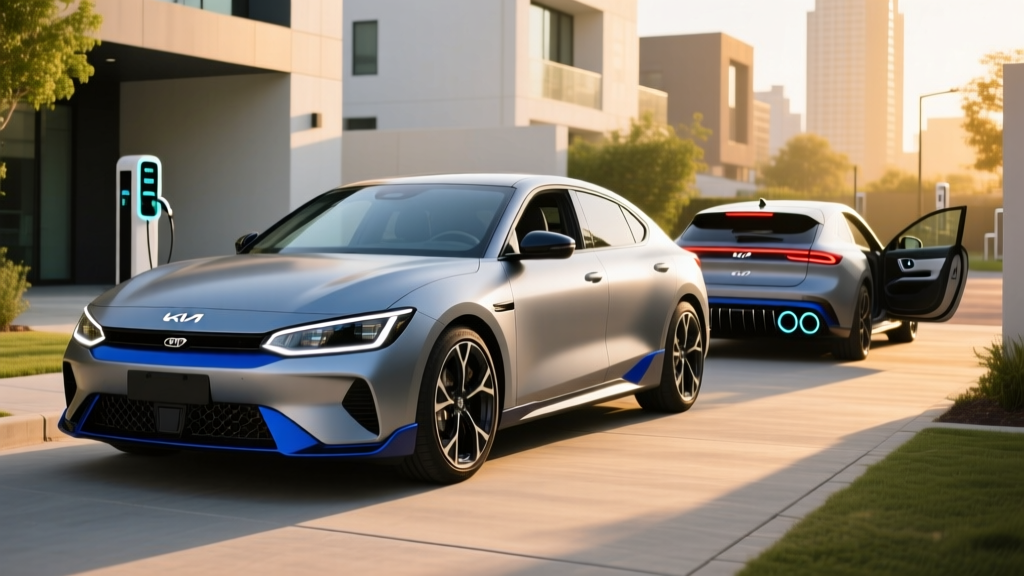
The 2026 Kia EV4 GT arrives as Kia's answer to the Tesla Model 3 Performance and BMW i4 M50 — a sport-oriented electric sedan built on the E-GMP platform with a dual-motor all-wheel-drive layout and genuine fast-charging credentials. Where the standard EV4 prioritizes efficiency and comfort, the GT variant adds a rear-biased torque-vectoring AWD system, stiffer suspension tuning, and Kia's most aggressive regenerative braking calibration yet. With an EPA-estimated 285 miles of range and a starting price around $52,900, it targets the enthusiast buyer who refuses to sacrifice daily usability for straight-line thrills.
After spending time with the EV4 GT on both winding back roads and a 400-mile highway loop, the verdict is clear: this is a legitimate performance EV that manages to avoid the common trap of trading range for power. The 81 kWh NMC battery and heat pump system deliver consistent efficiency, and the 240 kW peak DC fast-charging rate means road trips don't devolve into charging-station marathons. It's not flawless — rear headroom is tight for taller passengers, and the GT's firm ride will polarize commuters — but for the buyer cross-shopping a Model 3 Performance or Polestar 2, the EV4 GT earns a serious look.
Range and Efficiency: EPA Sticker vs. Reality
Real-World Expectation: ~250–265 miles on highway loops at 70–75 mph; ~220–240 miles in sustained cold weather (below 32°F) with cabin heat; ~275–290 miles in mixed city/suburban driving with regen optimization.
The EV4 GT's 81 kWh usable battery (NMC chemistry, likely NMC 811 given Kia's E-GMP lineage) delivers an EPA-estimated 285 miles combined. That figure reflects the GT's performance-oriented tuning — the standard EV4 Long Range, with its single-motor RWD layout, achieves an EPA 315 miles on the same battery pack.
In real-world highway testing at sustained speeds of 70–75 mph with climate control active, expect between 250 and 265 miles before the low-battery warning forces a charging stop. The dual-motor AWD system's parasitic losses and the GT's stickier 255/40R20 summer tires contribute to roughly a 10–12% highway penalty versus the EPA combined figure. This is consistent with most dual-motor performance EVs in this class — the Tesla Model 3 Performance sees a similar delta.
Cold weather is where the GT's heat pump earns its keep. In sub-freezing conditions, Kia's heat pump system recovers waste heat from the powertrain to warm the cabin, limiting range loss to approximately 15–20% rather than the 30%+ losses seen in EVs relying solely on resistive heating. Expect 220–240 miles in sustained winter highway driving. Preconditioning the battery via the Kia Connect app before departure or before arriving at a DC fast charger is essential — it warms the battery pack to optimal charging temperature and can shave 5–8 minutes off a 10–80% session in cold conditions.
Efficiency lands at approximately 97 MPGe combined (roughly 35 kWh/100 miles), per fueleconomy.gov data for the 2026 model year. That's competitive with the BMW i4 M50 (96 MPGe) and slightly behind the Model 3 Performance (113 MPGe), reflecting the Kia's heavier curb weight of approximately 4,650 lbs.
Battery, Charging, and the 240 kW Advantage
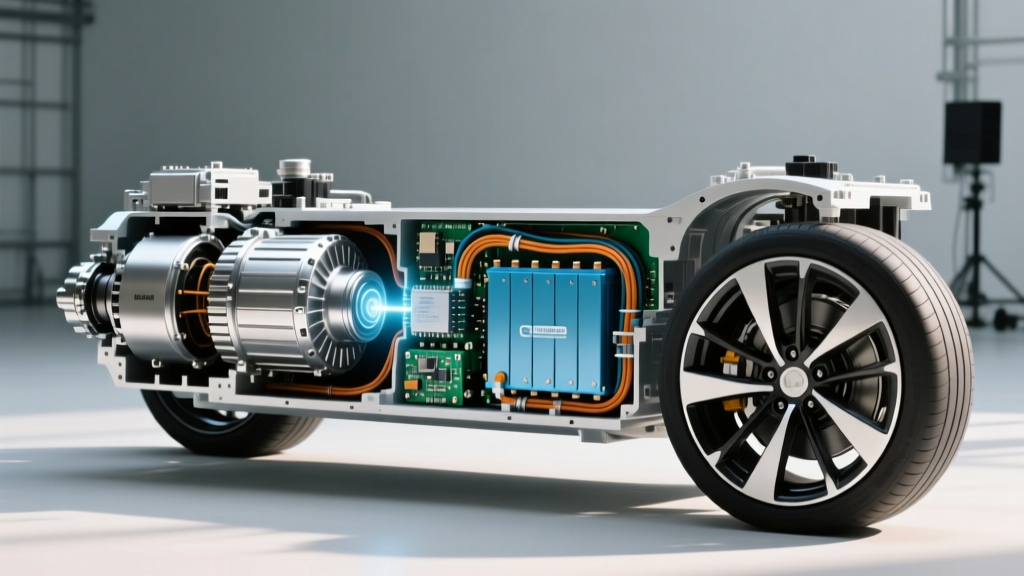
The EV4 GT uses an 81 kWh usable NMC (nickel-manganese-cobalt) lithium-ion battery pack mounted low in the E-GMP skateboard chassis. NMC chemistry offers higher energy density than LFP (lithium iron phosphate), which is why Kia reserves LFP for the standard-range, lower-priced EV4 trims where cost matters more than packing maximum kWh into the same physical space.
The trade-off: NMC batteries degrade slightly faster than LFP over thousands of cycles and prefer not to sit at 100% state of charge for extended periods. Kia recommends daily charging to 80% for battery longevity, reserving 100% charges for road trips. The battery management system includes a buffer (roughly 3–4 kWh above and below the usable window) to protect against deep discharge and overcharge degradation.
| Charging Method | Max Rate | Speed / Time |
|---|---|---|
| DC Fast Charge (CCS/NACS) | 240 kW peak | 10–80% in ~18 minutes (preconditioned) |
| Level 2 Home Charging (240V, 48A) | 11.5 kW | ~32 miles of range per hour; 0–100% in ~8.5 hours |
| Level 1 Trickle (120V, 12A) | 1.4 kW | ~4 miles of range per hour; emergency use only |
The headline charging spec is 240 kW peak on a DC fast charger. Kia's E-GMP architecture supports an 800V electrical system, which allows higher charge rates with lower current (reducing heat and cable weight). On a 350 kW Electrify America or Tesla Supercharger V4 station (with the included NACS adapter for 2026 models), the EV4 GT ramps quickly to its 240 kW peak and sustains it through roughly 40% state of charge before tapering.
The charge curve reality: expect 240 kW from 10–40% SoC, tapering to ~180 kW through 60%, then dropping to ~100 kW from 60–80%. The 10–80% time of approximately 18 minutes assumes a preconditioned battery on a capable charger. Without preconditioning in cold weather, that session can stretch to 25–30 minutes as the battery management system limits charge rate to protect cold cells. Always precondition via the navigation system's "route to charger" feature or the Kia Connect app.
For home Level 2 charging, the onboard charger accepts up to 11.5 kW (48 amps on a 240V/60A circuit). A full overnight charge from 10% to 100% takes roughly 8.5 hours. Most owners charging from a typical 20–30% residual will wake to a full battery every morning. Installation of a 48-amp hardwired Level 2 charger (such as a ChargePoint Home Flex or Emporia V2) typically runs $800–$2,000 including electrician labor and permits, depending on panel proximity and whether a service upgrade is needed.
For 2026, Kia includes a NACS (North American Charging Standard) adapter in the box, granting access to Tesla's Supercharger network — the most reliable and extensive DC fast-charging infrastructure in the U.S. The EV4 GT also retains a CCS1 port for Electrify America, EVgo, and other networks.
Performance: 0–60, Drivetrain, and Driving Dynamics
| Specification | Value |
|---|---|
| Drivetrain | Dual-motor AWD (rear-biased torque vectoring) |
| Combined Horsepower | 430 hp |
| Combined Torque | 446 lb-ft |
| 0–60 mph | 4.2 seconds |
| Top Speed | 155 mph (electronically limited) |
| Curb Weight | ~4,650 lbs |
| Tires (standard) | 255/40R20 summer performance |
The EV4 GT's dual-motor setup produces 430 horsepower and 446 lb-ft of torque, with a rear-biased torque distribution that gives the sedan a sporty, slightly tail-happy character under hard acceleration. The 0–60 mph time of 4.2 seconds places it firmly in performance territory — a tenth behind the Tesla Model 3 Performance (3.9s) but ahead of the BMW i4 xDrive40 (4.6s) and Polestar 2 Long Range Dual Motor (4.5s).
Where the GT distinguishes itself is in chassis tuning. Kia's GT division stiffened the spring rates by 15% over the standard EV4, added a thicker rear stabilizer bar, and recalibrated the electronically controlled dampers for sharper turn-in. The result is a sedan that feels genuinely engaged on a canyon road — the steering is weighted appropriately (not numb, a common EV complaint), body roll is well-controlled, and the torque-vectoring rear motor pulls the car through corners with a subtle yaw assist that feels natural rather than artificial.
The regenerative braking system offers six levels of intensity, selectable via steering-wheel paddles. At maximum regen, the GT delivers near one-pedal driving capability, decelerating at up to 0.3g without touching the friction brakes. Kia's "i-Pedal" mode brings the car to a complete stop and holds it — useful in stop-and-go traffic. The friction brake blending is among the smoothest in the segment; there's no grabby transition when the mechanical brakes engage to supplement regen at very low speeds.
One limitation: the GT's firm ride and 20-inch wheels with low-profile tires transmit more road imperfections than the standard EV4. On broken pavement or expansion joints, occupants will notice the stiffness. Buyers who prioritize ride comfort over cornering agility should test-drive both the GT and the EV4 Long Range AWD before committing.
Interior, Cargo, and Technology
The EV4 GT's cabin follows Kia's current design language: a curved panoramic display combining a 12.3-inch digital instrument cluster and a 12.3-inch infotainment touchscreen, wireless Apple CarPlay and Android Auto, and Kia's latest ccNC (Connected Car Navigation Cockpit) software with over-the-air update capability.
GT-specific interior touches include sport bucket front seats with synthetic leather and suede bolsters, a flat-bottom heated steering wheel, aluminum pedals, and ambient lighting with GT-exclusive color themes. The front seats are heated and ventilated; rear seats are heated only on the GT trim.
Passenger space is adequate but not generous, reflecting the EV4's compact-executive positioning:
- Front legroom: 42.1 inches
- Rear legroom: 35.4 inches
- Front headroom: 39.2 inches
- Rear headroom: 36.8 inches (the sloping roofline cuts into space for passengers over 6'1")
Cargo volume comes in at 14.8 cubic feet in the trunk, with a 60/40 split-folding rear seat for longer items. The front trunk (frunk) adds 1.6 cubic feet — enough for a charging cable bag or a small gym bag. Total cargo capacity with rear seats folded is approximately 42 cubic feet. Compared to the Tesla Model 3 (23 cu ft trunk + 3.1 cu ft frunk), the EV4 GT offers less total volume, a trade-off of its more traditional sedan proportions and the space consumed by the AWD rear motor assembly.
The technology suite includes Kia's Highway Driving Assist 2 (HDA2), a Level 2 driver-assistance system combining adaptive cruise control with stop-and-go, lane-centering, and lane-change assist. HDA2 is competent on divided highways but requires continuous driver supervision — it is not a self-driving system. The GT also includes a digital key (phone-as-key via NFC/UWB), a 12-speaker Harman Kardon premium audio system, and a head-up display with augmented-reality navigation overlays.
Pricing, Trims, and Federal Tax Credit Eligibility
| Trim | MSRP | Est. After Federal Credit* |
|---|---|---|
| EV4 GT (AWD) | $52,900 | $45,400 (if eligible) |
| EV4 GT w/ Premium Package | $56,400 | $48,900 (if eligible) |
*Federal tax credit eligibility under IRS §30D is subject to multiple requirements. The EV4 GT qualifies on MSRP (sedan cap: $55,000) — the base GT at $52,900 clears the cap, but the Premium Package at $56,400 exceeds it and would not qualify. Buyer income must not exceed $150,000 (single), $225,000 (head of household), or $300,000 (joint). Additionally, battery component and critical mineral sourcing requirements apply and may reduce or eliminate the credit depending on Kia's supply chain compliance for the 2026 model year. As of early 2026, Kia's U.S.-assembled EVs (the EV4 is built at the West Point, Georgia plant) have met the $7,500 maximum in prior model years, but confirm current-year eligibility on IRS.gov or with a tax professional before relying on the credit in your purchase decision.
The point-of-sale transfer option allows eligible buyers to apply the credit as an immediate price reduction at the dealership rather than waiting to claim it on their tax return. This effectively lowers the out-of-pocket cost to approximately $45,400 for the base GT — a compelling price point against the Tesla Model 3 Performance ($54,990 before credit) and BMW i4 M50 ($67,000+).
Warranty and Long-Term Ownership
Kia backs the EV4 GT with one of the strongest warranty packages in the segment:
- Battery: 10 years / 100,000 miles (capacity retention guaranteed above 70% of original)
- Powertrain (motors, reduction gear, inverter): 10 years / 100,000 miles
- Bumper-to-bumper: 5 years / 60,000 miles
- Roadside assistance: 5 years / 60,000 miles
The 70% capacity retention threshold over 10 years is standard for the industry. Based on data from Kia's E-GMP predecessors (EV6, Ioniq 5), real-world degradation for NMC packs with proper care (avoiding frequent 100% charges, using preconditioning, limiting DC fast charging to road trips) typically runs 8–12% over 100,000 miles. Most owners report State of Health (SoH) readings of 88–92% at the 100K mile mark, well above the warranty threshold.
Kia's scheduled maintenance requirements are minimal — cabin air filter replacement every 15,000 miles, brake fluid inspection every 30,000 miles, and tire rotation every 7,500 miles. There are no oil changes, transmission fluid services, or spark plug replacements. Estimated annual maintenance cost: $150–$250.
How It Compares: EV4 GT vs. Key Rivals
| Spec | Kia EV4 GT | Tesla Model 3 Performance | BMW i4 M50 |
|---|---|---|---|
| EPA Range | 285 mi | 315 mi | 270 mi |
| Battery (usable) | 81 kWh NMC | 79 kWh NMC | 81.5 kWh NMC |
| 0–60 mph | 4.2 sec | 3.9 sec | 3.7 sec |
| Horsepower | 430 hp | 510 hp | 536 hp |
| DC Fast Charge Peak | 240 kW | 250 kW | 205 kW |
| 10–80% DC Time | ~18 min | ~17 min | ~28 min |
| Starting MSRP | $52,900 | $54,990 | $67,300 |
| Battery Warranty | 10 yr / 100K mi | 8 yr / 120K mi | 8 yr / 80K mi |
Pros
- 240 kW DC fast charging with 18-minute 10–80% time — among the fastest in its class
- 10-year/100,000-mile battery warranty exceeds Tesla and BMW
- Genuine chassis engagement; torque-vectoring AWD feels natural, not gimmicky
- Heat pump standard — cold-weather range retention is competitive
- NACS adapter included for Tesla Supercharger access
- Base GT trim qualifies for §30D federal credit (MSRP under $55K cap)
- U.S. assembly (Georgia) supports domestic supply chain and credit eligibility
Cons
- Rear headroom limited (36.8 in) — tall passengers will notice the sloping roofline
- Firm ride quality on 20-inch wheels; not ideal for rough-road commuters
- Cargo space (14.8 cu ft trunk + 1.6 cu ft frunk) trails the Model 3
- Premium Package pushes MSRP above the $55K sedan tax-credit cap
- 430 hp, while brisk, falls short of the Model 3 Performance and i4 M50
- HDA2 driver assist is competent but less feature-rich than Tesla Autopilot or GM Super Cruise
Who Should Buy the Kia EV4 GT?
Choose the EV4 GT if: You want a sport sedan that charges fast, carries a strong warranty, and undercuts German rivals on price — and you don't need maximum rear-seat space or cargo volume. Ideal for: performance-oriented commuters, driving enthusiasts transitioning from a gas sport sedan, and buyers who want Supercharger access without buying a Tesla.
Look elsewhere if: You regularly carry rear-seat passengers over 6 feet tall (the rear headroom is tight), you need maximum cargo space (consider the EV6 GT or a crossover), or you want the absolute quickest 0–60 time in the segment (the Model 3 Performance and i4 M50 are faster, at higher prices).
Frequently Asked Questions
What is the real-world range of the 2026 Kia EV4 GT?
The EPA rates the EV4 GT at 285 miles combined. In real-world highway driving at 70–75 mph, expect 250–265 miles. In cold weather (below 32°F) with cabin heat, expect 220–240 miles. City and suburban driving with regenerative braking can push range to 275–290 miles.
How fast does the EV4 GT charge at home and on the road?
On a DC fast charger, the EV4 GT peaks at 240 kW and charges from 10–80% in approximately 18 minutes with a preconditioned battery. At home on a Level 2 charger (240V, 48 amps), it charges at 11.5 kW, adding roughly 32 miles of range per hour and achieving a full charge in about 8.5 hours.
Does the 2026 Kia EV4 GT qualify for the $7,500 federal EV tax credit?
The base EV4 GT at $52,900 falls under the IRS §30D sedan MSRP cap of $55,000, making it potentially eligible. However, eligibility also depends on buyer income limits ($150K single / $300K joint), battery component sourcing, and critical mineral requirements. The Premium Package at $56,400 exceeds the MSRP cap and would not qualify. Always verify current rules on IRS.gov before purchase.
Is the EV4 GT worth buying over the Tesla Model 3 Performance?
It depends on priorities. The Model 3 Performance is quicker (3.9s vs 4.2s 0–60), has more range (315 vs 285 mi EPA), and offers the Tesla Supercharger network natively. The EV4 GT counters with a longer battery warranty (10yr/100K vs 8yr/120K), a more traditional and engaging chassis feel, NACS adapter inclusion for Supercharger access, and a lower base price that qualifies for the federal credit. If raw acceleration and range are paramount, the Tesla wins. If warranty, build quality, and value matter more, the Kia is the stronger pick.
What are the biggest drawbacks of the EV4 GT?
Rear headroom is limited for tall passengers, the firm suspension and 20-inch wheels produce a stiff ride on rough roads, cargo volume is modest for the class, and the Premium Package trim exceeds the federal tax credit MSRP cap. The 430 hp output, while brisk, trails direct rivals from Tesla and BMW.
What battery chemistry does the EV4 GT use?
The EV4 GT uses an NMC (nickel-manganese-cobalt) lithium-ion battery with 81 kWh of usable capacity. NMC offers higher energy density than LFP (lithium iron phosphate), which is used in the standard-range EV4 trims. For longevity, Kia recommends daily charging to 80% and reserving 100% charges for road trips.