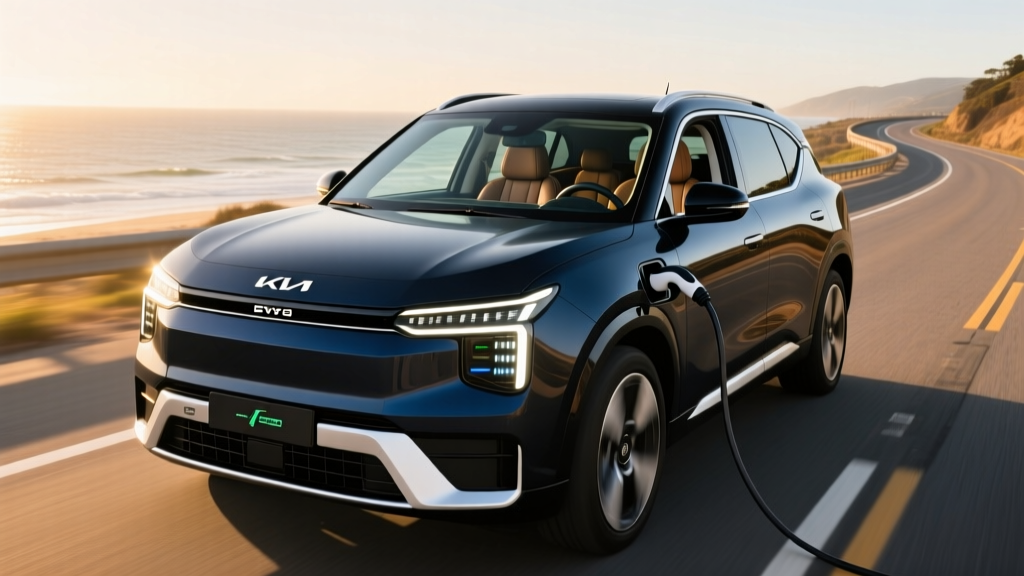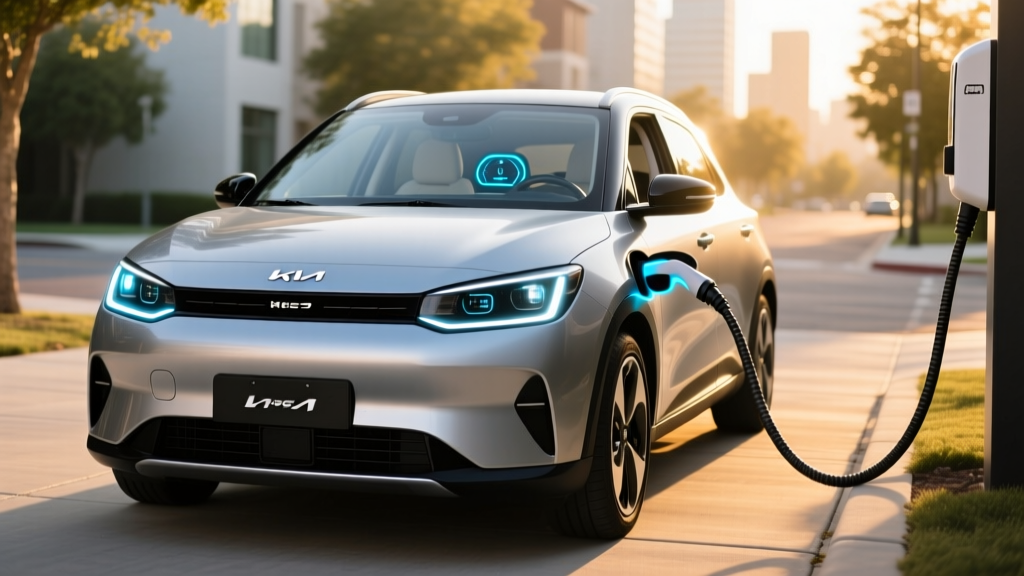
The subcompact electric SUV segment just got a serious new contender. The 2026 Kia EV3 arrives in the U.S. with a value proposition that's hard to ignore: over 300 miles of EPA-estimated range, competitive DC fast-charging speeds, and a starting price that undercuts nearly every rival in its class. Built on a shortened version of Hyundai Motor Group's EV platform, the EV3 slots below the EV6 and EV9 in Kia's electric lineup, targeting urban commuters and small families who want genuine daily usability without the premium price tag.
We've spent time with the EV3's specs, cross-referenced EPA filings, and analyzed its competitive position. Here's what matters.
2026 Kia EV3 Specifications at a Glance
| Spec | Light (Standard Range) | Long Range |
|---|---|---|
| EPA Range | 235 miles | 310 miles |
| Battery (usable) | 58.3 kWh | 81.4 kWh |
| Chemistry | NMC (Nickel Manganese Cobalt) | NMC |
| Drivetrain | FWD (single motor) | FWD (single motor) |
| Horsepower | 201 hp | 201 hp |
| Torque | 195 lb-ft | 195 lb-ft |
| 0–60 mph | ~7.9 sec | ~8.4 sec |
| Max DC Charge Rate | 120 kW | 150 kW |
| 10–80% DC Charge Time | ~32 min | ~31 min |
| Level 2 (240V) Rate | 11 kW | 11 kW |
| Efficiency | 117 MPGe / 29 kWh/100mi | 110 MPGe / 31 kWh/100mi |
| Base MSRP | $34,990 | $39,990 |
Sources: Kia America EV3 page, EPA fueleconomy.gov. Specs reflect 2026 model year as published.
Range and Efficiency: What the EPA Number Doesn't Tell You
Real-World Expectation: Plan on 260–280 miles in mixed highway driving for the Long Range model. In sustained 75 mph highway travel, expect closer to 250 miles. In cold weather (below 32°F), range can drop 20–30%, bringing the Long Range down to roughly 215–250 miles depending on cabin heating use and battery preconditioning. City driving with regenerative braking can actually exceed the EPA combined estimate, occasionally reaching 320+ miles in mild conditions.
The EV3 Long Range's 81.4 kWh usable battery gives it a genuine advantage in the subcompact EV segment. For context, the Hyundai Kona Electric offers 261 miles from a 64.8 kWh pack, and the Chevrolet Equinox EV tops out around 319 miles but at a higher price point.
Efficiency is where the EV3 earns its keep. At 31 kWh per 100 miles (Long Range), it's competitive with vehicles in its weight class. The single-motor FWD layout avoids the efficiency penalty of dual-motor AWD setups, and the EV3's relatively modest curb weight (~4,200 lbs for Long Range) helps keep consumption reasonable.
One note on cold-weather charging: the EV3 includes battery preconditioning when you navigate to a DC fast charger in the Kia navigation system. Use it. Preconditioning warms the pack to optimal temperature, which can shave 5–10 minutes off your 10–80% charge time in cold weather and improve the sustained charge rate. Without it, you'll see the peak charge rate capped lower, especially below 40°F.
Charging Speed: Home and DC Fast Charging
Charging speed is a top concern for EV buyers, and the EV3 delivers acceptable but not class-leading performance.
| Charging Level | Power | Miles Added per Hour | Notes |
|---|---|---|---|
| Level 1 (120V) | ~1.4 kW | ~3–4 mi/hr | Emergency/trickle only |
| Level 2 (240V, 48A) | 11 kW | ~30–34 mi/hr | Full charge in ~8 hours (Long Range) |
| DC Fast Charge | 150 kW peak | ~140 mi in 15 min | 10–80% in ~31 min |
The Long Range model peaks at 150 kW on a DC fast charger. That's the headline number, but as with all EVs, the charge curve matters more than the peak. The EV3 holds strong charge rates between 10% and roughly 55% State of Charge, then tapers progressively. Above 80%, charging slows dramatically — this is normal battery management to protect cell longevity, but it means that 80–100% top-off can take nearly as long as the 10–80% session. For road trips, plan your stops around 10–80% charges and skip topping off unless you need the last few miles.
At home on a Level 2 charger (240V, 48-amp circuit), the EV3's onboard 11 kW charger adds roughly 30–34 miles of range per hour. A full overnight charge from 10% takes about 8 hours for the Long Range pack — perfectly adequate for daily use. Installation of a home Level 2 charger typically runs $800–$2,000 depending on your electrical panel capacity and run length, so factor that into your purchase budget if you don't already have 240V access in your garage.
The EV3 uses the CCS1 connector standard. As of 2026, Kia has not announced a transition to NACS (Tesla's connector) for the EV3, though future model years may adopt it. For now, CCS1 gives you access to Electrify America, EVgo, ChargePoint, and most other public networks. Tesla Supercharger access requires a CCS-to-NACS adapter, which Kia may provide or sell separately — check with your dealer at purchase.
Performance and Driving Dynamics
The EV3 is not a performance EV, and it doesn't pretend to be. The single front-mounted motor produces 201 horsepower and 195 lb-ft of torque, delivering 0–60 mph in roughly 8.4 seconds for the Long Range variant. That's adequate for merging and passing but won't pin you in your seat. The Standard Range model is slightly quicker (around 7.9 seconds) due to its lighter battery pack.
What the EV3 does well is ride quality and daily drivability. The suspension tuning favors comfort over sportiness, absorbing potholes and expansion joints with minimal fuss. Steering is light and precise at city speeds, and the turning radius is tight enough for urban parking. At highway speeds, cabin noise is well-controlled — wind and tire noise are modest for the segment.
Regenerative braking offers multiple levels adjustable via steering-wheel paddles, from coasting (level 0) to near one-pedal driving (level 3 with i-Pedal mode engaged). The i-Pedal mode brings the car to a full stop without touching the brake pedal, which reduces brake wear and makes stop-and-go traffic significantly less fatiguing.
One limitation: the EV3 is not rated for towing. If you need trailer capability, look at the EV6 or EV9 instead.
Interior, Cargo, and Technology
Inside, the EV3 borrows heavily from Kia's newer design language. A dual-screen setup dominates the dashboard — a 12.3-inch digital instrument cluster paired with a 12.3-inch infotainment touchscreen running Kia's latest Connect interface. Wireless Apple CarPlay and Android Auto are standard across all trims.
Interior dimensions:
- Front legroom: 41.5 inches
- Rear legroom: 37.8 inches
- Front headroom: 40.2 inches
- Cargo volume (behind rear seats): 25.5 cu ft
- Cargo volume (rear seats folded): 50.2 cu ft
- Frunk (front trunk): 1.8 cu ft — enough for a charging cable bag, not much more
Rear seat space is adequate for adults on shorter trips, though taller passengers will notice the sloping roofline cutting into headroom. The cargo area is practical for groceries, strollers, and weekend luggage, but it's not a hauler — if you regularly carry large items, the EV9 or a midsize electric SUV will serve you better.
Notable tech features:
- Highway Driving Assist 2 (HDA2) — adaptive cruise with lane centering and lane-change assist, SAE Level 2 driver assist (driver must remain engaged)
- Remote Smart Parking Assist — the car can pull in and out of tight spaces while you stand outside
- Digital Key 2 — use your smartphone or smartwatch as a key fob
- Over-the-air (OTA) software updates for infotainment and vehicle systems
- Vehicle-to-Load (V2L) adapter available — power small appliances or tools from the EV3's battery (up to 3.6 kW output)
Drawbacks to note: The EV3 does not offer a heat pump in all trims (standard on Long Range, optional or unavailable on base Light trims in some markets — confirm U.S. spec at purchase). Without a heat pump, cold-weather range loss is more pronounced because cabin heating draws directly from the traction battery via resistive heating. Also, the rear seats don't recline, which affects long-trip comfort for rear passengers.
Pricing, Trims, and Federal Tax Credit Eligibility
The 2026 EV3 is offered in three primary trims:
| Trim | Battery | MSRP | Est. After Federal Credit* |
|---|---|---|---|
| Light (Standard Range) | 58.3 kWh | $34,990 | ~$27,490 |
| Wind (Long Range) | 81.4 kWh | $39,990 | ~$32,490 |
| GT-Line (Long Range) | 81.4 kWh | $44,990 | ~$37,490 |
*Federal credit estimates assume full §30D eligibility. See rules below.
The IRS §30D Clean Vehicle Credit can reduce your federal tax liability by up to $7,500, and as of 2024, this credit can be transferred to the dealer at the point of sale — meaning you get the discount upfront rather than waiting to claim it on your tax return. However, eligibility is not automatic. Key requirements include:
- MSRP cap: SUVs must be priced at or below $80,000. All EV3 trims clear this easily.
- Buyer income cap: Modified adjusted gross income (MAGI) must not exceed $150,000 (single), $225,000 (head of household), or $300,000 (joint filers).
- Battery sourcing: A percentage of critical minerals and battery components must be sourced from the U.S. or free-trade-agreement countries. These thresholds increase annually. As of 2026, vehicles with battery components from a "foreign entity of concern" (FEOC) are disqualified.
- Assembly: The vehicle must undergo final assembly in North America.
The EV3's eligibility for the full $7,500 credit depends on where Kia sources its battery cells and minerals for U.S.-spec vehicles, and whether final assembly occurs in North America. Kia has been shifting production and supply chains to meet §30D requirements, but buyers should verify current eligibility using the VIN-lookup tool at fueleconomy.gov before committing. Tax rules are complex — consult a tax professional or review IRS guidance on the §30D credit for your specific situation.
Warranty and Long-Term Ownership
Kia backs the EV3 with one of the strongest warranty packages in the industry:
- Battery & Drive Unit: 10 years / 100,000 miles (whichever comes first)
- Limited Vehicle Warranty: 5 years / 60,000 miles
- Roadside Assistance: 5 years / 60,000 miles
The battery warranty guarantees that the high-voltage pack will retain at least 70% of its original capacity over the warranty period. Based on NMC chemistry degradation data from Hyundai Motor Group's existing EV fleet, most packs retain 85–92% capacity at 100,000 miles under normal use — well above the warranty threshold. Avoiding habitual DC fast charging above 80% SoC and letting the car sit at 100% charge for extended periods will help preserve long-term battery health.
Insurance costs for the EV3 are expected to be moderate for the segment — typically 5–15% higher than a comparable gas-powered subcompact SUV, driven primarily by higher repair costs for EV-specific components. Get quotes before purchasing to set expectations.
Pros, Cons, and the Competition
Pros
- 310-mile EPA range (Long Range) is class-leading
- Sub-$35K starting price before incentives
- Strong 10-year/100,000-mile battery warranty
- Comfortable ride, quiet cabin
- Good standard driver-assist suite (HDA2)
- V2L capability for emergency or outdoor power
Cons
- 150 kW peak DC charge rate trails some rivals
- No AWD option available
- Modest frunk space (1.8 cu ft)
- Heat pump availability varies by trim
- Rear headroom compromised by roofline
- Not rated for towing
The EV3's direct competitors include the Hyundai Kona Electric (261 miles, ~$33K), Chevrolet Equinox EV (up to 319 miles, ~$33K), and Volvo EX30 (275 miles, ~$36K). Against this group, the EV3 Long Range stands out for its combination of range and price. The Kona Electric charges slightly faster but has less range. The Equinox EV has competitive range but is larger and may feel less nimble in city driving. The EX30 is premium-branded but offers less range at a higher price.
Who Should Buy the Kia EV3?
Choose the EV3 if:
- You commute 30–60 miles round-trip and want to charge at home nightly
- You want 300+ mile range without paying premium-SUV prices
- You value a long battery warranty and Kia's dealer network
- You primarily drive solo or with one passenger and need practical cargo space
Look elsewhere if:
- You need AWD for snow/ice (consider the EV6 or Ioniq 5 AWD)
- You regularly carry four adults (the EV9 or a midsize SUV offers more rear space)
- You need towing capability
- You road-trip frequently and want the fastest possible DC charging (the EV6 or Ioniq 5 charge at up to 240+ kW)
Frequently Asked Questions
What is the real-world range of the 2026 Kia EV3?
The Long Range EV3 has an EPA-estimated 310 miles. In real-world highway driving at 70–75 mph, expect 260–280 miles. In cold weather (below freezing), plan on 215–250 miles depending on heating use. City driving with regenerative braking can sometimes exceed the EPA number.
How fast does the EV3 charge at home and on DC fast chargers?
On a DC fast charger, the Long Range EV3 peaks at 150 kW and charges from 10–80% in approximately 31 minutes. At home on Level 2 (240V), it charges at 11 kW, adding about 30–34 miles per hour, with a full charge taking roughly 8 hours.
How much does the Kia EV3 cost after federal tax credits?
The EV3 Light starts at $34,990 and could drop to approximately $27,490 with the full $7,500 federal credit. The Long Range Wind trim at $39,990 could fall to around $32,490. Eligibility depends on your income, the vehicle's battery sourcing, and North American assembly — verify using the VIN tool at fueleconomy.gov.
Does the EV3 qualify for the federal EV tax credit?
It may qualify for up to $7,500 under IRS §30D, but eligibility depends on battery component and critical-mineral sourcing rules, your MAGI, and final assembly location. The MSRP is well under the $80,000 SUV cap. Always verify current eligibility before purchase — rules change annually.
Is the Kia EV3 worth buying over the Kona Electric or Equinox EV?
If range-per-dollar is your priority, the EV3 Long Range is compelling — 310 miles at ~$40K before incentives is hard to beat. The Kona Electric offers slightly faster charging but 49 fewer miles of range. The Equinox EV is larger and offers similar range but at a comparable or higher price. Test-drive all three; the EV3's ride comfort and Kia's warranty may tip the scale.
Does the EV3 have all-wheel drive?
No. The 2026 EV3 is front-wheel drive only across all trims. If AWD is essential, look at the Kia EV6, Hyundai Ioniq 5, or Tesla Model Y, all of which offer dual-motor AWD configurations.