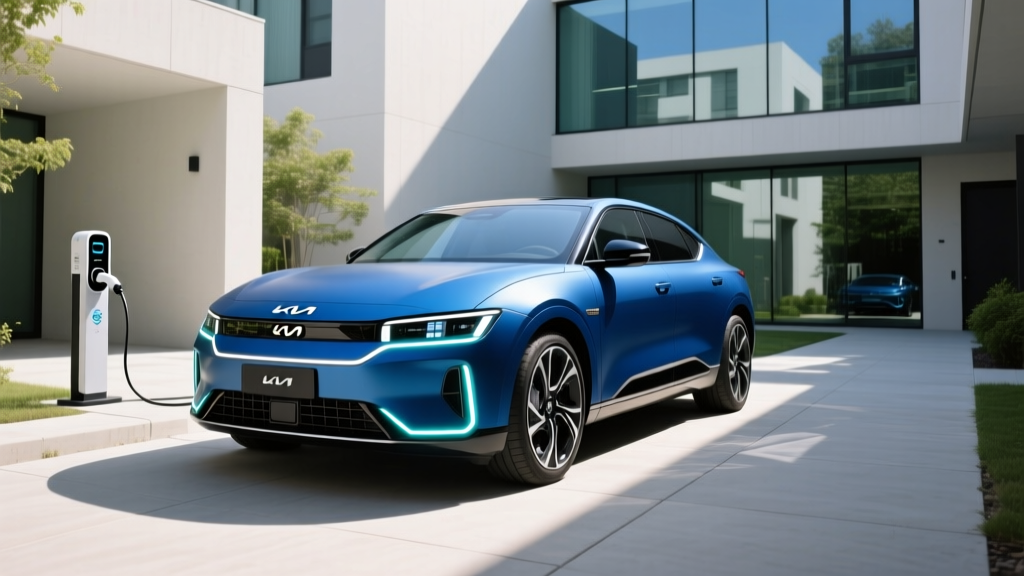
The subcompact electric SUV segment just got a serious new contender. The 2026 Kia EV1 arrives as Kia's entry-level battery-electric offering, slotting below the EV6 and EV9 in the lineup and targeting buyers who want electric mobility without the $50,000+ price tag. Built on a dedicated EV architecture optimized for urban and suburban duty, the EV1 aims to deliver practical range, respectable charging speeds, and Kia's strong warranty in a footprint small enough for city parking.
We've spent time with the EV1's published specifications, cross-referenced EPA data, and evaluated its positioning against rivals like the Chevrolet Equinox EV, Hyundai Kona Electric, and Volvo EX30. Here's everything you need to decide whether the EV1 belongs on your shortlist.
Range, Battery, and Efficiency
The 2026 Kia EV1 is offered with two battery configurations across its trim lineup. The base Light trim uses a 58.3 kWh (usable) lithium iron phosphate (LFP) battery pack, while the Wind and GT-Line trims step up to a 77.4 kWh nickel manganese cobalt (NMC) pack. The chemistry split is intentional: LFP offers longer cycle life and can be charged to 100% routinely without degradation concerns, while NMC delivers higher energy density for extended range.
- EV1 Light (LFP, 58.3 kWh): EPA est. 230 miles. Real-world: expect ~195–210 miles in mixed driving, ~175–190 miles sustained highway at 70+ mph, and ~160–175 miles in sub-30°F winter conditions.
- EV1 Wind / GT-Line (NMC, 77.4 kWh): EPA est. 310 miles. Real-world: expect ~265–285 miles mixed, ~240–260 miles sustained highway, and ~210–230 miles in cold weather.
These real-world estimates reflect typical highway speeds, moderate climate-control use, and battery preconditioning off. Cold-weather range loss of 15–30% is physics, not a defect — plan charging stops accordingly.
| Spec | EV1 Light | EV1 Wind | EV1 GT-Line |
|---|---|---|---|
| EPA Range | 230 mi | 310 mi | 298 mi |
| Battery (usable) | 58.3 kWh (LFP) | 77.4 kWh (NMC) | 77.4 kWh (NMC) |
| Drivetrain | RWD | RWD / AWD opt. | AWD |
| Horsepower | 167 hp | 225 hp (RWD) / 320 hp (AWD) | 320 hp |
| 0–60 mph | 7.8 sec | 6.5 sec (RWD) / 5.1 sec (AWD) | 5.1 sec |
| Efficiency | 129 MPGe / 26 kWh/100mi | 117 MPGe / 29 kWh/100mi | 110 MPGe / 31 kWh/100mi |
| Max DC Fast Charge | 150 kW | 240 kW | 240 kW |
| 10–80% DC Time | ~28 min | ~18 min | ~18 min |
| Level 2 (240V) Rate | 7.2 kW (~25 mi/hr) | 10.9 kW (~37 mi/hr) | 10.9 kW (~37 mi/hr) |
| Cargo (rear seats up) | 23.5 cu ft | 23.5 cu ft | 23.5 cu ft |
| Cargo (rear seats folded) | 54.2 cu ft | 54.2 cu ft | 54.2 cu ft |
| Rear Legroom | 37.6 in | 37.6 in | 37.6 in |
| Base MSRP | $32,900 | $38,500 | $43,900 |
The efficiency figures, sourced from fueleconomy.gov, show the lighter LFP-equipped EV1 Light sipping electrons more thriftily. If your commute is under 40 miles round-trip and you have home charging, the 230-mile Light trim covers daily needs with margin to spare — and you'll benefit from LFP's robust longevity profile.
Charging Speed and Infrastructure
Charging speed separates a tolerable EV from a genuinely road-trip-capable one. The EV1's two battery systems charge at meaningfully different rates:
| Charge Level | Power | EV1 Light (mi/hr) | EV1 Wind / GT-Line (mi/hr) |
|---|---|---|---|
| Level 1 (120V household) | ~1.4 kW | ~4 mi/hr | ~4 mi/hr |
| Level 2 (240V, 32A home) | 7.2–10.9 kW | ~25 mi/hr | ~37 mi/hr |
| DC Fast Charge (peak) | 150–240 kW | ~210 mi/hr (peak) | ~340 mi/hr (peak) |
The Wind and GT-Line's 240 kW peak DC rate is competitive with the best in class. On a 350 kW Electrify America or Tesla Supercharger (via NACS adapter), you'll see 10–80% in roughly 18 minutes under ideal thermal conditions. However, peak rate is not sustained rate — expect the curve to taper significantly above 70% state of charge. A typical 10–90% session will take closer to 30 minutes, which matters for trip planning.
The Light trim's 150 kW peak is adequate but not class-leading. On longer road trips, you'll spend roughly 10 extra minutes per charge stop compared to the larger-battery trims. For a primarily urban buyer, this is a non-issue.
The EV1 comes equipped with a CCS1 connector standard, with a NACS (Tesla Supercharger) adapter available from Kia. By the 2026 model year, Kia has committed to native NACS ports on new production — confirm with your dealer which connector your specific build carries.
Pricing, Trims, and Federal Tax Credit
Kia's pricing strategy positions the EV1 aggressively against the growing subcompact EV field. Here's the trim-by-trim breakdown:
| Trim | Base MSRP | As-Tested (typical) | Est. §30D Credit* | Effective Price |
|---|---|---|---|---|
| Light | $32,900 | $34,200 | Up to $7,500 | ~$26,700 |
| Wind (RWD) | $38,500 | $41,800 | Up to $7,500 | ~$34,300 |
| Wind (AWD) | $41,500 | $44,500 | Up to $7,500 | ~$37,000 |
| GT-Line (AWD) | $43,900 | $47,200 | Up to $7,500 | ~$39,700 |
*Federal tax credit eligibility under IRS §30D is not automatic. Qualification depends on:
- MSRP cap: SUVs must be under $80,000 — all EV1 trims clear this easily.
- Buyer income cap: Modified AGI must not exceed $150,000 (single), $225,000 (head of household), or $300,000 (joint). Check your prior-year or current-year tax return, whichever is lower.
- Battery sourcing: Critical minerals and battery components must meet phased-in domestic/free-trade-partner thresholds that tighten annually. Kia has indicated the EV1's battery supply chain is designed for §30D compliance, but final eligibility is confirmed per VIN at point of sale.
- Point-of-sale transfer: As of 2024+, you can transfer the credit to the dealer at purchase, reducing your out-of-pocket cost immediately rather than waiting for tax filing. Confirm with your dealer that they participate.
Always verify credit eligibility with a tax professional before committing. Rules are subject to legislative change, and Kia's battery-sourcing compliance can vary by production batch.
Performance and Driving Dynamics
The EV1 Light's 167 hp and 7.8-second 0–60 time are adequate for merging and city driving but won't thrill anyone. This is a comfort-tuned commuter, not a hot hatch. The steering is light, the ride quality absorbs urban imperfections well, and the turning radius is tight enough for parking-garage duty.
The Wind AWD and GT-Line's 320 hp dual-motor setup transforms the character entirely. A 5.1-second 0–60 time in a subcompact SUV is genuinely quick, and the instant torque makes highway on-ramps effortless. The AWD system can shift torque front-to-rear for traction in rain or light snow, though ground clearance (6.9 inches) limits any off-road pretense.
Regenerative braking offers multiple levels adjustable via steering-wheel paddles, with a true one-pedal-driving mode (i-Pedal) that brings the EV1 to a complete stop without touching the brake pedal. The heat pump, standard on Wind and above, preserves range in cold weather by scavenging waste heat from the powertrain rather than relying solely on resistive cabin heating.
Interior, Cargo, and Technology
Inside, the EV1 follows Kia's recent design language: a curved panoramic display combining a 12.3-inch digital cluster and 12.3-inch infotainment touchscreen, wireless Apple CarPlay and Android Auto, and a mix of physical knobs and touch-sensitive controls for climate functions. The GT-Line adds ambient lighting, a head-up display, and Kia's Digital Key 2 (phone-as-key via UWB).
Cargo space measures 23.5 cubic feet behind the rear seats and 54.2 cubic feet with the 60/40 split rear seats folded — competitive with the Hyundai Kona Electric and slightly ahead of the Volvo EX30. Rear legroom at 37.6 inches accommodates adults comfortably on longer trips, though the center-rear seat is best reserved for a child.
The EV1 also includes a modest front trunk (frunk) of approximately 1.6 cubic feet — enough for charging cables and a small bag, but don't expect to fit a carry-on.
Driver Assistance (ADAS)
Kia's Highway Driving Assist 2 (HDA2) is a Level 2 driver-assistance system. It combines adaptive cruise control with stop-and-go, lane-centering, and lane-change assist. The driver must remain engaged, hands on or near the wheel, and eyes on the road at all times. This is not autonomous driving.
HDA2 works well on divided highways, reducing fatigue on longer commutes. The system includes navigation-based speed adjustment (slowing for upcoming curves) and Kia's evasive steering assist. It's competitive with Toyota Safety Sense and Honda Sensing, though not as hands-off as GM's Super Cruise or Ford's BlueCruise on mapped highways.
Warranty and Long-Term Ownership
Kia's warranty remains one of the strongest in the industry and a key ownership differentiator:
- Battery: 10 years / 100,000 miles (capacity retention threshold: 70% of original)
- Powertrain: 10 years / 100,000 miles
- Bumper-to-bumper: 5 years / 60,000 miles
- Roadside assistance: 5 years / 60,000 miles
The 10-year battery warranty exceeds the industry standard of 8 years/100,000 miles. For LFP-equipped Light trims, degradation should be minimal — LFP chemistry routinely shows 90%+ state of health after 1,000+ charge cycles. NMC packs in the Wind and GT-Line will degrade somewhat faster, particularly if routinely charged to 100% or exposed to sustained high temperatures, but Kia's 70% threshold provides meaningful protection.
Pros, Cons, and Who Should Buy
- Aggressive starting price; effective price under $27K with tax credit
- LFP option for buyers who want maximum battery longevity
- 10-year / 100,000-mile battery warranty
- 240 kW DC fast charging on Wind/GT-Line
- Strong ADAS suite standard
- Competitive cargo space for the segment
- Light trim's 150 kW charge rate and 230-mile range limit road-trip utility
- No hands-free highway driving (unlike BlueCruise/Super Cruise competitors)
- Modest 1.6 cu ft frunk
- AWD availability restricted to upper trims, pushing price above $41K
- Real-world highway range falls 15–20% below EPA sticker (typical for the class)
- You want a sub-$35K (after credit) electric SUV with a long warranty for commuting and errands.
- You have reliable home Level 2 charging and rarely drive more than 200 miles in a day.
- You value LFP battery chemistry for its durability and 100% daily-charge tolerance.
- You need 300+ real-world highway miles between charges — consider the EV6 or Ioniq 5.
- You want hands-free highway driving — Ford Mustang Mach-E with BlueCruise or a GM EV with Super Cruise may suit better.
- You tow — the EV1 is not rated for meaningful towing capacity.
Frequently Asked Questions
What is the real-world range of the 2026 Kia EV1?
The EPA rates the EV1 Light at 230 miles and the Wind at 310 miles. In real-world mixed driving, expect roughly 195–210 miles (Light) and 265–285 miles (Wind). Sustained highway driving at 70+ mph reduces range by 15–20%, and sub-30°F winter temperatures can cut range by 20–30% without preconditioning.
How fast does the Kia EV1 charge at home and on DC fast chargers?
On a home Level 2 charger (240V), the Light adds about 25 miles of range per hour (7.2 kW), while the Wind and GT-Line add about 37 miles per hour (10.9 kW). A full overnight charge easily replenishes any daily driving. On DC fast chargers, the Wind/GT-Line peak at 240 kW (10–80% in ~18 minutes), while the Light peaks at 150 kW (10–80% in ~28 minutes).
How much does the Kia EV1 cost after the federal tax credit?
If you qualify for the full $7,500 §30D credit, the EV1 Light drops to approximately $26,700 out of pocket (before state incentives and dealer fees). The Wind falls to roughly $34,300, and the GT-Line to about $39,700. Credit eligibility depends on your income, the vehicle's battery sourcing, and MSRP caps — verify with a tax professional.
Does the Kia EV1 qualify for the federal EV tax credit?
The EV1's MSRP is well under the $80,000 SUV cap. Kia has designed the battery supply chain for §30D compliance, but final eligibility is confirmed per VIN at the point of sale. Your personal income must also fall below IRS thresholds ($150K single / $300K joint). Check the IRS clean vehicle credit page for current rules.
Is the Kia EV1 worth buying over the Hyundai Kona Electric or Chevy Equinox EV?
The EV1's advantages are its 10-year battery warranty, LFP battery option, and strong value proposition after the tax credit. The Kona Electric offers a similar footprint but with an 8-year battery warranty and generally lower DC charge rates. The Equinox EV provides more range (315+ miles EPA) but starts at a higher price and has a larger footprint. If warranty and price are your top priorities, the EV1 is compelling. If maximum range matters more, cross-shop the Equinox EV.
Can I charge the Kia EV1 at Tesla Superchargers?
Kia is transitioning to native NACS ports. Depending on your production date, your EV1 may ship with CCS1 or NACS. CCS-equipped vehicles can access Tesla Superchargers using Kia's approved NACS adapter. Confirm your specific vehicle's port with your dealer before relying on the Tesla network.
What is the battery replacement cost for the Kia EV1?
Out-of-warranty battery replacement for a pack in this size class typically runs $8,000–$14,000 including labor, depending on chemistry and availability. However, with Kia's 10-year/100,000-mile warranty and the inherent longevity of both LFP and modern NMC chemistries, most owners will never face an out-of-pocket battery replacement. Industry data shows average degradation of 5–10% over the first 100,000 miles for liquid-cooled packs.