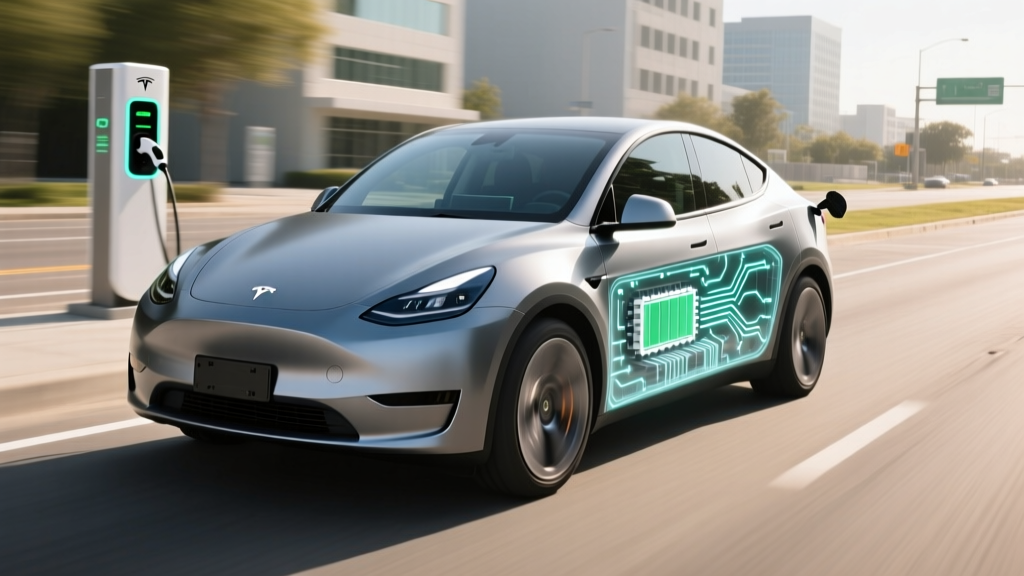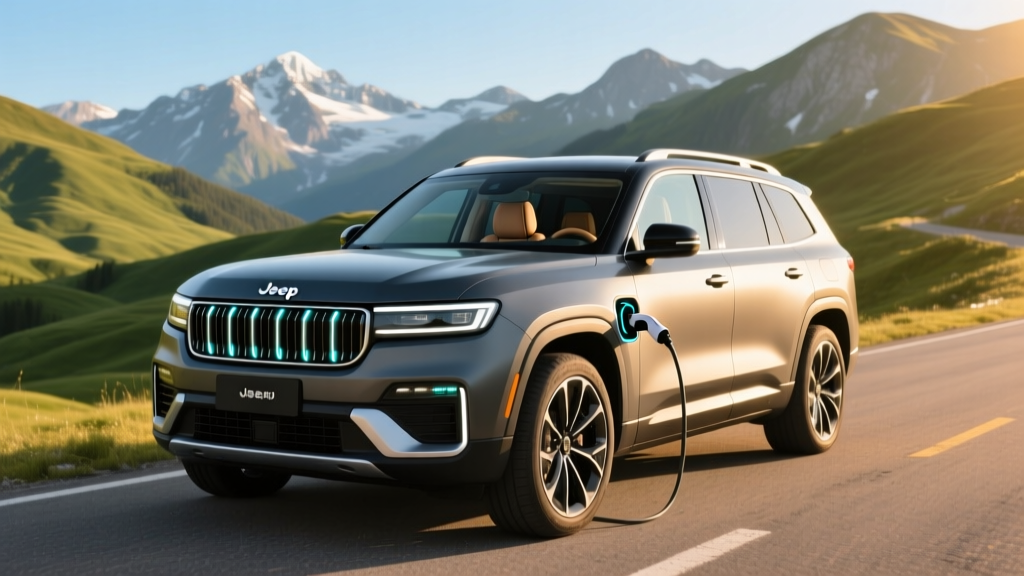
The Short Answer on the 2026 Jeep Wagoneer EV
The 2026 Jeep Wagoneer EV is an all-electric, three-row SUV built on Stellantis' STLA Large platform. Based on Stellantis' announced specifications and platform capabilities, buyers should expect an EPA-estimated range in the 300–350 mile neighborhood (final EPA certification pending at launch), a battery pack in the 100–120 kWh range, and DC fast-charging capability peaking around 200–250 kW. Pricing is anticipated to start in the $65,000–$75,000 range before incentives, positioning it against the Rivian R1S, Tesla Model X, and upcoming electric competitors in the large luxury SUV segment. If you need three-row seating, genuine off-road credibility, and electric powertrain efficiency, the Wagoneer EV is worth a close look — but home charging access and cold-climate range loss are critical factors to evaluate before committing.
What We Know About the 2026 Jeep Wagoneer EV So Far
Jeep first signaled its intent to electrify the Wagoneer nameplate as part of Stellantis' broader EV roadmap. The production Wagoneer EV rides on the STLA Large architecture, a flexible platform designed to underpin full-size SUVs and trucks across Stellantis brands with battery packs ranging from roughly 85 to 120+ kWh depending on configuration.
Here is what the preliminary data points suggest for the 2026 model year:
| Specification | Estimated / Announced |
|---|---|
| Platform | STLA Large (BEV) |
| Battery Capacity (usable) | ~100–120 kWh (NMC chemistry expected) |
| EPA Range (est.) | 300–350 miles (varies by trim/drivetrain) |
| Peak DC Fast Charge Rate | ~200–250 kW |
| 10–80% DC Fast Charge Time | ~25–35 minutes (est.) |
| Level 2 (240V) Charge Rate | ~11–19.2 kW |
| Drivetrain | Dual-motor AWD expected (4xe branding TBD) |
| Horsepower (est.) | 400–500+ hp |
| 0–60 mph (est.) | ~4.5–5.5 seconds |
| Towing Capacity (est.) | ~6,000–7,500 lbs |
| Seating | 3 rows / 7–8 passengers |
| Starting MSRP (est.) | $65,000–$75,000 |
| Battery/Powertrain Warranty | 8 years / 100,000 miles (typical Stellantis EV) |
Important context: These figures are based on STLA Large platform announcements and industry analysis. Final EPA range, pricing, and powertrain outputs will be confirmed closer to the vehicle's on-sale date. Always check fueleconomy.gov for certified numbers once published.
Real-World Range Reality Check
If the Wagoneer EV achieves a 330-mile EPA estimate, expect real-world highway driving (75+ mph, warm conditions) to yield approximately 270–295 miles. In cold weather (below 30°F), lithium-ion battery chemistry and cabin heating demands can reduce range by 20–35%, potentially dropping effective range to 215–265 miles depending on conditions. Towing will further reduce range significantly — plan for 150–200 miles between charges when pulling a trailer.
2026 Wagoneer EV vs. the Gas Wagoneer: Cost and Capability Comparison
The current gas-powered Jeep Wagoneer starts around $62,000 and is equipped with a 3.0L Hurricane inline-six producing up to 420 hp. Its EPA fuel economy sits at roughly 16–17 mpg city / 23–24 mpg highway depending on drivetrain (source: fueleconomy.gov). Let's break down what that means in annual fuel costs versus the electric model.
| Factor | Gas Wagoneer (3.0L I6) | Wagoneer EV (est.) |
|---|---|---|
| Combined Efficiency | ~19 mpg combined | ~85–95 MPGe (~35 kWh/100mi) |
| Annual Miles | 12,000 | 12,000 |
| Energy Cost (national avg.) | $3.50/gal gasoline | $0.16/kWh home electricity |
| Annual Fuel/Energy Cost | ~$2,210 | ~$672 (home charging) |
| Annual Savings (EV) | — | ~$1,538/year |
| 5-Year Fuel Savings | — | ~$7,690 |
These numbers assume predominantly home Level 2 charging. Public DC fast charging costs significantly more — typically $0.35–$0.55/kWh at networks like Electrify America or EVgo — which would narrow the savings gap on road trips. Oil changes, transmission fluid, and other ICE maintenance items are eliminated with the EV, adding roughly $300–$500/year in additional savings.
Charging the 2026 Wagoneer EV: What You Need at Home and on the Road
A large-battery EV like the Wagoneer demands a serious home charging setup. Here's what to expect across charging levels:
| Charging Level | Power (kW) | Miles of Range per Hour | Full Charge Time (10–100%) |
|---|---|---|---|
| Level 1 (120V standard outlet) | ~1.4 kW | ~3–4 mi/hr | Not practical for daily use |
| Level 2 (240V, 48A circuit) | ~11.5 kW | ~30–35 mi/hr | ~10–12 hours |
| Level 2 (240V, 80A circuit) | ~19.2 kW | ~50–55 mi/hr | ~6–7 hours |
| DC Fast Charge (peak) | ~200–250 kW | ~600–800 mi/hr (peak) | 10–80% in ~25–35 min |
Home Charging Installation Costs
With a battery this large, a 48-amp or higher Level 2 charger on a dedicated 240V circuit is essentially mandatory. Here's what that typically costs:
| Item | Cost Range |
|---|---|
| Level 2 charger hardware (48A–80A) | $400–$900 |
| Electrician labor (240V circuit, 50–100 ft run) | $800–$2,500 |
| Permit and inspection | $50–$300 |
| Electrical panel upgrade (if needed, 200A service) | $1,500–$4,000 |
| Total (no panel upgrade) | $1,250–$3,700 |
| Total (with panel upgrade) | $2,750–$7,700 |
Key consideration: If your home has older 100-amp electrical service, upgrading to 200-amp service may be required to support a high-amperage EV charger alongside existing household loads. Always get a quote from a licensed electrician before purchasing. Some utilities offer rebates of $250–$1,000 for Level 2 installations — check with your local provider.
Charging on the Road
Stellantis has indicated that its STLA Large EVs will support the NACS (North American Charging Standard) connector, giving the Wagoneer EV native access to the Tesla Supercharger network — the most reliable and extensive DC fast-charging network in the U.S. This is a significant advantage over CCS-only vehicles, which rely on Electrify America, EVgo, and other networks with more variable uptime records.
Understanding the charge curve: Peak charging speeds of 200–250 kW are not sustained across the entire session. The battery management system will taper charge rate as the battery fills, particularly above 80% State of Charge (SoC). A typical session might look like this:
- 10–40% SoC: Peak rate (~200–250 kW) — fastest segment
- 40–60% SoC: Moderate rate (~150–180 kW)
- 60–80% SoC: Reduced rate (~80–120 kW)
- 80–100% SoC: Slow taper (~30–50 kW) — avoid unless necessary
For road trips, plan to charge from 10–80% and skip the top-off. This is both faster and better for long-term battery health.
Pricing, Tax Credits, and the True Cost of Ownership
The 2026 Wagoneer EV is expected to start between $65,000 and $75,000 depending on trim. Higher trims (Overland, Series VII or equivalent) could push into the $85,000–$95,000 range. Here's how federal incentives factor in:
Federal EV Tax Credit (§30D) — 2026 Rules
- Credit amount: Up to $7,500 for eligible new EVs
- MSRP cap for SUVs/pickups/vans: $80,000 — higher Wagoneer EV trims may exceed this cap
- Buyer income cap (AGI): $300,000 (married filing jointly), $225,000 (head of household), $150,000 (single)
- Battery sourcing requirements: Critical minerals and battery components must meet escalating domestic/free-trade-partner thresholds — verify on IRS.gov for the specific model year
- Point-of-sale transfer: Eligible buyers can transfer the credit to the dealer for an immediate price reduction at purchase
- Important: Consult a tax professional to confirm your personal eligibility — rules are subject to change
| Cost Category | Gas Wagoneer (~$65K) | Wagoneer EV (~$70K, after credit) |
|---|---|---|
| Purchase Price (after incentives) | $65,000 | $62,500 (est. after $7,500 credit) |
| Fuel/Energy (5 years) | $11,050 | $3,360 (home charging) |
| Maintenance (5 years) | $3,500 | $1,500 |
| Insurance (5 years, est.) | $9,000 | $10,500 (EVs often 10–20% more) |
| Home Charger Install | $0 | $2,500 |
| Estimated Depreciation (5 years) | $29,250 (~45%) | $31,250 (~50%, EV depreciation historically higher) |
| Estimated 5-Year Total | $117,800 | $111,610 |
Key takeaway: The Wagoneer EV's lower fuel and maintenance costs can offset its higher purchase price and insurance premiums over five years, but the margin is modest — roughly $6,000 in savings. The real financial advantage grows if you have cheap home electricity (solar, time-of-use rates), drive more than 12,000 miles annually, or live in a state with additional EV rebates. Higher-mileage drivers will see the math swing decisively in the EV's favor.
Real-World Ownership Considerations Before You Buy
Do You Have Home Charging Access?
This is the single most important question for any prospective EV buyer. Without home Level 2 charging, owning a large-battery SUV like the Wagoneer EV becomes significantly less convenient and more expensive:
- Garage or driveway with 240V access: Ideal — wake up every morning with a full battery
- Apartment or condo without charging: You'll rely entirely on public DC fast charging, costing 2–4x more per kWh and requiring 30–60 minute stops multiple times per week
- Street parking only: Very challenging — not recommended for a daily-driver EV
Cold Climate Impact
If you live in the upper Midwest, Northeast, or mountain states, plan for 20–35% range loss during winter months. The Wagoneer EV is expected to feature a heat pump (common on modern EVs), which reduces but does not eliminate cold-weather range penalties. Preconditioning the battery while plugged in at home helps preserve range and enables faster DC charging in cold conditions.
Towing with an Electric SUV
Jeep's brand identity is built on capability, and the Wagoneer EV is expected to tow. However, towing with any EV dramatically increases energy consumption. Expect range to drop by 40–60% when pulling a loaded trailer at highway speeds. A 330-mile EPA range becomes 150–200 miles of practical towing range. For frequent heavy towing, the gas Wagoneer or a diesel competitor still has a practical advantage on long hauls.
| Myth | Fact |
|---|---|
| "EVs can't tow anything serious." | The Wagoneer EV is expected to tow 6,000–7,500 lbs — competitive with mid-range gas SUVs. The limitation is range while towing, not capability. |
| "The battery will need replacing in a few years." | Modern NMC and LFP packs are designed for 200,000+ miles. Stellantis typically warranties EV batteries for 8 years/100,000 miles with a capacity retention threshold of ~70%. |
| "EVs are more expensive to own, period." | Higher upfront cost is offset by fuel and maintenance savings. Break-even depends on your mileage, electricity rates, and incentive eligibility. |
| "I'll be stranded without charging stations everywhere." | The NACS connector gives access to 25,000+ Tesla Superchargers. Rural gaps exist, but the network is expanding rapidly through 2026. |
| "Home charging is too expensive to install." | A basic 48A Level 2 install averages $1,250–$3,700 — a one-time cost that pays for itself in fuel savings within 1–3 years for most drivers. |
Decision Framework: Is the 2026 Wagoneer EV Right for You?
Choose the Wagoneer EV If:
- You have home Level 2 charging (or can install it)
- You need three-row seating and want to reduce your carbon footprint
- You drive 12,000+ miles per year (fuel savings compound faster)
- You value instant torque and quiet, smooth acceleration
- You want access to the Supercharger network for road trips (via NACS)
- You qualify for the federal tax credit (income and MSRP caps apply)
Stick with the Gas Wagoneer (or a PHEV Alternative) If:
- You lack reliable home or workplace charging access
- You frequently tow heavy trailers over long distances
- You live in an extremely cold climate and regularly drive 250+ miles in winter
- The higher upfront cost (even after incentives) strains your budget
- You plan to keep the vehicle 10+ years and are concerned about out-of-warranty battery replacement costs ($15,000–$25,000 estimated for a pack this size)
Frequently Asked Questions
When will the 2026 Jeep Wagoneer EV be available to buy?
Stellantis has targeted 2025–2026 for STLA Large-based EV launches. Exact on-sale timing for the Wagoneer EV depends on production ramp at the retooled assembly plant. Monitor Jeep's official newsroom and dealer order banks for confirmed availability.
Will the Wagoneer EV qualify for the $7,500 federal tax credit?
It depends on the trim's MSRP (must be under $80,000 for SUVs), your adjusted gross income, and whether the battery's critical minerals and components meet 2026 sourcing thresholds under IRS §30D rules. Base trims are more likely to qualify; loaded models may exceed the MSRP cap. Always verify eligibility with a tax professional before purchasing.
What connector does the Wagoneer EV use — NACS or CCS?
Stellantis has committed to adopting NACS for its North American EVs, meaning the Wagoneer EV should natively access Tesla Superchargers without an adapter. This is a major advantage for road-trip charging reliability.
How long will the battery last before it needs replacement?
Modern EV batteries are engineered for the life of the vehicle. Typical degradation is 10–15% over 100,000–150,000 miles for NMC chemistry. Stellantis warrants its EV batteries for 8 years/100,000 miles (minimum 70% capacity retention). A full replacement, if ever needed, is estimated at $15,000–$25,000 for a pack of this capacity — though most owners will never need one.
Can I charge the Wagoneer EV on a regular 120V outlet?
Technically yes, but practically no. At ~1.4 kW, a 120V outlet adds only 3–4 miles of range per hour. Fully recharging a ~110 kWh battery from empty would take 70+ hours. A dedicated 240V Level 2 charger is strongly recommended for daily ownership.
How does the Wagoneer EV compare to the Rivian R1S?
The Rivian R1S (Dual-Motor, ~149 kWh Max Pack) offers up to 410 miles EPA range, starts around $75,000–$80,000, and is already in production. The Wagoneer EV may offer more traditional luxury styling, Jeep brand heritage, and potentially a lower entry price, but the R1S currently leads on confirmed range and proven off-road EV capability. Cross-shop both if you're in this segment.
What should a first-time EV buyer know before purchasing the Wagoneer EV?
Three essentials: (1) Install a Level 2 home charger before delivery day — it transforms the ownership experience. (2) Understand that EPA range is a best-case estimate; plan trips around 75–80% of the sticker range for a safety margin. (3) Download your charging network apps (Tesla Supercharger, PlugShare) and familiarize yourself with route planning before your first road trip. EV ownership is rewarding, but it requires a mindset shift from "fill up when empty" to "charge where you park."