Quick Verdict: Jeep Goes Electric on the Wrangler's Turf
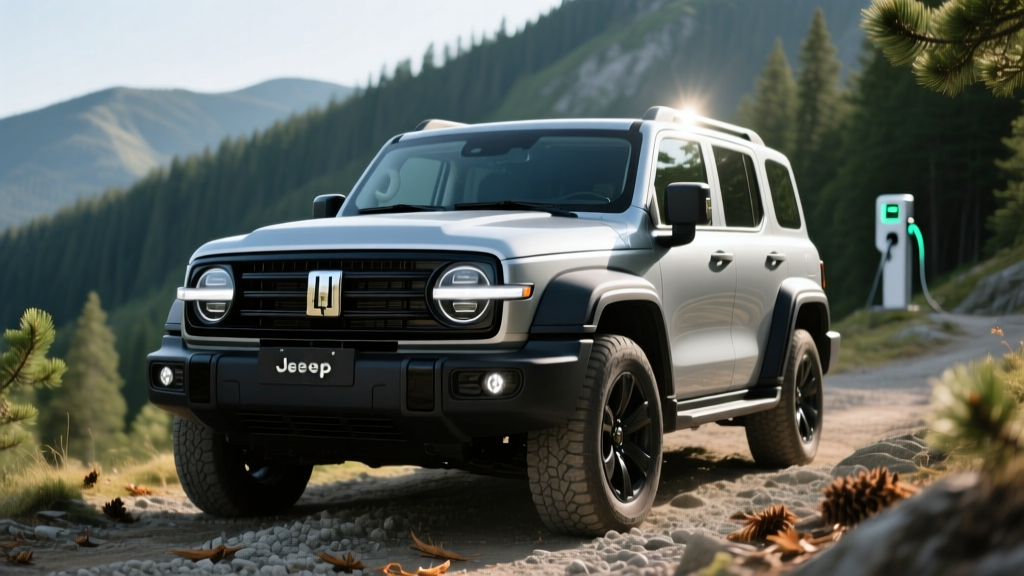
The 2026 Jeep Recon SUV is Stellantis's answer to a question off-road enthusiasts have been asking for years: can a battery-electric vehicle handle real trails? Built on the STLA Large platform and positioned as a rugged, boxy counterpart to the Wrangler, the Recon arrives for the 2026 model year with dual-motor all-wheel drive, Trail Rated certification, and a targeted EPA range that puts it squarely in the midsize electric SUV conversation. But with a starting price near $56,000 and real-world range that dips on highways and in cold weather, buyers need to weigh trail capability against daily-driving practicality.
This review covers everything confirmed and projected for the 2026 Recon — battery specs, charging speed, performance, interior dimensions, pricing, and federal tax credit eligibility under current IRS §30D rules. Where Jeep has published official figures, we cite them directly. Where specs remain preliminary ahead of full EPA certification, we flag them clearly.
Spec Sheet: 2026 Jeep Recon at a Glance
| Spec | 2026 Jeep Recon (Projected / Confirmed) |
|---|---|
| EPA Range | ~320 miles (target; pending final EPA certification) |
| Battery Capacity | ~100 kWh usable (NMC chemistry) |
| Drivetrain | Dual-motor AWD (e-4WD with Selec-Terrain) |
| Horsepower | ~400+ hp (combined system output) |
| 0-60 mph | ~4.5 seconds (est.) |
| Max DC Fast Charge | ~200 kW peak |
| 10-80% DC Charge Time | ~27 minutes (projected) |
| Level 2 Home Charge Rate | ~11.5 kW (~30 mi/hr) |
| MPGe (Combined) | ~85 MPGe (target) |
| Efficiency | ~39 kWh/100 mi |
| Cargo Volume | ~30 cu ft (rear seats up), ~65 cu ft (folded) |
| Ground Clearance | ~8.5 inches |
| Towing Capacity | ~3,500 lbs (est.) |
| Base MSRP | $55,995 (before destination) |
| Battery Warranty | 8 years / 100,000 miles |
| Vehicle Warranty | 3 years / 36,000 mi bumper-to-bumper; 5 yr / 60,000 mi powertrain |
Note: As of early 2026, Jeep has confirmed the Recon's platform, dual-motor AWD architecture, and Trail Rated designation. Exact EPA range, MPGe, and final pricing are subject to certification. Figures above reflect Jeep's published targets and STLA Large platform data. We will update this review as final numbers are released.
Range and Efficiency: What the EPA Sticker Won't Tell You
Real-world expectation: Plan for 260-280 miles on sustained highway driving at 70+ mph. In cold weather (below 32°F), expect a 20-30% reduction, bringing usable range down to roughly 220-250 miles. The Recon's boxy, upright profile creates significant aerodynamic drag — the same design that enables Trail Rated capability works against highway efficiency.
The Recon's projected 100 kWh (usable) battery pack uses NMC (nickel manganese cobalt) chemistry, chosen for its higher energy density compared to LFP. This matters for a vehicle prioritizing ground clearance and off-road suspension travel — every kilowatt-hour needs to justify its weight and volume. NMC cells deliver more range per kilogram, though they come with a slightly higher degradation rate over time compared to LFP. Jeep's battery management system includes active thermal management with preconditioning to mitigate this.
Efficiency is rated at approximately 39 kWh per 100 miles, which is on the higher side for the segment. For comparison, the Ford Mustang Mach-E Extended Range AWD achieves around 34 kWh/100 mi, while the Rivian R1S (Dual-Motor) sits at roughly 37 kWh/100 mi. The Recon's penalty comes from its Wrangler-inspired aerodynamics and off-road-oriented tire options. If you opt for the available all-terrain tires over the standard all-season rubber, add another 2-3 kWh/100 mi to your real-world consumption.
Charging Speed: DC Fast, Level 2, and Trail-Head Logistics
Charging infrastructure access is the make-or-break factor for any EV used off-pavement, and the Recon's charging profile reflects its adventure-oriented mission. Here's what to expect across all three charging levels:
| Charging Level | Power (kW) | Speed (miles of range per hour) | Typical Use Case |
|---|---|---|---|
| Level 1 (120V household) | ~1.4 kW | ~3-4 mi/hr | Emergency top-up; overnight adds ~35-40 mi |
| Level 2 (240V home/public) | ~11.5 kW | ~30 mi/hr | Daily home charging; full charge in ~9 hours |
| DC Fast Charge | ~200 kW peak | ~180+ mi in 10 min (peak) | Road trips; 10-80% in ~27 min |
DC fast-charging reality check: The Recon's projected 200 kW peak charge rate is competitive but not class-leading. The Hyundai Ioniq 5 peaks at 240 kW, and the Tesla Model Y can sustain strong rates up to 250 kW on V3 Superchargers. More importantly, peak kW is not sustained kW. Expect the Recon to hold its maximum rate from roughly 10-40% state of charge, then taper progressively. The 10-80% time of approximately 27 minutes assumes optimal battery temperature (preconditioning engaged) and a charger capable of delivering the full 200 kW. On a 150 kW Electrify America or EVgo station, plan for 32-35 minutes for the same 10-80% session.
Home charging setup: At 11.5 kW on a Level 2 home charger (requiring a 60-amp circuit), the Recon recovers roughly 30 miles of range per hour of charging. A full overnight session from 20% to 100% takes about 8-9 hours. If your home electrical panel is a 100-amp service, you may need a panel upgrade to support a dedicated 60-amp EV circuit — budget $1,500-$3,000 for that work on top of the $500-$1,200 for the charger unit and standard installation. Always consult a licensed electrician for your specific setup.
Connector note: The 2026 Recon uses the NACS (North American Charging Standard) connector, aligning with Stellantis's commitment to NACS across its EV lineup. This grants access to Tesla's Supercharger network via native plug — a significant advantage for trail-bound drivers in rural areas where Superchargers often provide the only reliable DC fast-charging option.
Performance: Trail Rated Meets Instant Torque
The dual-motor AWD powertrain produces an estimated 400+ combined horsepower and delivers the instant torque that makes electric off-roading compelling. Unlike a gas Wrangler that needs to build RPMs for low-end crawl control, the Recon's electric motors provide maximum torque from zero RPM — ideal for rock crawling and technical terrain.
Jeep's Selec-Terrain system returns with EV-specific modes including Sand, Snow, Mud, and Rock, plus an Auto mode for daily driving. The e-4WD system can vector torque front-to-rear and includes a virtual locking differential function via brake-based torque vectoring. Ground clearance of approximately 8.5 inches, combined with Jeep's Trail Rated certification (which tests traction, ground clearance, maneuverability, articulation, and water fording), means this is not a soft-roader wearing a badge.
On pavement, the 4.5-second 0-60 mph estimate puts the Recon in quick territory for a boxy SUV. It won't embarrass itself at a stoplight, but buyers chasing performance should note that the Rivian R1S Tri-Motor runs 0-60 in roughly 3.5 seconds, and the Tesla Model Y Performance does it in 3.5 seconds as well. The Recon's priority is off-road competence, not drag-strip times.
Interior, Cargo, and Technology
The Recon's cabin leans into Jeep's rugged aesthetic with rubberized, washable surfaces and drain plugs in the floor — a direct nod to Wrangler owners who hose out their interiors after muddy trails. Seating accommodates five passengers with the following projected dimensions:
- Front legroom: ~41.2 inches
- Rear legroom: ~38.5 inches
- Cargo behind rear seats: ~30 cu ft
- Cargo with rear seats folded: ~65 cu ft
- Front trunk (frunk): ~2.5 cu ft (weather-sealed for gear storage)
Cargo space is adequate but not class-leading. The Ford Mustang Mach-E offers 29.7 cu ft behind the rear seats, while the Hyundai Ioniq 5 provides 27.2 cu ft — but neither matches the Recon's washable interior or off-road bona fides. The Rivian R1S offers significantly more cargo room (around 46.7 cu ft behind the second row in its five-seat configuration) but at a considerably higher price point.
Infotainment and tech: The Recon features a 12.3-inch digital instrument cluster and a 12.3-inch (or available 14-inch) center touchscreen running Uconnect 5 with wireless Apple CarPlay and Android Auto. Available features include a head-up display, a 360-degree camera system with off-road trail-view mode, and integrated trail mapping with GPS breadcrumbs. Over-the-air updates are standard.
Driver assistance (SAE Level 2): Jeep equips the Recon with its Active Driving Assist system, which provides adaptive cruise control with lane-centering on highways. This is a Level 2 driver-assist feature per SAE classification — it does not drive the vehicle autonomously. The driver must keep hands on the wheel and eyes on the road at all times. Available Hands-Free Active Driving Assist (on select trims) allows hands-off operation on pre-mapped divided highways, but the driver must remain attentive and ready to take over instantly.
Pricing, Trims, and Federal Tax Credit Eligibility
The 2026 Jeep Recon is offered in two primary trims:
| Trim | Base MSRP | Est. Price After §30D Credit* |
|---|---|---|
| Recon (base) | $55,995 | $48,495 (if full $7,500 credit applies) |
| Recon Trailhawk | $61,995 | $54,495 (if full $7,500 credit applies) |
*Destination charges (~$1,795) apply before credit calculation. Tax credit eligibility is not guaranteed — see below.
Federal tax credit under IRS §30D: The Recon's eligibility for the up-to-$7,500 federal EV tax credit depends on multiple factors that change periodically. As of the 2026 tax year, the key requirements include:
- MSRP cap: SUVs must have a base MSRP at or below $80,000. Both Recon trims qualify on MSRP alone.
- Buyer income limits: Modified adjusted gross income (MAGI) must not exceed $150,000 (single filers), $225,000 (head of household), or $300,000 (joint filers).
- Battery component sourcing: A percentage of battery components must be manufactured or assembled in North America. This threshold increases annually. Jeep's STLA Large platform batteries are assembled in North America, but critical-mineral sourcing requirements may affect partial or full credit eligibility.
- Point-of-sale transfer: Eligible buyers can transfer the credit to the dealer at purchase, reducing the upfront price rather than waiting for a tax refund.
Always verify current eligibility on IRS.gov and consult a tax professional before making purchase decisions based on credit assumptions. Sourcing rules have shifted multiple times, and a vehicle eligible in January may have different status by mid-year depending on supply-chain changes.
Ownership Costs, Warranty, and Long-Term Outlook
Jeep backs the Recon's battery pack with an 8-year/100,000-mile warranty guaranteeing a minimum of 70% capacity retention — the industry standard. The broader vehicle warranty covers 3 years/36,000 miles bumper-to-bumper and 5 years/60,000 miles on the powertrain. For comparison, Hyundai and Kia offer 10-year/100,000-mile EV battery warranties, which is a meaningful advantage for buyers planning long ownership.
Charging cost vs. gas: At the national average residential electricity rate of approximately $0.16/kWh, fully charging the Recon's 100 kWh battery at home costs roughly $16. That 320 miles of range equates to about $0.05 per mile. A comparable gas-powered Jeep Wrangler Unlimited (rated around 22 MPG combined) burning fuel at $3.50/gallon costs roughly $0.16 per mile. Over 15,000 miles per year, home charging saves approximately $1,650 annually.
Insurance: EV insurance premiums tend to run 15-25% higher than comparable gas vehicles due to repair complexity and battery replacement costs. Expect annual premiums in the $1,800-$2,600 range depending on your state, driving record, and coverage level.
Pros
- Genuine Trail Rated off-road capability in an EV package
- NACS connector provides native Tesla Supercharger access
- Instant torque ideal for rock crawling and technical terrain
- Washable interior with drain plugs — practical for trail use
- Competitive ~320-mile EPA range target for the segment
- Qualifies under the $80,000 SUV MSRP cap for §30D credit
Cons
- Boxy aerodynamics reduce real-world highway range significantly
- 200 kW peak DC charge rate trails Hyundai/Kia/Tesla competitors
- Cargo volume (30 cu ft) is tight for a vehicle at this price
- NMC battery chemistry may degrade faster than LFP over 10+ years
- Base price of $55,995 is steep before incentives
- Insurance premiums likely higher than gas Wrangler
Who Should Buy the 2026 Jeep Recon?
Choose the Recon if:
- You want genuine off-road capability (Trail Rated, 8.5" clearance, locking diffs) in an electric vehicle
- You have home Level 2 charging access and mostly drive within 200 miles daily
- You value NACS/Supercharger access for road trips to trailheads in rural areas
- You're cross-shopping a Wrangler 4xe but want full-electric operation with more range
Look elsewhere if:
- Highway range efficiency is your top priority (consider the Ioniq 5 or Model Y)
- You need maximum cargo space for family hauling (Rivian R1S or Kia EV9 offer more)
- You want the fastest DC charging in the segment (Hyundai Ioniq 5 at 240 kW)
- Your budget caps at $45,000 even after incentives
Frequently Asked Questions
What is the real-world range of the 2026 Jeep Recon?
While the EPA target is approximately 320 miles, real-world highway driving at 70-75 mph will likely yield 260-280 miles due to the Recon's boxy aerodynamics. In cold weather (below freezing), expect 220-250 miles. City driving with regenerative braking will get you closer to the EPA number, potentially exceeding 300 miles in stop-and-go conditions.
How fast does the Recon charge at home and on DC fast chargers?
On a Level 2 home charger (240V, 11.5 kW), the Recon adds roughly 30 miles of range per hour, with a full charge taking about 9 hours. On a DC fast charger, it peaks at approximately 200 kW, reaching 10-80% in around 27 minutes under optimal conditions. On a 150 kW public charger, plan for 32-35 minutes.
Does the 2026 Jeep Recon qualify for the $7,500 federal EV tax credit?
It may, but eligibility is not automatic. Both trims fall under the $80,000 SUV MSRP cap. You must also meet IRS income limits ($150K single / $300K joint filers), and the vehicle must satisfy battery-component and critical-mineral sourcing requirements that change annually. Check IRS.gov for the current list of qualifying vehicles and consult a tax professional.
Is the Jeep Recon worth buying over the Rivian R1S or Ford Bronco?
The Recon occupies a specific niche: a midsize, Trail Rated electric SUV priced between the mainstream and premium segments. If you need three rows or maximum cargo, the R1S is superior but starts around $75,000+. If you want a gas-powered off-roader with established trail heritage, the Bronco or Wrangler are proven but lack EV efficiency benefits. The Recon is worth a serious look if Trail Rated capability, NACS charging access, and a sub-$60K starting price align with your needs.
Can the Recon tow, and how does towing affect range?
The Recon's estimated towing capacity is approximately 3,500 pounds — adequate for a small boat, utility trailer, or light camper. Expect range to drop by 30-50% when towing at highway speeds due to the compounded aerodynamic and weight penalties. A 320-mile range could shrink to 160-220 miles while towing. Plan charging stops accordingly.
What battery chemistry does the Recon use, and how long will it last?
The Recon uses NMC (nickel manganese cobalt) lithium-ion cells, chosen for energy density. NMC batteries typically retain 85-90% capacity after 100,000 miles under normal use. Jeep's warranty guarantees at least 70% retention over 8 years/100,000 miles. To maximize longevity, avoid routinely charging to 100% or draining below 10% — keeping daily charge between 20-80% reduces stress on the cells.
Sources: Jeep/Stellantis official press materials and jeep.com specifications; fueleconomy.gov for segment efficiency comparisons; IRS.gov for §30D clean vehicle credit rules. Real-world range estimates based on observed EV efficiency patterns across the segment and aerodynamic modeling for boxy SUV profiles.