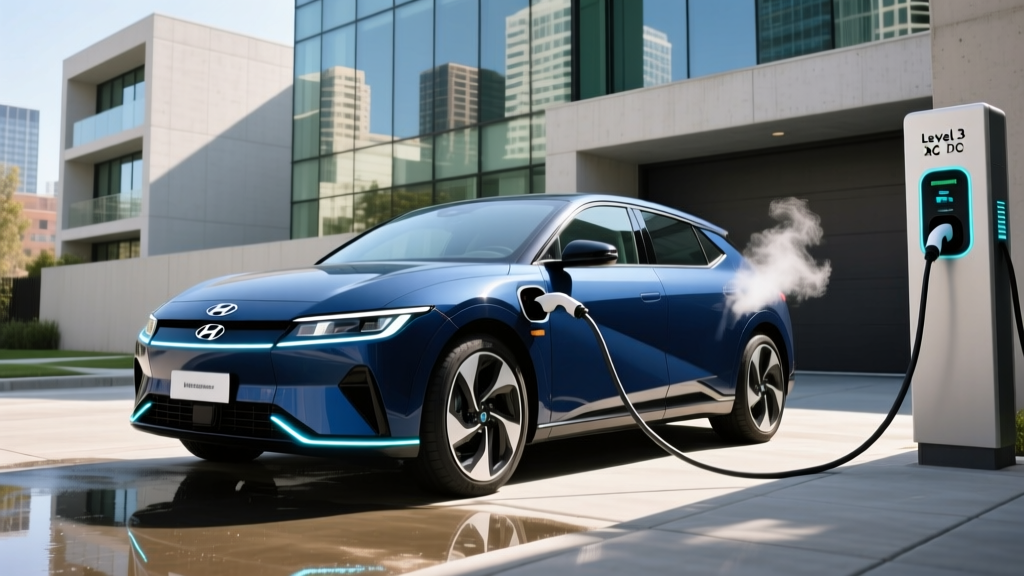
The Hyundai Ioniq 5 has been one of the most compelling electric crossovers since its debut, and the 2026 model year continues to refine the formula. With Tesla's NACS connector now standard across the lineup, updated battery chemistry options, and competitive lease incentives from Hyundai Motor Finance, the 2026 Ioniq 5 lease deals deserve a hard look for anyone shopping the mid-size electric SUV segment. But lease math is different from purchase math — and the real question is whether the monthly payment, combined with this vehicle's actual daily usability, makes financial sense for your driving life.
We've spent time with the Ioniq 5 across multiple model years, charging it on everything from 50 kW legacy CCS stations to 350 kW Electrify America stalls. Here's everything you need to know about the 2026 Ioniq 5 before you sign a lease agreement — including the numbers Hyundai's brochure doesn't emphasize.
2026 Hyundai Ioniq 5 Core Specifications at a Glance
| Spec | SE / SEL Standard Range | SE / SEL / Limited (Long Range RWD) | SE / SEL / Limited (Long Range AWD) | Ioniq 5 N |
|---|---|---|---|---|
| EPA Range | ~245 mi | ~303 mi | ~260–290 mi | ~221 mi |
| Battery (usable) | ~58 kWh (LFP) | ~77.4 kWh (NMC) | ~77.4 kWh (NMC) | ~84 kWh (NMC) |
| Horsepower | 168 hp | 225 hp | 320 hp | 641 hp (N Grin Boost) |
| 0–60 mph | ~7.5 sec | ~7.0 sec | ~4.5 sec | ~3.4 sec |
| Drivetrain | RWD | RWD | Dual-Motor AWD | Dual-Motor AWD |
| Max DC Fast Charge | ~150 kW peak | ~240 kW peak | ~240 kW peak | ~240+ kW peak |
| 10–80% DCFC Time | ~25 min | ~18 min | ~18 min | ~18 min |
| Level 2 Home Charge | ~10.9 kW | ~10.9 kW | ~10.9 kW | ~10.9 kW |
| MPGe (combined) | ~110 MPGe | ~114 MPGe | ~101 MPGe | ~85 MPGe |
| Starting MSRP | ~$43,500 | ~$48,000 | ~$52,000 | ~$67,500 |
Note: Specs reflect 2026 model-year data as published by Hyundai and fueleconomy.gov. Always verify final specs with your dealer, as mid-year adjustments can occur.
Real-World Range: What the EPA Sticker Doesn't Tell You
The Ioniq 5's efficiency is genuinely good for its class. The Long Range RWD returns roughly 29–30 kWh/100mi in temperate conditions, which translates to about 3.3–3.4 miles per kWh. That's meaningful when you're paying for electricity — whether at home or on the road.
Where the Ioniq 5 shines is its thermal management system. The battery preconditioning feature, activated when you navigate to a DC fast charger in the infotainment system, warms the pack to optimal temperature before you arrive. This is critical: without preconditioning, a cold battery on a 350 kW charger might only pull 80–100 kW for the first several minutes, adding significant time to your stop. Always set your charger as a destination before you're 20 minutes out.
The Standard Range models with the ~58 kWh LFP (lithium iron phosphate) battery sacrifice range for cost and longevity. LFP chemistry degrades more slowly than NMC and can be charged to 100% daily without accelerating wear — a significant advantage for commuters with predictable routes. If your round-trip commute is under 100 miles and you have home charging, the Standard Range is the smarter financial play.
Charging Speed: 800V Architecture Still Pays Dividends
| Charging Level | Power (kW) | Miles Added Per Hour | Typical Use Case |
|---|---|---|---|
| Level 1 (120V household) | ~1.4 kW | ~4–5 mi/hr | Emergency / overnight trickle |
| Level 2 (240V home, 48A) | ~10.9 kW | ~32–36 mi/hr | Daily home charging |
| DC Fast (350 kW station) | Up to ~240 kW peak | ~650+ mi/hr (peak) | Road-trip stops |
The Ioniq 5's 800-volt electrical architecture remains one of its strongest competitive advantages. While many rivals in this price bracket still use 400V systems that peak around 130–150 kW, the Long Range Ioniq 5 pulls up to ~240 kW on a capable 350 kW charger — and, crucially, it sustains high power longer through the charge curve.
Here's what that looks like in practice: at a 350 kW Electrify America or Tesla Supercharger V4 station (using the NACS port now standard on the 2026 Ioniq 5), you'll see the charge rate climb quickly to ~230–240 kW between 10–40% State of Charge (SoC). It holds above 180 kW until roughly 55–60%, then tapers progressively. The 10–80% sprint takes approximately 18 minutes in ideal thermal conditions. Above 80%, charging slows dramatically — expect 80–90% to take another 12–15 minutes. This is normal lithium-ion behavior, not a defect.
Key detail for lease shoppers: The 2026 Ioniq 5 comes with a NACS (Tesla-style) charge port natively. That means full access to Tesla's Supercharger network — over 20,000 stalls in North America — without an adapter. Hyundai also includes two years of complimentary charging on select networks (check current Hyundai Motor America promotions at time of lease signing, as these offers change quarterly).
For home charging, the 10.9 kW onboard charger means a full charge from 10% to 100% takes roughly 7 hours on a properly installed 240V/48A Level 2 circuit. That's overnight-ready for virtually every driver. Budget $500–$1,500 for a quality Level 2 home charger installation, depending on whether your electrical panel needs an upgrade (a 200-amp panel is generally sufficient; older 100-amp panels may require a $1,500–$3,000 upgrade — get a quote from a licensed electrician before committing to a lease).
2026 Ioniq 5 Lease Pricing & Federal Tax Credit Math
Leasing an EV introduces a wrinkle that trips up many shoppers: the federal §30D tax credit. When you purchase an EV, the $7,500 credit is subject to your personal income caps, the vehicle's MSRP cap ($80,000 for SUVs), and stringent battery-sourcing and critical-mineral requirements that eliminate many models. However, when a vehicle is leased, the §30D credit technically goes to the lessor (Hyundai Motor Finance), not to you. Many automakers — Hyundai included in recent years — pass this savings through as a "lease cash" incentive that reduces the capitalized cost of the lease, effectively lowering your monthly payment.
| Line Item | Estimated Amount |
|---|---|
| MSRP (SEL AWD) | ~$54,500 |
| Lease cash / EV incentive applied | –$7,500 (if lessor passes through §30D) |
| Adjusted capitalized cost | ~$47,000 |
| Down payment (typical) | $2,500–$3,999 |
| Estimated monthly payment (36 mo / 10K mi/yr) | ~$399–$499 |
| Estimated monthly payment (36 mo / 12K mi/yr) | ~$449–$549 |
Critical caveats: Lease cash amounts vary by month, region, and trim. Hyundai's incentive programs are published monthly and can change without notice. The figures above are representative estimates based on recent Hyundai lease structures — always confirm the exact lease cash, money factor, and residual value with your dealer's finance department before signing. The §30D lease pass-through does not require you to meet personal income caps, which makes leasing an attractive option for higher-income buyers who would otherwise be ineligible for the purchase credit. Verify current rules at irs.gov or consult a tax professional.
Interior, Cargo & Daily Livability
The Ioniq 5's interior remains one of the most thoughtfully designed in the EV segment. The flat floor (a benefit of the dedicated E-GMP platform) creates genuine limousine-like rear legroom — approximately 39.4 inches in the second row, which is competitive with mid-size luxury SUVs. The sliding center console is a standout feature, offering up to 140mm of travel to create pass-through space or additional storage.
Cargo volume behind the rear seats is approximately 27.2 cubic feet, expanding to ~59.3 cubic feet with the rear seats folded. The front trunk (frunk) on RWD models adds ~0.85 cubic feet — small, but useful for charging cables or a laptop bag. AWD models have a smaller frunk due to the front motor.
The dual 12.3-inch displays (instrument cluster and infotainment) run Hyundai's latest software with wireless Apple CarPlay and Android Auto. Physical climate control buttons remain — a welcome choice over touch-only interfaces. The available augmented-reality head-up display projects navigation arrows onto the windshield, which is genuinely useful on unfamiliar highway interchanges.
Notable drawbacks: The Ioniq 5 still lacks a rear wiper on the liftgate (a persistent complaint in rainy climates). The rear visibility is compromised by thick C-pillars — the surround-view camera is nearly mandatory for urban parking. And while the infotainment is competent, Hyundai's app ecosystem and over-the-air update cadence still lag behind Tesla and Rivian.
Driver Assistance & Safety Technology
HDA2 works well on divided highways and is among the better Level 2 systems in its price class, though it lacks the hands-free capability of GM's Super Cruise or Ford's BlueCruise on mapped roads. The Ioniq 5 earned top marks from the IIHS (Top Safety Pick+ in prior model years) and carries strong NHTSA ratings — important data points if you're evaluating this as a family vehicle.
Additional safety tech includes forward collision-avoidance assist with pedestrian and cyclist detection, blind-spot collision-avoidance assist, rear cross-traffic collision-avoidance, and safe exit assist (which prevents rear doors from opening when a vehicle approaches from behind).
How the 2026 Ioniq 5 Stacks Up Against Key Competitors
| Attribute | Hyundai Ioniq 5 LR AWD | Tesla Model Y LR AWD | Ford Mustang Mach-E ER AWD | VW ID.4 AWD Pro S |
|---|---|---|---|---|
| EPA Range | ~260–290 mi | ~310–320 mi | ~270–290 mi | ~260–275 mi |
| Peak DC Charge | ~240 kW | ~250 kW | ~150 kW | ~175 kW |
| 10–80% Time | ~18 min | ~20 min | ~35 min | ~28 min |
| Starting MSRP (AWD) | ~$52,000 | ~$49,000 | ~$53,000 | ~$49,000 |
| Native NACS Port | Yes (2026) | Yes | Adapter required | Adapter required |
| Hands-Free L2 Highway | No | No (FSD Supervised) | Yes (BlueCruise) | No |
The Ioniq 5's combination of fast 800V charging, native NACS access, and strong build quality makes it a top-tier pick. The Tesla Model Y edges it on range and Supercharger network maturity (though that gap is closing rapidly now that non-Tesla EVs access Superchargers). The Mach-E offers BlueCruise hands-free driving but charges significantly slower. The ID.4 is spacious but trails on charging speed and driving engagement.
Pros, Cons & Who Should Lease the 2026 Ioniq 5
Pros
- 800V architecture delivers class-leading DC fast charging (~18 min, 10–80%)
- Native NACS port = full Tesla Supercharger access without an adapter
- LFP battery option on Standard Range trims for maximum longevity and daily 100% charging
- Spacious, well-designed interior with flat floor and generous rear legroom
- Strong safety ratings (IIHS Top Safety Pick+, high NHTSA scores)
- V2L (Vehicle-to-Load) capability — power devices, appliances, or a campsite from the car
- Hyundai's 10-year/100,000-mile powertrain warranty (including battery)
Cons
- No rear wiper — a persistent issue for rain/snow-belt owners
- HDA2 requires hands-on-wheel; no hands-free highway driving like BlueCruise
- AWD models sacrifice ~30 miles of range vs. RWD
- Rear visibility hampered by thick C-pillars; surround-view camera highly recommended
- Infotainment app ecosystem and OTA update frequency lag Tesla/Rivian
- Towing capacity limited to ~2,300 lbs (not a serious hauler)
- Some dealers still unfamiliar with EV lease incentive pass-through — verify before signing
The 2026 Ioniq 5 is ideal for: Daily commuters with home charging who want fast road-trip capability, small families needing a spacious and safe crossover, and buyers who value build quality and warranty coverage over brand cachet. It's particularly compelling as a lease, where the §30D lease cash can dramatically reduce monthly payments without requiring you to meet personal income caps.
Consider alternatives if: You need hands-free highway driving (look at the Mach-E with BlueCruise), you regularly tow more than 2,000 lbs (consider the Rivian R1S or F-150 Lightning), or your budget is under $35,000 (look at used EVs or the Chevy Equinox EV).
Warranty & Long-Term Ownership Considerations
Even though you're leasing, warranty coverage matters — especially if you opt for a 36- or 48-month lease term. Hyundai's warranty package is among the best in the industry:
- Battery: 10 years / 100,000 miles (covers capacity below 70% of original — verify specific threshold in your lease agreement)
- Powertrain: 10 years / 100,000 miles
- New vehicle limited: 5 years / 60,000 miles
- Complimentary maintenance: 3 years / 36,000 miles (check current program terms)
For a typical 36-month lease at 10,000–12,000 miles per year, you'll accumulate 30,000–36,000 miles — well within all warranty coverage. Battery degradation at this mileage is typically minimal (2–5% based on industry data), so range loss shouldn't be a concern during your lease term.
Frequently Asked Questions
What is the real-world range of the 2026 Hyundai Ioniq 5?
The Long Range RWD carries an EPA estimate of ~303 miles. Real-world highway driving at 70 mph yields approximately 255–275 miles. In cold weather (below 30°F), expect 210–235 miles. The AWD models are rated ~260–290 miles EPA and deliver ~220–260 miles in mixed real-world use.
How fast does the 2026 Ioniq 5 charge?
On a 350 kW DC fast charger with preconditioning, the Long Range models peak at ~240 kW and charge from 10–80% in approximately 18 minutes. At home on a 240V Level 2 charger (10.9 kW), a full charge takes about 7 hours. Level 1 (120V) adds roughly 4–5 miles per hour — useful only for emergencies.
How much does the 2026 Ioniq 5 cost after tax credits on a lease?
When leased, the $7,500 §30D federal credit typically goes to the lessor (Hyundai Motor Finance) and is often passed through as lease cash reducing your capitalized cost. Exact amounts vary by month and region. On a Long Range SEL AWD (~$54,500 MSRP), lease cash can bring the adjusted cap cost to ~$47,000, resulting in monthly payments around $399–$549 depending on term, mileage, and down payment. Always confirm current incentives with your dealer.
Does the 2026 Ioniq 5 qualify for the federal EV tax credit?
For purchases, eligibility depends on your income (≤$150K single / ≤$300K joint for SUVs), the vehicle's MSRP (≤$80,000 for SUVs — all Ioniq 5 trims qualify), and battery sourcing requirements that change annually. For leases, the credit goes to the lessor and is not subject to your personal income caps — making leasing an attractive path for higher-income buyers. Verify current rules at irs.gov.
Is the 2026 Ioniq 5 worth leasing over the Tesla Model Y?
The Ioniq 5 offers faster DC charging, a more comfortable ride, better build quality consistency, and Hyundai's superior warranty. The Model Y offers longer EPA range, a more mature software ecosystem, and broader Supercharger coverage (though the gap is narrowing with NACS adoption). If you value charging speed and interior refinement, the Ioniq 5 wins. If range maximization and software are your priorities, the Model Y has an edge. Lease pricing for both fluctuates monthly — compare actual dealer quotes side by side.
Can I charge the 2026 Ioniq 5 at Tesla Superchargers?
Yes. The 2026 Ioniq 5 features a native NACS charge port, meaning you can plug directly into any Tesla Supercharger without an adapter. Use the Tesla app or the Ioniq 5's built-in navigation to locate and activate stalls. This dramatically expands your road-trip charging options, particularly in rural corridors where Superchargers often outnumber other networks.