The three-row electric SUV segment has been a battleground of compromises: too expensive, too slow to charge, or too cramped in the third row. The 2026 Hyundai Ioniq 9 SUV enters this space with a clear value proposition — a 110.3-kWh battery, up to 311 miles of EPA-estimated range, and a starting price that undercuts the Kia EV9 while matching its E-GMP platform architecture. After spending time with the specs, cross-referencing EPA data, and evaluating Hyundai's charging claims against real-world E-GMP behavior, here is everything buyers need to know before signing a purchase agreement.
2026 Hyundai Ioniq 9 SUV: Key Specifications at a Glance
| Specification | SE / SEL (RWD) | Limited / Calligraphy (AWD) |
|---|---|---|
| EPA Range | 311 miles | 272 miles |
| Battery (usable) | 110.3 kWh (NMC lithium-ion) | |
| Max DC Fast Charge | ~240 kW peak | |
| 10–80% DC Charge Time | ~24 minutes (preconditioned) | |
| Level 2 Home Charge Rate | 10.9 kW (~31 mi/hr) | |
| Horsepower | 215 hp | 379 hp |
| 0–60 mph | ~8.2 sec | ~5.5 sec |
| Drivetrain | RWD (single motor) | AWD (dual motor) |
| MPGe (combined) | 89 MPGe | 79 MPGe |
| Efficiency | 38 kWh/100 mi | 43 kWh/100 mi |
| Towing Capacity | Up to 2,700 lbs (w/ factory tow prep) | |
| Base MSRP | ~$56,500 | ~$70,500 |
Sources: EPA / fueleconomy.gov, Hyundai Motor America press materials. AWD figures reflect Long Range AWD trim. Final 2026 EPA certifications may vary slightly.
Range and Efficiency: EPA Sticker vs. Real-World Expectations
Real-World Expectation: ~260–280 miles highway (RWD), ~225–245 miles highway (AWD). In freezing temperatures (below 30°F), expect a 20–30% reduction, dropping RWD range to roughly 215–250 miles.
The Ioniq 9's 110.3-kWh usable battery is one of the largest in its class, rivaling the Rivian R1S and exceeding the Kia EV9's 99.8-kWh pack. Hyundai's use of NMC (nickel-manganese-cobalt) chemistry prioritizes energy density over the cycle-life longevity of LFP cells — a trade-off that matters if you plan to keep the vehicle beyond the 8-year warranty window.
On the RWD model, 89 MPGe combined is competitive for a vehicle this size, translating to roughly 38 kWh per 100 miles. The AWD variant drops to 79 MPGe (43 kWh/100 mi), a penalty driven by the additional front motor's weight and mechanical losses. For context, charging at the national average of $0.16/kWh, the RWD Ioniq 9 costs approximately $6.08 per 100 miles of driving — roughly half the fuel cost of a comparable gas-powered three-row SUV at 22 MPG combined.
Highway driving at 75+ mph is where large SUVs lose the most efficiency. Based on E-GMP platform behavior observed in the Ioniq 5 and Ioniq 6, expect real-world highway range to land 10–15% below the EPA sticker. Cold-weather impact is more severe: below-freezing temperatures increase cabin heating demand and slow electrochemical reactions in the NMC cells, compounding losses. The Ioniq 9's standard heat pump mitigates some of this, but physics wins — budget for 20–30% range loss in winter if you live north of the 37th parallel.
Charging Performance: DC Fast Charging and Home Level 2
Hyundai's E-GMP platform uses an 800-volt electrical architecture, which allows the Ioniq 9 to accept significantly higher DC fast-charge power than 400V competitors like the Volkswagen ID. Buzz or the base-trim Tesla Model X. Here is the full charging picture:
| Charging Level | Power / Voltage | Speed | Time / Notes |
|---|---|---|---|
| Level 1 (120V household) | ~1.4 kW | ~4 mi/hr | ~78 hours (0–100%) — emergency use only |
| Level 2 (240V home) | 10.9 kW | ~31 mi/hr | ~10 hours (0–100%) — overnight-ready |
| DC Fast Charge (peak) | ~240 kW / 800V | Up to ~170 mi in 15 min | 10–80% in ~24 min (preconditioned) |
Charge curve reality check: The ~240 kW peak rate is not sustained across the entire session. Like all EVs, the Ioniq 9's charge rate tapers as the battery fills. Expect peak power from roughly 10–40% state of charge (SoC), with a significant step-down above 55% and another above 80%. Charging from 80–100% on DC fast charge is painfully slow — plan your road-trip stops around 10–80% sessions for maximum time efficiency.
Preconditioning matters: The Ioniq 9's battery thermal management system must warm the pack to its optimal charging temperature (roughly 77–95°F internally) before it will accept peak power. When navigating to a DC fast charger via the built-in navigation, the vehicle should automatically begin preconditioning. If you arrive at a charger cold — especially in winter — your initial charge rate may be 50–100 kW until the pack warms up, adding 10–15 minutes to your stop.
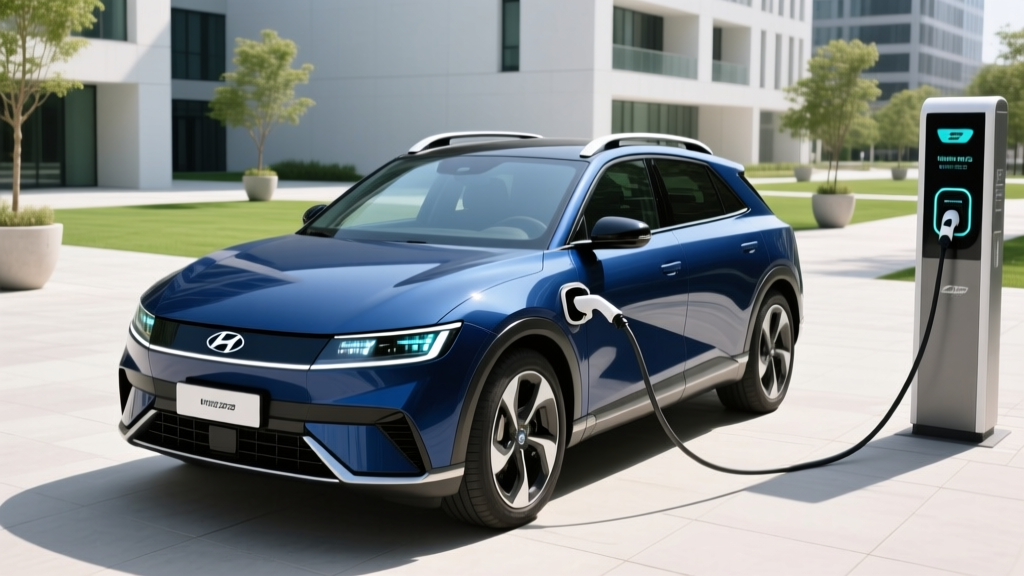
For home charging, a 48-amp Level 2 wall connector on a dedicated 60-amp circuit delivers the full 10.9 kW onboard charger rate, adding roughly 31 miles of range per hour. A full overnight charge (10 hours) replenishes the entire 110.3-kWh pack. Most owners who drive 30–50 miles daily will only need 2–3 hours of Level 2 charging per night.
Performance, Drivetrain, and Driving Dynamics
The 2026 Ioniq 9 offers two distinct powertrain configurations:
- RWD (SE, SEL trims): A single rear-mounted motor producing 215 horsepower and 258 lb-ft of torque. The 0–60 mph time of approximately 8.2 seconds is leisurely for an EV but adequate for a family hauler. The advantage is efficiency — this is the trim that achieves the 311-mile EPA range.
- AWD (Limited, Calligraphy trims): Dual motors combining for 379 horsepower and 516 lb-ft of torque. The 0–60 mph sprint drops to roughly 5.5 seconds, which is genuinely quick for a 5,000+ pound three-row SUV. The trade-off is a 39-mile range penalty and higher energy consumption.
Ride quality benefits from the E-GMP platform's low center of gravity (the battery pack sits under the floor) and Hyundai's multi-link rear suspension. The steering is light and numb — this is not a driver's SUV — but body control is composed, and the regenerative braking system (adjustable via steering wheel paddles from level 0 to 3, plus an i-PEDAL one-pedal mode) is well-calibrated for smooth stops.
Towing capacity maxes out at 2,700 pounds with the factory tow preparation package. That's enough for a small camping trailer or a pair of jet skis, but falls short of the Rivian R1S (up to 7,700 lbs) and is not intended for heavy-duty hauling.
Interior Space, Cargo, and Technology
The Ioniq 9's design brief was clearly "maximize interior volume on the E-GMP skateboard." The result is a flat floor, generous second-row legroom, and a third row that adults can tolerate for short trips — a rarity in the segment.
- First-row legroom: ~41.5 inches
- Second-row legroom: ~39.4 inches (class-leading; captain's chairs or bench available)
- Third-row legroom: ~30.1 inches (usable for children and shorter adults)
- Cargo behind third row: ~13.5 cu ft
- Cargo behind second row (third row folded): ~45.2 cu ft
- Max cargo (all rear rows folded): ~85.4 cu ft
- Front trunk (frunk): ~1.8 cu ft (enough for a charging cable kit and a small bag)
The infotainment system runs on a dual 12.3-inch panoramic display layout with Hyundai's latest ccNC (Connected Car Navigation Cockpit) software. Wireless Apple CarPlay and Android Auto are standard. Over-the-air (OTA) updates are supported for powertrain, battery management, and infotainment software — a feature that should improve charge-curve optimization and ADAS performance over the vehicle's lifetime.
Driver assistance comes via Hyundai's Highway Driving Assist 2 (HDA 2), which includes adaptive cruise control with stop-and-go, lane-centering, and lane-change assist. This is an SAE Level 2 system — the driver must remain fully engaged with hands on the wheel and eyes on the road at all times. It is not autonomous driving.
Pricing, Trim Levels, and Federal Tax Credit Eligibility
| Trim | Drivetrain | Base MSRP | Est. After §30D Credit* |
|---|---|---|---|
| SE Standard Range | RWD | ~$52,000 | ~$44,500 |
| SE | RWD | ~$56,500 | ~$49,000 |
| SEL | RWD | ~$60,000 | ~$52,500 |
| Limited | AWD | ~$66,500 | ~$59,000 |
| Calligraphy | AWD | ~$70,500 | ~$63,000 |
*Estimated prices assume full $7,500 §30D credit eligibility. Actual credit depends on individual circumstances.
- Vehicle MSRP must not exceed $80,000 for SUVs (all Ioniq 9 trims qualify on MSRP)
- Buyer adjusted gross income must not exceed $150,000 (single) / $300,000 (joint)
- Battery components and critical minerals must meet escalating domestic-sourcing thresholds (per IRS §30D guidelines)
- Credit can be transferred to the dealer at point of sale as an upfront price reduction (beginning 2024)
- Final assembly must occur in North America (Ioniq 9 is assembled at Hyundai's Metaplant in Ellabell, Georgia)
Important: Battery sourcing requirements tighten annually. Consult a tax professional and verify current-year eligibility on irs.gov before purchase. State and local incentives may stack on top — check AFDC for your jurisdiction.
Warranty and Long-Term Ownership
Hyundai backs the Ioniq 9 with one of the strongest warranty packages in the EV market:
- Battery: 10 years / 100,000 miles (capacity retention guaranteed above 70% of original)
- Powertrain: 10 years / 100,000 miles
- New Vehicle Limited: 5 years / 60,000 miles
- Complimentary Maintenance: 3 years / 36,000 miles
The 10-year battery warranty exceeds the federal minimum (8 years / 100,000 miles) and provides meaningful peace of mind given the NMC chemistry's typical degradation curve. Industry data from Recurrent Auto suggests NMC packs in liquid-cooled systems like E-GMP lose approximately 5–8% capacity over the first 100,000 miles, settling into a slow linear decline thereafter. A full battery replacement out of warranty would likely cost $15,000–$22,000 based on current 110-kWh pack pricing — a figure worth budgeting for if you plan to own the vehicle for 12+ years.
How the Ioniq 9 Compares to Key Competitors
The Ioniq 9's most direct rivals are the Kia EV9 (its corporate cousin), the Tesla Model X, and the Rivian R1S. Here is how they stack up on the metrics that matter:
- vs. Kia EV9: The Ioniq 9 shares the E-GMP platform but carries a larger 110.3-kWh battery (vs. 99.8 kWh), yielding ~25 more miles of EPA range. Interior quality and pricing are nearly identical. Choose the Ioniq 9 for slightly more range; choose the EV9 if you prefer its styling or find better dealer availability.
- vs. Tesla Model X: The Model X offers more range (~335 miles), faster Supercharger access, and the Supercharger network's reliability advantage. However, it starts above $80,000 (disqualifying it from the §30D credit) and has a controversial yoke steering option. The Ioniq 9 is the value play.
- vs. Rivian R1S: The R1S is a more capable off-roader and tow vehicle (7,700-lb capacity) with a quad-motor option, but starts at $75,000+ and has a smaller battery on the standard pack. The Ioniq 9 is the better choice for on-road family duty; the R1S wins for adventure use cases.
Pros and Cons: The Honest Assessment
Pros
- 311-mile EPA range (RWD) is among the best in the three-row EV segment
- 800V architecture enables ~240 kW DC fast charging — 10–80% in ~24 minutes
- Spacious second row with class-leading legroom; third row is genuinely usable
- Strong 10-year/100,000-mile battery and powertrain warranty
- Eligible for the full $7,500 federal tax credit (subject to sourcing and income rules)
- Georgia-built — supports domestic manufacturing and secures credit eligibility
- Heat pump standard — improves cold-weather efficiency and range retention
Cons
- RWD model's 8.2-second 0–60 is slow for an EV in this price range
- NMC battery chemistry has shorter cycle life than LFP alternatives
- 2,700-lb towing capacity is low for a large SUV — not a serious hauler
- CCS1 connector (NACS adapter may be required for Tesla Supercharger access in 2026)
- Frunk is small (1.8 cu ft) — barely fits a charge cable
- AWD range penalty of 39 miles is steep — the efficiency gap is real
- Dealer markups remain a risk in high-demand markets — negotiate firmly
Who Should Buy the 2026 Hyundai Ioniq 9 SUV?
Choose the Ioniq 9 if:
- You need a three-row EV for family duty (school runs, road trips, carpooling) with genuine adult-usable space in the second row
- You prioritize range and charging speed over performance — the RWD model's 311 miles and 24-minute fast charge are ideal for highway commuting
- You want to maximize federal tax credit value while staying under the $80K MSRP cap
- You value a long warranty and plan to own the vehicle 8–10 years
Look elsewhere if:
- You need serious towing capacity (consider the Rivian R1S or a PHEV like the Jeep Grand Cherokee 4xe)
- You want a driver-focused, sporty EV experience (the Ioniq 9 is comfort-tuned, not engaging)
- You exclusively use Tesla Superchargers and don't want to deal with a NACS adapter
- You prefer LFP battery chemistry for maximum cycle life (look at the Tesla Model Y or base Rivian R1S)
Frequently Asked Questions
What is the real-world range of the 2026 Hyundai Ioniq 9?
The EPA rates the RWD model at 311 miles and the AWD at 272 miles. In real-world highway driving at 70–80 mph, expect roughly 260–280 miles (RWD) and 225–245 miles (AWD). Cold weather below 30°F can reduce range by 20–30%.
How fast does the Ioniq 9 charge at home and on the road?
On a Level 2 home charger (240V, 48A), the Ioniq 9 charges at 10.9 kW, adding about 31 miles of range per hour — a full charge takes roughly 10 hours. On a DC fast charger, it peaks at ~240 kW and charges from 10–80% in approximately 24 minutes when the battery is preconditioned.
Does the 2026 Hyundai Ioniq 9 qualify for the federal EV tax credit?
The Ioniq 9 is assembled in Georgia and its MSRP falls under the $80,000 SUV cap, making it potentially eligible for the full $7,500 §30D credit. However, eligibility depends on the buyer's income (under $150K single / $300K joint), battery critical-mineral and component sourcing requirements (which tighten annually), and the vehicle's final IRS certification. Always verify on irs.gov and consult a tax professional before purchasing.
Is the Ioniq 9 worth buying over the Kia EV9?
The Ioniq 9 offers a larger battery (110.3 vs. 99.8 kWh) and approximately 25 more miles of EPA range than the EV9. Interior quality, charging speed, and pricing are very similar. If range is your top priority, the Ioniq 9 has a slight edge. If you prefer the EV9's design or find better local dealer inventory, the EV9 remains an excellent choice.
Can the Ioniq 9 use Tesla Superchargers?
As of the 2026 model year, Hyundai has not transitioned to the NACS (Tesla) connector as standard. The Ioniq 9 ships with a CCS1 port. Hyundai has announced plans to adopt NACS in future model years, but current owners may need a CCS-to-NACS adapter to access Tesla Supercharger stalls. Verify adapter compatibility and Hyundai's official guidance before relying on Supercharger access.
What is the battery warranty on the Ioniq 9?
Hyundai provides a 10-year / 100,000-mile battery warranty, guaranteeing that the pack will retain at least 70% of its original capacity during that period. This exceeds the federal minimum of 8 years / 100,000 miles and is among the best in the industry.