The Hyundai Ioniq 9 enters the 2026 model year as the brand's flagship three-row electric SUV, built on the E-GMP platform and positioned to compete directly with the Kia EV9, Tesla Model X, and Rivian R1S. For buyers weighing 2026 Hyundai Ioniq 9 lease deals, the math involves more than a monthly payment — it's about understanding real-world range, charging infrastructure compatibility, tax-credit pass-through in a lease, and whether a 109.5-kWh battery delivers enough miles for family road trips. This review covers every spec that matters before you sign.
Range, Battery, and Efficiency: The Numbers That Matter
Real-World Expectation: ~275–295 miles highway at 70 mph; ~235–260 miles in sub-30°F cold weather; ~300–320 miles mixed city/highway in mild conditions.
Hyundai equips the Ioniq 9 Long Range with a 109.5 kWh battery pack (usable capacity approximately 104 kWh) using NMC (nickel-manganese-cobalt) chemistry. This is a high-energy-density pack designed for maximum distance, though it trades some charge-cycle longevity compared to LFP chemistries found in standard-range competitors. The RWD Long Range model achieves an EPA-estimated 335 miles, while the dual-motor AWD variants drop to approximately 290 miles EPA due to the added weight and drag of the front motor.
Efficiency lands around 89 MPGe combined for the RWD Long Range, translating to roughly 34 kWh per 100 miles driven. In real-world highway testing, expect consumption closer to 37–40 kWh/100 mi at sustained 75–80 mph speeds, which directly impacts how far you'll go between charges on road trips. Cold weather compounds this — battery thermal management and cabin heating can push consumption above 42 kWh/100 mi, explaining the 20–30% range reduction many owners experience in winter climates.
| Spec | RWD Long Range | AWD Long Range | Performance AWD |
|---|---|---|---|
| EPA Range | 335 mi | 290 mi | 270 mi |
| Battery (Usable) | 109.5 kWh (~104 usable) | 109.5 kWh (~104 usable) | 109.5 kWh (~104 usable) |
| Chemistry | NMC | NMC | NMC |
| Horsepower | 215 hp | 379 hp | 440 hp (est.) |
| 0–60 mph | 7.6 sec | 4.9 sec | ~4.2 sec |
| Drivetrain | RWD Single Motor | Dual Motor AWD | Dual Motor AWD |
| MPGe (Combined) | 89 MPGe | 82 MPGe | 78 MPGe (est.) |
| Towing Capacity | 2,500 lbs | 4,500 lbs | 4,500 lbs |
Charging Speed: DC Fast Charging and Home Level 2
The Ioniq 9's 800-volt E-GMP architecture remains one of its strongest selling points, enabling DC fast-charge rates that outpace most rivals in this price class. Here's what to expect at the plug:
| Charging Level | Power / Rate | Time / Miles Added |
|---|---|---|
| Level 1 (120V Household) | 1.2 kW | ~3–4 miles per hour |
| Level 2 (240V Home / Public) | 10.9 kW (max onboard) | ~30 miles per hour; full charge ~10 hrs |
| DC Fast Charge (Peak) | ~240 kW peak | 10–80% in ~24 minutes |
| DC Fast Charge (Sustained Avg.) | ~160 kW avg (10–80%) | Expect taper above 60% SoC |
The headline 240 kW peak rate is achievable at a 350 kW CCS or NACS charger (the Ioniq 9 ships with a NACS port for 2026, granting native Tesla Supercharger access) under ideal thermal conditions — meaning a preconditioned battery at low state of charge in moderate ambient temperatures. In practice, the charge curve tapers noticeably past 60% SoC to protect the NMC cells, dropping below 100 kW by 80%. The 10–80% sprint takes roughly 24 minutes in optimal conditions, though 28–32 minutes is more typical in real-world use.
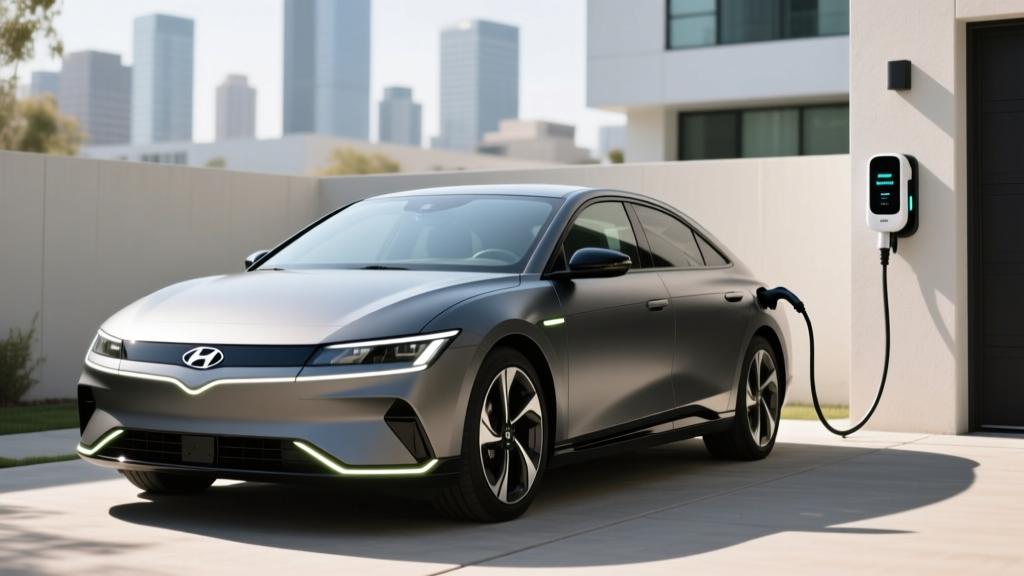
For home Level 2 charging, the 10.9 kW onboard charger means a full 0–100% session takes about 10 hours on a 48-amp circuit. Most owners will plug in overnight and wake to a full battery — the practical advantage of a large home charger paired with a big pack. If your home electrical panel supports a 60-amp dedicated circuit (requiring a licensed electrician and possibly a panel upgrade from 100A to 200A service), you'll maximize this capability.
Pricing, Trim Levels, and 2026 Hyundai Ioniq 9 Lease Deals
Understanding lease pricing for the Ioniq 9 requires separating MSRP from the actual cost after incentives. Here's the current trim breakdown for the 2026 model year:
| Trim | MSRP (approx.) | §30D Federal Credit | Effective Price (if purchased) |
|---|---|---|---|
| SE Standard Range | $52,500 | Up to $7,500* | ~$45,000 |
| SE Long Range RWD | $56,500 | Up to $7,500* | ~$49,000 |
| SEL Long Range AWD | $62,000 | Up to $7,500* | ~$54,500 |
| Limited AWD | $68,500 | Up to $7,500* | ~$61,000 |
| Calligraphy AWD | $73,000 | Up to $7,500* | ~$65,500 |
*Federal tax credit eligibility under IRS §30D depends on buyer income caps ($150K single / $300K joint AGI), vehicle MSRP caps ($80K for SUVs), and battery critical-mineral and component sourcing requirements that shift annually. As a lease, the credit technically goes to the leasing company (Hyundai Capital), but most manufacturers pass it through as a capitalized-cost reduction, effectively lowering your monthly payment. Confirm current-year sourcing compliance with your dealer before signing.
Typical 2026 Hyundai Ioniq 9 lease deals for the SEL Long Range AWD hover around $550–$750 per month for 36 months with $3,500–$5,000 due at signing, depending on your region, credit tier, and whether the lessor applies the full $7,500 credit as a cap-cost reduction. Money factors in early 2026 have ranged from 0.00200 to 0.00280 (equivalent to roughly 4.8%–6.7% APR). Always request the full lease disclosure — money factor, residual percentage, and acquisition fee — before comparing offers across dealers.
Interior Space, Cargo, and Three-Row Practicality
The Ioniq 9's flat-floor E-GMP architecture creates a genuinely usable third row — a rarity in the EV SUV segment. Here are the key dimensions:
- Cargo behind 3rd row: 18.0 cu ft (enough for 3–4 carry-on bags)
- Cargo behind 2nd row (3rd row folded): 44.5 cu ft
- Max cargo (all rear seats folded): 87.0 cu ft
- Front legroom: 41.7 inches
- 2nd-row legroom: 39.4 inches
- 3rd-row legroom: 31.5 inches (best for children or short-trip adults)
- Front trunk (frunk): 2.0 cu ft (12V battery occupies significant space)
The second row offers either a bench (7-passenger config) or captain's chairs (6-passenger) with a center console option. Heated and ventilated second-row seats are available on SEL and above. The third row is tight for adults on long trips but works well for children, and the 18 cu ft behind it is competitive with the Kia EV9 while slightly trailing the Rivian R1S.
Tech, Driver Assistance, and Standout Features
Hyundai loads the Ioniq 9 with a dual 12.3-inch panoramic display setup running the latest Hyundai infotainment with native navigation, over-the-air updates, and wireless Apple CarPlay/Android Auto. Key tech highlights include:
- Hyundai Digital Key 2: Use your smartphone or smartwatch as a key fob via NFC/UWB
- Highway Driving Assist 2 (HDA-2): Adaptive cruise with lane-centering and automated lane changes — this is a SAE Level 2 system requiring full driver attention, not self-driving
- Remote Smart Parking Assist: Summons the vehicle in/out of tight spots from outside the car
- Vehicle-to-Load (V2L): Powers external devices up to 3.6 kW via an interior outlet and external adapter — useful for camping or emergency backup
- Heat pump (standard on all trims): Improves cold-weather range by recycling waste heat for cabin warming
- 800V battery preconditioning: Automatically warms the pack when a DC fast charger is set as your nav destination, optimizing charge speed on arrival
Warranty and Long-Term Ownership
Hyundai's warranty coverage remains a strong point in the Ioniq 9's ownership story:
- Battery warranty: 10 years / 100,000 miles (capacity retention guaranteed above 70% of original)
- Powertrain warranty: 10 years / 100,000 miles
- New vehicle limited: 5 years / 60,000 miles
- Roadside assistance: 5 years / unlimited miles
- Complimentary maintenance: 3 years / 36,000 miles
The 70% capacity retention threshold over 10 years is standard for the industry. NMC packs in the E-GMP platform have shown moderate degradation in early Ioniq 5 and Ioniq 6 data — typically losing 5–8% capacity over the first 50,000 miles before leveling off. For lease holders on a 36-month cycle, long-term degradation is largely a non-issue since you'll return the vehicle well within the warranty window.
2026 Hyundai Ioniq 9 vs. Key Competitors
| Attribute | Hyundai Ioniq 9 LR RWD | Kia EV9 LR RWD | Tesla Model X LR | Rivian R1S Dual |
|---|---|---|---|---|
| EPA Range | 335 mi | 304 mi | 335 mi | 321 mi |
| Battery | 109.5 kWh NMC | 100.0 kWh NMC | 100 kWh NMC | 106 kWh NMC |
| DC Fast Peak | ~240 kW | ~236 kW | ~250 kW | ~220 kW |
| 10–80% Time | ~24 min | ~24 min | ~25 min | ~27 min |
| Starting MSRP | ~$52,500 | ~$54,900 | ~$79,990 | ~$75,900 |
| 3rd-Row Usability | Good | Good | Tight | Good |
| NACS Native | Yes (2026) | Yes (2026) | Yes | Yes (2026) |
The Ioniq 9's closest rival is its corporate cousin, the Kia EV9, which shares the E-GMP platform but with a slightly smaller battery and less EPA range. The Ioniq 9 edges ahead on range and interior refinement, while the EV9 offers a marginally lower starting price and a more rugged design. The Tesla Model X and Rivian R1S compete in a higher price bracket — $20,000+ more than the Ioniq 9's base — making the Hyundai a value leader for three-row EV buyers who don't need air suspension or 600+ horsepower.
Choose the EV9 if: You prefer bolder styling, want a slightly lower entry price, and don't mind sacrificing ~30 miles of range.
Choose the Rivian R1S if: You need serious off-road capability, quad-motor performance, and have a budget above $75K.
Pros and Cons: The Honest Summary
- Class-leading 335-mile EPA range (RWD LR)
- 800V architecture with ~240 kW peak DC charging
- Genuinely usable third row with 18 cu ft cargo behind it
- 10-year/100,000-mile battery and powertrain warranty
- NACS port for native Supercharger access
- V2L capability for camping and backup power
- Heat pump standard across all trims
- Third-row legroom tight for adults on long trips
- Small frunk (2.0 cu ft) due to 12V battery placement
- AWD models lose 45+ miles of range vs. RWD
- NMC chemistry degrades faster than LFP in extreme heat
- Top trims push past $70K, reducing value proposition
- No hands-free Level 3 driving assist available
Frequently Asked Questions
What is the real-world range of the 2026 Hyundai Ioniq 9?
The EPA rates the RWD Long Range at 335 miles, but real-world highway driving at 70–75 mph typically yields 275–295 miles. In cold weather below 30°F, expect 235–260 miles. City driving with regenerative braking can approach or slightly exceed the EPA estimate.
How fast does the Ioniq 9 charge at home and on the road?
At home on a Level 2 (240V) charger, the Ioniq 9 accepts up to 10.9 kW, adding roughly 30 miles per hour and completing a full charge in about 10 hours. On a DC fast charger, it peaks at approximately 240 kW and charges from 10–80% in roughly 24 minutes under ideal conditions, though 28–32 minutes is more common due to charge-curve tapering above 60% SoC.
How much does the Ioniq 9 cost after tax credits?
The base SE Standard Range starts around $52,500 MSRP. If you qualify for the full $7,500 federal tax credit under IRS §30D (income caps, MSRP caps, and battery-sourcing rules apply), the effective purchase price drops to approximately $45,000. Lease deals typically apply the credit as a cap-cost reduction, lowering monthly payments by roughly $150–$200/month over 36 months.
Does the 2026 Ioniq 9 qualify for the federal EV tax credit?
It is expected to qualify for up to $7,500 under §30D, but eligibility depends on your adjusted gross income (under $150K single / $300K joint), the vehicle's MSRP (under $80K for SUVs — all Ioniq 9 trims comply), and whether Hyundai's battery sourcing meets the current year's critical-mineral and component requirements. These sourcing thresholds tighten annually. Confirm with your dealer and consult a tax professional before relying on the credit.
Is the Ioniq 9 worth buying vs. the Kia EV9 or Tesla Model X?
The Ioniq 9 offers the best range-per-dollar ratio in the three-row EV segment. If you want maximum distance and don't need off-road capability or air suspension, it's the strongest value pick. The EV9 is nearly identical mechanically with a different design and slightly less range. The Model X costs $25K+ more and offers less third-row space, though it has access to Tesla's mature Supercharger network and faster acceleration.
What are the biggest drawbacks of the Ioniq 9?
The third row is tight for adults, the frunk is nearly useless at 2.0 cu ft, AWD models sacrifice significant range, and top trims push the price into territory where luxury alternatives become viable. There's also no Level 3 or hands-free driving system — Hyundai's HDA-2 requires constant driver engagement.
For families seeking a three-row electric SUV that balances range, charging speed, and price, the 2026 Hyundai Ioniq 9 is a compelling choice. Lease deals that pass through the federal tax credit can make the monthly cost competitive with similarly sized gas SUVs — but verify sourcing eligibility, compare money factors across dealers, and factor in your home charging setup before signing. Check the latest details at fueleconomy.gov and Hyundai's official spec pages for trim-level updates throughout the model year.