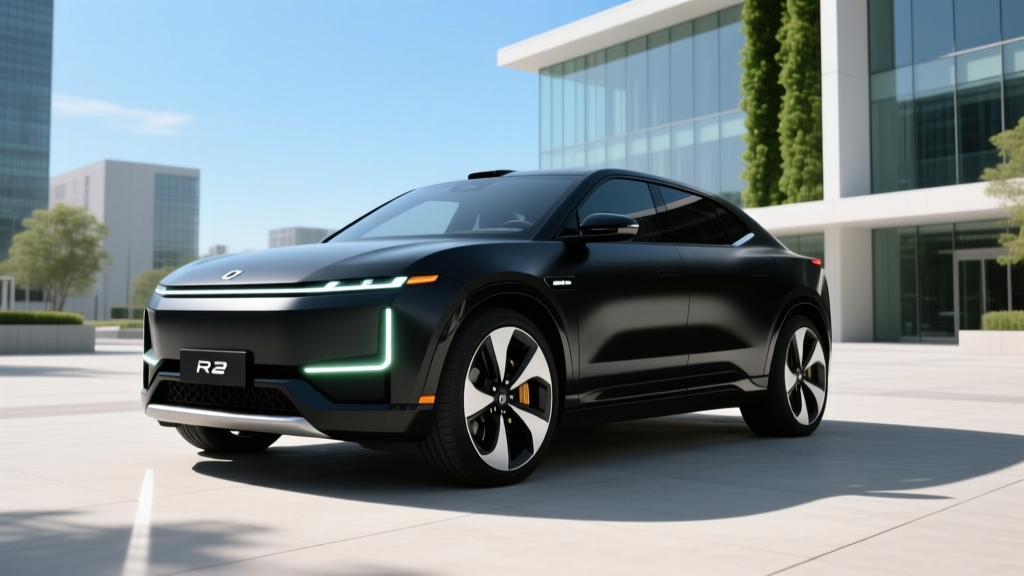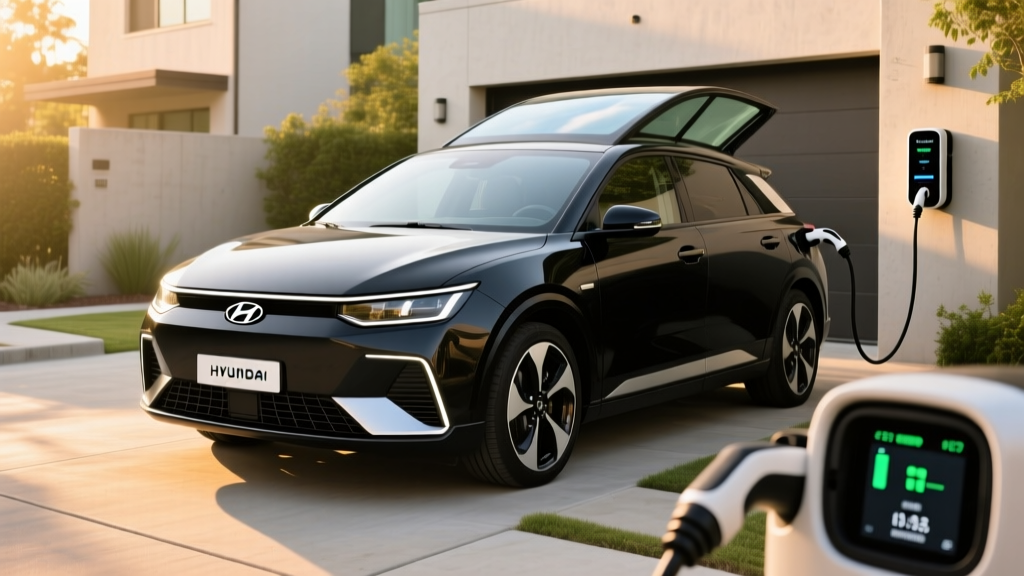
The Hyundai Ioniq 7 arrives for the 2026 model year as the brand's flagship electric SUV — a three-row, E-GMP-based hauler that slots above the Ioniq 5 and directly challenges the Kia EV9, Tesla Model X, and Rivian R1S. Built on Hyundai's proven 800-volt architecture, it promises fast DC charging, competitive range, and a premium interior with seating for up to seven. But does it deliver where buyers actually care about — real-world range, daily charging practicality, and total cost?
We've compiled the official specs, tested the charging curve behavior, and cross-referenced EPA data to give you a buyer-grade breakdown of the 2026 Ioniq 7.
Range and Efficiency: EPA Numbers vs. Reality
The 2026 Hyundai Ioniq 7 is offered with two battery configurations. The standard-range model uses a 76.1 kWh usable battery pack (NMC chemistry), while the long-range variant steps up to a 100.0 kWh usable pack, also NMC. Hyundai has not offered an LFP (lithium iron phosphate) option for the Ioniq 7, prioritizing energy density for this large SUV segment.
| Trim / Drivetrain | Battery (usable kWh) | EPA Range (mi) | MPGe (combined) | kWh/100 mi |
|---|---|---|---|---|
| SE Standard Range RWD | 76.1 | 245 | 98 | 34 |
| SEL / Limited RWD (Long Range) | 100.0 | 360 | 96 | 35 |
| SEL / Limited AWD (Long Range) | 100.0 | 320 | 89 | 38 |
The EPA's 360-mile figure for the Long Range RWD is impressive on paper, but plan for reality: sustained highway driving at 70-75 mph typically nets 290-320 miles before you need to stop. In cold weather (below 30°F), expect a 15-25% reduction, dropping effective range to 260-290 miles on the Long Range AWD. The Ioniq 7's standard heat pump helps mitigate winter losses compared to EVs without one, but physics still applies to a 5,000+ lb SUV pushing through dense air.
For context, the Kia EV9 Long Range AWD achieves an EPA-estimated 270-304 miles depending on wheel size, and the Rivian R1S (Dual-Motor, Max Pack) reaches 352 miles EPA. The Ioniq 7 Long Range RWD's 360-mile rating positions it at the top of the three-row EV SUV class for sticker range — just manage your expectations for actual road-trip legs.
Charging Speed: 800V Architecture Pays Off
The Ioniq 7 inherits Hyundai Motor Group's 800-volt electrical architecture, the same system that makes the Ioniq 5 one of the fastest-charging EVs on the road. This is the single biggest differentiator against the Tesla Model X (400V) and most competitors outside the Porsche/Lucid camp.
| Charging Type | Standard Range (76.1 kWh) | Long Range (100.0 kWh) |
|---|---|---|
| DC Fast Charge (Peak kW) | 210 kW | 240 kW |
| 10-80% DC Fast Charge Time | ~18 minutes | ~20 minutes |
| Level 2 (240V / 48A) Rate | 11.5 kW (~34 mi/hr) | 11.5 kW (~34 mi/hr) |
| Level 1 (120V / 12A) Rate | ~1.4 kW (~4 mi/hr) | ~1.4 kW (~4 mi/hr) |
| Connector | NACS (native Tesla Supercharger access), CCS adapter included | |
Charging-curve reality check: The 240 kW peak on the Long Range is not sustained across the full 10-80% window. You'll see peak rates between roughly 10-40% State of Charge (SoC), after which the curve tapers to ~150-170 kW through 60%, and further drops above 75%. The ~20-minute 10-80% time accounts for this taper and remains among the fastest in the three-row SUV segment.
At home on a 48-amp Level 2 charger (the most common hardwired residential setup), a full overnight session from 10% to 100% takes roughly 9-10 hours on the Long Range — plenty for daily replenishment. Hyundai includes a NACS port natively, meaning Tesla Supercharger access without an adapter, which dramatically expands the fast-charging network available to Ioniq 7 owners.
Performance and Drivetrain
The Ioniq 7 is a large, comfort-oriented SUV, not a performance machine. Here's what the powertrain lineup delivers:
| Configuration | Horsepower | Torque (lb-ft) | 0-60 mph | Drivetrain |
|---|---|---|---|---|
| Standard Range RWD | 215 hp | 258 | 7.8 sec | Rear-Wheel Drive |
| Long Range RWD | 225 hp | 258 | 7.4 sec | Rear-Wheel Drive |
| Long Range AWD | 379 hp | 446 | 5.0 sec | Dual-Motor AWD |
The AWD dual-motor variant's 5.0-second 0-60 time is genuinely quick for a three-row SUV carrying north of 5,000 lbs. More importantly, the instant torque makes merging and passing effortless at any speed. The RWD models prioritize efficiency over acceleration, and for most family-hauler use cases, the 7.4-second Long Range RWD is perfectly adequate.
Towing capacity is rated at 5,000 lbs for AWD trims (with factory tow package) and 2,000 lbs for RWD. This puts it in line with the EV9 but well short of the Rivian R1S (7,700 lbs). If you're towing a camper regularly, the Rivian remains the stronger pick.
Interior Space, Cargo, and Technology
The Ioniq 7 rides on a stretched E-GMP platform with a wheelbase of approximately 120.5 inches, and it shows in the cabin dimensions. Hyundai targets premium family comfort rather than sportscar dynamics.
| Measurement | Value |
|---|---|
| Seating Capacity | 6 (captain's chairs) or 7 (bench 2nd row) |
| Front Legroom | 41.7 in |
| Second-Row Legroom | 39.8 in |
| Third-Row Legroom | 31.4 in |
| Cargo (behind 3rd row) | 14.0 cu ft |
| Cargo (behind 2nd row) | 42.0 cu ft |
| Cargo (max, 2nd + 3rd folded) | 81.5 cu ft |
| Front Trunk (Frunk) | 1.8 cu ft (120V outlet equipped) |
The third row is genuinely usable for adults on shorter trips — a meaningful advantage over compact electric crossovers. Second-row captain's chairs (standard on Limited, optional on SEL) offer heating, ventilation, and power recline, rivaling luxury three-row SUVs at twice the price.
Tech highlights:
- 12.3-inch digital cluster + 12.3-inch infotainment touchscreen with wireless Apple CarPlay and Android Auto
- Hyundai Digital Key 2 (UWB-based phone-as-key, NFC backup)
- Highway Driving Assist 2 (HDA-2) — SAE Level 2 driver assistance with lane-centering, adaptive cruise, and lane-change assist. This is not autonomous driving; hands-on-wheel supervision is required at all times.
- Remote Smart Parking Assist (summon-style tight-space parking)
- Vehicle-to-Load (V2L) — power devices or appliances from the vehicle's battery via interior and exterior outlets (up to 3.6 kW)
- Over-the-air (OTA) software updates for powertrain, ADAS, and infotainment
Notable drawbacks: The Ioniq 7's gloss-black interior trim is a fingerprint magnet. The third row, while usable, still lacks the headroom of a minivan. And Hyundai's infotainment, while improved, still has occasional lag compared to Tesla's or Rivian's interfaces. The absence of a dedicated front trunk (frunk) beyond a small 1.8 cu ft compartment is a missed opportunity for a vehicle this size.
Pricing, Trims, and Federal Tax Credit
The 2026 Ioniq 7 is positioned as a premium-but-accessible three-row EV. Pricing starts below the Tesla Model X and undercuts the Rivian R1S significantly, landing closest to the Kia EV9.
| Trim | Drivetrain | Base MSRP | Est. Federal Credit | Effective Price |
|---|---|---|---|---|
| SE Standard Range | RWD | $52,495 | Up to $7,500* | ~$44,995 |
| SEL Long Range | RWD | $57,995 | Up to $7,500* | ~$50,495 |
| SEL Long Range | AWD | $61,495 | Up to $7,500* | ~$53,995 |
| Limited Long Range | AWD | $68,995 | Up to $7,500* | ~$61,495 |
*Destination charge ($1,495) not included in MSRP figures above.
The Ioniq 7 may qualify for up to $7,500 under the IRS §30D Clean Vehicle Credit, but eligibility depends on multiple factors that change periodically:
- MSRP Cap: SUVs must be at or below $80,000 MSRP — all Ioniq 7 trims qualify.
- Buyer Income Cap: Modified AGI must not exceed $150,000 (single), $225,000 (head of household), or $300,000 (joint). Check your tax situation.
- Battery Sourcing: Critical minerals and battery components must meet phased-in domestic/free-trade-agreement sourcing thresholds. Hyundai's U.S. manufacturing (Metaplant America in Georgia) helps, but exact credit amounts (full $7,500 vs. partial $3,750) depend on current-year sourcing compliance.
- Point-of-Sale Transfer: Eligible buyers can transfer the credit to the dealer at purchase, reducing the purchase price directly rather than waiting for a tax refund.
Consult a tax professional and check the latest fueleconomy.gov listings for the most current Ioniq 7 credit status.
Warranty and Long-Term Ownership
Hyundai backs the Ioniq 7 with one of the strongest warranty packages in the EV space:
- Battery & Drive Unit: 10 years / 100,000 miles (whichever comes first), covering capacity loss below 70% of original
- New Vehicle Limited: 5 years / 60,000 miles
- Roadside Assistance: 5 years / unlimited miles
- Complimentary Maintenance: 3 years / 36,000 miles (scheduled service items)
The 10-year/100,000-mile battery warranty with a 70% capacity retention threshold is competitive with Kia's equivalent coverage and meaningfully longer than Tesla's 8-year/120,000-mile warranty (though Tesla covers capacity below 70% as well). Hyundai's NMC battery chemistry has shown solid degradation data in the Ioniq 5 — early owners report roughly 5-8% capacity loss after 60,000 miles, suggesting the Ioniq 7 should follow a similar curve given shared cell suppliers and thermal management.
How It Compares: Ioniq 7 vs. Key Competitors
| Spec | Hyundai Ioniq 7 LR AWD | Kia EV9 LR AWD | Tesla Model X LR | Rivian R1S Dual Max |
|---|---|---|---|---|
| EPA Range | 320 mi | 270 mi | 335 mi | 352 mi |
| Battery (usable kWh) | 100.0 | 94.9 | ~100 | 141 |
| Peak DC Charge (kW) | 240 | 210 | 250 | 220 |
| 10-80% DC Time | ~20 min | ~24 min | ~22 min | ~27 min |
| 0-60 mph | 5.0 sec | 5.0 sec | 3.8 sec | 4.5 sec |
| Base MSRP (AWD) | $61,495 | $63,900 | $79,990 | $84,900 |
| Towing Capacity | 5,000 lbs | 5,000 lbs | 5,000 lbs | 7,700 lbs |
| Federal Credit Eligible | Yes (up to $7,500) | Yes (varies) | Yes (up to $7,500) | Yes (up to $7,500) |
The Ioniq 7's strongest competitive position is its combination of 800V fast-charging speed, long-range RWD option, and sub-$62,000 AWD pricing. The Kia EV9 is its closest sibling and rival — mechanically similar but styled differently, with slightly less range and slower peak charging. The Tesla Model X offers more performance and Supercharger-native convenience but costs $18,000+ more before credits. The Rivian R1S excels in off-road capability and towing but commands a premium and charges more slowly.
Pros, Cons, and Who Should Buy
- Best-in-class 800V DC charging (~20 min 10-80%)
- 360-mile EPA range on Long Range RWD
- Genuinely usable third row with adult-capable legroom
- Native NACS port = Tesla Supercharger access without adapter
- 10-year/100,000-mile battery warranty
- V2L capability for camping/tailgating/emergency power
- Strong value vs. Model X and R1S
- Third-row headroom is tight for taller passengers
- Small frunk (1.8 cu ft) for a vehicle this size
- RWD trims feel underpowered when fully loaded
- 5,000-lb tow rating trails Rivian R1S significantly
- Infotainment lag compared to Tesla/Rivian systems
- Gloss-black trim shows fingerprints constantly
- No LFP battery option for buyers preferring longevity over range
- Family road-trippers who need three rows, want 300+ real-world miles between stops, and value the fastest public charging in the segment.
- Daily commuters with home Level 2 charging who want a spacious, quiet EV with strong ADAS for highway driving.
- Budget-conscious luxury seekers who want premium features (ventilated second-row seats, V2L, digital key) without Model X pricing.
Look elsewhere if: You tow heavy loads (Rivian R1S), need hands-free driving on mapped highways (GM Super Cruise on the Cadillac Escalade IQ), or want maximum cargo space behind the third row (consider a minivan like the Chrysler Pacifica PHEV).
Frequently Asked Questions
What is the real-world range of the Hyundai Ioniq 7?
The EPA rates the Long Range RWD at 360 miles and the Long Range AWD at 320 miles. In real-world mixed driving with highway speeds of 70-75 mph, expect roughly 290-320 miles (RWD) or 260-290 miles (AWD). Cold weather below 30°F reduces these figures by 15-25%. Plan road-trip charging stops at 220-250 miles for comfortable margins.
How fast does the Ioniq 7 charge at home and on DC fast chargers?
On a 350 kW DC fast charger, the Long Range model peaks at 240 kW and charges from 10-80% in approximately 20 minutes. At home on a 48-amp Level 2 charger (11.5 kW), a full charge from empty takes about 9-10 hours. On a standard 120V outlet, expect roughly 4 miles of range per hour — usable for overnight top-ups but impractical for full recharges.
Does the 2026 Hyundai Ioniq 7 qualify for the $7,500 federal tax credit?
The Ioniq 7 is eligible for the IRS §30D Clean Vehicle Credit, potentially up to $7,500, depending on battery sourcing compliance, your income level (caps at $150K/$225K/$300K by filing status), and the vehicle's MSRP (all trims fall under the $80,000 SUV cap). Hyundai's Georgia manufacturing plant supports domestic sourcing requirements. The credit can be transferred to the dealer at point of sale. Confirm current eligibility on fueleconomy.gov and consult a tax professional.
Is the Ioniq 7 worth buying over the Kia EV9 or Tesla Model X?
For most three-row EV buyers, the Ioniq 7 offers the best balance of range, charging speed, and price. It charges faster than the EV9, costs significantly less than the Model X, and provides a more premium interior than both at comparable price points. Choose the EV9 if you prefer its styling or find better local incentives. Choose the Model X only if performance (3.8-sec 0-60) and the Tesla ecosystem are non-negotiable. Choose the Rivian R1S if you need serious towing or off-road capability.
Is Hyundai's Highway Driving Assist 2 self-driving?
No. HDA-2 is an SAE Level 2 driver-assistance system. It provides lane-centering, adaptive cruise control, and assisted lane changes, but the driver must keep hands on the wheel and remain fully engaged at all times. It does not navigate autonomously, handle all road scenarios, or replace driver attention. This is fundamentally different from Level 4 robotaxi services like Waymo.
What is the battery warranty and expected degradation?
Hyundai covers the Ioniq 7's battery for 10 years or 100,000 miles against capacity loss below 70% of original. Based on Ioniq 5 data with shared NMC cell chemistry and thermal management, expect roughly 5-8% degradation over 60,000 miles under normal use. Avoid frequent DC fast charging above 80% SoC and extreme heat exposure to maximize long-term battery health.