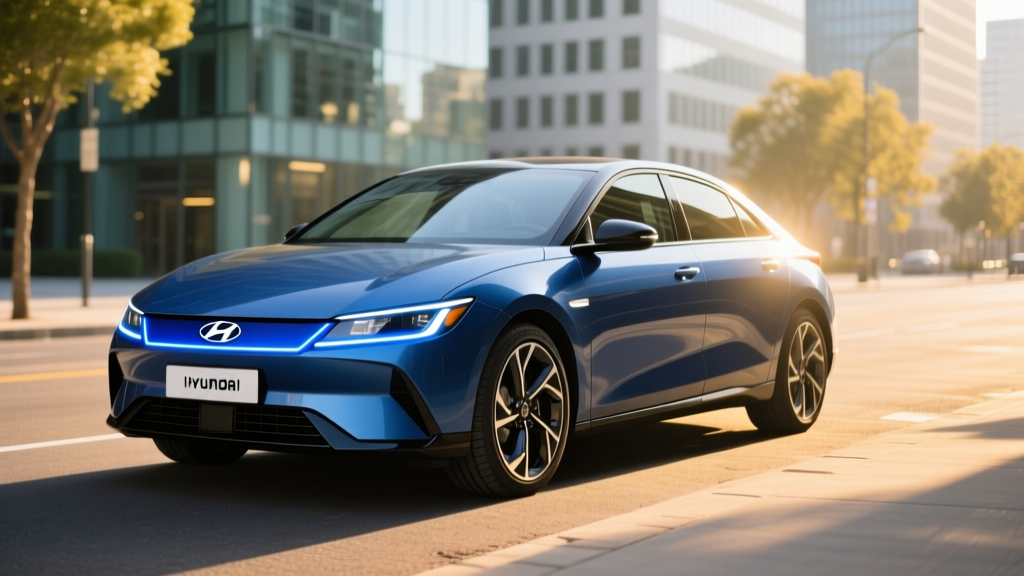
The Hyundai Ioniq 6 entered its second generation for the 2026 model year riding the updated E-GMP platform, and its spec sheet reads like a direct answer to every criticism leveled at the first-gen car. More range, faster sustained charging, a revised interior with physical climate controls, and a NACS port straight from the factory. But spec sheets don't tell the whole story. Below, we break down every number that matters — from real-world highway range to charging-curve taper — so you know exactly what you're getting before you sign.
2026 Hyundai Ioniq 6 Specs at a Glance
| Spec | SE Standard Range | SE / SEL Long Range RWD | SEL / Limited AWD |
|---|---|---|---|
| EPA Range | 270 mi | 361 mi | 316 mi |
| Battery (usable) | 58.0 kWh | 84.0 kWh | 84.0 kWh |
| Chemistry | NMC | NMC (4th-gen) | NMC (4th-gen) |
| Horsepower | 149 hp | 225 hp | 320 hp |
| Torque | 258 lb-ft | 258 lb-ft | 446 lb-ft |
| Drivetrain | RWD | RWD | Dual-motor AWD |
| 0-60 mph | 8.0 sec | 6.5 sec | 4.5 sec |
| Max DC Charge Rate | 220 kW | 350 kW | 350 kW |
| 10-80% DCFC Time | ~24 min | ~18 min | ~18 min |
| Level 2 Rate (kW) | 10.9 kW | 10.9 kW | 10.9 kW |
| MPGe (combined) | 134 MPGe | 140 MPGe | 117 MPGe |
| kWh/100 mi | 25 | 24 | 29 |
| Base MSRP | $38,650 | $43,500 | $49,200 |
Range and Efficiency: EPA vs. the Real World
The headline number for the 2026 Ioniq 6 Long Range RWD is 361 miles EPA — a meaningful jump over the prior generation's 361-mile peak that now comes with improved energy density from Hyundai's 4th-gen NMC cells. The Standard Range model lands at 270 miles, while the dual-motor AWD variants settle at 316 miles.
EPA range assumes a mix of city and highway driving at moderate temperatures. In our experience and consistent with independent testing, expect:
- Highway (70-75 mph, 75°F): ~290-310 miles in the Long Range RWD — roughly 85-88% of the EPA sticker. The Ioniq 6's low 0.21 Cd drag coefficient helps it hold up better than most EVs at speed.
- Cold weather (30°F, mixed driving): ~235-265 miles. The heat pump (standard on Long Range trims) mitigates cabin heating losses, but battery chemistry still suffers in the cold. Preconditioning while plugged in is essential.
- City / suburban (moderate climate): You'll meet or slightly exceed the 361-mile EPA figure thanks to heavy regenerative braking recovery.
Efficiency is where the Ioniq 6 shines. At 140 MPGe combined (24 kWh/100 mi) for the Long Range RWD, it's one of the most efficient EVs in its class, edging out the Tesla Model 3 Long Range (132 MPGe) and significantly outperforming the Ford Mustang Mach-E Extended Range (101 MPGe). That efficiency translates directly to lower charging costs and more miles per minute at a DC fast charger.
Charging Speed: 800V Architecture Delivers
The Ioniq 6 retains Hyundai's 800V electrical architecture, which remains one of its strongest competitive advantages. Most rivals still run 400V systems, which limits peak charge rates and forces earlier taper. Here's what the numbers look like across charging levels:
| Charging Level | Power (kW) | Miles Added per Hour | Notes |
|---|---|---|---|
| Level 1 (120V household) | 1.4 kW | ~5 mi/hr | Emergency/top-up only; a full charge takes days |
| Level 2 (240V home) | 10.9 kW | ~40 mi/hr | Full charge in ~8.5 hours (Long Range); ideal for overnight |
| DC Fast (150 kW station) | 150 kW | ~550 mi/hr | Station-limited; still fast, but not peak capability |
| DC Fast (350 kW station) | Up to 350 kW peak | ~1,300 mi/hr (peak) | Long Range only; 10-80% in ~18 min |
Charging curve reality: The 350 kW peak is exactly that — a peak. The Long Range Ioniq 6 sustains above 230 kW from roughly 10% to 55% State of Charge, then tapers progressively. From 55-80%, you'll see rates drop to 150-100 kW. The 18-minute 10-80% claim holds up at a properly rated 350 kW dispenser (such as Electrify America's latest stalls or Tesla Superchargers with the NACS adapter), but at a 150 kW station, expect 10-80% in roughly 30-32 minutes.
The Standard Range model peaks at 220 kW and takes about 24 minutes from 10-80%. For most Standard Range buyers who charge at home overnight, this difference is negligible — it only matters on road trips.
For 2026, the Ioniq 6 ships with a native NACS (Tesla) charge port, eliminating the need for the CCS-to-NACS adapter that early adopters had to carry. CCS adapters are still included in the glovebox for backward compatibility with older public chargers. The 10.9 kW onboard charger means a home Level 2 setup on a 48-amp circuit (60-amp breaker) will replenish the Long Range battery from empty in about 8.5 hours — plug in at 10 PM, wake up full at 6:30 AM.
Performance and Drivetrain
The Ioniq 6 was never designed as a performance EV in the way a Tesla Model 3 Performance or Porsche Taycan is. It's a grand tourer — comfortable, quiet, and efficient at speed. That said, the AWD variant's 4.5-second 0-60 time is genuinely quick and more than adequate for merging and passing.
The RWD Long Range model (6.5 seconds to 60) is the sweet spot. It delivers confident acceleration without the efficiency penalty of the dual-motor setup. The single-motor RWD layout also means lower tire wear and fewer drivetrain components to maintain long-term.
Ride quality benefits from the E-GMP platform's low center of gravity and Hyundai's revised multi-link rear suspension for 2026. Road noise is noticeably lower than the first-gen car, thanks to acoustic laminated glass and additional sound insulation. The steering is precise but light — this is a car tuned for comfort over canyon carving.
Interior, Cargo, and Technology
The 2026 Ioniq 6 interior addresses the most common first-gen complaint: the touch-only climate controls. Hyundai has restored physical knobs for temperature and fan speed, a welcome change that reduces distraction. The dual 12.3-inch curved displays (instrument cluster and infotainment) remain, now running Hyundai's latest ccNC (Connected Car Navigation Cockpit) software with wireless Apple CarPlay and Android Auto.
Passenger and cargo dimensions:
- Front legroom: 41.7 inches
- Rear legroom: 36.5 inches (adequate for adults, though the sloping roofline cuts headroom for passengers over 6'1")
- Cargo (rear seats up): 12.3 cu ft — this is the Ioniq 6's weak point compared to the Ioniq 5's 27.2 cu ft
- Cargo (rear seats folded): 40.1 cu ft
- Frunk (front trunk): 0.5 cu ft (AWD) / 1.6 cu ft (RWD) — enough for a charge cable bag, not much else
The trunk volume is the trade-off for the Ioniq 6's aerodynamic teardrop shape. If cargo capacity is a priority, the Ioniq 5 or Kia EV6 are more practical hatchback alternatives. The Ioniq 6 is a sedan for people who value range and efficiency over hauling capability.
Driver assistance (ADAS): The Ioniq 6 comes standard with Hyundai SmartSense, including:
- Highway Driving Assist 2 (HDA-2) — SAE Level 2 adaptive cruise with lane centering and lane-change assist
- Forward Collision-Avoidance Assist with pedestrian/cyclist detection
- Blind-Spot Collision-Avoidance Assist
- Rear Cross-Traffic Collision-Avoidance
- Navigation-based Smart Cruise Control (curve speed reduction)
HDA-2 is an SAE Level 2 driver-assistance system. You must keep your hands on the wheel and eyes on the road at all times. It is not autonomous or "self-driving." Hyundai does not currently offer a hands-off, eyes-off system on any consumer vehicle.
Pricing, Trims, and Federal Tax Credit
The 2026 Ioniq 6 lineup spans four trims across three powertrain configurations. Here's the pricing structure and how the federal tax credit applies:
| Trim | MSRP | §30D Credit (est.) | Effective Price |
|---|---|---|---|
| SE Standard Range | $38,650 | Up to $7,500 | ~$31,150 |
| SE Long Range RWD | $43,500 | Up to $7,500 | ~$36,000 |
| SEL Long Range AWD | $49,200 | Up to $7,500 | ~$41,700 |
| Limited AWD | $54,600 | Up to $7,500 | ~$47,100 |
Federal tax credit caveats (IRS §30D, 2026 rules):
- MSRP cap: Sedans must be under $55,000 MSRP to qualify. The Limited AWD at $54,600 clears the cap, but destination charges or dealer-installed accessories that push it over $55,000 will disqualify it. Verify the final window sticker.
- Income cap: Buyer AGI must not exceed $150,000 (single), $225,000 (head of household), or $300,000 (joint). Check your prior-year or current-year AGI — whichever is lower.
- Battery sourcing: The credit splits into two halves — $3,750 for critical minerals and $3,750 for battery component assembly. Hyundai has worked to localize sourcing through partnerships with SK On and LG Energy Solution's U.S. plants, but exact credit amounts can vary by production batch. Confirm with your dealer which credit tier a specific VIN qualifies for.
- Point-of-sale transfer: For 2026, the credit can be transferred to the dealer at purchase, reducing your out-of-pocket cost immediately rather than waiting for a tax refund. The dealer handles the IRS registration.
For the latest eligibility details, always verify against the IRS clean vehicle credits page before purchasing.
Warranty Coverage
Hyundai continues to offer one of the strongest warranty packages in the EV segment:
- Battery: 10 years / 100,000 miles (whichever comes first), covering capacity loss below 70% State of Health
- Powertrain (motor, reduction gear): 10 years / 100,000 miles
- New vehicle limited: 5 years / 60,000 miles
- Roadside assistance: 5 years / unlimited miles
- Complimentary maintenance: 3 years / 36,000 miles (oil changes don't apply, but this covers cabin air filter, tire rotation, and multi-point inspections)
The 10-year battery warranty is a significant advantage over Tesla's 8-year/120,000-mile coverage and matches Kia's offering. The 70% capacity retention threshold is industry standard — if your 84 kWh pack drops below roughly 59 kWh of usable capacity within the warranty window, Hyundai will repair or replace it.
Pros and Cons
Pros
- Best-in-class efficiency (140 MPGe, 24 kWh/100 mi)
- 350 kW peak charging with 800V architecture — 10-80% in ~18 min
- 361-mile EPA range (Long Range RWD)
- Native NACS port for 2026 — no adapter needed at Superchargers
- 10-year/100,000-mile battery warranty
- Physical climate controls restored for 2026
- Low 0.21 Cd drag coefficient aids highway efficiency
- Competitive pricing before and after tax credit
Cons
- Cargo space is tight (12.3 cu ft trunk) — sedan, not hatchback
- Rear headroom limited for tall passengers due to roofline
- Standard Range model's 220 kW peak charge rate is modest
- Frunk is nearly useless (0.5-1.6 cu ft)
- No one-pedal driving mode — regen tops out at Level 3, not full stop
- HDA-2 requires hands on wheel; no hands-free highway driving
- Limited AWD barely clears the $55K MSRP cap for tax credit
Who Should Buy the 2026 Ioniq 6?
This EV is ideal for:
- High-mileage commuters: 361 miles of range and 140 MPGe mean fewer charge stops and lower electricity costs. If your daily round trip is 60-100 miles, you'll charge every 3-4 days at home.
- Road-trip enthusiasts who value charging speed: The 800V system and 18-minute 10-80% sessions mean less time at charging plazas. On a 600-mile trip, you'll add roughly 36 minutes of charging total.
- Sedan loyalists: If you prefer a traditional trunk and sleek profile over crossover styling, the Ioniq 6 is one of the few long-range electric sedans outside of Tesla.
- Cost-conscious EV buyers: After the $7,500 credit, the SE Long Range RWD lands around $36,000 — undercutting the Model 3 Long Range and most AWD crossovers.
Look elsewhere if:
- You need cargo space — the Ioniq 5 or Kia EV6 offer hatchback practicality on the same platform
- You want hands-free highway driving — GM's Super Cruise or Ford's BlueCruise offer hands-off (eyes-on) Level 2 capability that HDA-2 doesn't match
- You tow — the Ioniq 6 is not rated for towing; consider the Ioniq 5 (2,300 lb capacity) or a truck-based EV
How It Stacks Up Against Competitors
| Spec | Hyundai Ioniq 6 LR RWD | Tesla Model 3 LR RWD | BMW i4 eDrive40 |
|---|---|---|---|
| EPA Range | 361 mi | 363 mi | 307 mi |
| Battery | 84.0 kWh (NMC) | 75.0 kWh (NMC/LFP) | 83.9 kWh (NMC) |
| Peak DC Charge | 350 kW | 250 kW | 205 kW |
| 10-80% Time | ~18 min | ~25 min | ~31 min |
| MPGe (combined) | 140 | 132 | 109 |
| 0-60 mph | 6.5 sec | 5.8 sec | 5.5 sec |
| Cargo | 12.3 cu ft | 23 cu ft (hatch) | 16.6 cu ft (hatch) |
| Base MSRP | $43,500 | $44,990 | $57,900 |
| Battery Warranty | 10 yr / 100k mi | 8 yr / 120k mi | 8 yr / 80k mi |
The Ioniq 6 wins on charging speed, efficiency, and warranty. The Model 3 wins on cargo versatility (hatchback), Supercharger network maturity, and performance. The i4 offers premium badge cachet and build quality at a significant price premium. For pure value-per-mile of range, the Ioniq 6 Long Range RWD is difficult to beat.
Frequently Asked Questions
What is the real-world range of the 2026 Hyundai Ioniq 6?
The EPA rates the Long Range RWD at 361 miles. In real-world highway driving at 70-75 mph and moderate temperatures, expect 290-310 miles. In cold weather (below 35°F), that drops to 235-265 miles. City driving with regenerative braking can match or slightly exceed the EPA figure.
How fast does the Ioniq 6 charge at home and on DC fast chargers?
On a home Level 2 charger (240V, 48A), the Ioniq 6 charges at 10.9 kW, adding about 40 miles of range per hour — a full charge takes roughly 8.5 hours for the Long Range model. On a 350 kW DC fast charger, the Long Range model peaks at 350 kW and charges from 10-80% in approximately 18 minutes. At a 150 kW station, expect 30-32 minutes for the same session.
How much does the 2026 Ioniq 6 cost after the federal tax credit?
The SE Long Range RWD starts at $43,500 and may qualify for up to $7,500 under IRS §30D, bringing the effective price to approximately $36,000. Eligibility depends on your income (AGI caps: $150K single / $300K joint), the vehicle's MSRP staying under $55,000, and battery sourcing requirements. The credit can be applied at the point of sale through your dealer. Always verify current rules at irs.gov.
Does the 2026 Ioniq 6 qualify for the federal EV tax credit?
Most trims are expected to qualify for the full $7,500 credit, but eligibility is not guaranteed for every buyer or every VIN. The §30D credit has three hurdles: buyer income caps, MSRP caps ($55,000 for sedans), and battery critical-mineral/component sourcing requirements that can change mid-year. The Limited AWD trim's $54,600 MSRP is close to the cap — options or destination fees could push it over. Confirm with your dealer and reference the IRS before finalizing your purchase.
Is the 2026 Ioniq 6 worth buying vs. the Tesla Model 3 or Ioniq 5?
If you prioritize charging speed, efficiency, and warranty, the Ioniq 6 is the stronger choice. If you need cargo space and hatchback practicality, the Ioniq 5 is the better fit on the same platform. The Model 3 remains compelling for its Supercharger network (though NACS adoption is closing this gap), software ecosystem, and slightly quicker acceleration. For buyers who want maximum range per dollar with the fastest charging in the segment, the Ioniq 6 Long Range RWD is hard to beat.
What battery chemistry does the 2026 Ioniq 6 use?
All 2026 Ioniq 6 trims use NMC (nickel-manganese-cobalt) lithium-ion cells — Hyundai's 4th-generation formulation on Long Range models. Hyundai does not currently offer an LFP (lithium iron phosphate) option in the Ioniq 6. NMC provides higher energy density (more range per kg) compared to LFP, but LFP typically offers longer cycle life and can be charged to 100% daily without degradation concerns. For Ioniq 6 owners, Hyundai recommends charging to 80% for daily use and reserving 100% for road trips.
Sources: fueleconomy.gov, Hyundai USA Ioniq 6, IRS Clean Vehicle Credits