Quick Verdict: The Ioniq 6 Refresh Fixes What Needed Fixing
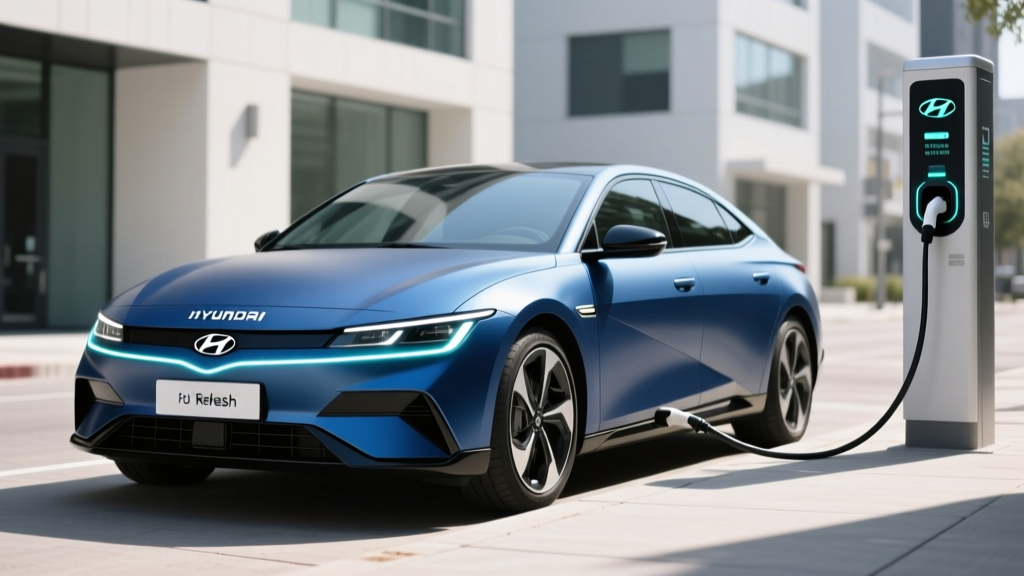
Hyundai's aerodynamic sedan has always been an efficiency monster, but the original Ioniq 6 drew criticism for its polarizing design, cramped rear cabin, and limited cargo flexibility. The 2026 Hyundai Ioniq 6 refresh addresses the most consequential complaints — adding a larger battery, faster DC charging, a revised interior with physical climate controls, and an expanded NACS-native charging port — while preserving the low drag coefficient that makes this sedan one of the most efficient EVs on the market.
If you're cross-shopping the Tesla Model 3, BMW i4, or Polestar 2, the refreshed Ioniq 6 now competes on charging speed, real-world highway range, and total cost of ownership in a way it didn't before. Here's exactly what changed and whether it's worth your money.
Range and Efficiency: EPA Numbers vs. Real-World Reality
The headline update for the 2026 Ioniq 6 is the larger battery pack. Hyundai moved from the previous 77.4 kWh usable capacity to an 84.0 kWh NMC (nickel-manganese-cobalt) pack across all trims, paired with a revised rear-mounted permanent-magnet synchronous motor. The result is a meaningful bump in EPA-estimated range.
| Trim / Drivetrain | EPA Range | Combined MPGe | kWh/100 mi |
|---|---|---|---|
| SE Standard Range (RWD) | 260 mi | 130 MPGe | 26 |
| SE / SEL / Limited (RWD, Long Range) | 361 mi | 140 MPGe | 24 |
| SEL / Limited (AWD, Dual Motor) | 310 mi | 117 MPGe | 29 |
EPA estimates assume a mix of city and highway driving at moderate temperatures. In our experience with the E-GMP platform:
- Highway-heavy driving (70-80 mph): Expect 85-90% of EPA, or roughly 305-325 miles for the RWD Long Range.
- Cold weather (below 32°F) without preconditioning: Range can drop 25-35%, bringing the Long Range RWD down to approximately 235-270 miles.
- Cold weather with heat pump + battery preconditioning enabled: Losses moderate to roughly 15-20%, yielding around 290-305 miles.
The Ioniq 6's 0.21 Cd drag coefficient is among the lowest of any production car, which is why its highway efficiency outperforms many SUVs with similar battery sizes. If your commute is mostly suburban or city driving, you'll likely meet or exceed the EPA number.
For the latest official figures, check the EPA's fueleconomy.gov EV database.
Charging Speed: 800V Architecture Still Sets the Bar
Hyundai retains the 800V electrical architecture that debuted on the Ioniq 5, and the 2026 refresh pushes peak DC fast-charge rates higher thanks to improved thermal management in the new battery pack. The Ioniq 6 now ships with a native NACS (North American Charging Standard) port, eliminating the need for a CCS-to-NACS adapter at Tesla Superchargers.
| Charging Level | Power / Rate | Time / Miles Added |
|---|---|---|
| Level 1 (120V household) | 1.4 kW | ~5 miles per hour |
| Level 2 (240V, 48A home charger) | 11.5 kW | ~40 miles per hour; full charge in ~8.5 hours |
| DC Fast Charge (peak) | 240 kW | 10-80% in approximately 18 minutes (on 350 kW charger) |
| DC Fast Charge (150 kW station) | ~150 kW sustained | 10-80% in approximately 25 minutes |
Charging curve reality check: Peak 240 kW is not sustained across the entire session. The Ioniq 6 hits peak rate between roughly 10-45% State of Charge (SoC), then tapers progressively. From 80-100%, charging slows dramatically to protect battery longevity — expect the final 20% to take nearly as long as the 10-80% portion. For road trips, plan your stops around the 10-80% window for the fastest turnaround.
The Ioniq 6 also supports vehicle-to-load (V2L) power delivery at up to 3.6 kW through an interior outlet and an exterior adapter, enough to run camping equipment, power tools, or emergency home appliances.
Performance and Drivetrain
The 2026 Ioniq 6 carries over the dual powertrain configurations with minor output revisions:
| Spec | RWD (Long Range) | AWD (Dual Motor) |
|---|---|---|
| Horsepower | 225 hp | 320 hp |
| Torque | 258 lb-ft | 446 lb-ft |
| 0-60 mph | 6.1 seconds | 4.5 seconds |
| Drivetrain | Rear-wheel drive | Dual-motor AWD |
| Towing Capacity | Not rated | Not rated |
The RWD model is the efficiency play and delivers adequate acceleration for daily driving and highway merging. The AWD variant's 4.5-second 0-60 time puts it in sports-sedan territory, though it costs you roughly 50 miles of EPA range. Neither variant is rated for towing, which is a notable gap if you need trailer capability — look to the Ioniq 5 or Kia EV6 for that.
What's New in the 2026 Refresh: Interior, Tech, and Design Updates
Hyundai made targeted changes based on owner feedback rather than a full redesign:
- Physical climate controls: The controversial touch-capacitive climate strip below the main screen has been replaced with physical knobs and buttons — a major usability win while driving.
- Updated infotainment: A new 12.3-inch center display running Hyundai's latest ccNC (Connected Car Navigation Cockpit) software with wireless Apple CarPlay and Android Auto, improved voice recognition, and native NACS charging-station routing.
- Revised rear seat: Thinner front seatbacks add approximately 1.2 inches of rear legroom, partially addressing the original car's tight rear cabin.
- Exterior tweaks: A redesigned front bumper with a larger active air flap, updated pixel-style LED taillights, and two new exterior colors. The overall silhouette — love it or hate it — is unchanged.
- ADAS updates: Hyundai SmartSense now includes Highway Driving Assist 2 (HDA2) with lane-change assist and improved curve-speed adaptation. This remains an SAE Level 2 driver-assistance system — you must keep your hands on the wheel and eyes on the road at all times.
Hyundai's HDA2 and Highway Driving Assist are Level 2 systems under the SAE automation scale. They provide adaptive cruise control and lane-centering support but require continuous driver supervision. They do not make the Ioniq 6 a self-driving vehicle. Hands-off systems like GM's Super Cruise or Ford's BlueCruise allow limited hands-free operation on mapped highways — Hyundai does not currently offer an equivalent hands-off system in the Ioniq 6.
Cargo and Passenger Space
| Measurement | Value |
|---|---|
| Front headroom | 39.1 in |
| Front legroom | 42.9 in |
| Rear headroom | 37.1 in |
| Rear legroom (refreshed) | 36.2 in |
| Trunk volume | 12.3 cu ft |
| Frunk (front trunk) | 1.6 cu ft (AWD) / 2.0 cu ft (RWD) |
The trunk is the Ioniq 6's persistent weakness. At 12.3 cubic feet with a sedan-style trunk lid (not a hatchback/liftback), cargo flexibility is limited compared to the Tesla Model 3's 23 cu ft (with folded seats) or the Ioniq 5's 27.2 cu ft hatchback. The frunk is small — useful for charging cables but not much else. If you regularly haul cargo or need fold-flat versatility, the Ioniq 5, Kia EV6, or a crossover-style EV will serve you better.
Pricing, Trims, and Federal Tax Credit Eligibility
| Trim | Drivetrain | MSRP (incl. destination) |
|---|---|---|
| SE Standard Range | RWD | $38,650 |
| SE | RWD | $43,400 |
| SEL | RWD | $46,650 |
| SEL | AWD | $50,150 |
| Limited | RWD | $52,100 |
| Limited | AWD | $55,600 |
Does the Ioniq 6 Qualify for the Federal EV Tax Credit?
Under IRS §30D rules, the 2026 Ioniq 6 may qualify for up to $7,500 in federal tax credits, which can now be transferred to the dealer at point of sale as an immediate purchase-price reduction. However, eligibility depends on several factors that vary by buyer and can change throughout the model year:
- MSRP cap: Sedans must have an MSRP at or below $55,000. This means the SE, SEL RWD, and Limited RWD trims qualify on price. The AWD trims (SEL AWD at $50,150 and Limited AWD at $55,600) face scrutiny — the Limited AWD exceeds the cap.
- Buyer income limits: Modified adjusted gross income must not exceed $150,000 (single), $225,000 (head of household), or $300,000 (joint filers).
- Battery sourcing requirements: The credit is split into two $3,750 halves — one for critical-minerals sourcing and one for battery-component manufacturing. Hyundai's supply-chain compliance has been evolving, and the exact credit amount available for the Ioniq 6 may be $3,750 or the full $7,500 depending on current battery sourcing. Always verify with your dealer and consult IRS.gov's clean vehicle credit page before purchasing.
- Point-of-sale transfer: If eligible, you can transfer the credit to the dealer for an upfront price reduction rather than waiting to claim it on your tax return.
With a full $7,500 credit applied, the SE RWD Long Range drops from $43,400 to an effective $35,900 — a compelling price for a 361-mile, 240 kW-charging sedan. Consult a tax professional for your specific situation.
Pros, Cons, and Who Should Buy the Ioniq 6 Refresh
- Best-in-class efficiency (140 MPGe combined, RWD)
- 800V charging at 240 kW — 10-80% in ~18 min
- 361-mile EPA range on Long Range RWD
- Native NACS port for Tesla Supercharger access
- Physical climate controls (finally)
- Competitive pricing after tax credit
- 10-year/100,000-mile powertrain and battery warranty
- Small 12.3 cu ft trunk with sedan-style lid (not a hatch)
- Rear headroom still tight for passengers over 6'2"
- No towing rating
- AWD trims may exceed $55K MSRP cap for tax credit
- HDA2 is capable but not hands-free (unlike Super Cruise/BlueCruise)
- Frunk is tiny (1.6-2.0 cu ft)
Who the Ioniq 6 Refresh Is Best For
- Long-distance commuters who prioritize efficiency and range over cargo space. The 361-mile EPA rating and low kWh/100mi mean fewer charging stops and lower electricity costs.
- Road-trippers who value 18-minute DC fast-charge stops on the Electrify America or Tesla Supercharger networks.
- Buyers who want a sedan (not a crossover) and find the Tesla Model 3's minimalist interior too spartan.
Who Should Look Elsewhere
- Families needing cargo versatility — the Ioniq 5, Kia EV6, or a three-row EV (Kia EV9, Hyundai Ioniq 9) offer hatchback/crossover practicality.
- Trailer-towing buyers — the Ioniq 6 is not rated for towing.
- Hands-free driving enthusiasts — GM's Super Cruise or Ford's BlueCruise offer hands-off highway driving that Hyundai doesn't match yet.
Warranty and Ownership Costs
| Coverage | Term |
|---|---|
| New vehicle limited | 5 years / 60,000 miles |
| Powertrain | 10 years / 100,000 miles |
| EV battery (capacity retention) | 10 years / 100,000 miles (70% minimum SoH) |
| Corrosion perforation | 7 years / unlimited miles |
| Roadside assistance | 5 years / unlimited miles |
Hyundai's 10-year/100,000-mile battery warranty with a 70% state-of-health threshold is among the best in the industry and matches Kia's coverage. For context, Tesla covers its Model 3 battery at 8 years/120,000 miles (70% retention). Hyundai's longer time limit provides additional peace of mind for high-mileage drivers and second owners.
Based on current national-average electricity rates of $0.16/kWh and the RWD model's 24 kWh/100mi efficiency, fueling the Ioniq 6 costs approximately $3.84 per 100 miles at home — roughly one-third the cost of a comparable gas sedan at 30 MPG and $3.50/gallon. Public DC fast charging at $0.40-0.50/kWh raises costs to $9.60-$12.00 per 100 miles, still competitive with gasoline.
Frequently Asked Questions
What is the real-world range of the 2026 Ioniq 6?
The EPA rates the Long Range RWD at 361 miles. In real-world highway driving at 70-80 mph, expect 305-325 miles. In cold weather (below freezing) without preconditioning, that can drop to 235-270 miles. Enable the heat pump and battery preconditioning to mitigate cold-weather losses to roughly 15-20%.
How fast does the Ioniq 6 charge at home and on the road?
At home on a Level 2 (240V, 48A) charger, the Ioniq 6 adds roughly 40 miles of range per hour, with a full charge taking about 8.5 hours. On a 350 kW DC fast charger, it peaks at 240 kW and charges from 10-80% in approximately 18 minutes. On a more common 150 kW station, expect 10-80% in about 25 minutes.
How much does the 2026 Ioniq 6 cost after tax credits?
The SE RWD Long Range starts at $43,400 MSRP. With the maximum $7,500 federal credit (subject to income limits, battery-sourcing rules, and MSRP caps under §30D), the effective price drops to approximately $35,900. Verify current eligibility on IRS.gov and with your dealer before purchase, as sourcing requirements can change.
Is the Ioniq 6 worth buying vs. the Tesla Model 3 and other rivals?
The Ioniq 6 refresh closes the gap with the Model 3 on charging speed and beats it on interior material quality and physical controls. The Model 3 still wins on cargo versatility (hatchback-style trunk), hands-free-capable Autopilot/FSD (Level 2, supervised), and Supercharger network maturity. Against the BMW i4, the Ioniq 6 offers more range and faster charging at a lower price, though the i4's driving dynamics and brand prestige appeal to some buyers. Against the Polestar 2, the Ioniq 6 offers substantially more range and faster charging.
Does the 2026 Ioniq 6 have a native Tesla-style charging port?
Yes. The 2026 refresh ships with a native NACS (North American Charging Standard) port, giving direct access to Tesla Superchargers without an adapter. This is a significant convenience upgrade over the previous CCS-equipped model.
What are the biggest drawbacks of the Ioniq 6?
The small 12.3 cu ft trunk with a conventional sedan lid (not a hatchback) is the most significant practicality limitation. Rear headroom remains tight for tall passengers, the frunk is tiny, and the car is not rated for towing. Hyundai's HDA2 driver-assist system is competent but doesn't offer hands-free highway driving like GM Super Cruise or Ford BlueCruise.
Sources: EPA fueleconomy.gov, IRS Clean Vehicle Credits, Hyundai Motor America specifications.