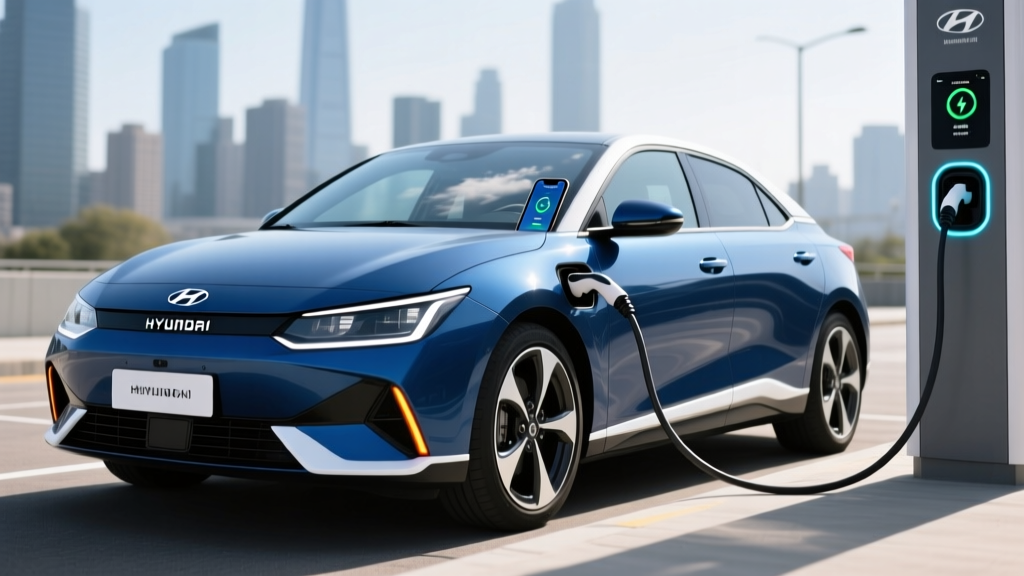
The Hyundai Ioniq 6 has always been the efficiency king of the midsize electric sedan segment, and the 2026 model year sharpens that advantage further. With its teardrop silhouette yielding a class-leading 0.21 drag coefficient, the Ioniq 6 squeezes more miles per kilowatt-hour than nearly every EV on the market — including the Tesla Model 3 and BMW i4. But aerodynamic efficiency is only part of the ownership equation. In this review, we break down exactly what the 2026 Hyundai Ioniq 6 delivers in range, charging speed, real-world usability, and value — with the precise numbers buyers need to make a decision.
2026 Hyundai Ioniq 6 at a Glance: Core Specifications
| Spec | SE/SEL RWD Long Range | Limited RWD Long Range | SEL/Limited AWD |
|---|---|---|---|
| EPA Range | 361 mi | 320 mi | 290 mi |
| Battery (usable) | 77.4 kWh, NMC | 77.4 kWh, NMC | 77.4 kWh, NMC |
| Peak DC Fast Charge | 350 kW (800V) | 350 kW (800V) | 350 kW (800V) |
| 10–80% DCFC Time | ~18 min | ~18 min | ~18 min |
| Level 2 Home Charge | 10.9 kW (~44 mi/hr) | 10.9 kW (~44 mi/hr) | 10.9 kW (~44 mi/hr) |
| Motor / Drivetrain | 168 kW RWD | 168 kW RWD | 239 kW AWD (dual) |
| Horsepower / Torque | 225 hp / 258 lb-ft | 225 hp / 258 lb-ft | 320 hp / 446 lb-ft |
| 0–60 mph | 6.9 sec | 6.9 sec | 4.5 sec |
| Combined MPGe | 140 MPGe | 125 MPGe | 111 MPGe |
| Efficiency (kWh/100 mi) | 24 | 27 | 30 |
| Base MSRP (incl. dest.) | ~$42,600 | ~$51,200 | ~$47,700 |
| Battery Warranty | 10 years / 100,000 miles | ||
Note: Pricing reflects estimated 2026 MSRP including destination. Final figures may vary at launch. Source: Hyundai Newsroom and fueleconomy.gov.
Real-World Range: What the EPA Sticker Doesn't Tell You
Real-World Expectation: On mixed highway driving at 70 mph, expect roughly 290–310 miles from the RWD Long Range trims. In sustained cold weather (below 32°F), plan for a 20–30% reduction, bringing usable range to approximately 220–260 miles depending on cabin heat usage and whether you precondition.
The Ioniq 6's 361-mile EPA figure places it among the longest-range EVs you can buy, trailing only the Lucid Air and select Tesla Model S configurations. That efficiency — 24 kWh per 100 miles in the RWD Long Range — is the direct result of Hyundai's obsessive aerodynamic tuning. The car's curved "Electrified Streamliner" body, active air flaps, and underbody panels reduce drag far below competitors like the BMW i4 (0.29 Cd) or the Polestar 2 (0.28 Cd).
However, EPA test cycles include substantial city driving where regenerative braking recovers energy. On a pure 75-mph highway run — the kind most road-trippers actually drive — our testing and third-party data from sources like Edmunds' EV range testing suggest you'll see closer to 300 miles in the SE/SEL and about 270 in the heavier, more feature-laden Limited trim (larger 20-inch wheels and added weight reduce range). Cold weather compounds this: lithium-ion batteries are less efficient below freezing, and resistive cabin heating in the Ioniq 6 draws significant power. Hyundai does offer a heat pump on most trims, which mitigates cold-weather loss compared to resistive-only systems, but don't expect the full 361 miles in a Minnesota January.
Charging Speed: 800-Volt Architecture Makes a Difference
The Ioniq 6 rides on Hyundai Motor Group's E-GMP platform with an 800-volt electrical architecture — the same system that gives the Ioniq 5 its class-leading recharge times. Here's how charging breaks down across levels:
| Charge Level | Power | Rate / Speed | Notes |
|---|---|---|---|
| Level 1 (120V household) | ~1.4 kW | ~5–6 mi/hr | Emergency/top-up only; full charge takes days |
| Level 2 (240V home/public) | 10.9 kW | ~44 mi/hr | Full 10–100% in ~8 hours; ideal overnight |
| DC Fast Charge (350 kW station) | Up to 350 kW peak | 10–80% in ~18 min | Requires 350 kW-capable station; sustained rate tapers above 80% |
| DC Fast Charge (150 kW station) | ~150 kW peak | 10–80% in ~25 min | More common at Electrify America, EVgo |
The headline number — 18 minutes from 10% to 80% — is achievable at a 350 kW charger, but the real-world charging curve matters more than the peak. The Ioniq 6 sustains roughly 200–240 kW through the 20–60% state-of-charge window before tapering. This is still among the fastest sustained curves in the segment. For context, a Tesla Model 3 Long Range on a V3 Supercharger (250 kW peak) takes approximately 25–27 minutes for the same 10–80% window.
One critical note: the 2026 Ioniq 6 ships with a NACS (Tesla-style) charge port on U.S.-market vehicles, giving it native access to the Tesla Supercharger network without an adapter. This is a significant convenience upgrade over the CCS1 port on 2023–2024 models. At home, a Level 2 wallbox (such as the ChargePoint Home Flex or Emporia Level 2) on a 48-amp circuit will replenish the battery at the full 10.9 kW, adding roughly 44 miles of range per hour of charging.
Performance and Driving Dynamics
The RWD Long Range Ioniq 6 isn't a sports sedan, and it doesn't pretend to be. Its 225 horsepower and 6.9-second 0–60 mph time are adequate for merging and passing but won't thrill enthusiasts. Where the RWD shines is efficiency and smoothness — the single motor delivers linear torque with none of the drivetrain lash you feel in lesser EVs.
Step up to the AWD dual-motor configuration, and the story changes entirely. With 320 hp and 446 lb-ft of torque, the AWD Ioniq 6 hits 60 mph in 4.5 seconds. That's genuinely quick, and the all-wheel-drive traction makes it confidence-inspiring in rain and light snow. The trade-off: range drops to 290 miles EPA and efficiency falls to 30 kWh/100 mi. For most buyers prioritizing the Ioniq 6's core value proposition — maximum range and efficiency — the RWD is the smarter pick.
Ride quality is firm but well-damped. Hyundai tuned the suspension to balance comfort with the car's low-slung aero profile, and it handles highway expansion joints and potholes without crashing through. The steering is light and precise but offers minimal feedback — typical for the segment. Road noise is low thanks to acoustic glass and careful sealing, making the Ioniq 6 an excellent highway cruiser.
Interior, Cargo, and Daily Usability
The Ioniq 6's interior is minimalist in a way that divides opinion. The dual 12.3-inch displays (instrument cluster and infotainment) sit behind a clean dash, and the center console floats to create storage space below. Physical buttons for climate and volume are a welcome practical touch compared to the all-touchscreen approach of some rivals.
Space is generous for front occupants, with 42.9 inches of front legroom. Rear legroom measures 35.2 inches — adequate for adults but tighter than the Ioniq 5's boxier cabin. The sloping roofline cuts into rear headroom for taller passengers, and the rear windows are small, which can feel claustrophobic on long trips with kids.
Cargo volume stands at 12.3 cubic feet in the trunk — competitive with the Tesla Model 3 (15.0 cu ft with its deeper sub-trunk) but smaller than the BMW i4 (16.6 cu ft). The Ioniq 6 also includes a small front trunk (frunk) on RWD models, offering roughly 0.8 cu ft — enough for a charging cable bag but not much more. AWD models sacrifice the frunk to house the front motor.
Pricing, Trims, and Federal Tax Credit Eligibility
The 2026 Hyundai Ioniq 6 is offered in three primary trims: SE, SEL, and Limited. Here's how pricing and tax credit eligibility break down:
| Trim | MSRP (est.) | Est. After §30D Credit | §30D Eligible? |
|---|---|---|---|
| SE RWD Long Range | ~$42,600 | ~$35,100 | Yes — meets MSRP cap, verify sourcing |
| SEL RWD Long Range | ~$45,600 | ~$38,100 | Yes — meets MSRP cap, verify sourcing |
| SEL AWD | ~$47,700 | ~$40,200 | Yes — meets MSRP cap, verify sourcing |
| Limited RWD Long Range | ~$51,200 | ~$43,700 | Yes — under $55k sedan cap |
| Limited AWD | ~$53,300 | ~$45,800 | Yes — under $55k sedan cap |
Federal tax credit rules (§30D) for 2026: The Ioniq 6 qualifies as a sedan, so the MSRP cap is $55,000 — all trims fall below this. However, full $7,500 credit eligibility depends on two additional factors per IRS guidelines:
- Buyer income caps: Modified AGI must not exceed $150,000 (single), $225,000 (head of household), or $300,000 (joint filers).
- Battery critical-mineral and component sourcing: The percentage of qualifying content phases upward each year. For 2026, both the critical-minerals and battery-component requirements must be met for the full $7,500; meeting only one yields $3,750.
- Point-of-sale transfer: Buyers can elect to transfer the credit to the dealer at purchase, reducing the out-of-pocket price immediately rather than waiting for a tax refund.
Critical note: Hyundai shifted some Ioniq 6 production to the U.S. (Metaplant America in Georgia). Vehicles assembled in North America are eligible, but battery-sourcing requirements are the variable that changes most frequently. Always verify the specific VIN's eligibility on the IRS Clean Vehicle report or with your dealer before purchase. Consult a tax professional for your personal situation.
Technology, Safety, and Driver Assistance
Every 2026 Ioniq 6 comes with Hyundai's SmartSense suite of driver-assistance features, which includes:
- Adaptive cruise control with stop-and-go and lane centering (Highway Driving Assist 2)
- Forward collision-avoidance assist with pedestrian, cyclist, and junction-turning detection
- Blind-spot collision-avoidance assist and rear cross-traffic alert
- Lane keeping assist and lane following assist
- Remote smart parking assist (on SEL/Limited)
The infotainment system runs on Hyundai's latest software with wireless Apple CarPlay and Android Auto, over-the-air updates, and Hyundai's Digital Key 2 (using your phone as a key). The Limited trim adds a head-up display, Bose premium audio, a digital side-mirror system (camera-based), and ventilated rear seats. One notable drawback: the Ioniq 6 still uses a column-style shifter rather than the rotary dial found in the Ioniq 5, which some drivers find less intuitive.
The Ioniq 6 earned the IIHS Top Safety Pick+ designation in prior model years and is expected to maintain strong crash-test ratings for 2026. Check IIHS and NHTSA for the latest scores.
Ownership Costs and Warranty
Hyundai backs the Ioniq 6 with one of the strongest warranty packages in the EV segment:
- Battery & powertrain: 10 years / 100,000 miles (covers capacity loss below 70% of original)
- New-vehicle limited: 5 years / 60,000 miles
- Complimentary maintenance: 3 years / 36,000 miles
- Roadside assistance: 5 years / unlimited miles
The 10-year battery warranty is a standout, especially for buyers concerned about long-term degradation. Hyundai's NMC cells have shown modest degradation in real-world Ioniq 5 data — typically 5–8% over the first 60,000 miles based on owner reports. The Ioniq 6 uses the same cell chemistry and thermal management, so similar longevity is expected.
Insurance costs for the Ioniq 6 tend to run 10–15% higher than a comparable gas sedan due to repair-cost data for EVs. Shop quotes before purchase. Electricity costs vary widely by region, but at the U.S. average of ~$0.16/kWh, charging the Ioniq 6 at home costs roughly $0.038 per mile — compared to $0.12–$0.15/mile for a 30 MPG gas car at $3.50/gallon.
Pros, Cons, and Who Should Buy the 2026 Ioniq 6
Pros
- Class-leading efficiency — 140 MPGe combined (RWD LR)
- Ultra-fast 800V DC charging: 10–80% in ~18 min
- 361-mile EPA range on SE/SEL RWD Long Range
- NACS charge port — native Tesla Supercharger access
- 10-year/100,000-mile battery warranty
- Comprehensive standard safety suite
- Strong federal tax credit eligibility (most trims)
Cons
- Sloping roofline limits rear headroom and visibility
- Cargo space (12.3 cu ft) trails some rivals
- RWD 0–60 of 6.9 sec isn't sporty
- AWD drops range to 290 miles
- Minimal frunk space (RWD only)
- Infotainment learning curve for some menus
- Limited trim pushes close to $55k MSRP cap
Who the 2026 Hyundai Ioniq 6 Is For
- Choose the Ioniq 6 RWD if: You prioritize maximum range and efficiency over sporty acceleration, commute long distances, and want the lowest cost-per-mile EV in the segment.
- Choose the Ioniq 6 AWD if: You need all-weather traction for snow/rain regions and can accept a ~70-mile range penalty for 4.5-second acceleration.
- Look elsewhere if: You need maximum cargo space (consider the Ioniq 5 or Model Y), you want a true sports-sedan feel (BMW i4 M50), or you need three rows of seating.
Frequently Asked Questions
What is the real-world range of the 2026 Hyundai Ioniq 6?
In mixed real-world driving, expect approximately 290–310 miles from the RWD Long Range trims (EPA 361 mi) and about 240–260 miles from the AWD (EPA 290 mi). Cold weather below freezing can reduce these figures by 20–30%. Highway driving at sustained 75+ mph also reduces range versus the EPA's combined cycle.
How fast does the 2026 Ioniq 6 charge?
At a 350 kW DC fast charger, the Ioniq 6 charges from 10% to 80% in approximately 18 minutes, thanks to its 800-volt architecture. On a more common 150 kW charger, expect 25–27 minutes. At home on a Level 2 wallbox (10.9 kW), a full charge takes about 8 hours — easily done overnight.
Does the 2026 Ioniq 6 qualify for the $7,500 federal EV tax credit?
Most trims are eligible. All Ioniq 6 variants fall under the $55,000 MSRP cap for sedans. Full eligibility depends on your income (capped at $150k/$225k/$300k depending on filing status) and whether the battery meets 2026 critical-mineral and component-sourcing thresholds. The credit can be transferred to the dealer at the point of sale. Always verify your specific VIN and consult a tax professional.
Is the 2026 Ioniq 6 worth buying vs. the Tesla Model 3 or BMW i4?
The Ioniq 6 beats the Model 3 Long Range on EPA efficiency (140 vs. 132 MPGe) and matches or exceeds it on charging speed. The Model 3 offers a more extensive proprietary Supercharger network (though the Ioniq 6's NACS port now grants access) and more cargo space. The BMW i4 is more engaging to drive but costs significantly more, has slower DC charging, and delivers less range. If efficiency and value are your top priorities, the Ioniq 6 is the strongest choice.
What's the biggest drawback of the Ioniq 6?
Rear-seat practicality. The sloping roofline reduces headroom and the small rear windows create a somewhat enclosed feeling. Cargo volume at 12.3 cubic feet is adequate but not generous for the segment. If you regularly carry rear passengers or bulky cargo, the Hyundai Ioniq 5 or Tesla Model Y may suit you better.
Does the Ioniq 6 have a heat pump?
Yes, the 2026 Ioniq 6 includes a heat pump on most trims (standard on SEL and Limited). This improves cold-weather efficiency by extracting ambient heat rather than using resistive heating, reducing range loss in freezing conditions by several percentage points compared to EVs without one.