Quick Verdict: The Ioniq 6 Makes Aftermarket Lane Assist Obsolete
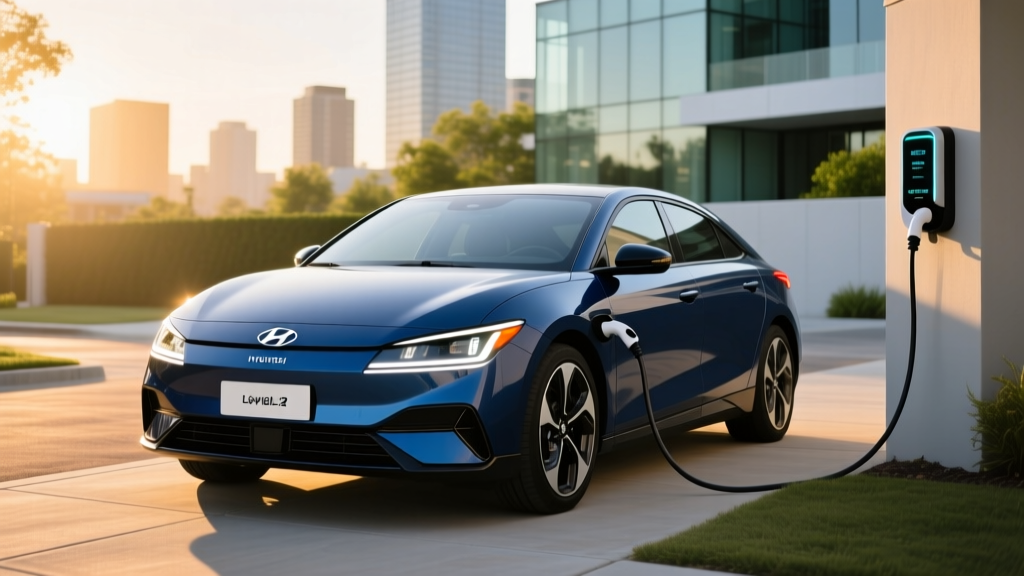
If you've been shopping for an aftermarket lane assist system to retrofit your daily driver, the 2026 Hyundai Ioniq 6 might convince you to trade the car instead. Hyundai's midsize electric sedan packs a factory-installed ADAS (Advanced Driver Assistance System) suite so comprehensive that bolting on a third-party lane-keeping device feels like strapping a flip phone to a Tesla dashboard. Beyond safety tech, the Ioniq 6 delivers up to 361 miles of EPA-estimated range, 800-volt DC fast-charging architecture, and a slippery 0.21 drag coefficient that makes it one of the most efficient EVs on the market.
But the Ioniq 6 isn't for everyone. Its swooping roofline compromises rear headroom, and the sedan trunk limits cargo flexibility compared to hatchback rivals. Here's everything you need to know — exact numbers, real-world expectations, and ownership economics — to decide if this is your next EV.
Range and Efficiency: EPA Numbers vs Real-World Reality
Real-World Expectation: ~290–320 miles highway at 70 mph; ~240–270 miles in freezing weather with heat on
EPA Efficiency: 140 MPGe combined / 24 kWh per 100 miles
The 2026 Ioniq 6 continues to ride on Hyundai's E-GMP (Electric-Global Modular Platform) with a 77.4 kWh usable lithium-ion battery pack using NMC (nickel-manganese-cobalt) chemistry. NMC offers higher energy density than LFP (lithium iron phosphate), which is how Hyundai achieves 361 miles in a relatively compact sedan footprint. The trade-off: NMC batteries are more sensitive to sustained high-state-of-charge storage, so daily charging to 80% is recommended for longevity.
The range hierarchy breaks down by trim and drivetrain:
| Trim / Drivetrain | Battery (kWh usable) | EPA Range (mi) | MPGe Combined | kWh/100 mi |
|---|---|---|---|---|
| SE Long Range RWD (18") | 77.4 | 361 | 140 | 24 |
| SEL / Limited RWD (20") | 77.4 | 316 | 123 | 27 |
| SE / SEL AWD (20") | 77.4 | 292 | 113 | 30 |
Why the 69-mile spread between the best and worst trims? Larger 20-inch wheels increase rolling resistance and weight, while AWD adds a front motor that draws additional power. According to fueleconomy.gov, the SE Long Range RWD with 18-inch wheels is the efficiency sweet spot.
In real-world highway testing at sustained 70–75 mph speeds, expect roughly 80–85% of the EPA sticker. Cold weather (below 32°F) compounds this: battery internal resistance increases and cabin heating draws from the pack, even with the Ioniq 6's standard heat pump. Plan for 240–270 miles of usable range on a frigid winter road trip before needing to charge.
Charging Speed: 800V Architecture That Actually Delivers
The Ioniq 6's headline charging advantage is its 800-volt electrical architecture, shared with the Ioniq 5 and Kia EV6. Most competitors run 400V systems, which limits peak charge rates. The Ioniq 6 can accept up to 240 kW on a compatible DC fast charger — and more importantly, it sustains high charge rates longer before tapering.
| Charging Level | Power (kW) | Speed / Time | Notes |
|---|---|---|---|
| Level 1 (120V household) | ~1.4 kW | ~4 mi/hr | Emergency/trickle only; 77.4 kWh pack takes ~55+ hours |
| Level 2 (240V home, 48A) | 10.9 kW | ~36 mi/hr; 0–100% in ~7.5 hrs | Requires NEMA 14-50 outlet or hardwired wallbox |
| DC Fast Charge (350 kW station) | Peak 240 kW | 10–80% in ~18 min | Charge curve tapers above 80%; sustained avg ~165 kW to 80% |
| DC Fast Charge (150 kW station) | ~130 kW avg | 10–80% in ~30 min | More common at Electrify America, EVgo locations |
The 10–80% time of roughly 18 minutes on a 350 kW charger is among the fastest in the segment. However, understand the charge curve: the Ioniq 6 peaks near 240 kW between roughly 10–55% state of charge, then tapers to ~150 kW through 80%, and drops sharply above 80%. Charging to 100% on DC fast charging adds another 20+ minutes — so plan your road-trip stops around 80% tops for efficiency.
At home on a Level 2 wallbox (10.9 kW), a full charge takes about 7.5 hours — easily achievable overnight. If your home electrical panel supports a 60A circuit (48A continuous), you'll wake up to a full battery every morning. Homes with older 100A panels may need an electrical service upgrade, which typically costs $1,500–$3,000 from a licensed electrician.
The Ioniq 6 uses the NACS (North American Charging Standard / Tesla-style) connector for 2026, giving native access to Tesla Superchargers without an adapter. This is a significant practical advantage over CCS-only vehicles, which still require a Magic Dock adapter at Superchargers.
Performance: Quiet Thrust, Not Track Heroics
| Metric | RWD (Long Range) | AWD (Dual Motor) |
|---|---|---|
| Horsepower | 225 hp | 320 hp |
| Torque | 258 lb-ft | 446 lb-ft |
| 0–60 mph | 6.1 sec | 4.5 sec |
| Drivetrain | Rear motor, RWD | Dual motor, AWD |
| Top Speed | 115 mph (electronically limited) | 115 mph |
The RWD model's 225 hp and 6.1-second 0–60 time feel more than adequate for merging, passing, and daily commuting. Electric torque delivery is instant, so the Ioniq 6 feels punchier than those numbers suggest at city speeds. The AWD dual-motor variant's 4.5-second sprint is genuinely quick and adds all-weather traction, but it costs you 69 miles of EPA range.
Ride quality leans comfortable rather than sporty. The low center of gravity (battery pack under the floor) keeps body roll minimal, but the steering is numb and the suspension isn't tuned for canyon carving. This is a grand-touring sedan, not a sports sedan — and that's fine for its target buyer.
Factory ADAS vs Aftermarket Lane Assist: Why the Ioniq 6's System Wins
Many EV shoppers researching aftermarket lane assist systems are trying to add modern safety features to older vehicles. The 2026 Ioniq 6 illustrates why factory-integrated ADAS is superior to any retrofit solution.
The Ioniq 6's Hyundai SmartSense suite is a Level 2 driver-assistance system. The driver must remain fully engaged — hands on the wheel, eyes on the road — at all times. This is not autonomous or self-driving.
The Ioniq 6's standard Hyundai SmartSense suite includes:
- Lane Keeping Assist (LKA) & Lane Following Assist (LFA): Uses a forward-facing camera to detect lane markings and applies steering corrections. LFA actively centers the vehicle in the lane during highway driving.
- Highway Driving Assist 2 (HDA 2): Combines adaptive cruise control with lane centering and machine-learning-based driver monitoring. On mapped highways, HDA 2 handles speed, following distance, and lane position — and can even execute lane changes when the driver activates the turn signal.
- Forward Collision-Avoidance Assist (FCA): Automatic emergency braking with pedestrian, cyclist, and junction-turning detection.
- Blind-Spot Collision-Avoidance Assist (BCA): Actively steers the car back into its lane if you attempt to merge into an occupied blind spot.
- Rear Cross-Traffic Collision-Avoidance Assist (RCCA): Alerts and brakes when reversing into cross traffic.
- Navigation-Based Smart Cruise Control: Automatically adjusts speed for upcoming curves and speed-limit changes.
Aftermarket lane assist kits (typically $300–$1,200 installed) use standalone cameras and vibration or audio alerts. They cannot integrate with the vehicle's electric power steering, braking system, or adaptive cruise control. The result is a warning-only system — not active lane centering. By contrast, the Ioniq 6's factory LFA and HDA 2 actively steer, brake, and accelerate in concert, using sensor fusion from cameras, radar, and ultrasonic sensors.
If you're considering aftermarket lane assist because your current car lacks it, the cost-benefit math is worth examining: a $1,000 aftermarket kit adds basic warnings, while trading into an Ioniq 6 gives you a fully integrated Level 2 suite plus a 361-mile electric drivetrain.
- Navigate unmapped roads or construction zones autonomously
- Handle heavy rain, snow-covered lane markings, or faded pavement lines reliably
- Replace driver attention — Hyundai's driver monitoring camera will issue escalating warnings and eventually bring the car to a stop if you look away
- Perform hands-free driving on all roads (HDA 2 requires hands-on-wheel on most surface streets)
Interior, Cargo, and Tech: Sleek but Space-Constrained
The Ioniq 6's "streamliner" design creates a cabin that feels airy up front, with a dual 12.3-inch curved display setup running Hyundai's latest infotainment OS. Physical climate controls remain (thankfully), and the center console features a bridge-style design with a flat floor — a benefit of the E-GMP platform's lack of transmission tunnel.
| Dimension | Measurement |
|---|---|
| Front Headroom | 38.7 in |
| Rear Headroom | 36.0 in (limited by sloping roofline) |
| Front Legroom | 42.3 in |
| Rear Legroom | 35.2 in |
| Trunk Volume | 12.3 cu ft |
| Frunk (Front Trunk) | 0.7 cu ft (AWD) / 1.6 cu ft (RWD) |
The 12.3 cu ft trunk is the Ioniq 6's most significant practical drawback. A Tesla Model 3 offers 23 cu ft (hatchback), and the Hyundai Ioniq 5 crossover provides 27.2 cu ft behind the rear seats. If you regularly haul strollers, hockey gear, or Costco runs, the Ioniq 6's traditional sedan trunk opening will frustrate. The tiny frunk is useful only for charging cables.
Infotainment highlights include wireless Apple CarPlay and Android Auto, over-the-air (OTA) software updates, a digital key (phone-as-key via NFC/UWB), and Hyundai's Bluelink connected services with remote preconditioning — critical for maximizing range in cold weather by warming the battery before you drive.
Pricing, Trims, and Federal Tax Credit Eligibility
| Trim | MSRP (incl. destination) | Est. After §30D Credit* | Drivetrain |
|---|---|---|---|
| SE Standard Range | $38,650 | ~$31,150 | RWD |
| SE Long Range | $42,400 | ~$34,900 | RWD |
| SEL | $45,350 | ~$37,850 | RWD or AWD (+ $3,500) |
| Limited | $51,100 | ~$43,600 | RWD or AWD (+ $3,500) |
*Federal tax credit estimates assume buyer eligibility under IRS §30D rules. Actual credit amount varies based on battery component sourcing, critical minerals requirements, buyer income, and MSRP caps. Verify current eligibility at IRS.gov or consult a tax professional.
The Ioniq 6 qualifies as a sedan under the §30D MSRP cap of $55,000 — meaning the Limited trim (at $51,100 base) still clears the threshold. However, buyers must also meet income caps ($150,000 single / $300,000 joint filers) and the vehicle's battery components and critical minerals must satisfy phased-in domestic-sourcing percentages that tighten each year. As of 2026, these sourcing requirements have eliminated some previously eligible models, so confirm the Ioniq 6's current status before committing.
Under the 2026 rules, the §30D credit can be transferred to the dealer at point of sale, reducing your purchase price upfront rather than waiting for a tax refund. This is a significant cash-flow advantage — but the dealer must be registered with the IRS energy credits portal.
Warranty and Long-Term Ownership
| Coverage | Term |
|---|---|
| Basic Vehicle Warranty | 5 years / 60,000 miles |
| Powertrain Warranty | 10 years / 100,000 miles |
| Battery Capacity Warranty | 10 years / 100,000 miles (minimum 70% retention) |
| Complimentary Maintenance | 3 years / 36,000 miles |
| Roadside Assistance | 5 years / unlimited miles |
Hyundai's 10-year/100,000-mile battery warranty guarantees the pack will retain at least 70% of its original capacity. In practice, E-GMP NMC batteries have shown degradation curves of roughly 5–8% loss over the first 50,000 miles based on fleet data from Ioniq 5 owners, suggesting most packs will comfortably exceed the warranty threshold. Long-term NMC longevity is well-established across Hyundai/Kia's EV lineup.
Insurance costs tend to run 15–25% higher than comparable ICE sedans, per industry data — a factor to include in your total cost of ownership calculation. Shop quotes before purchasing.
Pros
- Class-leading 361-mile EPA range (SE RWD)
- 800V architecture: 10–80% DC fast charge in ~18 min
- Comprehensive factory ADAS eliminates need for aftermarket lane assist
- NACS connector: native Supercharger access
- Standard heat pump for cold-weather efficiency
- 10-year battery warranty
- Low 0.21 Cd drag coefficient
Cons
- Tiny 12.3 cu ft trunk; impractical for families with bulky cargo
- Rear headroom tight for passengers over 6'0"
- AWD model drops to 292-mile range
- Infotainment learning curve; some features buried in menus
- No hands-free highway driving (unlike GM Super Cruise / Ford BlueCruise)
- Tax credit eligibility depends on evolving sourcing rules
Who Should Buy the 2026 Hyundai Ioniq 6?
- You commute 30–80 miles daily and want to charge once or twice a week at home
- You prioritize efficiency and range over cargo space
- You want factory-integrated ADAS rather than researching aftermarket lane assist solutions
- You take occasional road trips and value 18-minute DC fast-charge stops
- You want native Tesla Supercharger access via NACS
- You need hatchback cargo flexibility (consider the Ioniq 5, Tesla Model Y, or Ford Mustang Mach-E)
- You regularly carry tall rear-seat passengers
- You want true hands-free highway driving (consider GM Super Cruise-equipped vehicles)
- You tow — the Ioniq 6 is not rated for towing
The Ioniq 6 occupies a specific niche: the efficiency-maximizing commuter sedan. It trades cargo versatility for wind-cheating aerodynamics and maximum miles per kWh. If that trade-off works for your lifestyle, it's one of the most compelling EVs in the $38,000–$51,000 range — especially after the federal tax credit.
Frequently Asked Questions
What is the real-world range of the 2026 Hyundai Ioniq 6?
The SE Long Range RWD achieves 361 miles EPA-estimated. In real-world highway driving at 70–75 mph, expect 290–320 miles. In freezing temperatures with cabin heating, plan for 240–270 miles. The AWD models drop to 292 miles EPA, translating to roughly 235–260 miles real-world highway.
How fast does the Ioniq 6 charge at home and on the road?
On a 350 kW DC fast charger, the Ioniq 6 charges from 10–80% in approximately 18 minutes, peaking at 240 kW. At home on a Level 2 wallbox (10.9 kW), a full 0–100% charge takes about 7.5 hours. Level 1 (120V) trickle charging adds roughly 4 miles per hour — suitable only for emergencies.
Does the 2026 Ioniq 6 qualify for the $7,500 federal EV tax credit?
The Ioniq 6 may qualify for up to $7,500 under IRS §30D, but eligibility depends on the buyer's modified adjusted gross income (under $150,000 single / $300,000 joint), the vehicle's MSRP (must be under $55,000 for sedans — all trims qualify), and battery component/critical mineral sourcing requirements that change annually. The credit can be transferred at point of sale. Verify current eligibility at IRS.gov before purchasing.
Is the Ioniq 6 worth buying over the Tesla Model 3 or Hyundai Ioniq 5?
The Ioniq 6 beats the Model 3 Long Range on EPA range (361 vs. 341 miles) and offers a more traditional interior with physical buttons. The Model 3 wins on trunk space (hatchback), Supercharger network maturity, and software polish. The Ioniq 5 offers far more cargo room (27.2 cu ft) but sacrifices ~55 miles of range. If range and efficiency are your top priorities, the Ioniq 6 is the segment leader.
Do I need aftermarket lane assist if I buy the Ioniq 6?
No. The Ioniq 6 comes standard with Lane Keeping Assist, Lane Following Assist, and Highway Driving Assist 2 — a factory-integrated Level 2 ADAS suite that actively centers the car, manages speed, and monitors driver attention. Aftermarket lane assist systems typically offer only warnings, not active steering correction, and cannot integrate with cruise control or braking systems.
What is the Ioniq 6's battery chemistry, and how long will it last?
The Ioniq 6 uses a 77.4 kWh (usable) NMC (nickel-manganese-cobalt) battery pack. NMC offers higher energy density than LFP, enabling the 361-mile range. Hyundai warrants the battery for 10 years / 100,000 miles with a minimum 70% capacity retention guarantee. Real-world data from E-GMP vehicles suggests ~5–8% degradation over the first 50,000 miles with normal use.
Sources: fueleconomy.gov (EPA range and efficiency data), IRS.gov (§30D clean vehicle credit rules), Hyundai USA official specifications.