The Aerodynamic Sedan That Rewrites the Efficiency Rulebook
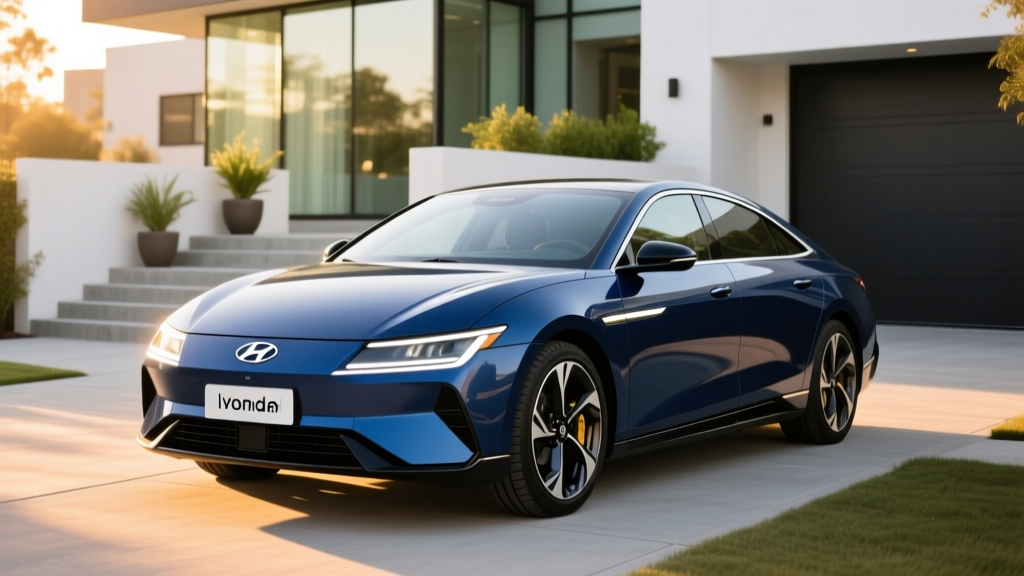
If you've been searching for an Ioniq 6 lease deal, you've likely noticed something unusual: this midsize electric sedan delivers crossover-rivaling range in a package that sips electrons like a compact. Hyundai's second dedicated EV on the E-GMP platform leans hard into aerodynamics — a drag coefficient of just 0.21 Cd — and the result is one of the most efficient long-range EVs sold in America. For 2026, the Ioniq 6 lineup carries over with minor trim adjustments, but the fundamental value proposition remains: 361 miles of EPA-estimated range on the Long Range RWD model, 800V-class DC fast charging, and a starting MSRP that undercuts the Tesla Model 3 Long Range by several thousand dollars.
This review covers everything you need to evaluate a lease or purchase: real-world range expectations, charging speeds across all three levels, interior practicality, §30D tax credit qualification, and how it stacks up against the Model 3, BMW i4, and Polestar 2.
| Spec | SE/SEL Std Range | SE/SEL/Limited Long Range RWD | SE/SEL/Limited Long Range AWD |
|---|---|---|---|
| EPA Range | 240 mi | 361 mi | 316 mi |
| Battery (usable) | 54.0 kWh | 77.4 kWh | 77.4 kWh |
| Chemistry | NMC | NMC | NMC |
| Horsepower | 149 hp | 225 hp | 320 hp |
| 0-60 mph | ~7.5 sec | ~6.2 sec | ~4.5 sec |
| Drivetrain | RWD | RWD | Dual-Motor AWD |
| Max DC Fast Charge | ~175 kW | ~240 kW | ~240 kW |
| 10-80% DCFC Time | ~20 min | ~18 min | ~18 min |
| Level 2 Rate | 10.9 kW | 10.9 kW | 10.9 kW |
| EPA Combined MPGe | 134 MPGe | 140 MPGe | 111 MPGe |
| EPA Efficiency | 25 kWh/100 mi | 24 kWh/100 mi | 30 kWh/100 mi |
Source: EPA / fueleconomy.gov
Real-World Range: What the Sticker Doesn't Tell You
The 361-mile EPA estimate on the Long Range RWD is legitimately excellent — it ties the longest-range non-luxury EVs on the market. But EPA testing cycles favor mixed city/highway driving at moderate temperatures. Here's what to actually expect when you're behind the wheel.
- EPA Sticker: 361 miles
- Real-world highway (70-75 mph, 70°F): ~290-315 miles
- Real-world city/suburban mixed: ~330-350 miles
- Cold weather (20°F, highway, heater on): ~225-260 miles
- AWD model penalty: Subtract ~45 miles from EPA (316 mi sticker, ~255-275 real-world highway)
The Ioniq 6's heat pump (standard on Long Range trims) helps mitigate cold-weather losses compared to EVs without active thermal management, but no EV is immune to winter physics. Lithium-ion batteries lose roughly 15-30% of usable capacity at freezing temperatures, and cabin heating draws significant power. If you live in the upper Midwest or Northeast and plan a 250-mile winter highway drive, you'll want at least one DC fast-charge stop regardless of the sticker number.
The Standard Range model's 240-mile EPA figure is adequate for commuting but tight for road trips. Budget-conscious lessees should carefully assess their longest regular drive before choosing the smaller battery.
Charging Speed: 800V Architecture Makes a Difference
Hyundai's E-GMP platform supports 800V DC fast charging natively — a feature still rare outside the Porsche Taycan and Kia EV6 family. On a 350 kW CCS-capable station (like Electrify America's latest stalls), the Long Range Ioniq 6 peaks near 240 kW and can add 10-80% state of charge in approximately 18 minutes under ideal conditions.
Understanding the charge curve: Peak kW is not sustained kW. The Ioniq 6 holds near its peak rate from roughly 10-55% SoC, then tapers progressively. From 80-100%, charging slows dramatically — expect 30+ additional minutes to go from 80% to full. This is standard behavior for NMC lithium-ion batteries and protects long-term cell health. For road trips, plan stops around the 10-80% window for maximum time efficiency.
| Level | Power (kW) | Miles Added per Hour | Typical Use Case |
|---|---|---|---|
| Level 1 (120V household) | ~1.4 kW | ~4-5 mi/hr | Emergency/overnight trickle |
| Level 2 (240V, 48A) | 10.9 kW | ~38-42 mi/hr | Home/workplace daily charging |
| DC Fast (350 kW stall) | Peak 240 kW | ~600+ mi/hr (peak) | Road trip 10-80% in ~18 min |
| DC Fast (150 kW stall) | ~130 kW sustained | ~350 mi/hr (avg) | 10-80% in ~28 min |
For home Level 2 charging, a full 0-100% session on the Long Range model takes roughly 7.5 hours — easily accomplished overnight. A 48-amp hardwired Level 2 station (like a ChargePoint Home Flex or Emporia V2) on a 60-amp circuit is the optimal setup. Expect $800-$1,500 for installation depending on your panel proximity and local permit requirements.
Connector note: The 2026 Ioniq 6 uses the CCS1 connector for DC fast charging and J1772 for Level 2. Hyundai has not yet transitioned to NACS (Tesla's connector) on this model year. If Tesla Supercharger access is critical to your route planning, you'll need Hyundai's approved CCS-to-NACS adapter for Superchargers that support non-Tesla vehicles — verify compatibility on Hyundai's website before relying on it for a trip.
Performance and Driving Dynamics
The Ioniq 6 isn't positioned as a sports sedan, but the Long Range AWD model's 320 hp and 4.5-second 0-60 time mean it's genuinely quick when you need it. The RWD model at 225 hp is more relaxed — adequate for merging and passing, but not thrilling. The Standard Range RWD at 149 hp is the least energetic, best suited to urban commuters who prioritize efficiency over acceleration.
Ride quality is a standout. The multi-link rear suspension absorbs highway expansion joints with composure that outclasses the Tesla Model 3, which tends toward firmness. Steering is light and accurate rather than communicative — this is a cruiser, not a canyon carver. Road noise is impressively low at 70 mph, aided by the slippery bodywork and acoustic laminated glass on higher trims.
Regenerative braking offers four levels selectable via steering-wheel paddles, including a full one-pedal-driving mode (i-Pedal) that brings the car to a complete stop without touching the brake pedal. The transition between regen and friction braking is smooth — a common pain point in competitors that Hyundai has clearly refined.
Interior Space, Cargo, and Daily Practicality
The Ioniq 6's "streamliner" roofline looks dramatic from the outside, and it does exact a toll on rear headroom compared to a boxier SUV. Here are the key interior dimensions:
- Front headroom: 40.2 inches
- Front legroom: 46.0 inches
- Rear headroom: 37.6 inches (tighter than Ioniq 5's 38.7")
- Rear legroom: 37.8 inches
- Cargo volume (rear seats up): 12.3 cu ft
- Frunk (front trunk): 0.4 cu ft (Long Range) / 1.6 cu ft (Standard Range RWD)
The trunk is the Ioniq 6's most common complaint. At 12.3 cubic feet, it's smaller than a Honda Civic sedan's trunk and significantly less than the Ioniq 5's 27.2 cu ft hatchback area. The frunk on Long Range AWD models is essentially a shallow cubby for charging cables — not usable for groceries. If cargo versatility matters, the Ioniq 5, Kia EV6, or Ford Mustang Mach-E are meaningfully more practical.
Up front, the dual 12.3-inch curved displays (instrument cluster and infotainment) run Hyundai's latest software with wireless Apple CarPlay and Android Auto. Physical buttons for climate control are a welcome carry-over. The center console bridge design creates a flat floor and a usable lower storage shelf. Available features on the Limited trim include a panoramic sunroof, Bose premium audio, digital key (phone-as-key via NFC/UWB), and Hyundai's Digital Side Mirrors (camera-based, availability varies by state).
Pricing, Lease Deals, and the §30D Tax Credit Question
The 2026 Ioniq 6 lineup breaks down across five trims. Pricing below reflects MSRP before destination charges (~$1,195):
| Trim | MSRP | Battery | §30D Credit Eligible? | Effective Price (if eligible) |
|---|---|---|---|---|
| SE Standard Range | $38,650 | 54.0 kWh | Likely partial* | ~$34,900 |
| SEL Standard Range | $41,900 | 54.0 kWh | Likely partial* | ~$38,150 |
| SE Long Range | $43,500 | 77.4 kWh | Check sourcing† | ~$39,750 |
| SEL Long Range | $46,750 | 77.4 kWh | Check sourcing† | ~$43,000 |
| Limited Long Range | $52,600 | 77.4 kWh | Check sourcing† | ~$48,850 |
*Standard Range note: The 54 kWh battery may qualify for only the $3,750 battery-component half of the credit if critical-mineral sourcing requirements are partially met. Verify current eligibility on IRS.gov §30D guidance before signing.
†Long Range sourcing note: The 77.4 kWh pack's critical-mineral and battery-component sourcing determines whether you receive the full $7,500, partial $3,750, or no credit. These requirements tighten annually. Hyundai has worked to localize supply chains, but eligibility can change mid-year. Confirm with your dealer and cross-reference the IRS eligible-vehicle list at the time of delivery.
Buyer income caps (2026): Modified AGI must not exceed $150,000 (single), $225,000 (head of household), or $300,000 (joint). The credit is non-refundable but can now be transferred to the dealer as a point-of-sale discount under §30D(g).
Lease-specific advantage: If you lease rather than buy, the §30D income and MSRP caps do not apply to you directly. Instead, the leasing company (the legal owner) claims a commercial clean vehicle credit under §45W and typically passes the savings through as a reduced money factor or capitalized-cost reduction. Hyundai has historically offered aggressive lease cash on the Ioniq 6 — check HyundaiUSA.com's current offers for your ZIP code. A $7,500 lease cash incentive effectively makes even the Limited trim accessible at a SEL-level monthly payment.
How It Compares: Ioniq 6 vs. the Competition
The midsize electric sedan segment is crowded. Here's how the Ioniq 6 Long Range RWD stacks up against its three most common cross-shops:
| Metric | Ioniq 6 LR RWD | Tesla Model 3 LR AWD | BMW i4 eDrive40 | Polestar 2 LR SM |
|---|---|---|---|---|
| EPA Range | 361 mi | 341 mi | 307 mi | 320 mi |
| Efficiency | 24 kWh/100mi | 25 kWh/100mi | 31 kWh/100mi | 27 kWh/100mi |
| Max DCFC | ~240 kW | ~250 kW | ~205 kW | ~205 kW |
| 0-60 mph | 6.2 sec | 4.2 sec | 5.5 sec | 5.9 sec |
| Base MSRP | $43,500 | $47,740 | $57,900 | $51,300 |
| Cargo | 12.3 cu ft | 23 cu ft (hatch) | 16.6 cu ft (hatch) | 14.4 cu ft (hatch) |
| §30D Credit | Partial/Full* | Full $7,500 | $0 (MSRP cap) | $0 (MSRP cap) |
- Choose the Ioniq 6 if: Maximum range and efficiency are your top priorities, you prefer a comfortable cruiser over a sport-sedan feel, and you want a sub-$45K starting price with potential tax-credit savings.
- Choose the Model 3 if: You need hatchback cargo versatility, rely on the Tesla Supercharger network, want the fastest acceleration in this price bracket, or prioritize over-the-air feature updates.
- Choose the BMW i4 if: Build quality and brand cachet matter, you value a traditional luxury dealership experience, and budget is less of a constraint.
- Choose the Polestar 2 if: You want Scandinavian design, Google Built-in infotainment, and a hatchback form factor with a distinctive, under-the-radar presence.
Warranty, Reliability, and Long-Term Ownership
Hyundai's EV warranty coverage is among the strongest in the industry:
- Battery & drive unit: 10 years / 100,000 miles (whichever comes first)
- New vehicle limited: 5 years / 60,000 miles
- Roadside assistance: 5 years / unlimited miles
- Complimentary maintenance: 3 years / 36,000 miles (oil changes aren't relevant, but this covers tire rotations, fluid top-offs, and inspections)
The battery warranty guarantees the 77.4 kWh pack will retain at least 70% of its original capacity over the 10-year/100,000-mile term. Based on data from the Ioniq 5 and Kia EV6 (which share the E-GMP platform and NMC cells), real-world degradation after 100,000 miles typically falls in the 8-12% range under normal use — well within the warranty buffer. The Ioniq 6's liquid-cooled thermal management system actively conditions the battery during DC fast charging and extreme temperatures, which is the single most important factor in long-term cell health.
- Class-leading 361-mile EPA range on Long Range RWD
- 140 MPGe combined — among the most efficient EVs sold
- 800V fast charging: 10-80% in ~18 minutes
- Comfortable, quiet highway ride quality
- Competitive starting MSRP with strong lease incentives
- 10-year/100,000-mile battery warranty
- Physical climate buttons and CarPlay/Android Auto
- Trunk is only 12.3 cu ft — smaller than most compact sedans
- Sloping roofline reduces rear headroom for taller passengers
- CCS connector requires adapter for Tesla Superchargers
- Standard Range model's 240-mile range limits road-trip utility
- No front wiper on rear window (visibility in rain)
- Full §30D credit eligibility depends on evolving sourcing rules
Who Should Lease the Ioniq 6?
Ideal for: Commuters covering 30-80 miles daily who want to charge once or twice a week at home. The Long Range RWD model's efficiency means your electricity cost per mile is roughly $0.04-$0.06 depending on your utility rate (assuming $0.13/kWh national average). It's also well-suited to couples or small families who don't regularly haul bulky cargo and who take road trips within the 250-300 mile single-charge comfort zone.
Look elsewhere if: You need SUV-level cargo space, regularly carry three adults in the rear seat, tow anything (the Ioniq 6 is not rated for towing), or live in a region with sparse DC fast-charging infrastructure where CCS-only access is a limitation.
Frequently Asked Questions
What is the real-world range of the Ioniq 6?
The EPA rates the Long Range RWD at 361 miles, but expect roughly 290-315 miles on sustained highway driving at 70-75 mph in mild weather, and 225-260 miles in freezing conditions with cabin heat. City and suburban driving with regenerative braking recovers more energy, pushing closer to the EPA number at ~330-350 miles.
How fast does the Ioniq 6 charge at home and on the road?
On a Level 2 home charger (240V, 48A), the Long Range model charges at 10.9 kW, adding about 40 miles of range per hour — a full charge takes roughly 7.5 hours overnight. On a 350 kW DC fast charger, it peaks near 240 kW and reaches 10-80% in approximately 18 minutes under ideal battery-temperature conditions.
Does the Ioniq 6 qualify for the $7,500 federal EV tax credit?
Eligibility depends on battery-critical-mineral sourcing and component manufacturing requirements under IRS §30D rules, which tighten annually. The Ioniq 6's MSRP (under the $55,000 sedan cap) and Hyundai's localization efforts make partial or full credit possible, but you must verify on the IRS eligible-vehicle list at the time of purchase. If you lease, the §30D caps don't apply to you — the leasing entity claims a commercial credit and may pass savings through as reduced lease payments.
Is it worth buying vs. the Tesla Model 3?
The Ioniq 6 wins on EPA range (361 vs. 341 mi), efficiency (140 vs. 134 MPGe), and starting price ($43,500 vs. $47,740). The Model 3 wins on cargo space (hatchback vs. trunk), Supercharger network access, performance (4.2s 0-60 AWD), and software ecosystem. If range-per-dollar and ride comfort top your list, the Ioniq 6 is the stronger value. If cargo versatility and charging-network convenience are non-negotiable, the Model 3 remains the safer bet.
What are the biggest drawbacks of the Ioniq 6?
The trunk (12.3 cu ft) is unusually small for a midsize sedan, rear headroom is compromised by the sloping roof, and the CCS connector requires an adapter for Tesla Supercharger access. The Standard Range model's 240-mile EPA range is limiting for road trips, and full federal tax credit eligibility is not guaranteed due to evolving battery-sourcing rules.
What battery chemistry does the Ioniq 6 use?
All 2026 Ioniq 6 models use NMC (nickel-manganese-cobalt) lithium-ion cells. NMC offers higher energy density than LFP (lithium iron phosphate), which is how Hyundai achieves 361 miles in a relatively compact sedan. The trade-off is that NMC cells are best charged to 80% for daily use (reserving 100% for road trips) to maximize long-term longevity — the car's built-in charge-limit setting makes this easy.