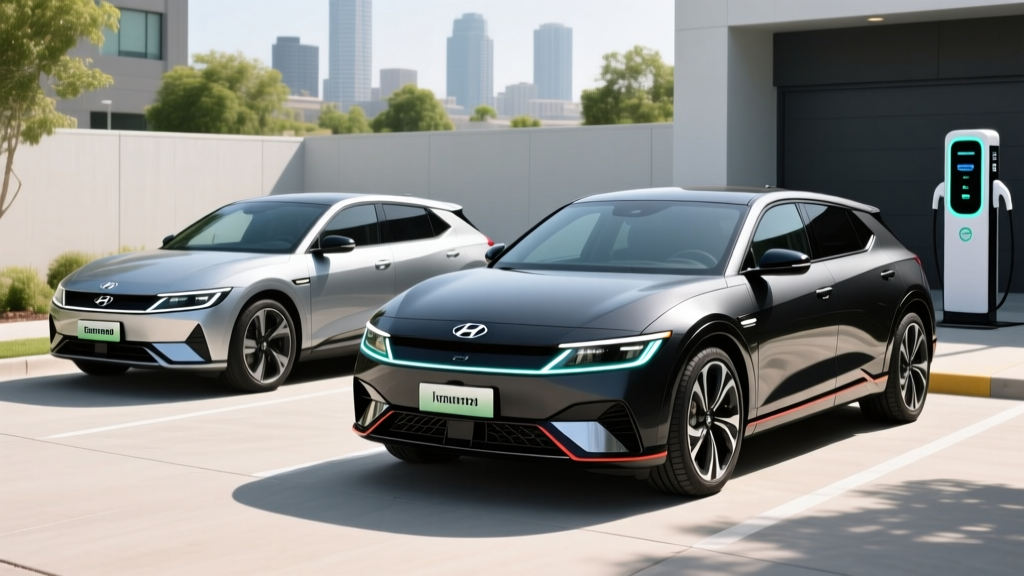
The Hyundai Ioniq 5 remains one of the most compelling electric crossovers on the market, but with four distinct trim levels for 2026, choosing the right configuration requires careful analysis of range, charging speed, performance, and pricing. This guide breaks down every 2026 Ioniq 5 trim level with the exact numbers buyers need to make an informed decision.
2026 Ioniq 5 Trim Lineup at a Glance
Hyundai offers the 2026 Ioniq 5 in four primary trims: SE Standard Range, SE, SEL, and Limited. The N performance variant sits above the lineup as a separate model. Each trim offers distinct battery sizes, drivetrain options, and feature sets that meaningfully affect daily usability and total cost of ownership.
| Specification | SE Standard Range | SE / SEL (RWD) | SE / SEL / Limited (AWD) | Ioniq 5 N |
|---|---|---|---|---|
| Base MSRP | $42,600 | $47,100 / $49,600 | $50,600 / $53,100 / $58,200 | $67,700 |
| Battery (usable kWh) | 58 kWh (LFP) | 77.4 kWh (NMC) | 77.4 kWh (NMC) | 84 kWh (NMC) |
| EPA Range | 240 mi | 310 mi | 280 mi | 221 mi |
| Drivetrain | RWD | RWD | Dual-motor AWD | Dual-motor AWD |
| Horsepower | 168 hp | 225 hp | 320 hp | 641 hp (N Grin Boost) |
| 0-60 mph | 7.4 sec | 7.0 sec | 4.5 sec | 3.25 sec |
| Max DC Fast Charge | 150 kW | 240 kW | 240 kW | 240 kW |
| 10-80% DCFC Time | ~22 min | ~18 min | ~18 min | ~18 min |
| Level 2 Home Charge | 7.2 kW (~24 mi/hr) | 10.9 kW (~36 mi/hr) | 10.9 kW (~36 mi/hr) | 10.9 kW (~36 mi/hr) |
| MPGe (combined) | 114 MPGe | 117 MPGe | 101 MPGe | 85 MPGe |
| kWh/100 mi | 29 | 29 | 33 | 40 |
Real-World Range: What the EPA Sticker Doesn't Tell You
EPA vs. Real-World Range Expectations
The 77.4 kWh RWD models carry an EPA rating of 310 miles, but sustained highway driving at 70-80 mph typically yields 250-275 miles in mild conditions. In cold weather (below 32°F), expect a 20-30% reduction, bringing usable range to approximately 200-240 miles before needing to charge.
The Standard Range model's 240-mile EPA rating translates to roughly 190-210 miles highway in moderate temps and 160-185 miles in freezing conditions. The AWD trims at 280 miles EPA deliver approximately 230-250 miles highway and 185-215 miles in cold weather.
Source: EPA Fuel Economy
The Ioniq 5's 800V architecture gives it a meaningful advantage when range does run low — provided you can access a 350 kW-capable DC fast charger. More on charging infrastructure compatibility below.
Charging Performance: 800V Architecture in Practice
Hyundai's E-GMP platform supports 800V DC fast charging, which allows the long-range trims to accept up to 240 kW at compatible stations. However, peak charge rate is not sustained throughout the session — understanding the charge curve matters for trip planning.
| Charging Method | Power / Rate | Miles Added per Hour | Notes |
|---|---|---|---|
| Level 1 (120V household) | 1.4 kW | ~4-5 mi/hr | Emergency/trickle only |
| Level 2 (240V home, 48A) | 10.9 kW | ~36 mi/hr | Full charge overnight (~8 hrs for 77.4 kWh) |
| DC Fast Charge (Standard Range) | Peak 150 kW | ~480 mi/hr (peak) | 10-80% in ~22 min; tapers above 80% |
| DC Fast Charge (Long Range) | Peak 240 kW | ~790 mi/hr (peak) | 10-80% in ~18 min; requires 350 kW station |
| DC Fast Charge (N) | Peak 240 kW | ~790 mi/hr (peak) | Preconditioning critical for max speed |
Charging curve reality: The 240 kW peak rate holds from roughly 10-55% State of Charge, then tapers progressively. From 80-100%, charging slows dramatically to protect battery health — adding that final 20% can take as long as the first 70%. For road trips, plan stops around the 10-80% window for optimal time efficiency.
Preconditioning matters: The Ioniq 5 will precondition its battery when a DC fast charger is entered into the navigation system, warming the pack for maximum charge acceptance. Arriving at a charger without preconditioning — especially in cold weather — can reduce peak charge rates by 40-60%.
The Standard Range trim's LFP battery charges at a lower peak rate (150 kW) but offers a practical advantage: LFP chemistry tolerates regular 100% charging without the degradation concerns associated with NMC packs. Hyundai recommends daily charging to 80% for NMC trims but permits 100% for the LFP Standard Range model.
Battery Chemistry: LFP vs. NMC Trade-offs by Trim
The 2026 Ioniq 5 lineup uses two distinct battery chemistries, each with meaningful ownership implications:
| Factor | LFP (SE Standard Range) | NMC (SE, SEL, Limited, N) |
|---|---|---|
| Usable Capacity | 58 kWh | 77.4 kWh / 84 kWh (N) |
| Energy Density | Lower (heavier per kWh) | Higher (more range in same space) |
| Cycle Life | 3,000+ cycles | 1,500-2,000 cycles |
| Daily Charge Recommendation | 100% acceptable | 80% recommended for longevity |
| Cold-Weather Performance | Greater range loss in cold | Better cold-weather retention |
| Cost | Lower (reflected in trim pricing) | Higher |
| Thermal Stability | Superior (lower fire risk) | Good (requires active management) |
For buyers who can charge at home nightly and drive fewer than 180 miles daily, the Standard Range LFP trim offers excellent long-term battery longevity. For road-trippers and those without reliable daily charging access, the 77.4 kWh NMC trims provide the range buffer needed for flexibility.
Trim-by-Trim Breakdown: Which Ioniq 5 Fits Your Needs?
SE Standard Range ($42,600)
The value entry point. You get the 58 kWh LFP battery, RWD, 168 hp, and the same core infotainment and safety suite as higher trims. Standard features include the 12.3-inch dual displays, Hyundai SmartSense (forward collision avoidance, lane-keeping, blind-spot monitoring), and the NACS charge port (native Tesla Supercharger compatibility without an adapter).
Best for: Budget-conscious commuters with home charging who drive under 160 miles daily and want maximum battery longevity.
SE ($47,100) and SEL ($49,600)
Both trims share the 77.4 kWh NMC battery, 225 hp RWD powertrain, and 310-mile EPA range. The SEL adds heated front seats, leatherette upholstery, a power-adjustable driver's seat, and wireless phone charging. AWD is available on both for $3,500 additional, dropping range to 280 miles but adding the 320 hp dual-motor setup.
Best for: Most buyers. The SE RWD offers the best range-to-price ratio in the lineup. The SEL's comfort upgrades justify the $2,500 premium for daily drivers.
Limited ($58,200)
The premium trim is AWD-only and includes ventilated front seats, a panoramic fixed glass roof, Bose premium audio, a head-up display with augmented reality navigation, Highway Driving Assist 2 (HDA2 with lane-change assist), Remote Smart Parking Assist, and a vehicle-to-load (V2L) adapter for powering external devices up to 3.6 kW.
Best for: Tech-forward buyers who want the full feature suite and don't mind the range trade-off for AWD and premium amenities.
Ioniq 5 N ($67,700)
The performance outlier. The N variant features an 84 kWh battery, 641 hp with N Grin Boost, simulated gear shifts, N-specific suspension tuning, and track-oriented thermal management. Range drops to 221 miles EPA. This is a driver's car that happens to be electric, not an efficiency play.
Best for: Enthusiasts who prioritize driving dynamics over range and efficiency. Not a rational commuter choice.
Federal Tax Credit and Pricing After Incentives
| Trim | Base MSRP | §30D Credit Potential | Effective Price | MSRP Cap Status |
|---|---|---|---|---|
| SE Standard Range | $42,600 | Up to $7,500 | ~$35,100 | Under $80,000 SUV cap ✓ |
| SE RWD | $47,100 | Up to $7,500 | ~$39,600 | Under $80,000 SUV cap ✓ |
| SEL RWD | $49,600 | Up to $7,500 | ~$42,100 | Under $80,000 SUV cap ✓ |
| Limited AWD | $58,200 | Up to $7,500 | ~$50,700 | Under $80,000 SUV cap ✓ |
| Ioniq 5 N | $67,700 | Up to $7,500 | ~$60,200 | Under $80,000 SUV cap ✓ |
Critical eligibility requirements under IRS §30D (2026 rules):
- Buyer income caps: Modified AGI must not exceed $150,000 (single), $225,000 (head of household), or $300,000 (joint filers)
- MSRP cap: Vehicle must be under $80,000 for SUVs — all Ioniq 5 trims qualify
- Battery sourcing: A percentage of critical minerals and battery components must be sourced from the U.S. or free-trade-agreement countries. These thresholds increase annually. Verify current-year compliance at IRS.gov
- Point-of-sale transfer: The credit can be transferred to the dealer at purchase, reducing your out-of-pocket cost immediately rather than waiting for tax filing
Hyundai assembles the Ioniq 5 at the Hyundai Motor Group Metaplant in Georgia, satisfying the North American final assembly requirement. However, battery-sourcing compliance varies by model year and production batch. Always verify current eligibility using the IRS VIN-lookup tool before purchase, and consult a tax professional for your specific situation.
Cargo Space, Interior, and Practicality
The Ioniq 5's flat-floor E-GMP platform delivers genuinely usable interior volume that competes with midsize SUVs despite its compact-crossover footprint:
- Cargo behind rear seats: 27.2 cu ft
- Cargo with rear seats folded: 59.3 cu ft
- Front trunk (frunk): 0.85 cu ft (RWD) / 0.42 cu ft (AWD) — enough for a charging cable bag, not luggage
- Rear legroom: 39.4 inches — class-leading for the segment
- Front headroom: 39.6 inches
- Wheelbase: 118.1 inches (longer than the Tucson, enabling the spacious cabin)
The flat floor and sliding center console (on SEL and Limited) make the rear seat exceptionally comfortable for adults. The V2L feature on the Limited trim transforms the Ioniq 5 into a mobile power source — useful for camping, tailgating, or emergency backup power for small appliances.
Warranty Coverage
Hyundai backs the Ioniq 5 with one of the strongest warranty packages in the EV market:
- Battery: 10 years / 100,000 miles (retains minimum 70% capacity under warranty)
- Powertrain: 10 years / 100,000 miles
- New vehicle limited: 5 years / 60,000 miles
- Anti-perforation: 7 years / unlimited miles
- Roadside assistance: 5 years / unlimited miles
The 10-year battery warranty is transferable to the second owner, which supports resale value. The 70% capacity retention threshold is industry-standard — if your 77.4 kWh pack drops below approximately 54 kWh of usable capacity within the warranty period, Hyundai will repair or replace it.
How Does the Ioniq 5 Compare to Key Competitors?
Ioniq 5 Advantages
- 800V charging architecture (10-80% in 18 min at 350 kW stations)
- Native NACS port — Tesla Supercharger access without adapter
- Standard-range LFP option for budget and longevity
- V2L capability (Limited trim)
- 10-year/100,000-mile battery warranty
- Class-leading rear legroom
Ioniq 5 Drawbacks
- Frunk is nearly useless (under 1 cu ft)
- No rear wiper (visibility issue in rain/snow)
- Infotainment learning curve; capacitive touch controls
- AWD range penalty is significant (310 → 280 mi)
- Limited availability of 350 kW chargers in many regions
- Insurance premiums run 15-25% above comparable gas crossovers
Versus the Tesla Model Y: The Model Y offers a more mature Supercharger network (though the gap is closing with NACS adoption), a larger frunk, and slightly more cargo volume. The Ioniq 5 counters with faster peak charging, a more comfortable ride, better rear-seat space, and a significantly longer battery warranty.
Versus the Ford Mustang Mach-E: The Mach-E Extended Range AWD offers comparable range (290 mi EPA) and similar pricing. The Ioniq 5 charges faster on paper (240 kW vs. 150 kW peak) and offers the LFP Standard Range option. The Mach-E has a more usable frunk and a sportier driving feel in non-N trims.
Versus the Kia EV6: The EV6 shares the E-GMP platform and nearly identical powertrain specs. The Ioniq 5 offers more rear headroom and cargo volume; the EV6 has a slightly sportier exterior design and marginally faster 10-80% times in some tests. Choose based on styling preference and dealer proximity.
Who Should Buy the 2026 Ioniq 5?
Choose the Ioniq 5 SE Standard Range if: You have reliable home charging, commute under 160 miles daily, want the lowest entry price, and prioritize long-term battery health over maximum range.
Choose the Ioniq 5 SE or SEL RWD if: You want the best range-to-price ratio, take occasional road trips, and don't need AWD. The SE RWD at ~$39,600 after tax credit is the value sweet spot of the entire lineup.
Choose the Ioniq 5 SEL or Limited AWD if: You live in a climate with snow and ice, need the 320 hp dual-motor performance, or want the premium tech suite (Limited). Accept the 30-mile range penalty as the cost of all-weather capability.
Choose the Ioniq 5 N if: You're an enthusiast who wants a daily-drivable performance EV and range is a secondary concern. This is a niche product and should be cross-shopped with the Tesla Model 3 Performance and Porsche Macan Electric.
Look elsewhere if: You need three rows of seating (consider the Kia EV9), require over 350 miles of range (look at the Lucid Air or Tesla Model S), or tow frequently (the Ioniq 5 is not rated for towing in the U.S. market).
Frequently Asked Questions
What is the real-world range of the 2026 Ioniq 5?
The EPA rates the long-range RWD models at 310 miles, but expect 250-275 miles in real-world highway driving and 200-240 miles in cold weather. The Standard Range model delivers approximately 190-210 miles highway in moderate conditions.
How fast does the Ioniq 5 charge at home and on the road?
On a Level 2 home charger (240V, 48A), the long-range trims charge at 10.9 kW, adding roughly 36 miles of range per hour — a full charge takes about 8 hours. On a 350 kW DC fast charger, the 77.4 kWh models peak at 240 kW and charge from 10-80% in approximately 18 minutes. The Standard Range model peaks at 150 kW with a 10-80% time of about 22 minutes.
Does the 2026 Ioniq 5 qualify for the federal EV tax credit?
All Ioniq 5 trims fall under the $80,000 SUV MSRP cap and are assembled in Georgia, meeting the North American assembly requirement. Eligibility for the full $7,500 credit depends on your income (under $150K single / $300K joint), battery-sourcing compliance for the specific production batch, and the credit's availability under current IRS rules. Verify at IRS.gov and use the VIN-lookup tool before purchasing.
Is the Ioniq 5 worth buying over the Tesla Model Y?
The Ioniq 5 offers faster peak charging, a longer battery warranty (10 years vs. 8), more rear-seat legroom, and V2L capability. The Model Y counters with a larger cargo area, more established service network, and generally lower insurance costs. With native NACS on the 2026 Ioniq 5, the Supercharger access advantage Tesla once held is largely eliminated.
What are the biggest drawbacks of the Ioniq 5?
The frunk is impractically small (under 1 cu ft), there's no rear wiper, the infotainment system relies heavily on capacitive touch controls that can be distracting while driving, and AWD trims take a meaningful 30-mile range penalty. Insurance costs also run higher than comparable gas crossovers.
Can I charge the Ioniq 5 at Tesla Superchargers?
Yes. The 2026 Ioniq 5 comes equipped with a native NACS charge port, providing direct access to Tesla's Supercharger network without requiring an adapter. This significantly expands the available DC fast-charging infrastructure for road trips.
How long will the Ioniq 5 battery last?
Hyundai warranties the battery for 10 years or 100,000 miles with a 70% capacity retention threshold. Real-world data from early Ioniq 5 owners and similar E-GMP vehicles suggests NMC packs retain approximately 90-93% capacity after 50,000 miles with proper charging habits (avoiding frequent 100% charges and extreme heat exposure). The LFP Standard Range pack is expected to show even slower degradation due to LFP's superior cycle life.
Specifications sourced from fueleconomy.gov, Hyundai Motor America, and IRS guidance at irs.gov. Pricing and tax credit rules reflect 2026 model-year data and are subject to change. Always verify eligibility and final pricing with your dealer and a qualified tax professional before purchase.