Quick Verdict: The Ioniq 5 Limited at a Glance
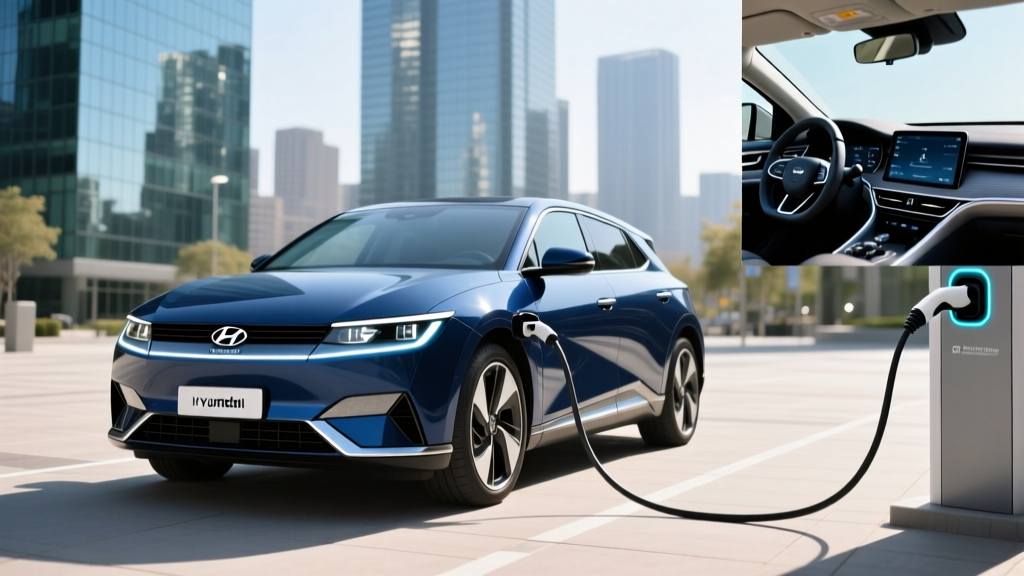
The 2026 Hyundai Ioniq 5 Limited remains the top-trim electric crossover for buyers who want a near-luxury cabin, 800V ultra-fast charging, and genuinely usable range — without stepping into six-figure territory. Built at Hyundai's Metaplant America facility in Georgia, the Limited trim bundles dual-motor AWD, a full ADAS suite, and premium amenities like ventilated seats and a digital side-mirror system. At $53,850 before destination, it undercuts comparable trims from BMW, Mercedes, and even the Tesla Model Y Long Range AWD on price, while delivering competitive real-world efficiency and one of the fastest DC fast-charge curves in the segment.
But the Limited trim's weight and equipment load come with trade-offs: slightly lower MPGe than the lighter SEL RWD, and a real-world highway range that falls short of the EPA sticker. Below, we break down every number that matters for a purchase decision.
| Spec | Value |
|---|---|
| EPA Range | 290 miles (AWD) |
| Battery (Usable) | 84.0 kWh, NMC lithium-ion |
| Drivetrain | Dual-motor AWD |
| Horsepower / Torque | 320 hp / 446 lb-ft |
| 0-60 mph | 4.5 seconds |
| Max DC Fast Charge | 240 kW (peak) |
| 10-80% DC Charge Time | ~18 minutes (ideal conditions) |
| Level 2 Charge Rate | 10.9 kW (~37 mi/hr) |
| MPGe (Combined) | 110 MPGe |
| Efficiency | 31 kWh/100 mi |
| Cargo Volume | 27.2 cu ft (rear seats up) / 59.3 cu ft (folded) |
| Rear Legroom | 39.4 inches |
| Base MSRP (Limited AWD) | $53,850 + $1,395 destination |
| Battery Warranty | 10 years / 100,000 miles |
| Vehicle Warranty | 5 years / 60,000 miles |
Range and Efficiency: EPA vs. Real World
The EPA rates the 2026 Ioniq 5 Limited AWD at 290 miles of combined range. That figure reflects the 84.0 kWh usable battery capacity paired with the dual-motor AWD powertrain's 31 kWh/100 mi energy consumption. The lighter SEL and XRT trims with RWD push past 310 miles, but the Limited's added weight (4,894 lbs curb) and standard 20-inch alloy wheels reduce the sticker number.
- EPA Sticker: 290 miles
- Mixed driving (city/suburban, 65°F): ~270-285 miles
- Sustained highway (75 mph, 70°F): ~245-260 miles
- Cold weather (20°F, cabin heat on): ~200-230 miles (25-30% reduction typical for NMC packs without aggressive preconditioning)
- Towing (max 2,300 lbs rated): ~170-190 miles — not a tow-friendly EV for long hauls
The Ioniq 5's heat pump (standard on the Limited) helps mitigate cold-weather losses compared to EVs without one. However, NMC chemistry is inherently less cold-tolerant than LFP at low states of charge. Plan charging stops accordingly in winter.
Efficiency-wise, the Limited's 110 MPGe combined (per fueleconomy.gov) trails the RWD trims' 117 MPGe but remains competitive with the Ford Mustang Mach-E AWD (105 MPGe) and ahead of the Subaru Solterra (102 MPGe). In practical terms, expect to use roughly 31 kWh per 100 miles of mixed driving — translating to about $0.045-$0.055 per mile on home Level 2 charging at the national average of $0.16/kWh.
Charging Speed: 800V Architecture Delivers
Hyundai's E-GMP platform runs on an 800V native architecture, which is the Ioniq 5's single biggest charging advantage over competitors still using 400V systems. This allows the Limited to accept up to 240 kW peak at a compatible DC fast charger — though sustained rates tell a more nuanced story.
| Charging Level | Power | Speed / Time | Notes |
|---|---|---|---|
| Level 1 (120V household) | 1.4 kW | ~5 mi/hr | Emergency/trickle only; full charge in 60+ hours |
| Level 2 (240V home/public) | 10.9 kW | ~37 mi/hr; full charge in ~8.5 hrs | Requires 48A dedicated circuit (60A breaker) |
| DC Fast Charge (peak) | 240 kW | 10-80% in ~18 min | Requires 350 kW-capable station; battery preconditioned |
| DC Fast Charge (50 kW station) | 50 kW | 10-80% in ~65 min | Common older infrastructure |
| NACS / Tesla Supercharger | Up to 240 kW | Varies by station | Native NACS port on 2026 models; no adapter needed |
The charge curve reality: The Ioniq 5 hits its 240 kW peak between roughly 10-45% state of charge, then tapers progressively. Expect an average sustained rate of ~150-170 kW across the full 10-80% session. That taper is why the 18-minute claim holds under ideal conditions — but a cold battery without preconditioning can add 5-8 minutes. The vehicle's navigation system will automatically precondition the battery when you route to a DC fast charger, a feature that matters significantly in cold climates.
For home charging, the 10.9 kW onboard charger is generous. A full overnight session from 20% to 100% takes about 8.5 hours — easily within a single night's parking window. Installation of a 48-amp Level 2 home charger typically costs $800-$2,000 depending on your electrical panel's capacity and the run length to your garage. Homes with older 100-amp panels may need a $1,500-$3,000 service upgrade to support a dedicated 60-amp circuit.
Performance and Driving Dynamics
The Limited's dual-motor AWD powertrain produces 320 horsepower and 446 lb-ft of torque, launching the 4,894-lb crossover to 60 mph in 4.5 seconds. That's quick enough for confident highway merging and genuinely engaging on back roads, though it trails the Ioniq 5 N (640 hp, 3.3 sec) by a wide margin. Hyundai does not offer a single-motor RWD option for the Limited trim — AWD is standard.
Driving dynamics benefit from the E-GMP platform's low center of gravity and multi-link rear suspension. The steering is communicative by EV crossover standards, and regenerative braking offers four levels adjustable via steering-wheel paddles — including a true one-pedal driving mode (i-Pedal) that brings the car to a complete stop without touching the brake pedal.
Ride quality on the Limited's standard 20-inch wheels is firm but controlled. Road noise is well-isolated at highway speeds, aided by acoustic laminated glass on the front windows. The Limited trim adds an electronically controlled suspension with adaptive dampers, smoothing out rough pavement noticeably better than the base SE's passive setup.
Interior, Cargo, and Technology
The Ioniq 5 Limited's cabin is one of the most spacious in the compact electric crossover segment. Rear legroom measures 39.4 inches — enough for adults on long trips — and the flat floor (no transmission tunnel) makes the middle seat genuinely usable. Cargo volume behind the rear seats is 27.2 cubic feet, expanding to 59.3 cubic feet with the 60/40 split rear seats folded. The front trunk (frunk) adds 0.85 cubic feet on AWD models — enough for charging cables and a small bag, but far less than a Mustang Mach-E's 4.7 cu ft frunk.
The Limited trim's tech highlights:
- Dual 12.3-inch displays — instrument cluster and infotainment in a single curved glass panel
- Digital side mirrors (camera-based) — reduces blind spots and drag, though some drivers prefer traditional mirrors
- Augmented-reality head-up display — projects navigation arrows and ADAS alerts onto the windshield
- Hyundai Digital Key 2 — use your phone or NFC card as the key; share access with family members
- Vehicle-to-Load (V2L) — power laptops, appliances, or camping gear via interior and exterior 120V outlets (up to 3.6 kW output)
- Highway Driving Assist 2 (HDA 2) — adaptive cruise with lane centering and automatic lane change assist (SAE Level 2)
Notable drawbacks: The Limited's touch-capacitive climate controls lack physical buttons, which frustrates some drivers when making adjustments on the move. Wireless Apple CarPlay and Android Auto are standard, but the infotainment system can lag slightly when navigating between heavy map and media tasks. Rear visibility is compromised by the thick C-pillars — the surround-view camera helps, but it's a design trade-off.
Pricing, Tax Credits, and Total Cost
The 2026 Ioniq 5 Limited AWD starts at $53,850, plus a $1,395 destination charge, bringing the total to $55,245 before options or incentives. Hyundai offers the Limited in a single well-equipped configuration — there are no major option packages to add, though premium paint colors add $450.
| Item | Amount |
|---|---|
| Base MSRP (Limited AWD) | $53,850 |
| Destination Charge | $1,395 |
| Premium Paint (optional) | $0 - $450 |
| Total Before Credits | $55,245 - $55,695 |
| Federal §30D Tax Credit (if eligible) | Up to $7,500 (point-of-sale) |
| Effective Price (with full credit) | $47,745 - $48,195 |
Federal tax credit eligibility — critical details: Because the 2026 Ioniq 5 is assembled at Hyundai's Metaplant America in Ellabell, Georgia, it qualifies as a domestically manufactured EV under IRS §30D rules. However, the full $7,500 credit depends on several buyer and vehicle criteria:
- MSRP cap: The Ioniq 5 Limited ($53,850) falls under the $80,000 SUV/truck cap — passes this test.
- Buyer income cap: Modified AGI must not exceed $150,000 (single), $225,000 (head of household), or $300,000 (joint filers).
- Battery sourcing: Critical minerals and battery component requirements phase in annually. For 2026, a percentage of critical minerals must be sourced from the U.S. or FTA partners, and battery components must be manufactured/assembled in North America. Hyundai has been progressively shifting supply chains to meet these thresholds — confirm current-year eligibility with your dealer at the time of purchase, as sourcing can change mid-year.
- Point-of-sale transfer: You can transfer the credit to the dealer at purchase, reducing the purchase price directly rather than waiting to claim it on your tax return.
State and local incentives vary widely and are not covered here. Check your state's energy office or the Alternative Fuels Data Center for current regional programs.
Warranty, Ownership Costs, and Longevity
Hyundai backs the Ioniq 5 with one of the strongest warranty packages in the EV market:
- Battery: 10 years / 100,000 miles (capacity retention threshold: 70% of original capacity)
- Powertrain: 10 years / 100,000 miles
- New vehicle: 5 years / 60,000 miles bumper-to-bumper
- Roadside assistance: 5 years / unlimited miles
- Complimentary maintenance: 3 years / 36,000 miles (oil changes don't apply, but tire rotations, inspections, and fluid top-offs are covered)
Long-term battery degradation on the Ioniq 5's NMC pack has been moderate based on early fleet data. Expect approximately 8-12% capacity loss over 100,000 miles under normal use patterns — meaning a 290-mile new battery would retain roughly 255-265 miles of range at the 100K mark. Avoiding habitual DC fast charging above 80% and frequent deep discharges below 10% will extend longevity. The 800V system's thermal management is robust, which helps mitigate heat-related degradation in hot climates.
Insurance costs for the Limited trim run 15-25% higher than a comparable gas-powered Tucson Limited, based on national averages — a common EV ownership reality driven by higher repair costs for aluminum panels and sensor-laden bumpers. Budget roughly $1,800-$2,400 annually depending on your state and driving record.
How It Stacks Up: Ioniq 5 Limited vs. Key Competitors
| Spec | Hyundai Ioniq 5 Limited AWD | Tesla Model Y LR AWD | Ford Mach-E Premium AWD |
|---|---|---|---|
| EPA Range | 290 mi | 320 mi | 290 mi |
| Battery | 84 kWh NMC | 78.1 kWh NMC | 91 kWh NMC |
| Max DC Charge | 240 kW | 250 kW | 150 kW |
| 10-80% Time | ~18 min | ~20 min | ~36 min |
| 0-60 mph | 4.5 sec | 4.8 sec | 5.1 sec |
| MPGe (Combined) | 110 | 122 | 101 |
| Cargo (behind rear) | 27.2 cu ft | 30.2 cu ft | 29.7 cu ft |
| MSRP (top AWD) | $53,850 | $52,490 | $54,975 |
| Battery Warranty | 10yr/100K | 8yr/120K | 8yr/100K |
- Choose the Ioniq 5 Limited if: You prioritize ultra-fast DC charging for road trips, want the longest battery warranty in the segment, value V2L capability, and prefer a more traditional dealership service experience.
- Choose the Tesla Model Y Long Range if: Maximum range and Supercharger network access are your top priorities, you prefer OTA-driven software updates, and you're comfortable with Tesla's direct-to-consumer service model.
- Choose the Mach-E Premium if: You want the largest battery for cold-climate buffer, prefer Ford's dealer network, and don't mind slower DC charging speeds for mostly local driving.
Pros, Cons, and Who Should Buy
- Fastest DC charging in segment (240 kW peak, 800V native)
- 10-year/100,000-mile battery warranty — best in class
- Spacious, flat-floor cabin with premium Limited amenities
- V2L capability for camping, tailgating, and backup power
- Native NACS port — no adapter needed for Tesla Superchargers
- U.S.-built (Georgia) — strong §30D credit eligibility
- AWD Limited range (290 mi) trails RWD trims and Model Y LR
- Small frunk (0.85 cu ft) limits front storage
- Touch-capacitive climate controls frustrate during driving
- 20-inch wheels compromise ride comfort on rough roads
- No single-motor RWD option for the Limited trim
- Insurance premiums run 15-25% above gas equivalents
Who the Ioniq 5 Limited suits best: Two-adult households or small families who commute 30-60 miles daily, take 2-4 road trips per year (where 18-minute DC charging shines), and have reliable home Level 2 charging. The AWD system and heat pump make it a strong choice for four-season climates. It's less ideal for high-mileage commuters who need maximum range (look at RWD trims or the Model Y) or those who regularly tow (the 2,300-lb rating is modest).
Frequently Asked Questions
What is the real-world range of the 2026 Ioniq 5 Limited?
The EPA rates it at 290 miles combined. In real-world mixed driving at moderate temperatures, expect 270-285 miles. Sustained highway driving at 75 mph drops that to 245-260 miles, and cold weather (below freezing) can reduce range to 200-230 miles depending on cabin heat usage and battery preconditioning.
How fast does the Ioniq 5 Limited charge at home and on the road?
On a DC fast charger, it peaks at 240 kW and can go from 10-80% in about 18 minutes under ideal conditions. At home on a Level 2 (240V, 48A) charger, it adds roughly 37 miles per hour and charges fully in about 8.5 hours. A standard 120V outlet provides only about 5 miles per hour — suitable only for emergency trickle charging.
Does the 2026 Ioniq 5 Limited qualify for the federal EV tax credit?
Yes, it is eligible for up to $7,500 under IRS §30D because it is assembled in Georgia. However, you must meet income caps ($150K single / $300K joint), and the vehicle's battery must meet critical-mineral and component sourcing requirements for the current model year. The credit can be transferred to the dealer at the point of sale to reduce the purchase price directly. Confirm eligibility with your dealer and a tax professional before purchasing.
How much does the Ioniq 5 Limited cost after incentives?
The MSRP is $53,850 plus $1,395 destination, totaling $55,245. With the full $7,500 federal credit applied at point of sale, the effective price drops to approximately $47,745. State incentives can reduce this further — check your local programs. Additional savings come from lower per-mile fuel costs versus gas (roughly $0.05/mi on home charging vs. $0.12-$0.15/mi for a comparable gas SUV).
Is the Ioniq 5 Limited worth buying over the Tesla Model Y?
It depends on your priorities. The Ioniq 5 Limited offers faster real-world DC charging, a longer battery warranty (10 vs. 8 years), V2L capability, and a more traditional dealership service network. The Model Y Long Range AWD offers more EPA range (320 vs. 290 miles), slightly better efficiency (122 vs. 110 MPGe), and access to the mature Supercharger network without any adapter. Both are strong choices — the Ioniq 5 wins on charging speed and warranty, the Model Y on range and charging infrastructure breadth.
What battery chemistry does the Ioniq 5 Limited use?
The 2026 Ioniq 5 Limited uses an NMC (nickel-manganese-cobalt) lithium-ion battery with 84.0 kWh of usable capacity. NMC offers higher energy density than LFP (lithium iron phosphate), which is why it's used in the AWD trims that need more range from the same physical pack size. The trade-off is that NMC is more sensitive to extreme heat and benefits from avoiding prolonged 100% states of charge for long-term longevity.
Is Highway Driving Assist 2 self-driving?
No. HDA 2 is an SAE Level 2 driver-assistance system. It combines adaptive cruise control with lane centering and can assist with lane changes, but the driver must remain fully engaged, keep hands on or near the wheel, and monitor the road at all times. It does not navigate complex urban environments, construction zones, or adverse weather autonomously.