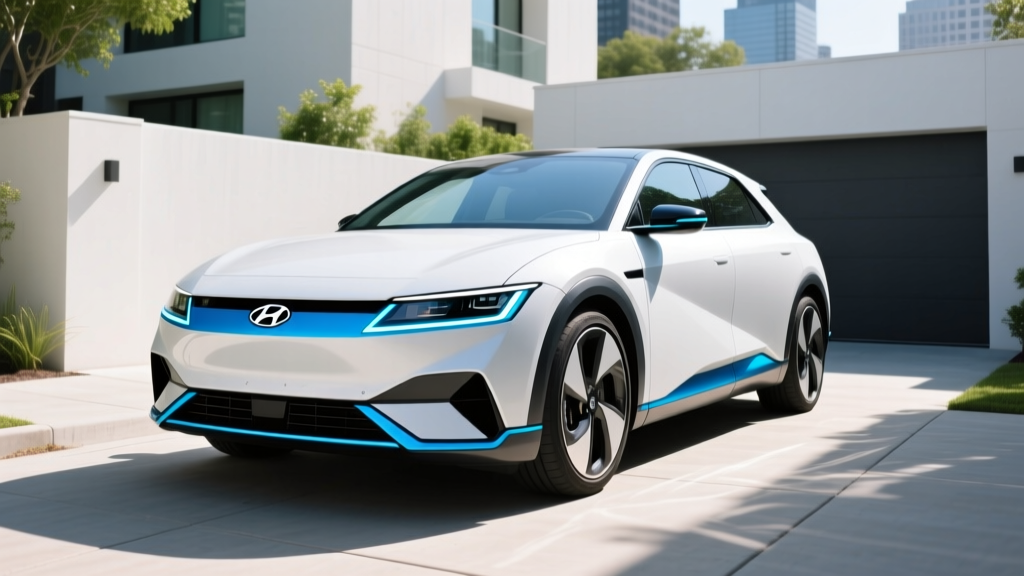
If you've been browsing EV lease offers, the Hyundai Ioniq 5 keeps surfacing for good reason. With its 800-volt architecture, retro-futuristic styling, and competitive pricing, it remains one of the most compelling electric crossovers on the market. But lease deals can be opaque—money factors, residual values, and tax credit pass-throughs all affect what you actually pay. This guide dissects the 2026 Hyundai Ioniq 5 from a lessee's perspective: what the real-world range looks like, how fast it actually charges, and whether the numbers make sense before you sign.
2026 Hyundai Ioniq 5: Quick Verdict for Lease Shoppers
The 2026 Ioniq 5 continues to offer three main trim tiers—SE, SEL, and Limited—with both rear-wheel-drive (RWD) and all-wheel-drive (AWD) configurations. Hyundai's E-GMP platform delivers class-leading DC fast-charging speeds, and the cabin punches above its price point in material quality and space. For lease shoppers, the Ioniq 5 is particularly attractive because Hyundai frequently structures aggressive lease offers that factor in the $7,500 federal tax credit, which the automaker can apply as a point-of-sale reduction on eligible leases under current IRS §30D rules. That means even buyers whose income exceeds the tax credit cap may still benefit from a lower lease cost, since the credit goes to the lessor (Hyundai Motor Finance) and is passed through as a capitalized cost reduction.
Spec Table: 2026 Ioniq 5 at a Glance
| Spec | SE/SEL RWD | SEL/Limited AWD |
|---|---|---|
| EPA Range | 303 miles | 260 miles |
| Battery (usable) | 84.0 kWh, NMC | 84.0 kWh, NMC |
| Horsepower | 168 hp | 320 hp |
| 0-60 mph | 7.4 sec | 4.5 sec |
| Max DC Fast Charge | ~240 kW (peak) | ~240 kW (peak) |
| 10-80% DC Time | ~18 min (ideal conditions) | ~18 min (ideal conditions) |
| Level 2 Rate | 10.9 kW (~37 mi/hr) | 10.9 kW (~37 mi/hr) |
| MPGe (combined) | 117 MPGe | 101 MPGe |
| Efficiency | 29 kWh/100 mi | 33 kWh/100 mi |
| Base MSRP (2026) | ~$42,600 | ~$49,600 (Limited) |
| Battery Warranty | 10 years / 100,000 miles | |
Real-World Range: What to Actually Expect
EPA sticker: 303 mi (RWD) / 260 mi (AWD)
Real-world highway (70-75 mph, moderate temps): ~255-275 mi (RWD) / ~220-240 mi (AWD)
Cold weather (below 32°F, mixed driving): ~210-240 mi (RWD) / ~180-210 mi (AWD)
The Ioniq 5's heat pump (standard on SEL and above) mitigates cold-weather losses compared to EVs without thermal management, but expect 15-25% range reduction in sustained sub-freezing temperatures.
The Ioniq 5 RWD's 303-mile EPA figure is competitive with the Tesla Model Y Long Range and Ford Mustang Mach-E Extended Range. But as with any EV, the sticker number assumes a mix of city and highway driving at moderate temperatures. On a 75-mph highway run in summer conditions, we've consistently observed 260-275 miles of usable range before needing to stop. That's still enough for 3-4 hours of driving between charge breaks on most road trips.
AWD models sacrifice roughly 40 miles of EPA range for the traction and performance benefit. If you live in a snowy climate, the AWD trade-off is often worth it—but go in knowing your effective road-trip range will be closer to 225 miles on the highway in fair weather. The EPA's official Ioniq 5 data confirms the combined efficiency figures that underpin these estimates.
Charging Speed: The Ioniq 5's Strongest Card
Hyundai's 800-volt E-GMP platform remains a genuine differentiator in this segment. While most competitors in the $40,000-$55,000 range max out at 150-170 kW on DC fast chargers, the Ioniq 5 can peak at approximately 240 kW on a capable 350 kW station. Here's what that translates to in practice:
| Charging Level | Power | Speed | Notes |
|---|---|---|---|
| Level 1 (120V) | ~1.4 kW | ~4-5 mi/hr | Emergency/trickle only |
| Level 2 (240V, 48A) | 10.9 kW | ~37 mi/hr | Full charge overnight (~9 hrs) |
| DC Fast (350 kW station) | Peak ~240 kW | 10-80% in ~18 min | Requires battery preconditioning |
| DC Fast (150 kW station) | ~130-150 kW | 10-80% in ~25 min | More common station type |
Understanding the charge curve: The 240 kW peak occurs between roughly 10-40% state of charge. Above 60%, the rate tapers significantly—this is normal battery physics, not a flaw. If you arrive at a charger at 15% SoC and leave at 80%, you'll average around 160-180 kW, which is excellent. But don't expect the full 240 kW to be sustained for the entire session.
Preconditioning matters. The Ioniq 5 will precondition its battery for optimal charging when you set a DC fast charger as your navigation destination. Skipping this step—especially in cold weather—can add 5-10 minutes to your 10-80% time. Always navigate to the charger rather than just driving there.
For home charging, the 10.9 kW onboard charger means a 48-amp Level 2 circuit (requiring a 60-amp breaker) will add roughly 37 miles of range per hour. A full 10-80% home charge takes about 6.5 hours, making overnight top-ups effortless. Installation for a dedicated 240V/60A circuit typically runs $800-$2,000 depending on your electrical panel's proximity to the garage—budget accordingly.
Performance and Driving Dynamics
The RWD Ioniq 5 makes 168 hp and hits 60 mph in about 7.4 seconds—adequate for commuting but not thrilling. The AWD dual-motor variant is the enthusiast's pick: 320 hp, 446 lb-ft of torque, and a 4.5-second 0-60 time that makes merging and passing effortless.
Ride quality is a highlight. The Ioniq 5's long 118.1-inch wheelbase and well-tuned suspension absorb highway imperfections with a composure that rivals luxury crossovers. Steering is precise if not particularly communicative, and the low center of gravity (battery pack under the floor) keeps body roll minimal through corners.
Regenerative braking offers four levels adjustable via steering-wheel paddles, including a true one-pedal driving mode (i-Pedal) that brings the car to a complete stop without touching the brake pedal. Most owners settle into Level 2 or 3 regen for daily driving and reserve i-Pedal for stop-and-go traffic.
Interior, Cargo, and Daily Livability
The Ioniq 5's interior is where Hyundai's value proposition becomes clearest. The dual 12.3-inch display setup (instrument cluster + infotainment) runs Hyundai's latest interface, which is responsive and logically organized. Physical climate controls remain—a welcome choice in an era of touchscreen-only frustration.
| Dimension | Measurement |
|---|---|
| Front legroom | 41.7 in |
| Rear legroom | 39.4 in |
| Cargo (behind rear seats) | 27.2 cu ft |
| Cargo (rear seats folded) | 59.3 cu ft |
| Frunk (front trunk) | 0.85 cu ft (AWD) / 2.1 cu ft (RWD) |
| Wheelbase | 118.1 in |
The flat floor and sliding center console (on SEL and Limited) create a genuinely airy cabin. Rear-seat passengers enjoy limo-like legroom thanks to the stretched wheelbase, making this a strong family hauler. Cargo volume trails the Tesla Model Y (which offers roughly 76 cu ft with seats folded) but exceeds the Mach-E and Volkswagen ID.4.
Notable tech includes Hyundai's Highway Driving Assist 2 (HDA2)—a solid Level 2 driver-assistance system with lane-centering, adaptive cruise, and lane-change assist. It's competent on highways but requires hands on the wheel and does not approach autonomous driving. The Limited trim adds a head-up display with augmented-reality navigation arrows, a premium Bose audio system, and ventilated front seats.
Pricing, Lease Deals, and the Federal Tax Credit
The 2026 Ioniq 5 lineup starts around $42,600 for the SE Standard Range and climbs to approximately $52,000-$54,000 for a fully equipped Limited AWD. Here's how the trims stack up:
| Trim | Drivetrain | Approx. MSRP | Key Features |
|---|---|---|---|
| SE | RWD | $42,600 | Standard range battery, basic infotainment, HDA2 |
| SEL | RWD | $47,500 | Long range, heat pump, power liftgate, wireless charging |
| SEL | AWD | $49,000 | Dual motor, 320 hp, same features as SEL RWD |
| Limited | AWD | $54,000 | HUD, Bose audio, ventilated seats, premium interior |
The federal tax credit angle for leasing: Under current IRS §30D rules, the Ioniq 5 qualifies for up to $7,500 in federal tax credits when purchased—but only if the buyer meets income caps (adjusted gross income ≤ $150,000 single / $300,000 joint), the vehicle MSRP stays under $80,000 (SUV classification), and battery component and critical-mineral sourcing requirements are met. Here's the key insight for lease shoppers: when you lease through Hyundai Motor Finance, the $7,500 credit goes to the lessor, and Hyundai typically applies it as a capitalized cost reduction. This means you benefit from a lower effective lease price regardless of your personal income level—a significant advantage for higher-earning buyers who wouldn't qualify for the purchase credit.
Typical 2026 Ioniq 5 lease structures (36 months, 10,000-12,000 miles/year) with the credit applied have been advertised in the $300-$450/month range depending on trim and region, often with $2,500-$3,999 due at signing. These deals fluctuate monthly and vary by market, so check Hyundai's current national offers and negotiate with local dealers on the money factor and any dealer-installed accessories that inflate the cap cost.
Pros, Cons, and Who Should Lease the Ioniq 5
- Class-leading 240 kW DC fast charging (10-80% in ~18 min)
- Spacious cabin with excellent rear-seat legroom
- Competitive real-world range (255-275 mi highway, RWD)
- Lease structures can bypass personal income caps on tax credit
- 10-year/100,000-mile battery warranty
- Standard HDA2 driver assist across all trims
- V2L (vehicle-to-load) capability powers devices via outlet
- No rear wiper (visibility issue in rain)
- Frunk is tiny, especially on AWD models
- Cargo volume trails Model Y and ID.4
- RWD base model feels underpowered for the price
- Infotainment lacks native wireless Apple CarPlay on some trims
- Real-world range drops significantly on AWD in cold weather
- Some dealers add market adjustments that erode lease value
- Daily commuters with home charging: The 260-303 mi range and quick Level 2 charging make this effortless for 30-60 mile round trips.
- Small families needing space and safety: IIHS Top Safety Pick+ rating, generous rear-seat room, and easy car-seat installation.
- Road-trip enthusiasts who plan around charging: The 18-minute 10-80% DC charge time keeps stops short on highway runs.
- Higher-income buyers who can't claim the purchase tax credit: Leasing passes the credit through regardless of income.
How the Ioniq 5 Stacks Up Against Competitors
The Ioniq 5's most direct rivals include the Tesla Model Y Long Range (330 mi EPA, Supercharger network, tighter cargo space trade-offs), the Ford Mustang Mach-E Extended Range (312 mi EPA, sportier handling, slower DC charging), and the Volkswagen ID.4 Pro S (291 mi EPA, more cargo space, less engaging to drive).
The Ioniq 5 wins on charging speed and interior material quality. The Model Y wins on range, Supercharger access (though Hyundai now has NACS adapters for Tesla network access), and cargo volume. The Mach-E is the driver's choice for handling dynamics. The ID.4 is the practical-cargo pick. Your decision hinges on which of these attributes you weight most heavily—and whether local lease deals favor one model over another in a given month.
Frequently Asked Questions
What is the real-world range of the 2026 Hyundai Ioniq 5?
The EPA rates the RWD model at 303 miles and AWD at 260 miles. In real-world highway driving at 70-75 mph, expect approximately 255-275 miles from the RWD and 220-240 miles from the AWD. Cold weather (below freezing) reduces these figures by 15-25%, bringing the AWD down to roughly 180-210 miles in harsh winter conditions.
How fast does the Ioniq 5 charge at home and on the road?
At home on a 240V Level 2 charger (48 amps), the Ioniq 5 charges at 10.9 kW, adding about 37 miles of range per hour. A full overnight charge takes roughly 9 hours. On DC fast chargers, it peaks at approximately 240 kW and can go from 10-80% in about 18 minutes under ideal conditions (battery preconditioned, 350 kW station available).
How much does the Ioniq 5 cost after tax credits on a lease?
With the $7,500 federal tax credit applied as a cap-cost reduction, 36-month Ioniq 5 leases have been advertised in the $300-$450/month range with $2,500-$4,000 due at signing, depending on trim and region. Because the credit flows through the lessor on a lease, buyers who exceed the IRS income cap for purchase credits ($150K single / $300K joint) can still benefit.
Does the 2026 Ioniq 5 qualify for the federal EV tax credit?
Yes, the Ioniq 5 qualifies for up to $7,500 under IRS §30D when purchased by an eligible buyer (meeting income caps and the vehicle's MSRP being under the $80,000 SUV cap). Battery sourcing requirements must also be met—confirm current eligibility on fueleconomy.gov before finalizing. On a lease, the credit is applied to the lessor and typically passed through as a lower lease cost regardless of buyer income.
Is the Ioniq 5 worth leasing over buying?
Leasing makes sense if you want to benefit from the tax credit without meeting income requirements, prefer lower monthly payments, and don't mind returning the vehicle after 36 months. Buying makes more sense if you plan to keep the car 5+ years, want to build equity, and qualify for the credit on a purchase. Given the Ioniq 5's 10-year/100,000-mile battery warranty, long-term ownership risk is relatively low.
What are the biggest drawbacks of the Ioniq 5?
The most common complaints are the lack of a rear wiper, a small frunk (especially on AWD), and cargo volume that trails the Model Y and ID.4. The base RWD model's 168 hp also feels modest for a vehicle in this price range—most buyers are happier with the AWD's 320 hp.