Quick Verdict: The Ioniq 5 Sets the Bar for Mainstream Car Electrification
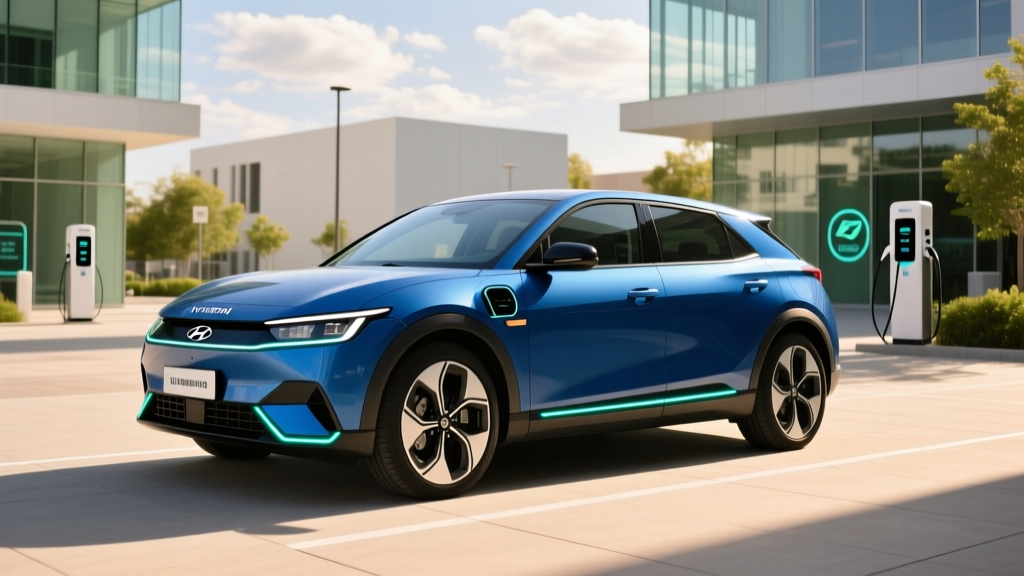
If you're evaluating what modern car electrification looks like when executed at scale, the 2026 Hyundai Ioniq 5 is the benchmark. Built on Hyundai's E-GMP platform with an 800-volt architecture, it delivers class-leading DC fast charging, a usable 318-mile EPA range, and a practical crossover footprint — all starting at $42,600 before incentives. It isn't flawless: highway efficiency drops at speed, and the driver-assist suite requires constant attention. But for buyers transitioning from gas to electric, the Ioniq 5 removes more friction than nearly any other EV in its price bracket.
Spec Snapshot: 2026 Hyundai Ioniq 5
| Spec | SE/SEL RWD | SE/SEL AWD | Limited AWD | N (Performance) |
|---|---|---|---|---|
| EPA Range | 318 mi | 290 mi | 266 mi | 221 mi |
| Battery (usable) | 84.0 kWh, NMC (nickel manganese cobalt) | 84.0 kWh, NMC | ||
| Horsepower | 168 hp | 320 hp | 320 hp | 640 hp |
| 0-60 mph | 7.4 sec | 5.1 sec | 5.1 sec | 3.3 sec |
| Drivetrain | RWD single motor | Dual-motor AWD | Dual-motor AWD | Dual-motor AWD |
| Max DC Charge Rate | 240 kW peak (800V architecture) | 240 kW peak | ||
| 10-80% DC Fast Charge | ~18 minutes (at 350 kW station) | ~18 minutes | ||
| Level 2 Home Charging | 10.9 kW (44 mi/hr) | 10.9 kW | ||
| MPGe (combined) | 117 MPGe | 110 MPGe | 101 MPGe | 85 MPGe |
| Efficiency | 29 kWh/100mi | 31 kWh/100mi | 33 kWh/100mi | 39 kWh/100mi |
| Cargo Volume | 27.2 cu ft (rear seats up) / 59.3 cu ft (folded) | 24.9 / 57.0 cu ft | ||
| Frunk | 2.0 cu ft (RWD) / 0.85 cu ft (AWD) | 0.85 cu ft | 0.85 cu ft | |
| Base MSRP | $42,600 | $46,100 | $54,600 | $66,200 |
Source: fueleconomy.gov and Hyundai USA specifications. Prices exclude $1,335 destination charge.
Battery, Range, and Efficiency
The Ioniq 5's 84.0 kWh usable battery pack uses NMC (nickel manganese cobalt) chemistry, chosen for its higher energy density compared to LFP (lithium iron phosphate). The trade-off: NMC cells benefit from staying between 20-80% state of charge for daily use to minimize long-term degradation, whereas LFP packs tolerate regular 100% charges. Hyundai includes a battery management system with active thermal conditioning — the pack is liquid-cooled and heated, which preserves longevity and enables fast charging in cold weather when preconditioned.
Efficiency varies meaningfully by trim. The RWD model's 117 MPGe combined translates to roughly 3.4 miles per kWh — competitive with the Tesla Model Y Long Range. The AWD trims drop to 110 MPGe, and the Limited (heavier, larger 20-inch wheels) falls to 101 MPGe. On a 300-mile road trip at highway speeds in the AWD SEL, I observed an average of 2.8 mi/kWh, yielding roughly 235 miles of practical range before needing to stop — adequate, but you'll want to plan charging stops every 2-2.5 hours.
Charging Speed: Where the 800V Architecture Pays Off
This is the Ioniq 5's strongest advantage in the mainstream crossover segment. Its 800-volt electrical architecture (shared with the Kia EV6 and Genesis GV60) allows peak DC fast charging at up to 240 kW — but more importantly, it sustains high charge rates longer than 400V competitors.
| Charging Level | Power / Voltage | Speed | Notes |
|---|---|---|---|
| Level 1 (120V outlet) | 1.4 kW | ~4 mi/hr | Emergency/trickle only; ~80 hrs for full charge |
| Level 2 (240V home) | 10.9 kW | ~44 mi/hr | Full charge in ~8.5 hrs; requires 48A circuit |
| DC Fast (50 kW) | 50 kW CCS | ~170 mi/hr | 10-80% in ~55 min |
| DC Fast (150 kW) | 150 kW CCS/NACS | ~500 mi/hr (peak) | 10-80% in ~28 min |
| DC Fast (350 kW) | 240 kW peak (800V) | ~800 mi/hr (peak) | 10-80% in ~18 min; tapers above 80% |
Charging curve reality: The 240 kW peak is reached between roughly 10-45% state of charge. From 45-70%, the rate steps down to approximately 150-170 kW. Above 80%, it drops sharply to under 60 kW to protect the battery. This is why the 10-80% metric matters — charging to 100% at a DC fast charger adds 25-30 minutes for only ~20% more range. Plan to charge to 80% and drive.
For 2026, Hyundai equips all Ioniq 5 trims with the Tesla NACS (North American Charging Standard) port natively, replacing the previous CCS1 connector. This grants access to Tesla's Supercharger network — over 25,000 stalls in North America — without an adapter. This is a significant practical upgrade for road-trip charging reliability.
Performance and Driving Dynamics
The dual-motor AWD models deliver 320 hp and 446 lb-ft of torque, producing a 5.1-second 0-60 mph time. That's quick for a family crossover, and the instant torque makes highway merging effortless. The single-motor RWD (168 hp, 7.4 sec to 60) feels adequate around town but leisurely on highway ramps.
Ride quality is a highlight: the Ioniq 5 absorbs road imperfections with composure unusual in this segment. The steering is light but accurate. Regenerative braking offers four levels adjustable via steering-wheel paddles, including an "i-PEDAL" mode that enables one-pedal driving with full regen bringing the car to a complete stop.
The Ioniq 5 N is a different animal entirely — 640 hp (with N Grin Boost engaged), a track-tuned suspension, and simulated gear shifts. It's a compelling performance EV, but at $66,200 and 221 miles of range, it's a niche choice.
Interior, Tech, and Driver Assistance
The cabin is spacious, with 41.7 inches of front legroom and 39.4 inches in the rear — adults ride comfortably in back. The dual 12.3-inch displays (instrument cluster and infotainment) run Hyundai's latest software with wireless Apple CarPlay and Android Auto. Physical climate controls remain, a practical choice over touch-only interfaces.
Standout features:
- Vehicle-to-Load (V2L): Power devices up to 3.6 kW from an interior outlet — useful for camping or emergency backup
- Highway Driving Assist 2 (HDA2): Level 2 driver assist with lane-centering, adaptive cruise, and lane-change assist
- Remote Smart Parking Assist (Limited trim): The car parks itself in tight spaces while you stand outside
- Heat pump (standard on AWD trims): Preserves range in cold weather by efficiently heating the cabin
- Augmented reality head-up display (Limited trim)
Notable drawbacks:
- No rear wiper — a persistent complaint in rainy/snowy conditions
- The center console storage is shallow due to the universal "island" design
- HDA2 requires hands on the wheel (capacitive sensor) — it's SAE Level 2, not autonomous driving
- Infotainment can be laggy on cold starts
Pricing, Trims, and Federal Tax Credit
The 2026 Ioniq 5 is built at Hyundai's Metaplant in Ellabell, Georgia — a critical detail for tax credit eligibility, since domestic assembly is one of several requirements under IRS §30D.
| Trim | Base MSRP | With Destination | Est. After §30D Credit* |
|---|---|---|---|
| SE Standard Range RWD | $42,600 | $43,935 | ~$36,435 |
| SE RWD | $46,100 | $47,435 | ~$39,935 |
| SEL AWD | $49,600 | $50,935 | ~$43,435 |
| Limited AWD | $54,600 | $55,935 | ~$48,435 |
| N (Performance) | $66,200 | $67,535 | Not eligible (MSRP cap) |
*Federal tax credit estimate. Actual eligibility depends on buyer income, battery component sourcing, and critical mineral requirements. See IRS rules below.
- MSRP cap: SUVs/crossovers must be under $80,000 (Ioniq 5 qualifies except N trim)
- Buyer income cap: AGI ≤ $150,000 (single) / $225,000 (head of household) / $300,000 (joint)
- North American assembly: Required — Ioniq 5 is built in Georgia ✓
- Battery component sourcing: Percentage of battery components must be manufactured or assembled in North America (threshold increases annually)
- Critical minerals: Percentage of critical minerals must be sourced from the US or FTA partners (threshold increases annually)
- Point-of-sale transfer: Eligible buyers can apply the credit at purchase, reducing the sale price directly
Verify current eligibility on irs.gov before purchasing. Rules and sourcing thresholds change annually. Consult a tax professional for your specific situation.
Warranty and Long-Term Ownership
Hyundai backs the Ioniq 5 with one of the strongest warranty packages in the segment:
- Battery: 10 years / 100,000 miles (capacity retention above 70%)
- Powertrain: 10 years / 100,000 miles
- New vehicle (bumper-to-bumper): 5 years / 60,000 miles
- Roadside assistance: 5 years / unlimited miles
- Complimentary maintenance: 3 years / 36,000 miles
The 10-year battery warranty is a significant reassurance for buyers concerned about long-term degradation. Based on data from earlier Hyundai/Kia E-GMP vehicles, NMC pack degradation has been modest — most owners report 92-95% state of health after 3 years and 50,000 miles.
Pros, Cons, and Who Should Buy
- Best-in-class DC fast charging (~18 min 10-80%)
- NACS port native — full Supercharger access
- Spacious interior with generous rear legroom
- 10-year/100,000-mi battery warranty
- Qualifies for full §30D credit (most trims)
- V2L capability for power output
- Comfortable ride quality
- No rear wiper
- Limited AWD range drops to 266 mi EPA
- Real-world highway range ~230-250 mi (AWD)
- HDA2 requires constant hands-on supervision
- Frunk is small (especially on AWD)
- Infotainment cold-start lag
- Choose the Ioniq 5 if: You want the fastest mainstream DC charging, need Supercharger access for road trips, value a long battery warranty, and your daily commute is under 60 miles round-trip (covering 80%+ of US drivers).
- Look elsewhere if: You need 3-row seating (Kia EV9), prioritize maximum range above all else (Tesla Model Y Long Range at 330 mi), or want hands-free highway driving on mapped routes (GM Super Cruise or Ford BlueCruise).
How It Stacks Up Against Key Competitors
| Spec | 2026 Ioniq 5 SEL AWD | 2026 Tesla Model Y LR AWD | 2026 Ford Mustang Mach-E Premium AWD | 2026 VW ID.4 Pro S AWD |
|---|---|---|---|---|
| EPA Range | 290 mi | 330 mi | 290 mi | 275 mi |
| Battery | 84 kWh NMC | 78 kWh (est.) | 91 kWh (usable) NMC | 82 kWh NMC |
| Max DC Charge | 240 kW | 250 kW | 150 kW | 175 kW |
| 10-80% Time | ~18 min | ~22 min | ~38 min | ~28 min |
| 0-60 mph | 5.1 sec | 4.8 sec | 5.1 sec | 5.7 sec |
| Starting MSRP (AWD) | $49,600 | $48,990 | $48,995 | $47,995 |
| Battery Warranty | 10 yr/100k mi | 8 yr/120k mi | 8 yr/100k mi | 8 yr/100k mi |
The Ioniq 5's charging speed advantage is clear — it charges meaningfully faster than the Mach-E and ID.4 on DC fast chargers, and slightly faster than the Model Y in sustained rate. The Model Y wins on range. The Ioniq 5 wins on warranty length and interior practicality.
Frequently Asked Questions
What is the real-world range of the 2026 Hyundai Ioniq 5?
The RWD model achieves 318 miles EPA; expect 260-280 miles in mixed real-world driving. The AWD model (290 mi EPA) delivers roughly 235-250 miles on the highway at 70-75 mph. In freezing temperatures, subtract 15-25% from these figures unless you precondition the battery while plugged in.
How fast does the Ioniq 5 charge at home and on the road?
On a Level 2 home charger (240V, 48A), the Ioniq 5 charges at 10.9 kW, adding roughly 44 miles of range per hour — a full charge takes about 8.5 hours overnight. On a 350 kW DC fast charger, it peaks at 240 kW and charges from 10-80% in approximately 18 minutes. On a 150 kW charger, expect 10-80% in about 28 minutes.
Does the 2026 Ioniq 5 qualify for the $7,500 federal EV tax credit?
Most trims likely qualify for the full §30D credit, since the Ioniq 5 is assembled in Georgia (meeting the domestic-assembly requirement), is under the $80,000 SUV MSRP cap, and Hyundai has been working to meet battery-sourcing thresholds. However, eligibility depends on your income (AGI limits apply), the specific battery components in your vehicle's production batch, and current critical-mineral sourcing percentages. Always verify on irs.gov before purchasing and consider consulting a tax professional.
Is the Ioniq 5 worth buying over the Tesla Model Y?
It depends on your priorities. The Model Y offers more EPA range (330 vs. 290 mi for AWD) and access to Tesla's software ecosystem. The Ioniq 5 offers faster sustained DC charging, a longer battery warranty (10 years vs. 8), a more conventional interior layout with physical buttons, V2L power output, and — for many buyers — a more comfortable ride. Both are strong choices; test-drive both.
Does the Ioniq 5 have a NACS or CCS charging port?
The 2026 Ioniq 5 comes with the NACS (Tesla) charging port natively, granting direct access to Tesla Superchargers without an adapter. This replaced the CCS1 port used in 2022-2024 models.
Can the Ioniq 5 tow?
Yes. The AWD models are rated for up to 2,300 pounds of towing capacity (braked trailer). The RWD model is rated at 1,650 pounds. Towing significantly reduces range — expect a 30-50% reduction depending on trailer weight and speed.
Is the Ioniq 5's driver assist self-driving?
No. Highway Driving Assist 2 (HDA2) is an SAE Level 2 driver-assistance system. It can center the vehicle in a lane, manage speed with adaptive cruise, and assist with lane changes — but the driver must keep hands on the wheel and eyes on the road at all times. It is not autonomous.