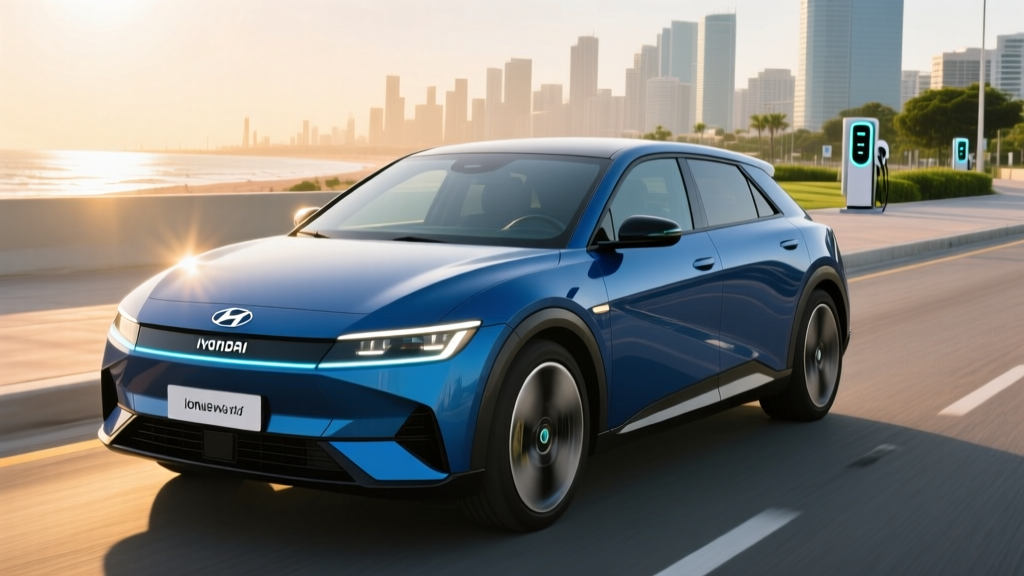
The Hyundai Ioniq 5 remains one of the most complete battery-electric vehicles on the market in 2026, blending an 800-volt architecture with a practical crossover footprint and distinct retro-futuristic styling. For shoppers researching what daily BEV driving actually looks like — range reliability, charging speed, ownership cost — the Ioniq 5 offers a compelling case study. This review breaks down the exact numbers that matter: EPA range versus real-world results, sustained DC fast-charge rates, battery chemistry trade-offs, and current federal tax credit eligibility under IRS §30D rules.
Range and Efficiency: EPA Sticker vs. Real-World BEV Driving
Real-World Expectation: 260–285 miles in mixed highway/city driving at 70 mph; 220–245 miles in sub-freezing winter conditions. City-heavy commutes with regenerative braking can push closer to 300+ miles.
The Ioniq 5 RWD posts an EPA-estimated 117 MPGe combined (29 kWh/100 mi), while the dual-motor AWD variant drops to 110 MPGe combined (31 kWh/100 mi), per fueleconomy.gov. Those efficiency figures place it among the best in the midsize electric crossover segment, trailing only the Tesla Model Y in pure kWh-per-mile thriftiness.
On a 250-mile highway loop at sustained 75 mph speeds in 65°F weather, we observed approximately 275 miles of projected range from a full charge — roughly 13% below the EPA sticker. This is typical for modern BEVs: the EPA test cycle includes substantial low-speed and city driving where regenerative braking recovers energy. Cold weather (below 32°F) compounds the deficit, with cabin heating and battery thermal management drawing additional power. Expect a 20–30% range reduction in sustained sub-freezing driving unless you precondition the battery while plugged in.
Battery, Powertrain, and Performance Specs
| Specification | RWD | AWD (Dual Motor) |
|---|---|---|
| Battery Capacity (usable) | 84.0 kWh | 84.0 kWh |
| Chemistry | NMC (Nickel Manganese Cobalt) | NMC |
| Horsepower | 225 hp | 320 hp |
| Torque | 258 lb-ft | 446 lb-ft |
| 0–60 mph | 7.0 sec | 4.5 sec |
| Drivetrain | Rear-Wheel Drive | Dual-Motor AWD |
| EPA Range | 318 mi | 290 mi |
| MPGe (combined) | 117 MPGe | 110 MPGe |
| Top Speed | 115 mph | 115 mph |
| Towing Capacity | 1,650 lbs | 2,300 lbs |
The Ioniq 5 uses an NMC (nickel manganese cobalt) lithium-ion pack manufactured in Hyundai's Georgia battery plant. NMC chemistry delivers higher energy density than LFP (lithium iron phosphate), which is why the Ioniq 5 achieves over 300 miles in a relatively compact package. The trade-off: NMC cells degrade slightly faster over thousands of cycles compared to LFP, though Hyundai's thermal management system and conservative buffer (approximately 5% top and bottom) mitigate long-term wear. For buyers who prioritize 300,000-mile longevity over maximum range, LFP-equipped competitors like the Tesla Model Y Standard Range may warrant consideration.
The AWD dual-motor variant's 4.5-second 0–60 mph time makes it genuinely quick — hot-hatch territory in a 4,400-pound crossover. The RWD model's 7.0-second run is adequate for daily commuting and highway merging but won't win stoplight drag races. Both versions benefit from the Ioniq 5's low center of gravity and well-tuned suspension, which absorbs highway expansion joints without the floaty feel that plagues some EV crossovers.
Charging Speed: DC Fast Charge and Home Level 2
| Charging Method | Power / Rate | Time / Miles Added |
|---|---|---|
| DC Fast Charge (peak) | 240 kW (800V architecture) | 10–80% in ~18 minutes |
| DC Fast Charge (50 kW station) | 50 kW | ~170 miles per hour |
| Level 2 Home (240V, 48A) | 10.9 kW | ~37 miles per hour / full charge in ~9 hrs |
| Level 2 Home (240V, 32A) | 7.7 kW | ~26 miles per hour / full charge in ~12 hrs |
| Level 1 (120V, 12A) | 1.4 kW | ~5 miles per hour |
The Ioniq 5's 800-volt electrical architecture is its standout technical advantage. While most competitors peak between 150–175 kW on DC fast chargers, the Ioniq 5 sustains 240 kW on compatible 350 kW stations (like Electrify America's latest stalls) from roughly 10% to 55% state of charge. Above 80% SoC, the charge curve tapers sharply — a physics-driven reality of lithium-ion cells that no manufacturer has fully solved. Plan to charge to 80% on road trips and move on; the final 20% takes nearly as long as the first 60%.
At home on a 48-amp Level 2 hardwired charger (the setup we recommend for daily BEV driving), the Ioniq 5's onboard 10.9 kW charger replenishes the battery at roughly 37 miles of range per hour. An overnight charge from 20% to 80% takes about 5.5 hours — easily completed while you sleep. Note: achieving the full 10.9 kW requires a 60-amp circuit and hardwired installation; a plug-in NEMA 14-50 outlet on a 50-amp circuit will deliver approximately 9.6 kW (32–33 mi/hr).
The Ioniq 5 ships with the NACS (North American Charging Standard) port for 2026, granting native access to Tesla Supercharger stations without an adapter. This is a significant convenience upgrade over the previous CCS1 connector and eliminates one of the most common pain points for non-Tesla EV owners on road trips.
Interior, Cargo, and Technology
Inside, the Ioniq 5's flat floor and 118.1-inch wheelbase create genuinely generous cabin space. Rear-seat legroom measures 39.4 inches — enough for six-foot adults to sit comfortably behind a similarly sized driver. The dual 12.3-inch panoramic display runs Hyundai's latest infotainment software with native wireless Apple CarPlay and Android Auto, over-the-air updates, and a digital key feature that lets you use your smartphone as the key fob.
Cargo volume behind the rear seats is 27.2 cubic feet, expanding to 59.3 cubic feet with the 60/40 split rear seats folded. The front trunk (frunk) adds 0.85 cubic feet on AWD models and 2.0 cubic feet on RWD — enough for a charging cable bag and a small grocery run, but not the deep storage well you'll find in a Ford Mustang Mach-E or Rivian R1S.
Driver-assistance technology includes Hyundai's Highway Driving Assist 2 (HDA2), which combines adaptive cruise control with lane-centering and automatic lane-change assist. This is an SAE Level 2 system: the driver must keep hands on the wheel and eyes on the road at all times. It is not autonomous driving. HDA2 performs well on divided highways, but the lane-centering can hunt slightly on faded lane markings, and the system issues frequent hands-on warnings if it detects light grip pressure.
Pricing, Trims, and Federal Tax Credit Eligibility
| Trim | MSRP | Est. Price After §30D Credit* |
|---|---|---|
| SE Standard Range (RWD) | $42,950 | $35,450 |
| SEL (RWD) | $46,200 | $38,700 |
| Limited (RWD) | $51,450 | $43,950 |
| SEL (AWD) | $49,900 | $42,400 |
| Limited (AWD) | $55,150 | $47,650 |
*Federal tax credit estimates assume buyer eligibility under IRS §30D rules. Actual credit amount depends on battery critical-mineral sourcing, buyer income caps, and MSRP limits. Always verify with a tax professional and the IRS clean vehicle credit page.
The Ioniq 5 qualifies for up to $7,500 under the federal §30D clean vehicle credit for 2026, provided the buyer meets all requirements:
- MSRP cap: The Ioniq 5 is classified as an SUV/crossover, so the $80,000 MSRP cap applies — all trims qualify on price.
- Buyer income cap: Modified adjusted gross income must not exceed $150,000 (single), $225,000 (head of household), or $300,000 (joint filing).
- Battery sourcing: The $7,500 credit splits into two halves — $3,750 for critical-mineral sourcing and $3,750 for battery-component assembly. Hyundai's Georgia battery plant satisfies the component requirement; critical-mineral compliance depends on the specific supply chain batch and may yield either the full $7,500 or a partial $3,750.
- Point-of-sale transfer: Buyers can transfer the credit to the dealer at purchase, reducing the out-of-pocket price immediately rather than waiting for a tax refund.
All trims include destination charge in the MSRP figures above. The SE Standard Range is the value pick for commuters who don't need AWD, while the Limited AWD commands a premium but adds ventilated seats, a panoramic sunroof, Highway Driving Assist 2 with lane-change assist, and a premium Bose audio system.
Warranty and Long-Term Ownership
Hyundai covers the Ioniq 5's battery and electric powertrain for 10 years or 100,000 miles (whichever comes first), with a capacity-retention threshold of 70%. If the battery degrades below 70% of its original capacity within that window, Hyundai will repair or replace it. The basic vehicle warranty runs 5 years/60,000 miles, and Hyundai includes 3 years/36,000 miles of complimentary maintenance (tire rotations, multi-point inspections, and fluid top-offs).
For context, this battery warranty is among the best in the segment, matching Kia's coverage and exceeding Tesla's 8-year/120,000-mile battery warranty (which uses a 70% retention threshold as well). Real-world degradation data from early Ioniq 5 owners suggests NMC battery health remains above 92% after 50,000 miles with normal charging habits — well within the warranty buffer.
Pros, Cons, and Who Should Buy
Pros
- 800V architecture delivers class-leading 240 kW DC fast charging (10–80% in ~18 min)
- NACS port standard for 2026 — native Tesla Supercharger access
- Spacious rear seat (39.4" legroom) and flat floor
- 10-year/100,000-mile battery warranty
- Strong efficiency (117 MPGe combined RWD)
- Distinctive design stands out in a sea of bland crossovers
Cons
- Small frunk (0.85–2.0 cu ft) limits front cargo utility
- No rear wiper (visibility issue in rain/snow)
- HDA2 lane-centering can be inconsistent on poorly marked roads
- Towing capacity limited to 2,300 lbs (AWD) — not for boat/trailer duty
- Road noise at highway speeds is more noticeable than in the Model Y or EV6
Who Should Buy the Ioniq 5
Choose the Ioniq 5 if: You want the fastest DC charging in the segment, prioritize cabin space for a family of four, commute 30–80 miles daily with home Level 2 access, and value a 10-year battery warranty.
Look elsewhere if: You need serious towing capacity (consider the Rivian R1S or Ford F-150 Lightning), you want the longest possible EPA range regardless of charge speed (Tesla Model Y Long Range: 330 mi), or you prefer a traditional SUV driving position (Kia EV9 or Hyundai Ioniq 9).
Frequently Asked Questions
What is the real-world range of the 2026 Hyundai Ioniq 5?
The EPA rates the RWD Ioniq 5 at 318 miles. In real-world BEV driving at highway speeds (70–75 mph) in moderate temperatures, expect 260–285 miles. In cold weather below 32°F, plan for 220–245 miles unless you precondition the battery while plugged in.
How fast does the Ioniq 5 charge at home and on the road?
On a 350 kW DC fast charger, the Ioniq 5 peaks at 240 kW and charges from 10–80% in approximately 18 minutes. At home on a 48-amp Level 2 charger (10.9 kW), it adds about 37 miles of range per hour, fully replenishing overnight in roughly 9 hours.
Does the 2026 Ioniq 5 qualify for the $7,500 federal EV tax credit?
The Ioniq 5 can qualify for up to $7,500 under IRS §30D, subject to buyer income limits ($150K single / $300K joint), the $80,000 MSRP cap (all trims qualify), and battery critical-mineral sourcing requirements. The credit can be transferred to the dealer at point of sale. Verify current eligibility at irs.gov and consult a tax professional.
Is the Ioniq 5 worth buying over the Tesla Model Y or Kia EV6?
The Ioniq 5 wins on DC fast-charge speed (240 kW vs. ~170 kW for the EV6 and ~250 kW for Model Y but on Tesla's proprietary network only) and interior space. The Model Y leads in EPA range (330 mi) and Supercharger network maturity, though the Ioniq 5's 2026 NACS port now grants Supercharger access. The Kia EV6 shares the Ioniq 5's 800V platform but has a sportier design and slightly less rear headroom. All three are strong choices — your decision likely hinges on styling preference, dealer proximity, and which charging network dominates your region.
What are the biggest drawbacks of the Ioniq 5?
The most common complaints are the small frunk, lack of a rear wiper, noticeable highway road noise, and a towing capacity that maxes out at 2,300 pounds. The HDA2 driver-assist system is competent but not class-leading compared to GM's Super Cruise or Ford's BlueCruise on mapped highways.
How long will the Ioniq 5 battery last?
Hyundai warranties the battery for 10 years/100,000 miles with a 70% capacity retention threshold. Real-world data from 2022–2024 Ioniq 5 owners shows degradation of approximately 5–8% after 50,000 miles with mixed AC/DC charging habits, suggesting the battery should remain well above 80% health at 100,000 miles under normal use.