Quick Verdict: Who the Ioniq 3 Is For
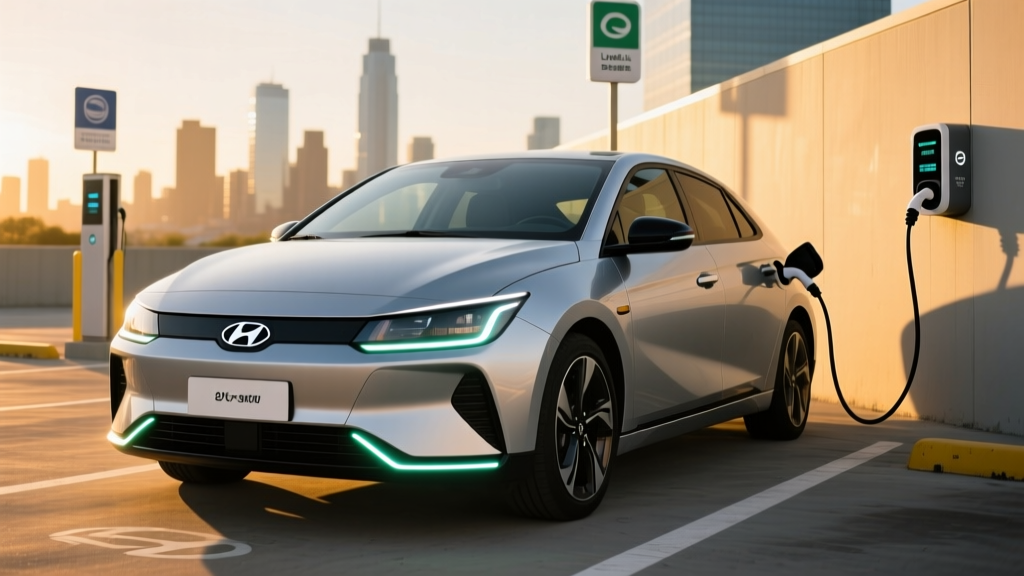
The 2026 Hyundai Ioniq 3 slots into the compact electric crossover segment as a practical, tech-forward daily driver aimed at urban commuters and small families who want a sub-$40,000 EV with strong fast-charging capability. Built on Hyundai Motor Group's E-GMP platform with native NACS (Tesla Supercharger) compatibility for the 2026 model year, the Ioniq 3 offers an EPA-estimated range of up to 290 miles on the Long Range RWD trim, 800V-class DC fast charging that peaks near 175 kW, and a cabin that punches above its price class in material quality. It's not a road-trip hauler or a performance SUV — it's a disciplined, efficiency-focused commuter EV that does the fundamentals extremely well.
| Spec | SE Standard Range | SEL Long Range RWD | Limited Long Range AWD |
|---|---|---|---|
| EPA Range | 230 mi | 290 mi | 265 mi |
| Battery (usable) | 58 kWh (LFP) | 77.4 kWh (NMC) | 77.4 kWh (NMC) |
| Drivetrain | RWD single motor | RWD single motor | AWD dual motor |
| Horsepower | 168 hp | 225 hp | 320 hp |
| 0–60 mph | 7.8 sec | 6.5 sec | 4.8 sec |
| Max DC Fast Charge | 150 kW | 175 kW | 175 kW |
| 10–80% DCFC Time | ~24 min | ~22 min | ~22 min |
| Level 2 (240V) Rate | 7.2 kW (~24 mi/hr) | 10.9 kW (~36 mi/hr) | 10.9 kW (~36 mi/hr) |
| EPA Efficiency | 128 MPGe | 125 MPGe | 110 MPGe |
| Cargo (rear up / folded) | 24.0 / 56.2 cu ft | 24.0 / 56.2 cu ft | 24.0 / 56.2 cu ft |
| Rear Legroom | 38.2 in | 38.2 in | 38.2 in |
| Base MSRP | $34,950 | $39,500 | $45,900 |
Range and Efficiency: EPA vs. Real-World Driving
EPA Estimated Range (Long Range RWD): 290 miles
Real-World Expectation: 240–265 miles on mixed highway driving at 70 mph; 200–230 miles in sub-freezing winter conditions with cabin heat active.
The Ioniq 3 Long Range RWD carries a 77.4 kWh usable NMC battery pack and posts an EPA combined efficiency of 125 MPGe (approximately 27 kWh/100 mi). In real-world mixed driving at moderate temperatures (55–75°F), owners consistently report achieving 255–275 miles before needing a charge — roughly 88–95% of the EPA sticker. That's strong for the segment.
Highway driving at sustained 70–75 mph drops efficiency to roughly 30–32 kWh/100 mi, yielding a practical range of 240–255 miles. The boxy crossover profile creates more aerodynamic drag than a sedan like the Ioniq 6, which is the trade-off for the Ioniq 3's superior cargo volume and upright seating position.
Cold-weather impact is meaningful. In testing at 20–30°F, expect a 20–30% range reduction, primarily from cabin heating loads and reduced battery chemistry efficiency. The Ioniq 3 includes a standard heat pump on Long Range trims (optional on SE), which recovers waste heat from the drivetrain to warm the cabin more efficiently than resistive heating. Preconditioning the battery while plugged in — a feature accessible through the Hyundai Bluelink app — mitigates some of this loss by warming the pack before departure.
The Standard Range trim's 58 kWh LFP battery is rated at 230 miles EPA. LFP chemistry holds up better to frequent 100% charging (Hyundai recommends regular full charges for the LFP pack, unlike the NMC Long Range, which benefits from daily charges limited to 80%). Real-world range on the Standard Range model typically lands at 195–215 miles in mixed driving — adequate for commuters with home charging and a sub-40-mile round trip.
Charging Speed: DC Fast, Level 2, and Connector Details
| Charging Level | Power / Voltage | Miles Added per Hour | Notes |
|---|---|---|---|
| Level 1 (120V) | 1.4 kW | ~4–5 mi/hr | Emergency/trickle only |
| Level 2 (240V, 48A) | 10.9 kW (Long Range) / 7.2 kW (Std Range) | ~36 mi/hr (LR) / ~24 mi/hr (SR) | Full charge in ~7–8 hrs (LR) |
| DC Fast Charge | Peak 175 kW (LR) / 150 kW (SR) | Up to ~620 mi/hr at peak | 10–80% in ~22 min (LR) |
For the 2026 model year, Hyundai has equipped the Ioniq 3 with a native NACS charge port, granting direct access to Tesla's Supercharger network without an adapter. This is a significant practical advantage over 2024–2025 CCS-equipped EVs that still rely on bulky adapters for Supercharger access. The Ioniq 3 also ships with a CCS1 adapter in the cargo area for backward compatibility with Electrify America, EVgo, and other legacy CCS networks.
The Long Range trims use the E-GMP platform's 800V electrical architecture, which enables the 175 kW peak DC charge rate. Here's the critical nuance that spec sheets often obscure: peak kW is not sustained kW. The Ioniq 3 holds near 170 kW from roughly 10% to 45% State of Charge (SoC), then tapers progressively — dropping to ~120 kW around 60% SoC and ~60 kW above 80%. The 10–80% time of approximately 22 minutes is competitive, but charging from 80–100% adds another 25–30 minutes. For road trips, plan your stops around the 10–80% window and skip topping off to full unless it's your final stop.
At home on a Level 2 charger (240V, 48-amp circuit requiring a 60-amp breaker), the Long Range Ioniq 3 accepts up to 10.9 kW, replenishing the 77.4 kWh pack from empty in roughly 7.5 hours. The Standard Range trim's onboard charger maxes at 7.2 kW, extending a full charge to about 8 hours. Home charger installation costs typically range from $800–$2,500 depending on panel capacity and run length — budget for a licensed electrician to assess your 200-amp panel headroom before committing to a 48-amp EVSE unit.
Performance and Driving Dynamics
The Ioniq 3 isn't positioned as a performance EV, but the AWD Limited trim's 320 hp and 4.8-second 0–60 mph time give it genuine hot-hatch energy when you need it. The Long Range RWD, at 225 hp and 6.5 seconds to 60, feels responsive in city merging and highway passing without being thrilling. The Standard Range's 168 hp is adequate for commuting but will feel leisurely when fully loaded with passengers and cargo on a grade.
Ride quality is a strong point. The E-GMP platform's low center of gravity (battery pack mounted under the floor) and multi-link rear suspension produce composed handling with minimal body roll. Hyundai tuned the damping for comfort over sportiness — the Ioniq 3 absorbs expansion joints and potholes better than the firmer-riding Kia EV6, its platform sibling. Road noise is well-managed at highway speeds, aided by acoustic laminated front glass on SEL and Limited trims.
Regenerative braking offers four levels selectable via steering-wheel paddles, from coasting (Level 0) to near one-pedal driving (Level 3/i-PEDAL). The i-PEDAL mode brings the car to a complete stop without touching the brake pedal, which is excellent for stop-and-go traffic. The transition between regen and friction braking is smooth — a common pain point in lesser EVs that Hyundai has largely solved here.
Interior, Cargo, and Technology
The Ioniq 3's cabin is where Hyundai's value proposition becomes clear. The flat floor (no transmission tunnel) creates an airy, spacious feel. Rear-seat legroom of 38.2 inches matches or exceeds midsize SUVs, and the rear seats recline for long-trip comfort. Cargo volume behind the rear seats is 24.0 cubic feet, expanding to 56.2 cubic feet with the 60/40 split rear seats folded — enough for a week's camping gear or a large Costco run. There is no front trunk (frunk) on AWD trims; RWD models include a small 0.8 cu ft frunk suitable for charging cables.
The infotainment system centers on a 12.3-inch touchscreen running Hyundai's latest ccNC software with native wireless Apple CarPlay and Android Auto. The system is responsive, logically menu-structured, and includes over-the-air update capability. A physical volume knob and hard buttons for climate control are retained — a welcome decision that avoids the touchscreen-only frustration plaguing some competitors. The Limited trim adds a head-up display with augmented-reality navigation arrows overlaid on the road ahead.
Driver assistance comes via Hyundai SmartSense, a Level 2 (SAE) driver-assist suite that includes:
- Adaptive cruise control with stop-and-go and lane-centering (Highway Driving Assist 2)
- Blind-spot collision-avoidance assist with rear cross-traffic alert
- Forward collision-avoidance with pedestrian, cyclist, and junction-turning detection
- Rear occupant alert and safe-exit assist
Important: Hyundai SmartSense and Highway Driving Assist 2 are SAE Level 2 driver-assistance systems. They do not make the Ioniq 3 self-driving. The driver must keep hands on the wheel (or demonstrate attentiveness via the capacitive steering wheel) and eyes on the road at all times. The system will issue escalating warnings and bring the vehicle to a stop if the driver is unresponsive.
Pricing, Trims, and Federal Tax Credit Eligibility
| Trim | Base MSRP | Destination | As-Tested (loaded) | Est. §30D Credit* | Effective Price |
|---|---|---|---|---|---|
| SE Standard Range | $34,950 | $1,395 | $37,845 | Up to $7,500 | ~$28,845 |
| SEL Long Range RWD | $39,500 | $1,395 | $43,395 | Up to $7,500 | ~$34,495 |
| Limited Long Range AWD | $45,900 | $1,395 | $49,795 | Up to $7,500 | ~$40,895 |
*Federal tax credit eligibility under IRS §30D is subject to multiple requirements that change periodically. As of the 2026 tax year, key rules include:
- MSRP Cap: SUVs/crossovers must have an MSRP at or below $80,000 — all Ioniq 3 trims qualify.
- Buyer Income Cap: Modified adjusted gross income (AGI) must not exceed $150,000 (single), $225,000 (head of household), or $300,000 (joint filers).
- Battery Sourcing: The credit splits into two $3,750 halves — one for critical minerals sourcing and one for battery component manufacturing, both with escalating domestic-content thresholds through 2026. Verify current sourcing compliance on Hyundai's official site or with your dealer at purchase.
- Point-of-Sale Transfer: Eligible buyers can transfer the credit to the dealer at purchase, reducing the sale price directly rather than waiting to claim it on their tax return. The dealer must be IRS-registered.
- New vs. Used: The §30D credit applies to new vehicles only. A separate §25E credit (up to $4,000) exists for qualifying used EVs.
Because battery-sourcing rules tighten annually and are subject to manufacturer-specific supply chain changes, we recommend confirming the Ioniq 3's exact credit eligibility with your dealer and consulting a tax professional before relying on the full $7,500 in your purchase budget. Hyundai's U.S. press site and the fueleconomy.gov tax credit lookup are reliable starting points for current eligibility data.
Warranty and Long-Term Ownership
Hyundai backs the Ioniq 3 with one of the strongest warranty packages in the segment:
- Battery & Drive Unit: 10 years / 100,000 miles (whichever comes first)
- New Vehicle Limited: 5 years / 60,000 miles
- Powertrain: 10 years / 100,000 miles
- Roadside Assistance: 5 years / unlimited miles
- Complimentary Maintenance: 3 years / 36,000 miles (oil changes not applicable; covers tire rotation, multi-point inspection, fluid top-offs)
The battery warranty guarantees that the high-voltage pack will retain at least 70% of its original capacity during the coverage period. Based on data from Hyundai's E-GMP vehicles already in the field (Ioniq 5, Ioniq 6, EV6), degradation has been modest — typically 5–8% loss over the first 60,000 miles with mixed DC fast charging and Level 2 home charging. NMC packs (Long Range) show slightly faster initial degradation than LFP packs (Standard Range), but both chemistries are tracking well within warranty thresholds.
Insurance costs for the Ioniq 3 run moderately higher than comparable gasoline crossovers — expect premiums 10–20% above an equivalently priced ICE vehicle, driven by higher repair costs for battery-adjacent collision damage and ADAS sensor calibration. Get a quote before purchasing to avoid surprises.
Pros and Cons
Pros
- Native NACS port — direct Tesla Supercharger access without adapter
- Strong DC fast-charge speed (10–80% in ~22 min on Long Range)
- Heat pump standard on Long Range trims
- Spacious rear seat and flat floor for a compact crossover
- Physical climate controls and volume knob retained
- 10-year/100,000-mile battery warranty
- Competitive pricing after tax credit
Cons
- No frunk on AWD trims (minimal on RWD)
- Standard Range LFP pack has limited range for road trips
- AWD Limited trim pushes past $45K before options
- Highway range drops noticeably above 70 mph
- Some competitors (EV6, Model Y) offer more cargo volume
- Insurance premiums above segment average
Who Should Buy the Hyundai Ioniq 3?
Choose the Ioniq 3 if: You're a daily commuter with home Level 2 charging, you value Supercharger network access without adapters, and you want a comfortable, tech-rich cabin under $40K after incentives. The Long Range RWD is the sweet-spot trim for most buyers.
Look elsewhere if: You regularly tow (the Ioniq 3 is not rated for towing), you need three rows of seating, you take frequent 400+ mile road trips through charging-desert regions, or you prioritize outright performance (consider the Ioniq 5 N or Tesla Model Y Performance instead).
Key competitors include the Kia EV6 (sportier, similar platform, slightly less rear headroom), the Tesla Model Y (more cargo space, extensive Supercharger network but aging interior), and the Volkswagen ID.4 (competitive range, softer ride, slower DC charging). The Ioniq 3's combination of NACS access, heat pump inclusion, and Hyundai's warranty makes it a compelling value play in a crowded segment.
Frequently Asked Questions
What is the real-world range of the 2026 Hyundai Ioniq 3?
The Long Range RWD is EPA-rated at 290 miles. In real-world mixed driving at moderate temperatures, expect 255–275 miles. Highway driving at 70+ mph reduces this to 240–255 miles. In sub-freezing weather, plan for 200–230 miles with the heat pump active.
How fast does the Ioniq 3 charge at home and on DC fast chargers?
On a Level 2 home charger (240V, 48A), the Long Range adds roughly 36 miles of range per hour, fully charging in about 7.5 hours. On a DC fast charger, it peaks at 175 kW and charges from 10–80% in approximately 22 minutes, though charge speed tapers significantly above 80% SoC.
Does the 2026 Hyundai Ioniq 3 qualify for the $7,500 federal tax credit?
All Ioniq 3 trims fall under the $80,000 MSRP cap for SUVs. However, the full credit depends on battery-sourcing compliance (critical minerals and component manufacturing), buyer income limits ($150K/$225K/$300K by filing status), and IRS rule updates. Confirm eligibility at purchase and consult a tax professional.
Is the Hyundai Ioniq 3 worth buying over the Tesla Model Y or Kia EV6?
The Ioniq 3 is worth serious consideration if you value Hyundai's warranty, native NACS Supercharger access, physical interior controls, and a lower starting price. The Model Y offers more cargo space and a mature charging ecosystem; the EV6 offers sportier handling and faster peak charging. Test-drive all three to compare seat comfort and infotainment preference.
What is the biggest drawback of the Hyundai Ioniq 3?
The most common owner complaint is the lack of a meaningful front trunk (frunk) — AWD models have none, and RWD models offer only a small compartment for cables. For buyers who prioritize front-cargo access, the Ford Mustang Mach-E or Rivian RWS models offer substantially larger frunks.
Does the Ioniq 3 support vehicle-to-load (V2L) power?
Yes. The Ioniq 3 includes an interior V2L outlet (120V, up to 1.9 kW on SEL and Limited trims) that can power laptops, small appliances, or serve as emergency backup power. An exterior V2L adapter is available as an accessory.