Quick Verdict: The Electric Supertruck That Actually Delivers
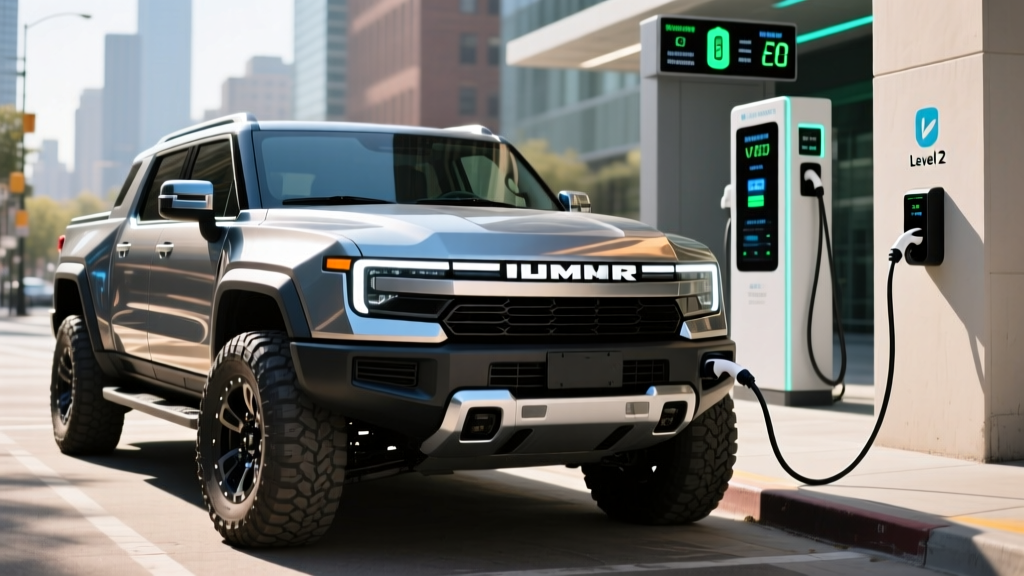
The 2026 Hummer EV Truck remains the most physically imposing electric vehicle on the road, and unlike many flagship EVs that trade substance for spectacle, GMC's electric supertruck backs up its 1,000+ horsepower claims with genuinely useful capability. For 2026, the Hummer EV lineup has been streamlined around the 3X trim with the large 24-module Ultium battery, delivering an EPA-estimated 350 miles of range while maintaining the Watts to Freedom launch mode that rockets this 9,000-pound rig to 60 mph in roughly 3.0 seconds.
But the Hummer EV isn't for everyone. Its sheer size — over 18 feet long, nearly 7 feet wide — makes it a challenge in tight urban environments and many parking structures. Efficiency suffers compared to lighter EVs, and the price of entry remains steep even as GMC has trimmed the lineup. If you need a truck that can tow, haul, and make a statement while running purely on electrons, nothing else quite matches this package. If you're primarily commuting in a city, there are far more practical options.
Real-World Range Expectations
EPA Estimated: 350 miles (24-module battery, 3X trim)
Real-World Highway (70 mph): Expect 280–310 miles. The Hummer EV's massive frontal area and 9,000+ lb curb weight hit efficiency hard at sustained highway speeds.
Cold Weather (below 32°F): Plan for 230–270 miles. The large battery pack loses significant capacity in freezing temps despite active thermal management.
City/Mixed Driving: 320–350 miles. Regenerative braking recovers more energy in stop-and-go traffic, getting closer to the EPA sticker.
Specs at a Glance: 2026 GMC Hummer EV Truck
| Specification | 2026 Hummer EV 3X (24-Module) |
|---|---|
| EPA Range | 350 miles |
| Battery Capacity (Usable) | ~205 kWh (NMC lithium-ion, Ultium platform) |
| Drivetrain | Tri-motor AWD (1 front, 2 rear) |
| Horsepower | Up to 1,000 hp (Watts to Freedom mode) |
| Torque | Up to 1,200 lb-ft |
| 0–60 mph | ~3.0 seconds |
| Max DC Fast Charge | 350 kW (800V architecture) |
| 10–80% DC Charge Time | ~34 minutes (at 350 kW-capable station) |
| Level 2 Home Charging | 19.2 kW / ~12 miles per hour |
| Efficiency | 47 MPGe combined / 72 kWh/100 mi |
| Towing Capacity | 7,500 lbs |
| Payload Capacity | 1,300 lbs |
| Bed Length | 5 ft (standard) |
| Cargo Volume (behind 2nd row) | 81.8 cu ft (rear seats folded) |
| Front Trunk (Frunk) | 11.3 cu ft |
| Ground Clearance | Up to 15.9 in (Extract Mode) |
| Curb Weight | ~9,046 lbs |
| Base MSRP (3X) | $106,395 (incl. $1,995 destination) |
| Battery/Powertrain Warranty | 8 years / 100,000 miles |
Sources: fueleconomy.gov, GMC official specifications.
Range & Efficiency: Big Battery, Big Appetite
The 2026 Hummer EV Truck continues to use GM's Ultium battery platform with NMC (nickel manganese cobalt) chemistry across all trims. The 24-module pack holds roughly 205 kWh of usable energy — one of the largest battery packs in any production vehicle. That enormous capacity is what enables the 350-mile EPA estimate despite the truck's poor aerodynamics and extreme weight.
Efficiency is where the physics of a 9,000-pound, brick-shaped vehicle become undeniable. At 47 MPGe combined and roughly 72 kWh per 100 miles, the Hummer EV consumes significantly more energy per mile than a Rivian R1T (approximately 43 kWh/100 mi) or a Ford F-150 Lightning Extended Range (approximately 48 kWh/100 mi). On a road trip, that means you're paying more per mile at public DC fast chargers and adding more frequent stops if you're driving beyond the truck's range envelope.
For context: a 300-mile highway trip in the Hummer EV will consume roughly 216 kWh of energy. At a national average DC fast-charging cost of $0.48/kWh, that's approximately $104 in electricity. The same trip in an F-150 Lightning would cost roughly $70. The Hummer EV's advantage is raw range — it can complete that trip without stopping, while many competitors cannot.
Charging Speed: 800V Architecture, But the Curve Tapers Hard
The 2026 Hummer EV retains its 800-volt electrical architecture, enabling DC fast charging at up to 350 kW at compatible stations. GMC quotes a 10–80% charge time of approximately 34 minutes when connected to a 350 kW-capable charger. However, as with every large-battery EV, the charge curve tells the full story.
| Charging Level | Power | Speed | Notes |
|---|---|---|---|
| Level 1 (120V) | ~1.4 kW | ~1 mile/hour | Emergency/trickle only — impractical for daily use |
| Level 2 (240V, 80A) | 19.2 kW | ~12 miles/hour | Full charge in ~18 hours; overnight recovery of ~150–200 mi |
| Level 2 (240V, 48A) | 11.5 kW | ~7 miles/hour | Standard home charger; full charge in ~30 hours |
| DC Fast (350 kW peak) | Up to 350 kW | 10–80% in ~34 min | Requires 800V-capable CCS/NACS station; peak only at low SoC |
| DC Fast (150 kW) | Up to 150 kW | 10–80% in ~55 min | More common station type; still viable for road trips |
Real-world charging nuance matters here. The Hummer EV sustains peak charge rates only at low states of charge (roughly 10–30% SoC) before tapering significantly. Above 60% SoC, charge speeds drop dramatically to protect the massive battery pack. On a road trip, plan your stops strategically: arrive at 10–15% SoC, charge to 70–75%, and move on. Sitting to 90%+ adds 20+ minutes of diminishing returns.
For home charging, the 19.2 kW onboard charger is among the fastest available in a production EV. With a hardwired 100-amp circuit and a 19.2 kW Level 2 station (such as a ChargePoint Home Flex or FLO Home X8 configured for 80A), you can recover approximately 12 miles of range per hour. That means a full overnight session (10–12 hours) replenishes 120–144 miles — enough for most daily driving. However, a full 0–100% charge still requires roughly 18 hours, which matters if you deplete the battery on a weekend trip and need a full charge by Monday morning.
Home Charging Installation Reality
A 19.2 kW Level 2 charger requires a 100-amp dedicated circuit. Many homes have 200-amp main panels that cannot accommodate this without a panel upgrade ($2,000–$5,000). Budget $1,200–$3,500 total for equipment, electrician labor, and permits. Consult a licensed electrician to assess your panel capacity before purchasing equipment.
Performance & Driving: 1,000 HP and Genuinely Surprising Capability
The tri-motor 3X powertrain produces up to 1,000 horsepower and 1,200 lb-ft of torque in Watts to Freedom (WTF) launch mode. The 0–60 mph time of approximately 3.0 seconds is staggering for a vehicle that weighs over 9,000 pounds — it matches sports cars that cost twice as much and weigh a third as much. The launch sequence includes haptic seat vibrations, a countdown animation, and an audible cue that builds anticipation before the instant torque hits.
Beyond straight-line performance, the Hummer EV's 4-wheel steering system (which GMC calls CrabWalk) allows the rear wheels to turn up to 10 degrees, enabling diagonal movement at low speeds and dramatically reducing the turning circle at higher speeds. In practice, this makes the truck far more maneuverable than its dimensions suggest — it can navigate trails and tight spaces with surprising agility.
The adaptive air suspension offers up to 15.9 inches of ground clearance in Extract Mode (primarily for off-road obstacle clearance), dropping to a more practical ride height on the highway. Ride quality is firm but controlled, though you'll feel the truck's mass over sharp bumps and during quick directional changes. This is a vehicle that rewards smooth inputs; aggressive steering and braking make the weight very apparent.
Towing capacity stands at 7,500 pounds — competitive with the F-150 Lightning and Rivian R1T, though well below the Silverado EV's 10,000+ lb rating. Expect range to drop by 40–50% when towing near maximum capacity at highway speeds.
Interior, Tech & Standout Features
The 2026 Hummer EV interior balances rugged utility with premium materials. A 13.4-inch infotainment touchscreen running GM's latest Ultifi software platform dominates the dashboard, paired with a 12.3-inch driver instrument cluster. Wireless Apple CarPlay and Android Auto are standard, along with built-in Google services and over-the-air update capability.
Standout tech features include:
- CrabWalk 4-wheel steering — diagonal movement for trail navigation and tight spaces
- Extract Mode — raises air suspension to 15.9 inches of ground clearance
- UltraVision camera system — up to 18 camera views including underbody cameras for off-road obstacle awareness
- Super Cruise (Level 2) — hands-free highway driving on 750,000+ miles of compatible roads; driver must remain attentive
- Infinity Roof with removable panels — open-air driving with modular sky panels stored in the frunk
- Power tailgate and MultiPro midgate — extends the 5-foot bed into the cabin for longer cargo
Notable drawbacks:
- The A-pillar is thick and creates a significant blind spot at intersections
- Rear-seat legroom (38.9 inches) is adequate but not generous for a truck this size
- The 5-foot bed is short for traditional truck buyers; the midgate helps but compromises cabin sealing
- At 86.6 inches wide (with mirrors), the Hummer EV will not fit in many automated car washes or tight urban parking garages
- Insurance premiums are among the highest in the EV segment due to repair costs and vehicle value
Super Cruise Is Level 2 — Not Self-Driving
GMC's Super Cruise is an SAE Level 2 driver-assistance system. It provides hands-free steering, acceleration, and braking on pre-mapped divided highways, but the driver must remain fully attentive and ready to take over at any time. The system monitors driver attention via an infrared camera. It does not handle construction zones, unmapped roads, or complex urban driving. For the latest Super Cruise coverage map, consult GMC's official Super Cruise page.
Pricing, Trims & Federal Tax Credit Eligibility
For 2026, GMC has simplified the Hummer EV Truck lineup. The Edition 1 is long sold out, and the lineup now centers on the 3X trim with the 24-module battery. The 2X (dual-motor, 16-module battery) remains available as a lower-priced entry point.
| Trim | Base MSRP (incl. destination) | Est. As-Tested (loaded) | Federal §30D Credit Eligible? |
|---|---|---|---|
| 2X (16-module, dual-motor) | $98,895 | $105,000–$110,000 | Potentially — subject to MSRP cap, income limits, and battery-sourcing rules |
| 3X (24-module, tri-motor) | $106,395 | $115,000–$130,000 | Potentially — subject to MSRP cap, income limits, and battery-sourcing rules |
Federal tax credit eligibility (IRS §30D) requires careful review. The Hummer EV Truck qualifies under the pickup truck MSRP cap of $80,000 — and here's the critical issue: both trims exceed this cap. As of current IRS rules, vehicles with an MSRP above $80,000 (for trucks) do not qualify for the $7,500 federal tax credit, regardless of battery sourcing or buyer income.
This means the 2026 Hummer EV Truck is not eligible for the $7,500 federal EV tax credit under current §30D rules. Buyers should not factor the credit into their purchase budget. State and local incentives may still apply — check your state's energy office or IRS Publication on clean vehicle credits for the latest eligibility details.
- MSRP Cap (trucks): $80,000 — Hummer EV exceeds this ❌
- Buyer Income Cap (joint filers): $300,000 MAGI — varies by buyer
- Battery Component Sourcing: Must meet North American assembly thresholds — varies by model year
- Critical Minerals Sourcing: Must meet percentage thresholds from US/FTA partners — varies by model year
- Point-of-Sale Transfer: Available for eligible vehicles — but MSRP cap disqualifies the Hummer EV
Who Should Buy the 2026 Hummer EV Truck?
Buy the Hummer EV If:
- You want maximum electric truck range (350 mi EPA) without sacrificing off-road capability
- You need tri-motor AWD for serious off-road use, snow, or towing in adverse conditions
- You value the Super Cruise hands-free highway system for long commutes and road trips
- Your garage and daily routes can accommodate a vehicle that's 18.5 feet long and 7.2 feet wide (without mirrors)
- Budget is not your primary constraint and you're paying $100K+ regardless
Look Elsewhere If:
- You commute primarily in a city with tight parking — consider the Rivian R1T or Ford F-150 Lightning
- Efficiency and cost-per-mile are top priorities — the F-150 Lightning uses roughly 35% less energy per mile
- You need a full-size 6.5+ foot bed for work — the Hummer EV's 5-foot bed is short even with the midgate
- You want to qualify for the $7,500 federal tax credit — the Hummer EV's MSRP exceeds the $80K truck cap
- You need to tow more than 7,500 lbs — the Silverado EV offers 10,000+ lb capacity
Pros
- 350-mile EPA range is best-in-class for electric trucks
- 1,000 hp and 3.0-second 0–60 are unmatched in the segment
- CrabWalk and 4-wheel steering provide genuine off-road and maneuverability advantages
- 19.2 kW onboard AC charging is among the fastest available
- Super Cruise hands-free driving on 750,000+ miles of highways
- Removable roof panels for open-air driving
Cons
- $106K+ starting price with no federal tax credit eligibility
- 47 MPGe / 72 kWh/100 mi — expensive to charge on the road
- 9,046 lb curb weight limits payload to 1,300 lbs and stresses tires/brakes
- 5-foot bed is short for traditional truck utility
- 86.6-inch width (with mirrors) won't fit many parking structures
- High insurance premiums and potential for costly collision repairs
- Full home charge takes 18+ hours even at 19.2 kW
Ownership Costs & Long-Term Outlook
GMC backs the Hummer EV's battery and powertrain with an 8-year/100,000-mile warranty, which is standard for the segment. The battery is expected to retain at least 70% of its original capacity over that warranty period, though real-world degradation data for the 24-module Ultium pack is still limited given the vehicle's relatively recent launch.
Insurance is a significant ownership cost. Expect annual premiums of $3,500–$5,000+ depending on your state, driving record, and coverage levels. The high vehicle value, expensive repair parts (particularly the air suspension and tri-motor drivetrain), and limited collision-repair familiarity all push premiums higher than mainstream EVs.
Tire costs are another factor. The Hummer EV uses 35-inch all-terrain tires on most trims, and the extreme weight and torque accelerate tire wear. Budget $1,500–$2,500 for a set of replacement tires, and expect to replace them every 25,000–35,000 miles under normal driving.
Frequently Asked Questions
What is the real-world range of the 2026 Hummer EV Truck?
The EPA estimates 350 miles for the 3X trim with the 24-module battery. In real-world highway driving at 70 mph, expect 280–310 miles. In freezing temperatures, plan for 230–270 miles. City and mixed driving with regenerative braking gets closest to the EPA sticker, around 320–350 miles.
How fast does the Hummer EV charge at home and on the road?
On a 350 kW DC fast charger, the Hummer EV charges from 10–80% in approximately 34 minutes, though peak speeds only sustain at low states of charge before tapering. At home on a 19.2 kW Level 2 charger, it adds about 12 miles of range per hour. A full 0–100% home charge takes roughly 18 hours. On a standard 48-amp Level 2 charger (11.5 kW), expect about 7 miles per hour and a 30-hour full charge.
Does the 2026 Hummer EV qualify for the $7,500 federal tax credit?
No. Under current IRS §30D rules, trucks must have an MSRP of $80,000 or less to qualify for the federal clean vehicle credit. Both the 2X ($98,895) and 3X ($106,395) trims exceed this cap. Buyers should not budget around the federal credit. State and local incentives may still apply — consult your state energy office and IRS.gov for details.
Is the Hummer EV worth buying vs. the Rivian R1T or Ford F-150 Lightning?
It depends on your priorities. The Hummer EV offers the longest EPA range (350 mi) and the most power (1,000 hp) in the electric truck segment, plus unique off-road features like CrabWalk. The Rivian R1T is lighter, more efficient, has a longer bed, and starts around $75,000 — potentially qualifying for the tax credit. The F-150 Lightning is the most practical daily truck with a larger bed, better efficiency, and a lower starting price, though with shorter range. If maximum range and performance are non-negotiable, the Hummer EV wins. If daily practicality and value matter more, the R1T and Lightning are stronger choices.
Can the Hummer EV tow a trailer, and how does towing affect range?
Yes — the Hummer EV is rated to tow up to 7,500 pounds. When towing near maximum capacity at highway speeds, expect range to drop by 40–50%, reducing effective range to roughly 175–210 miles. Preconditioning the battery and planning charging stops around the reduced range is essential for any towing trip.
What is the battery warranty and expected lifespan?
GMC provides an 8-year/100,000-mile battery and powertrain warranty, guaranteeing the battery will retain at least 70% of its original capacity during that period. The NMC Ultium battery pack is designed for long-term durability, and GM's active thermal management system helps mitigate degradation. Replacement cost for the full 24-module pack, if needed out of warranty, is estimated at $25,000–$35,000+ based on current Ultium pricing, though costs are expected to decline over time.