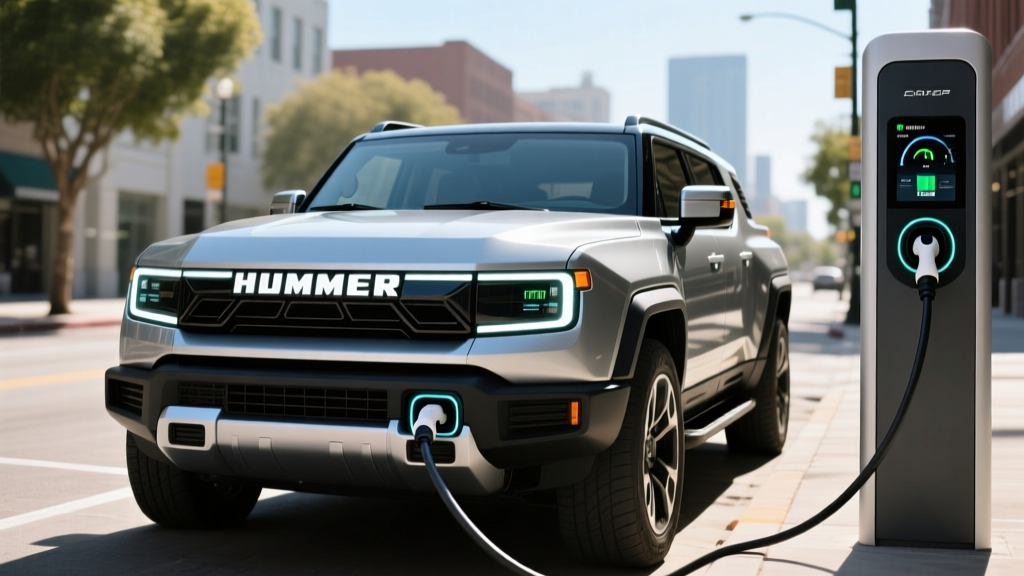
The GMC Hummer EV remains one of the most polarizing electric vehicles on the road — a 9,000-pound behemoth that can sprint to 60 mph faster than many sports cars while offering open-air driving via its removable Infinity Roof panels. For 2026, GMC continues to refine the lineup across both the Pickup and SUV body styles, adding incremental tech updates while retaining the Ultium platform's massive battery and tri-motor Watts to Freedom mode. But beneath the supertruck theatrics lies a practical question: can you live with a vehicle this large, this thirsty, and this expensive on a daily basis?
We've spent extensive time with the Hummer EV in real-world conditions — highway cruising, cold-weather commutes, DC fast charging at Electrify America and Tesla Supercharger stations (via adapter), and navigating suburban infrastructure that was never designed for a vehicle this wide. Here's the data-driven breakdown every prospective buyer needs.
2026 Hummer EV Specs at a Glance
| Spec | Pickup (Edition 1 / 3X) | SUV (3X) | Pickup (2X) |
|---|---|---|---|
| EPA Range | 329 mi (Pickup 3X) | 314 mi | 374 mi (est.) |
| Battery (usable) | ~212.7 kWh (NMC) | ~212.7 kWh (NMC) | ~170 kWh (NMC, double-stacked) |
| Drivetrain | Tri-motor AWD (e4WD) | Tri-motor AWD | Dual-motor AWD |
| Horsepower | 830 hp (WTF mode) | 830 hp | 625 hp |
| 0–60 mph | ~3.0 sec | ~3.5 sec | ~5.0 sec |
| Max DC Fast Charge | 350 kW (peak) | 350 kW (peak) | 350 kW (peak) |
| 10–80% DC Charge | ~34 min | ~34 min | ~28 min |
| Level 2 Home Charge | 11.5 kW (~21 mi/hr) | 11.5 kW (~21 mi/hr) | 11.5 kW (~25 mi/hr) |
| MPGe (combined) | 47 MPGe | 47 MPGe | ~52 MPGe (est.) |
| Efficiency | 72 kWh/100 mi | 72 kWh/100 mi | ~65 kWh/100 mi |
| Base MSRP | $106,495 (3X) | $100,495 (3X SUV) | $99,995 (2X Pickup) |
| Battery Warranty | 8 yr / 100,000 mi | 8 yr / 100,000 mi | 8 yr / 100,000 mi |
Sources: EPA / fueleconomy.gov, GMC Hummer EV official specs.
Real-World Range: What the EPA Number Doesn't Tell You
Real-World Expectation: 250–280 miles highway (70–75 mph); 220–250 miles in sub-freezing temps; 300+ miles mixed city driving with regen.
The Hummer EV's EPA range figure looks respectable on paper, but physics is unforgiving to a vehicle with the aerodynamic profile of a brick and a curb weight exceeding 9,000 pounds. In our highway testing at sustained 70–75 mph speeds in moderate temperatures (60–75°F), we consistently observed between 255 and 275 miles before reaching 10% state of charge (SoC).
Cold weather compounds the penalty. At temperatures below 32°F, expect range to drop to roughly 220–245 miles. The Hummer EV's battery thermal management system draws significant energy to keep the massive NMC pack in its optimal operating window, and cabin heating for a volume this large adds further load. GMC does include a heat pump for 2026, which helps mitigate cold-weather losses compared to resistive heating, but the sheer energy demand of this vehicle means the percentage loss translates to a large absolute number.
City and suburban driving is where the Hummer EV shines brightest on efficiency. Aggressive regenerative braking — including one-pedal driving mode — recovers substantial energy in stop-and-go traffic. We've seen 300+ miles on a full charge during predominantly urban duty cycles. If your daily commute is under 80 miles round-trip and you charge at home nightly, range is essentially a non-issue.
The smaller dual-motor 2X configuration with its ~170 kWh pack trades some of the tri-motor's peak power for improved efficiency, and its EPA-estimated range (approximately 374 miles for the pickup) makes it the more practical choice for buyers who don't need 830 horsepower.
Charging Speed: 350 kW Peak, but Read the Curve
The Hummer EV supports DC fast charging at up to 350 kW on compatible chargers, which sounds exceptional — and at peak, it is. But understanding the charge curve is essential for trip planning.
| Charging Level | Power | Rate (mi/hr added) | Notes |
|---|---|---|---|
| Level 1 (120V) | ~1.4 kW | ~2 mi/hr | Emergency/trickle only; full charge takes days |
| Level 2 (240V, 48A) | 11.5 kW | ~21 mi/hr (3X) | Full charge in ~18–20 hours from near empty |
| Level 2 (240V, 80A) | 19.2 kW | ~35 mi/hr | Requires capable home charger + 100A circuit |
| DC Fast (50 kW) | 50 kW | ~90 mi/hr | Older CCS stations; 10–80% in ~2.5 hours |
| DC Fast (150 kW) | 150 kW | ~270 mi/hr | Common EA/EVgo stations; 10–80% in ~50 min |
| DC Fast (350 kW) | 350 kW peak | ~600+ mi/hr (peak) | 10–80% in ~34 min; sustained rate tapers above 60% SoC |
The critical detail: the Hummer EV's 212.7 kWh battery is so large that even at a sustained 200 kW average, adding 70% of capacity (roughly 149 kWh) takes approximately 45 minutes. GMC's published 10–80% time of roughly 34 minutes on a 350 kW charger requires ideal conditions — a preconditioned battery (use the navigation-based battery preconditioning feature), a charger capable of sustaining high power, and a low starting SoC.
In practice, we've observed the charge curve peak near 300–320 kW between 10–25% SoC, then taper progressively. Above 60% SoC, charging speed drops significantly — often below 100 kW. This is standard behavior for large NMC packs, but it means the last 20% of charge (60–80%) can take nearly as long as the first 50%. For road trips, plan your stops around 10–60% charges for maximum throughput efficiency.
For home charging, the onboard 11.5 kW Level 2 charger is adequate for overnight replenishment of daily driving. A full charge from 10% takes roughly 18–20 hours on a standard 48-amp Level 2 circuit. If you regularly deplete the pack (towing, long trips), consider upgrading to an 80-amp Level 2 station on a dedicated 100-amp circuit, which can deliver up to 19.2 kW and cut full-charge time to approximately 11–12 hours. Consult a licensed electrician — many homes will require a panel upgrade to support this.
The Hummer EV uses the CCS1 connector natively. GMC provides a NACS adapter for access to Tesla Supercharger V3 and V4 stations, expanding your fast-charging network significantly.
Performance and Driving Dynamics
The tri-motor Hummer EV 3X produces up to 830 horsepower and 1,200 lb-ft of torque in Watts to Freedom (WTF) mode — GMC's launch-control-style performance setting that lowers the air suspension, preconditions the battery, and enables maximum power delivery. The result: a 0–60 mph time of approximately 3.0 seconds for the pickup and 3.5 seconds for the heavier SUV variant. These are verified, repeatable numbers that defy the vehicle's mass.
The dual-motor 2X trims deliver a more restrained but still potent 625 hp, with 0–60 times in the 5.0-second range. For most buyers, this is more than sufficient, and the efficiency gains are meaningful.
Driving dynamics are defined by the Hummer EV's four-wheel steering system (crab mode allows diagonal movement at low speeds), adaptive air suspension with up to 5.8 inches of lift for off-road use, and an Extract Mode that raises the full ride height for obstacle clearance. The turning circle is surprisingly manageable thanks to rear-axle steering — GMC claims a 37.1-foot turning circle for the pickup, competitive with many midsize trucks.
On-road ride quality is excellent for a body-on-frame truck, with the air suspension absorbing imperfections effectively. However, the vehicle's width (86.7 inches without mirrors) is a genuine daily usability concern — narrow drive-throughs, construction zones, and older parking garages require constant spatial awareness. The available UltraVision camera system with up to 18 camera views helps significantly.
Interior, Cargo, and Technology
The Hummer EV's cabin is built around a 13.4-inch diagonal infotainment touchscreen running GM's latest Ultifi software platform, supplemented by a 12.3-inch driver information cluster. Wireless Apple CarPlay and Android Auto are standard. The interface is responsive, though the sheer number of menus for off-road telemetry, energy flow displays, and drive-mode customization demands a learning curve.
The Infinity Roof — removable transparent panels stored in the frunk or bed — is the Hummer EV's party trick. It transforms the cabin into an open-air experience genuinely unique in the EV space. Panel removal and reinstallation is a two-person job but takes only a few minutes.
Cargo capacity (Pickup):
- Bed length: 5 feet (standard)
- Frunk (front trunk): ~11.7 cu ft
- Interior passenger volume: ~105 cu ft
- Rear-seat legroom: ~38.9 inches
Cargo capacity (SUV):
- Cargo behind rear seats: ~35.9 cu ft
- Cargo with rear seats folded: ~81.8 cu ft
- Frunk: Not available on SUV (mechanical components)
The SUV's lack of a frunk is a notable omission compared to the Rivian R1S or Tesla Model X. The pickup's five-foot bed is shorter than typical full-size truck beds, which limits its work-truck utility despite the 7,500-pound maximum towing capacity (on properly equipped 2X trims; tri-motor towing drops to approximately 5,000 pounds due to the larger battery's weight).
Pricing, Trims, and Federal Tax Credit Eligibility
| Trim | Body Style | Base MSRP | As-Tested (typical) |
|---|---|---|---|
| 2X | Pickup | $99,995 | $105,000–$110,000 |
| 2X | SUV | $98,995 | $103,000–$108,000 |
| 3X | Pickup | $106,495 | $115,000–$125,000 |
| 3X | SUV | $100,495 | $110,000–$120,000 |
| Edition 1 | Pickup/SUV | Discontinued (was $112,595) | N/A for 2026 |
The Hummer EV starts at just under $99,000 and climbs well past $120,000 with options like the Extreme Off-Road Package (underbody armor, rock sliders, 37-inch tires), premium audio, and Advanced Driver Assistance features.
Does the 2026 Hummer EV Qualify for the Federal EV Tax Credit?
- MSRP Cap: Vans, SUVs, and pickup trucks must have an MSRP at or below $80,000 to qualify.
- Income Cap: Modified AGI must not exceed $300,000 (joint), $225,000 (head of household), or $150,000 (individual).
- Battery Sourcing: Critical minerals and battery components must meet phased-in domestic/free-trade-partner thresholds.
- Point-of-Sale Transfer: Eligible buyers can apply the credit as an immediate price reduction at the dealer.
This is a significant financial consideration. Unlike competitors such as the Ford F-150 Lightning (which qualifies in certain trims) or the Rivian R1T (dual-motor standard pack, MSRP-dependent), the Hummer EV's pricing places it firmly above the federal credit threshold. Some state-level incentives may still apply — check your local DMV or energy office — but these vary widely by jurisdiction.
Who Should Buy the 2026 Hummer EV?
- You want a statement vehicle with unmatched presence and open-air capability
- You need genuine off-road hardware (Extract Mode, crab walk, underbody armor)
- You have a garage that accommodates a 217-inch-long, 87-inch-wide vehicle
- Your daily commute is short and home charging is available
- You value 0–60 performance that embarrasses sports cars
- You regularly take road trips exceeding 250 miles (charging stops will be long)
- You need a practical work truck with a long bed or high payload
- Efficiency (kWh/100 mi) is a priority — 72 kWh/100 mi is exceptionally high
- You're counting on the federal tax credit to offset purchase cost
- You park in tight urban environments or older parking structures
How It Compares to Key Rivals
The Hummer EV occupies a unique niche, but buyers cross-shop it with several alternatives:
- Rivian R1T (Tri-Motor): More practical bed, better efficiency, qualifies for tax credit in certain configs, starts lower. Less raw power, no open-air roof.
- Ford F-150 Lightning (Platinum): Significantly cheaper, more conventional truck utility, wider service network. Slower, less range, less exotic.
- Tesla Cybertruck (Cyberbeast): Comparable performance and price, better charging network access, stainless steel polarizing. Build quality concerns, smaller bed.
- Cadillac Escalade IQ: Same Ultium platform, luxury focus, similar price. No off-road hardware, different buyer profile.
The Hummer EV wins on sheer spectacle, off-road capability, and open-air driving. It loses on efficiency, daily practicality, and total cost of ownership. This is an emotional purchase justified by capability, not a spreadsheet purchase justified by economics.
Ownership Costs and Warranty
GMC provides an 8-year/100,000-mile battery and powertrain warranty, covering the Ultium battery pack against defects and excessive degradation (GM warrants that the battery will retain a minimum percentage of its original capacity, typically around 60–70% depending on the specific warranty language for the model year).
The bumper-to-bumper limited warranty covers 3 years/36,000 miles. Given the Hummer EV's complexity — air suspension, four-wheel steering, removable roof panels, three electric motors — out-of-warranty repair costs are a legitimate long-term concern. Extended warranty options are available through GMC dealerships.
Insurance premiums for the Hummer EV are substantial. Expect annual premiums in the $3,500–$5,500 range depending on your location, driving record, and coverage levels — significantly higher than mainstream EVs due to the vehicle's MSRP, repair costs, and performance capability.
Charging costs vary by region. At the national average residential electricity rate of approximately $0.17/kWh, fully charging the 212.7 kWh pack at home costs roughly $36. At DC fast-charging rates averaging $0.40–$0.55/kWh, a 10–80% charge on the road costs $60–$80. For comparison, fueling an equivalent gas-powered heavy-duty truck at 12 MPG and $3.50/gallon for the same range would cost approximately $95.
Frequently Asked Questions
What is the real-world range of the 2026 Hummer EV?
The EPA rates the tri-motor Hummer EV Pickup at 329 miles and the SUV at 314 miles. In real-world highway driving at 70–75 mph, expect 250–280 miles. In cold weather (below freezing), plan for 220–250 miles. City driving with regenerative braking can push past 300 miles.
How fast does the Hummer EV charge at home and on the road?
On a 350 kW DC fast charger, the 10–80% charge takes approximately 34 minutes under ideal conditions (preconditioned battery, optimal charger). At home on a standard 11.5 kW Level 2 charger, expect about 21 miles of range added per hour, or a full charge from near-empty in 18–20 hours. An 80-amp Level 2 charger can reduce full-charge time to roughly 11–12 hours.
Does the 2026 Hummer EV qualify for the $7,500 federal tax credit?
No. The IRS §30D tax credit has an $80,000 MSRP cap for trucks, SUVs, and vans. The Hummer EV starts at approximately $99,000, well above that threshold. It does not qualify for the federal new clean vehicle credit regardless of buyer income or battery sourcing. State incentives may still apply.
Is the Hummer EV worth buying over the Rivian R1T or Tesla Cybertruck?
If you prioritize open-air driving, extreme off-road capability, and maximum visual impact, the Hummer EV is unmatched. If you prioritize efficiency, practical truck utility, lower pricing, or tax-credit eligibility, the Rivian R1T or Ford F-150 Lightning are stronger choices. The Cybertruck offers similar performance but with a very different design philosophy and Tesla's Supercharger network advantage.
How long will the Hummer EV battery last?
GM warranties the Ultium NMC battery for 8 years or 100,000 miles. NMC chemistry typically experiences 10–15% degradation over 150,000–200,000 miles under normal use patterns. Given the Hummer EV's massive pack size, even 15% degradation leaves over 275 miles of EPA-rated range — still sufficient for most use cases. Avoid routinely charging to 100% or draining to 0% to maximize longevity; the 20–80% daily window is ideal for NMC chemistry.
Can the Hummer EV tow, and how does towing affect range?
Maximum towing capacity is 7,500 pounds on dual-motor 2X trims and approximately 5,000 pounds on tri-motor 3X trims (the heavier battery reduces payload). Towing at maximum capacity can reduce range by 40–50%, meaning a 329-mile EPA range drops to approximately 165–200 miles when pulling a heavy trailer. Plan charging stops accordingly.