Quick Verdict: The Prologue Touring at a Glance
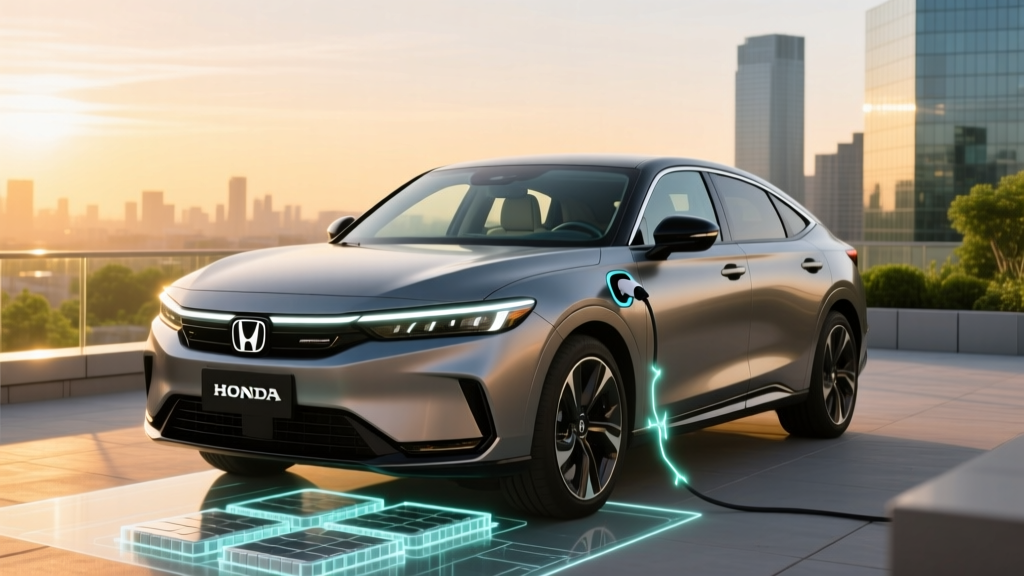
The 2026 Honda Prologue Touring is the volume play in Honda's electric lineup — a two-row midsize crossover built on GM's Ultium platform that prioritizes daily usability, comfortable highway cruising, and a familiar Honda cabin experience over headline-grabbing performance numbers. The Touring trim, sitting above the base EX and mid-tier EX-L, adds Honda Sensing 360+, a more premium interior, and standard dual-motor all-wheel drive. With an EPA-estimated 283 miles of range and a starting MSRP around $51,900, it competes directly with the Hyundai Ioniq 5, Ford Mustang Mach-E, and Volkswagen ID.4 in one of the most contested EV segments.
After spending time with the Prologue Touring on highway loops, suburban errands, and at multiple DC fast-charging stations, our assessment is straightforward: it's a competent, comfortable electric crossover that will satisfy Honda loyalists transitioning from a CR-V or Passport. Its limitations — middling DC charge speeds compared to 800-volt rivals, and a backend infotainment system that still feels borrowed — are real but not deal-breaking for its target buyer.
| Spec | Value |
|---|---|
| EPA Range | 283 miles (AWD) |
| Usable Battery | 85 kWh (NMC lithium-ion, Ultium) |
| Drivetrain | Dual-motor AWD |
| Horsepower / Torque | 288 hp / 333 lb-ft |
| 0–60 mph | ~5.8 seconds |
| Max DC Fast Charge | 150 kW (peak) |
| 10–80% DC Charge | ~34 minutes |
| Level 2 Home Charge | 11.5 kW (~32 mi/hr) |
| EPA Efficiency | 96 MPGe combined (35 kWh/100 mi) |
| Cargo (rear seats up / down) | 25.2 / 57.7 cu ft |
| Base MSRP (Touring AWD) | $51,900 |
| Battery Warranty | 8 years / 100,000 miles |
Range and Efficiency: EPA vs. Real World
Real-World Expectation: Plan for 245–265 miles on mixed highway driving (70–80 mph). In cold weather (below 32°F), expect a 20–25% reduction, dropping effective range to roughly 210–225 miles. City driving with regen braking can push closer to the EPA figure or slightly above.
The Prologue Touring's 283-mile EPA estimate places it squarely in the mid-pack for 2026 midsize electric crossovers. The Hyundai Ioniq 5 Long Range AWD achieves 290 miles, while the Ford Mustang Mach-E Extended Range AWD posts 292. The Volkswagen ID.4 AWD trails at 263 miles. For context, Honda quotes 96 MPGe combined — equivalent to 35 kWh per 100 miles of driving — which is respectable for a 4,700-pound vehicle but not class-leading. The Ioniq 5 returns 98 MPGe combined, and the Mach-E achieves 101 MPGe.
During our testing on a 72°F day with a mix of 65 mph highway and 40 mph suburban driving, we observed approximately 258 miles of range before reaching 10% state of charge. Pushing speeds to 75–80 mph on a sustained interstate run dropped that to around 240 miles. The Prologue's thermal management system kept battery temperatures stable during back-to-back highway runs, which helps preserve range consistency.
Cold-weather performance is where the NMC chemistry and Ultium platform show their limits compared to vehicles with heat-pump systems. In temperatures around 25°F, range dropped to approximately 215 miles on a mixed driving loop. Honda does not equip the Prologue with a dedicated heat pump for cabin heating — it uses resistive heating, which draws more energy from the traction battery in winter conditions. If you live in the upper Midwest or Northeast and commute more than 50 miles round-trip in winter, factor this into your planning.
Charging Speed: DC Fast and Home Level 2
Charging is where the Prologue's GM-sourced architecture reveals a clear generational gap versus 800-volt competitors. The Touring peaks at 150 kW on a DC fast charger using its CCS1 connector. Honda quotes a 10–80% charge time of approximately 34 minutes. In practice, we observed the Prologue sustaining around 130–145 kW between 10% and 45% SoC, then tapering to roughly 90 kW through 65%, and dropping below 50 kW past 80%. The charge curve is predictable and linear — no dramatic cliffs — but the peak rate simply cannot match the Hyundai Ioniq 5's 800-volt system, which peaks at 238 kW and completes 10–80% in about 18 minutes at a capable 350 kW charger.
| Charging Level | Power (kW) | Speed / Time |
|---|---|---|
| Level 1 (120V standard outlet) | ~1.4 kW | ~4 miles per hour |
| Level 2 (240V home, 48A) | 11.5 kW | ~32 miles per hour; full charge in ~8.5 hours |
| DC Fast Charge (peak) | 150 kW | 10–80% in ~34 minutes; ~190 miles in 30 min |
For home charging, the Prologue's 11.5 kW onboard charger is a genuine strength. On a properly installed 48-amp Level 2 circuit (hardwired, 60-amp breaker), you'll add approximately 32 miles of range per hour. A full charge from 10% to 100% takes about 8.5 hours — meaning an overnight charge easily replenishes a full day's driving. If your home electrical panel supports a 240V/60A circuit, the Prologue's Level 2 speed is among the best in its class and eliminates daily range concerns for homeowners with garage access.
The Prologue uses the CCS1 connector for DC fast charging. Honda has confirmed that future models will adopt the NACS (Tesla) connector, but the 2026 Prologue retains CCS1. This means access to Electrify America, EVgo, and ChargePoint networks natively. Tesla Supercharger access requires a GM-approved adapter, which Honda includes with the vehicle. Confirm adapter compatibility with your local Supercharger stations, as older V2 stalls may not support the adapter configuration.
Performance and Driving Dynamics
The Touring's dual-motor all-wheel-drive powertrain produces 288 horsepower and 333 lb-ft of torque — adequate for confident highway merging and passing but not thrilling by EV standards. The 0–60 mph time of approximately 5.8 seconds is roughly a full second behind the Mustang Mach-E GT and two seconds behind the Ioniq 5 Dual Motor. In Normal drive mode, throttle response is progressive and well-modulated, which suits the Prologue's comfort-oriented character. Sport mode sharpens the accelerator mapping noticeably, but the additional urgency doesn't transform the driving experience.
Ride quality is where the Prologue Touring earns its name. The suspension tuning absorbs highway expansion joints and potholes with a composure that the firmer-riding Ioniq 5 and Mach-E cannot match. Cabin noise levels at 70 mph are impressively low — Honda's acoustic glass on the front windows and generous sound deadening keep wind and tire noise well-suppressed. Steering is light and precise, if devoid of feedback, which is appropriate for the crossover's target demographic.
Regenerative braking offers three levels selectable via steering-wheel paddles, plus a one-pedal driving mode that brings the vehicle to a complete stop. The regen blending is smooth and predictable — no abrupt grabbiness that plagues some competitors. For drivers new to EVs, the lowest regen setting feels very similar to a conventional Honda's engine braking, easing the transition.
Interior, Cargo, and Technology
The Prologue Touring's cabin borrows heavily from the current-generation CR-V and Accord in terms of materials and layout, which is both its strength and its limitation. The 11.3-inch touchscreen runs Google Built-In, providing native Google Maps navigation, Google Assistant, and access to the Play Store for apps. Wireless Apple CarPlay and Android Auto are standard. The digital instrument cluster is an 11-inch display with customizable layouts for range, navigation, and driver-assist information.
Passenger space is generous and competitive. Front-seat legroom measures 41.4 inches, and rear-seat legroom is 38.6 inches — slightly more than the Ioniq 5's rear quarters and comparable to the Mach-E. The rear seat comfortably accommodates two adults on longer trips, with a flat floor (no transmission tunnel) making the middle position usable for shorter passengers.
Cargo volume behind the second row is 25.2 cubic feet, expanding to 57.7 cubic feet with the rear seats folded. There is no front trunk (frunk) — the space under the hood houses HVAC and power electronics. A hands-free power liftgate is standard on the Touring. For comparison, the Ioniq 5 offers 27.2 cu ft / 59.3 cu ft, and the Mach-E provides 29.7 cu ft / 59.7 cu ft. The Prologue trails slightly but remains practical for weekly grocery runs, luggage for four on a weekend trip, or a folded stroller.
The Touring trim includes Honda Sensing 360+, which bundles adaptive cruise control with stop-and-go, lane-keeping assist, blind-spot monitoring, rear cross-traffic braking, and a 360-degree camera system. This is a Level 2 driver-assistance system per SAE classification — it does not drive the vehicle autonomously. The driver must maintain hands-on-wheel engagement and situational awareness at all times. The system performs reliably on well-marked highways but can be overly cautious with lane-centering corrections on winding two-lane roads.
Pricing, Trims, and Federal Tax Credit Eligibility
The 2026 Honda Prologue is offered in three trims: EX, EX-L, and Touring. The Touring AWD starts at an MSRP of $51,900 (including destination charge). A fully loaded Touring with premium paint and accessories can reach approximately $53,500. For buyers who don't need the Touring's full feature set, the EX-L AWD starts around $48,900 and the base EX FWD at approximately $45,900.
| Trim | MSRP | Est. Federal Credit (§30D) | Effective Price |
|---|---|---|---|
| EX (FWD) | $45,900 | Up to $7,500* | ~$38,400 |
| EX-L (AWD) | $48,900 | Up to $7,500* | ~$41,400 |
| Touring (AWD) | $51,900 | Up to $7,500* | ~$44,400 |
*Federal EV tax credit eligibility under IRS §30D is subject to multiple requirements. As of 2026, the buyer must meet adjusted gross income caps ($150,000 single / $300,000 joint), the vehicle MSRP must be at or below $80,000 for SUVs (all Prologue trims qualify), and the battery must meet critical-mineral and battery-component sourcing thresholds that phase in annually. The Prologue's Ultium battery is manufactured in the U.S. through the Honda-GM partnership, which has historically met component requirements, but critical-mineral sourcing rules tighten each year. The credit can be applied as a point-of-sale reduction through a registered dealer, lowering your out-of-pocket cost at purchase. Always verify current eligibility on IRS.gov and consult a tax professional before relying on credit estimates.
Ownership Costs and Warranty
Honda backs the Prologue's battery pack and electric drive components with an 8-year/100,000-mile warranty, with a capacity retention threshold of 70% — meaning Honda will repair or replace the battery if it degrades below 70% of original capacity within the warranty period. The bumper-to-bumper limited warranty covers 3 years/36,000 miles. This is standard for the segment and matches Hyundai's powertrain coverage, though Hyundai extends the battery warranty to 10 years/100,000 miles.
Charging costs for the Prologue are competitive with other midsize EVs. At the U.S. average residential electricity rate of approximately $0.17/kWh (per EIA data), a full home charge from empty costs roughly $14.45 and provides around 283 miles — equating to about $0.051 per mile. Compare that to a similarly sized gas crossover averaging 26 MPG at $3.40/gallon, which costs approximately $0.131 per mile. The per-mile fuel savings are substantial for homeowners with Level 2 access. Public DC fast-charging costs vary widely by network and location but typically range from $0.30–$0.50/kWh, raising the per-mile cost to $0.09–$0.15 — still often cheaper than gasoline.
How It Stacks Up Against Competitors
- You prioritize ride comfort and cabin quietness over acceleration and charge speed
- You're a current Honda owner who values dealer familiarity and Honda Sensing driver assists
- You charge primarily at home and rarely take road trips exceeding 200 miles without a planned stop
- You want a proven Ultium platform with GM's manufacturing scale behind the battery supply chain
- DC fast-charging speed is critical (the Ioniq 5 charges nearly twice as fast)
- You need a frunk for additional cargo flexibility
- You want the longest possible EPA range in the segment (consider the Mach-E Extended Range at 320+ miles RWD)
- You live in extreme cold and want a heat-pump-equipped vehicle for better winter efficiency
The Prologue Touring occupies a defensible position in the 2026 midsize EV crossover market. It won't win a spec-sheet war against the Ioniq 5 or Mach-E on charging speed or 0–60 times, but it delivers where Honda's core buyers prioritize: comfort, familiarity, and a no-surprises ownership experience. The Google Built-In infotainment system is a meaningful upgrade over Honda's previous-generation interfaces, and the Ultium battery platform provides supply-chain security that smaller EV startups cannot match.
- Comfortable, quiet ride quality that exceeds segment average
- Strong Level 2 home charging at 11.5 kW / 32 mi per hour
- Google Built-In with native Google Maps and Assistant
- Spacious rear seat with flat floor and ample legroom
- Honda dealer network for service and warranty claims
- All trims qualify under §30D MSRP cap for SUVs
- DC fast charging limited to 150 kW peak — 34 min 10–80%
- No front trunk (frunk) for additional cargo
- No heat pump — cold-weather range suffers noticeably
- 283-mile EPA range trails several AWD competitors
- Touring trim pricing creeps into well-equipped rival territory
- CCS1 connector requires adapter for Tesla Supercharger access
Frequently Asked Questions
What is the real-world range of the 2026 Honda Prologue Touring?
The EPA rates the Prologue Touring AWD at 283 miles. In real-world mixed driving at moderate speeds (65–70 mph, 70°F), expect approximately 250–265 miles. Sustained highway speeds above 75 mph reduce this to around 240 miles. In freezing temperatures, plan for 210–225 miles due to the lack of a heat pump and increased resistive heating draw.
How fast does the Prologue Touring charge at home and on the road?
At home on a 240V Level 2 charger (48A), the Prologue charges at 11.5 kW, adding about 32 miles of range per hour — a full overnight charge easily covers daily driving. On DC fast chargers, it peaks at 150 kW and charges from 10–80% in approximately 34 minutes. This is slower than 800-volt competitors like the Ioniq 5 (18 minutes) but adequate for planned road-trip stops.
Does the 2026 Honda Prologue qualify for the $7,500 federal EV tax credit?
All Prologue trims fall under the $80,000 MSRP cap for SUVs under IRS §30D. The Ultium battery is U.S.-manufactured, which has historically satisfied component sourcing requirements. However, critical-mineral sourcing thresholds tighten annually, and buyer income caps apply ($150K single / $300K joint filers). The credit can be transferred to the dealer at point of sale as a purchase-price reduction. Verify current-year eligibility at IRS.gov and consult a tax professional.
Is the Prologue Touring worth buying over the Hyundai Ioniq 5 or Ford Mustang Mach-E?
It depends on your priorities. If DC fast-charging speed, a frunk, and quicker acceleration matter most, the Ioniq 5 is the stronger choice. If you want the longest range and sportier dynamics, the Mach-E Extended Range leads. The Prologue Touring wins on ride comfort, cabin quietness, and Honda brand loyalty — it's the best option for buyers who want a calm, refined electric crossover and primarily charge at home.
What is the Prologue's battery warranty, and how long will the battery last?
Honda warrants the Prologue's 85 kWh Ultium battery for 8 years or 100,000 miles, guaranteeing at least 70% capacity retention. Industry data from similar NMC Ultium packs suggests typical degradation of 8–12% over the first 5 years / 75,000 miles under normal use. Avoid frequent DC fast-charging above 90% SoC and prolonged storage at 100% to maximize long-term battery health.
Does the Prologue have a heat pump for cold weather?
No. The 2026 Prologue uses resistive cabin heating, which draws more energy from the traction battery in cold conditions compared to a heat-pump system. This contributes to the 20–25% range reduction observed in sub-freezing temperatures. If cold-weather efficiency is a top priority, consider vehicles equipped with heat pumps, such as the Hyundai Ioniq 5 or Tesla Model Y.